Lucky Saree Color for Your Zodiac Sign: The Vedic Tattva Guide to Handloom Silk
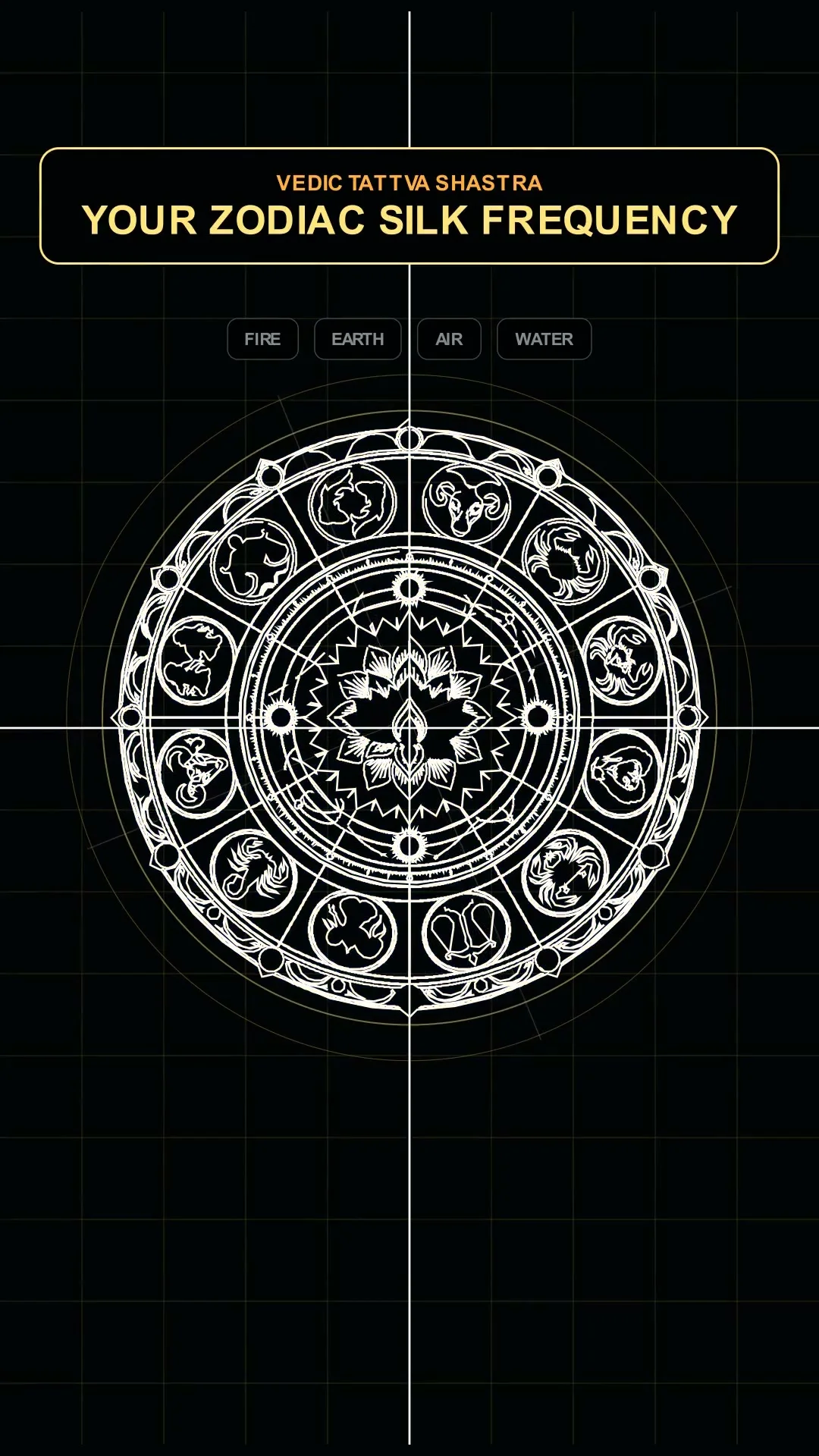
Every wedding season in Varanasi, we watch the same scene unfold on the white floor mattresses of our Chowk shop. A bride sits with her mother, her mother-in-law, and a stack of color swatches. The bride wants an English pastel lilac because she saw it on Pinterest. Her grandmother insists on a traditional crimson. Then someone pulls out the family kundali, calls their family pandit on speakerphone, and suddenly everyone is arguing about whether green brings bad luck to an Aries or if yellow belongs only to Jupiter.
Color choice in Indian weddings is rarely just about what looks pretty on a phone screen. In classical Jyotish Shastra, fabric touches the skin for ten to twelve hours during a ceremony. Ancient texts like the Brihat Parashara Hora Shastra treat dyed natural fibers, especially mulberry silk, as conductors of planetary energy. When you drape five and a half meters of pure silk around your body, you wrap yourself in a specific visual and mineral frequency.
Here is the practical, grounded guide to finding your lucky saree color based on the four Vedic elements (Tattvas) and twelve zodiac signs (Rashis), along with the authentic handloom weaves that carry those dyes best.
Should You Match Your Saree to Your Sun Sign or Moon Sign?
Before buying a saree, you need to know which sign you are dressing for. Western astrology looks almost entirely at your Sun sign, which depends on your birth month. Vedic astrology relies on your Moon sign (Chandra Rashi) or your Ascendant (Lagna).
- For weddings and sacred pujas: Use your Chandra Rashi (Moon sign). The Moon rules the mind (Manas) and emotional well-being. Wearing colors that support your Moon sign helps you feel calm and grounded during long rituals.
- For receptions, business galas, and public appearances: Use your Lagna (Ascendant). The Ascendant governs your physical body and public persona. Dressing for your rising sign gives you presence in a crowded room.
If you only know your Western birth date, do not worry. The elemental groups below work because your Sun sign and Moon sign often share complementary elemental needs.
1. Fire Signs (Agni Tattva): Aries, Leo, Sagittarius
Fire signs are governed by Mars (Mangal), the Sun (Surya), and Jupiter (Brihaspati). These planets carry high thermal and kinetic energy. When women with strong Fire placements wear muddy greys, flat beiges, or washed-out pastels, they often look tired. Their skin needs saturated warmth to match their natural vitality.
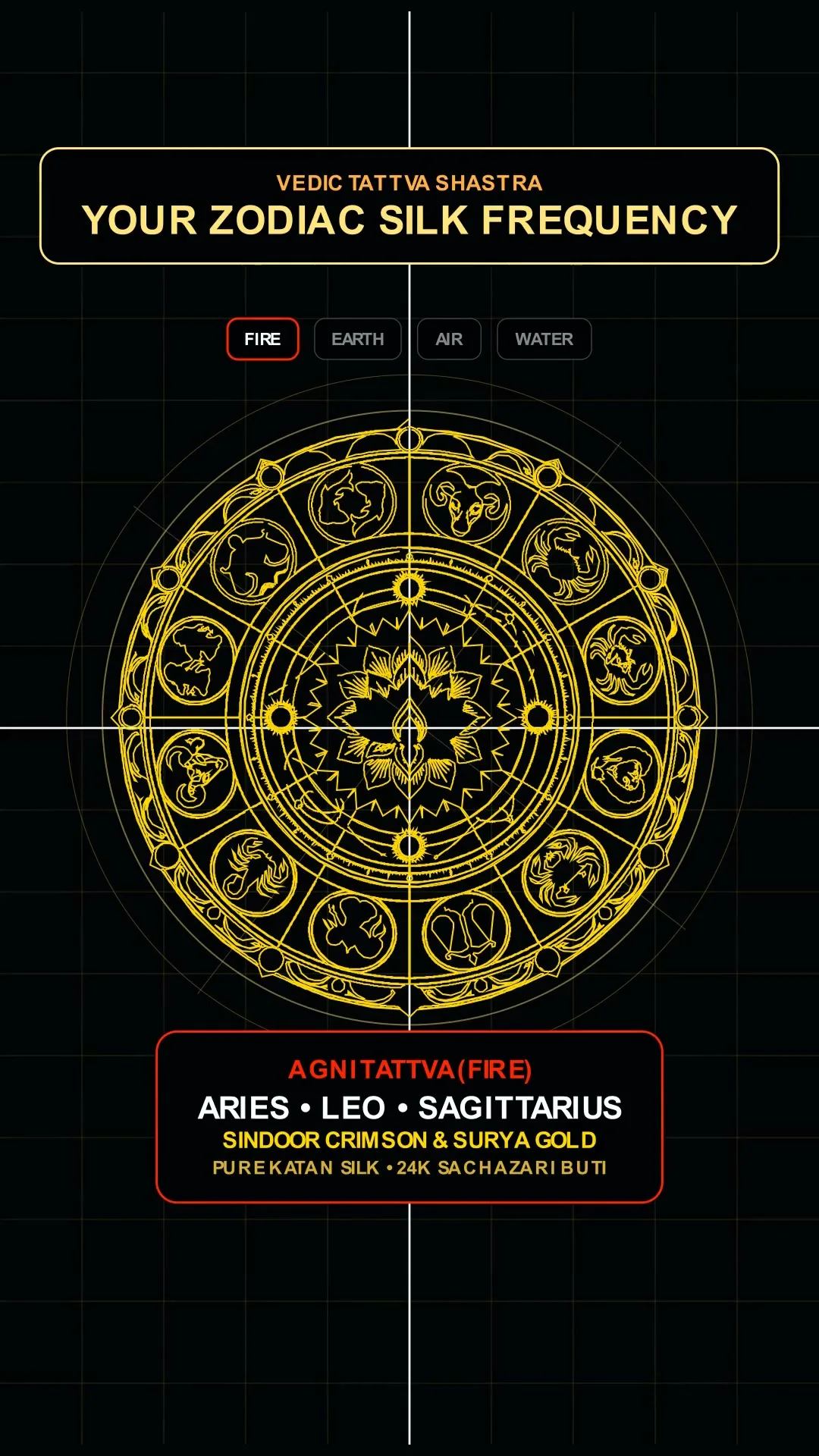
The Sacred Colors
- Sindoor Crimson and Raktambar Red: A fiery, vermilion-based red. Cool berry or wine tones do not give the same warmth.
- Surya Pitambari Gold: Deep saffron, turmeric yellow, and warm mustard.
- Burnt Copper and Rust: Warm earth-toned metallics that hold gold zari work.
Best Handloom Weave
Fire signs carry structured, weighty drapes with ease. The ideal weave is a dense Pure Silk Katan woven with 2-ply twisted mulberry silk yarns. Look for classic Shikargah hunting motifs or dense Surya Buti (sunburst patterns) woven with authentic 24-karat gold-plated silver thread (Sacha Zari), as explained in our detailed guide on Banarasi saree motifs, buta, and jaal patterns.
What to Avoid
Keep dull charcoal, washed navy, and icy pale blue away from major festive moments. These colors dampen the natural warmth of Mars and Surya.
2. Earth Signs (Prithvi Tattva): Taurus, Virgo, Capricorn
Earth signs are ruled by Venus (Shukra), Mercury (Budha), and Saturn (Shani). In Vedic philosophy, Earth represents structure and lasting prosperity. Earth signs do not need loud neon shades to stand out. They look striking in rich mineral tones, forest hues, and deep heritage patinas.
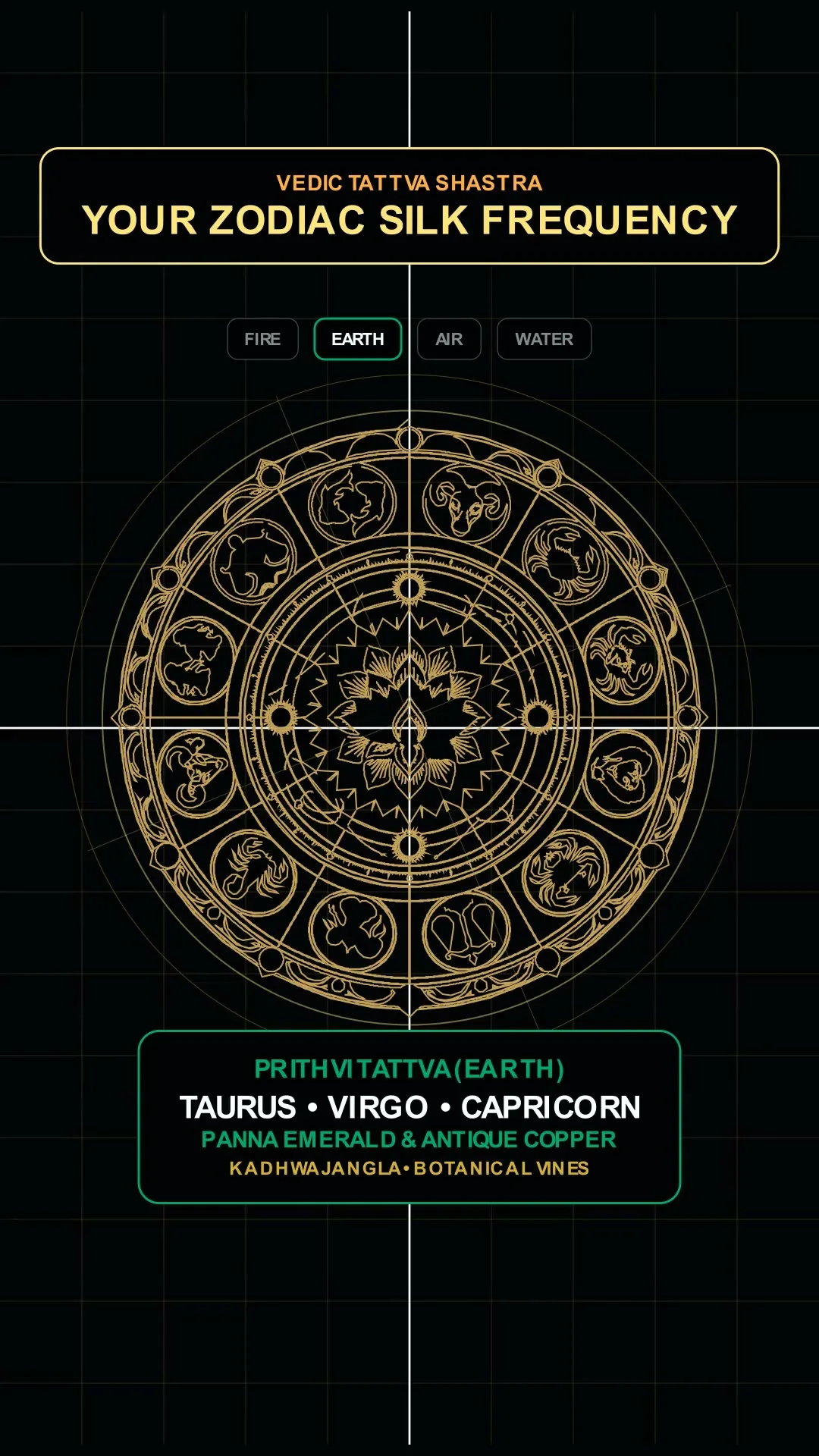
The Sacred Colors
- Panna (Emerald) Bottle Green: A deep, forest-toned green that reflects light like an untreated gemstone.
- Ganga-Jamuni Antique Gold and Bronze: Two-tone metallic weaves where silver and gold zari run parallel.
- Muted Terracotta and Warm Ochre: Earthy base colors that ground heavy gold borders.
Best Handloom Weave
Earth signs appreciate intricate technical detail. The match here is Pure Handloom Silk featuring hand-locked Kadhwa Jangla, where every floral vine and bird motif is individually locked onto the pit-loom by hand using small spools (tilist). This weave leaves no loose floating threads on the back of the cloth, creating a smooth drape that sits flat against the body.
What to Avoid
Neon yellows, jarring candy pinks, and stark optic whites can make Earth signs appear restless. Stick to tones that look like they were pulled directly from stone, bark, or unpolished gems.
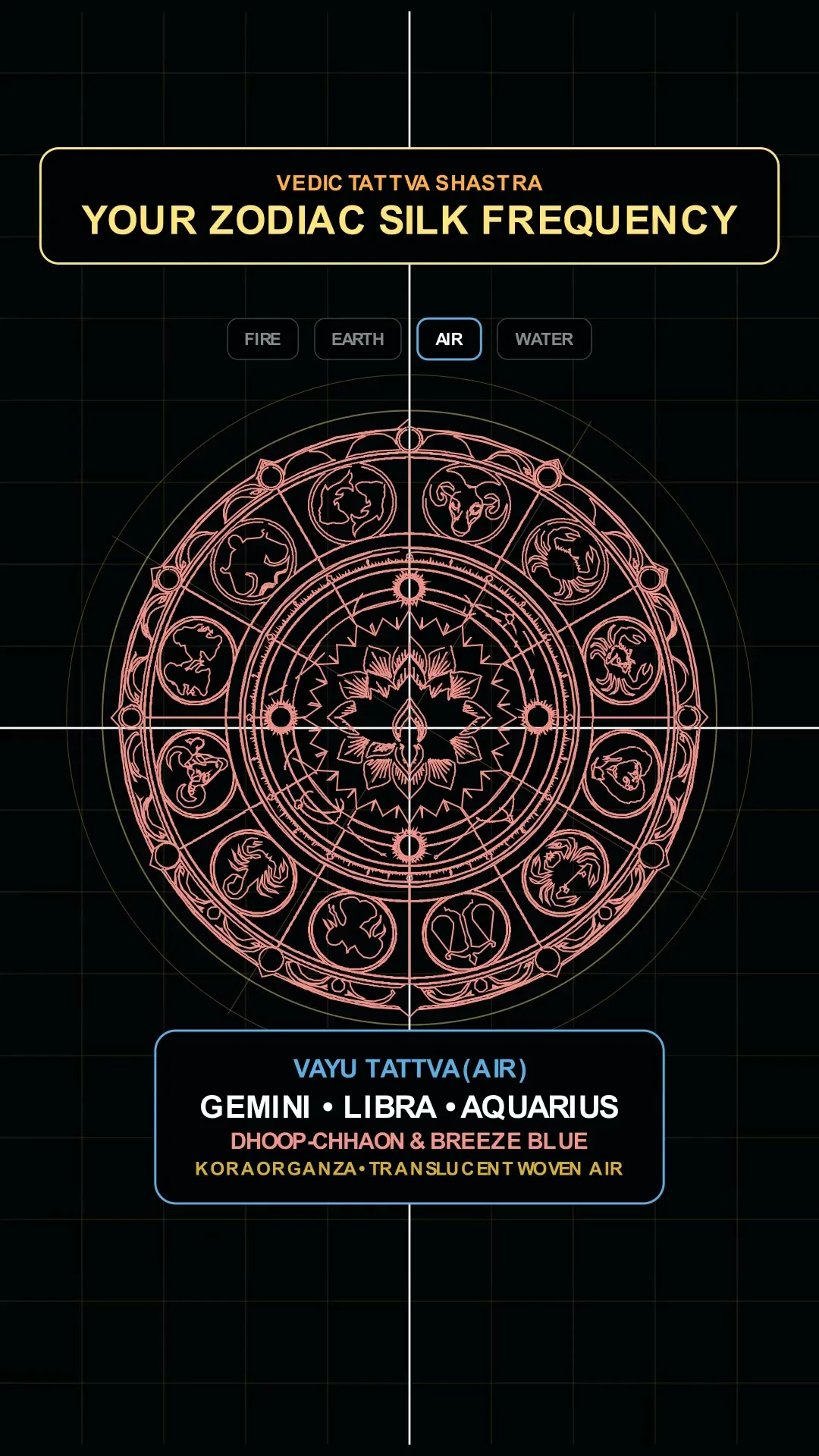
3. Air Signs (Vayu Tattva): Gemini, Libra, Aquarius
Air signs move quickly and value lightness. Ruled by Mercury (Budha), Venus (Shukra), and Saturn (Shani), Air signs often feel suffocated in stiff, heavy nine-yard silks that restrict walking. They look best in colors that shift under changing light.
The Sacred Colors
- Vyoma Breeze Blue and Seafoam: Soft atmospheric blues that do not carry the harshness of cobalt.
- Dhoop-Chhaon (Shot Silk): Dual-tone silks woven with one warp color and a contrasting weft, such as blush pink crossed with sky blue.
- Lavender and Soft Pistachio: Gentle pastels that retain clean saturation.
Best Handloom Weave
Air signs need fabric that breathes and floats. The classic choice is Banarasi Kora Organza, historically referred to in Varanasi as Baft-Hawa ("Woven Air"). Made with raw, un-degummed silk filaments, Kora organza is featherweight and crisp, as broken down in our study on the anatomy of Banarasi organza. It catches breezes easily and looks luminous during daytime garden weddings. For evening receptions, a featherlight Tanchoi silk weave provides fluid movement without bulk.
What to Avoid
Heavy, dark maroon and dense jet black can weigh Air signs down, making the drape look boxy.
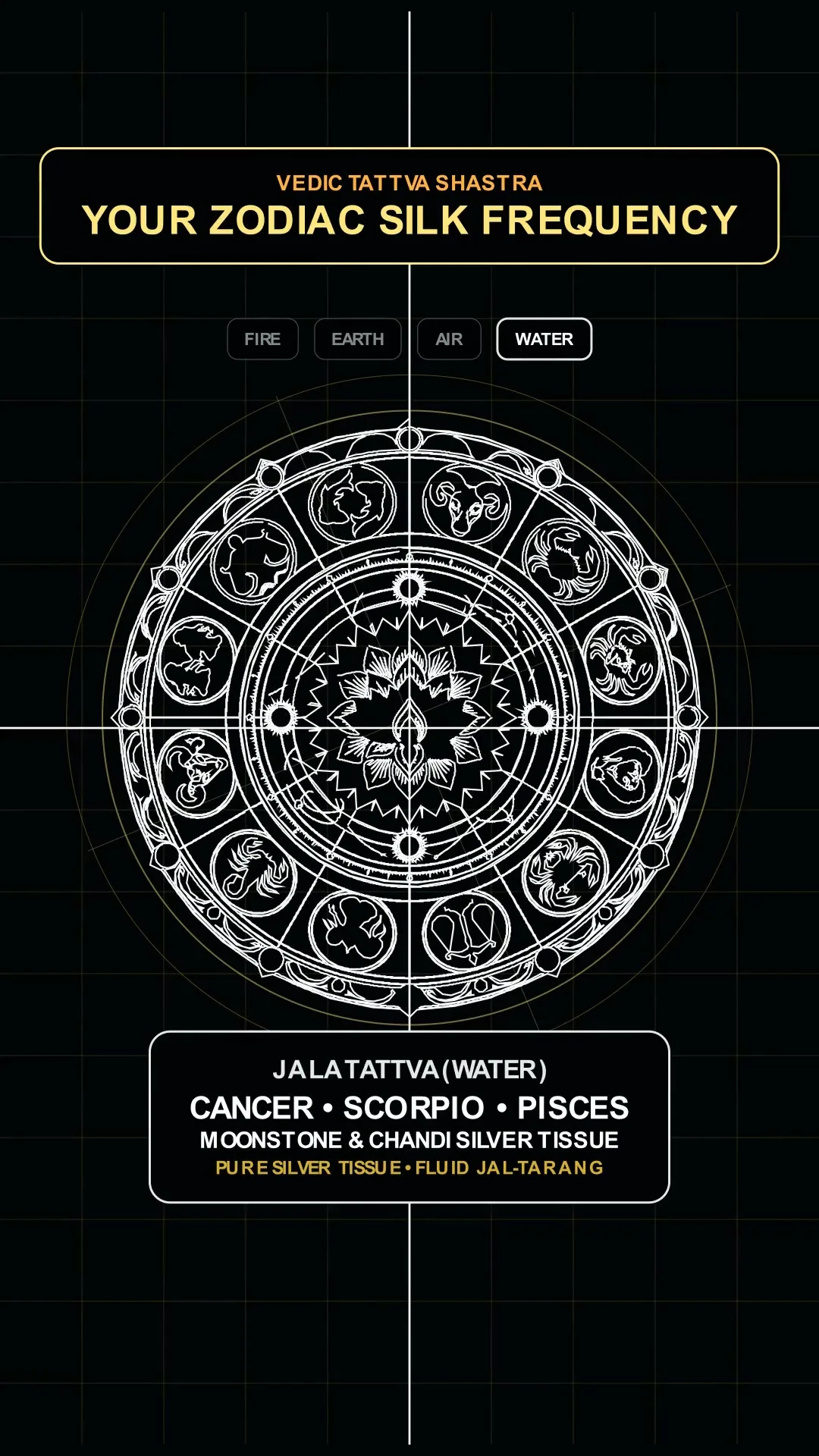
4. Water Signs (Jala Tattva): Cancer, Scorpio, Pisces
Water signs are governed by the Moon (Chandra), Mars (Mangal), and Jupiter (Brihaspati). Popular internet blogs frequently make the mistake of assigning navy blue to Water signs simply because water in the ocean looks blue. In Vedic Jyotish, deep blue belongs strictly to Saturn (Shani). Water signs represent reflection, pearl luster, and moonlight.
The Sacred Colors
- Chandrakanta (Moonstone) Pearl White and Ivory: Creamy, glowing whites with warm luster. Avoid stark, chemically bleached white.
- Rajata Silver and Liquid Mercury: Metallic silver threads that catch the light like flowing water (Jal-Tarang).
- Ganga-Rani Pale Rose and Seafoam Lilac: Subtle watery pastels that carry a faint pearl sheen.
Best Handloom Weave
Water signs thrive in Pure Tissue Sarees. In authentic Varanasi tissue, fine pure silk warp yarns are woven across a continuous weft of flattened silver zari wire (badla). The resulting cloth handles like liquid metal, rippling and reflecting every flicker of candlelight during evening receptions. Learn more about the metallic warp engineering in our feature on the anatomy of a Banarasi tissue saree.
What to Avoid
Harsh mustard yellows, muddy browns, and abrasive synthetic neons clash with the calm, reflective aura of Water signs.
Quick Reference: Zodiac Signs, Colors & Weaves
| Zodiac Sign (Rashi) | Element | Planetary Ruler | Lucky Saree Colors | Recommended Handloom Weave |
|---|---|---|---|---|
| Aries (Mesha) | Fire | Mars | Sindoor Red, Coral, Warm Saffron | Pure Silk Katan with Sacha Zari |
| Taurus (Vrishabha) | Earth | Venus | Lotus Pink, Off-White, Bottle Green | Pure Handloom Silk Jangla |
| Gemini (Mithuna) | Air | Mercury | Parrot Green, Breeze Blue, Dhoop-Chhaon | Kora Organza or Soft Chanderi |
| Cancer (Karka) | Water | Moon | Pearl White, Moonstone, Liquid Silver | Pure Tissue Saree or Tanchoi |
| Leo (Simha) | Fire | Sun | Royal Pitambari Gold, Flame Orange | Heavy Katan Silk Shikargah |
| Virgo (Kanya) | Earth | Mercury | Emerald Green, Olive, Antique Copper | Handloom Kadhwa with Meenakari |
| Libra (Tula) | Air | Venus | Powder Blue, Rose Quartz, Champagne | Banarasi Kora Organza |
| Scorpio (Vrishchika) | Water | Mars | Deep Crimson, Garnet, Burnished Copper | Dense Pure Silk Katan Brocade |
| Sagittarius (Dhanu) | Fire | Jupiter | Haldi Yellow, Royal Purple, Saffron | Pure Silk Katan with Gold Buti |
| Capricorn (Makara) | Earth | Saturn | Charcoal Grey, Olive Green, Steel Blue | Antique Zari Tanchoi Silk |
| Aquarius (Kumbha) | Air | Saturn | Electric Sky Blue, Slate, Dual-Tone Lilac | Lightweight Kora Organza |
| Pisces (Meena) | Water | Jupiter | Turmeric Gold, Pearl Ivory, Aqua Seafoam | Liquid Pure Tissue Saree |
Frequently Asked Questions
What if my lucky zodiac color clashes with my skin undertone?
This is the most common concern we hear in our showroom. If your Moon sign calls for bright turmeric yellow, but warm yellows wash out your cool undertones, you do not have to wear yellow next to your face.
The secret lies in the blouse and border placement. Choose a base saree body color that flatters your complexion, and introduce your lucky planetary color through a contrasting hand-embroidered blouse, a rich pallu, or the selvedge piping. For a step-by-step diagnostic on matching jewelry and metals with your skin tone, read our guide on how to choose jewellery and colors for your skin undertone.
Can I wear black to an Indian wedding if my zodiac sign allows it?
In classical Hindu tradition, black (Krishna-varna) is traditionally avoided during wedding pheras and auspicious pujas, even if your sign is ruled by Saturn. For evening sangeets or cocktail receptions, however, a charcoal or midnight navy Banarasi with antique copper zari looks striking and dignified. If you want a deep, grounding tone for a religious ceremony, choose a midnight sapphire or deep forest green.
How do I verify that my saree has real silk and genuine zari?
Many commercial sarees sold under zodiac names use synthetic polyester and plastic lurex threads that trap heat and irritate sensitive skin. You can protect your investment by checking two things:
- The Silk Mark Tag: Always look for the government-authorized Silk Mark label. Review our unbiased investigative guide on what is art silk and how artificial fibers differ from pure silk, as well as our master checklist on how to identify an authentic handloom Banarasi saree.
- The Zari Core: Real silver zari is made by electroplating pure silver around a natural silk core. It has a warm, supple feel. Cheap plastic metallic yarn feels scratchy and stiff.
How should I store a pure zari saree so the color stays bright?
Pure zari contains real silver, which reacts to moisture and atmospheric sulfur. Never spray perfume directly onto the cloth, and avoid using chemical mothballs. Learn the traditional archival methods in our guides on how to hang and store silk sarees properly and how to care for and clean your pure Banarasi silk saree to keep your heirlooms bright for decades.
Visit Shri Geeta Sarees in Varanasi
If you are planning your bridal trousseau or looking for a heritage saree aligned with your horoscope, come sit with us in Chowk, Varanasi. We will spread out the handlooms, let you feel the weight of real Katan silk, and help you find a piece that honors your tradition and your personal taste.
- Address: Shri Geeta Sarees, Chowk, Varanasi, Uttar Pradesh 221001
- Heritage: Serving handloom connoisseurs and families since 1960
- Browse Online: Explore our complete Authentic Handloom Banarasi Catalog or view our dedicated Pure Silk Katan Collection. You can also message our master drapers on WhatsApp for direct video consultations.
Continue Reading
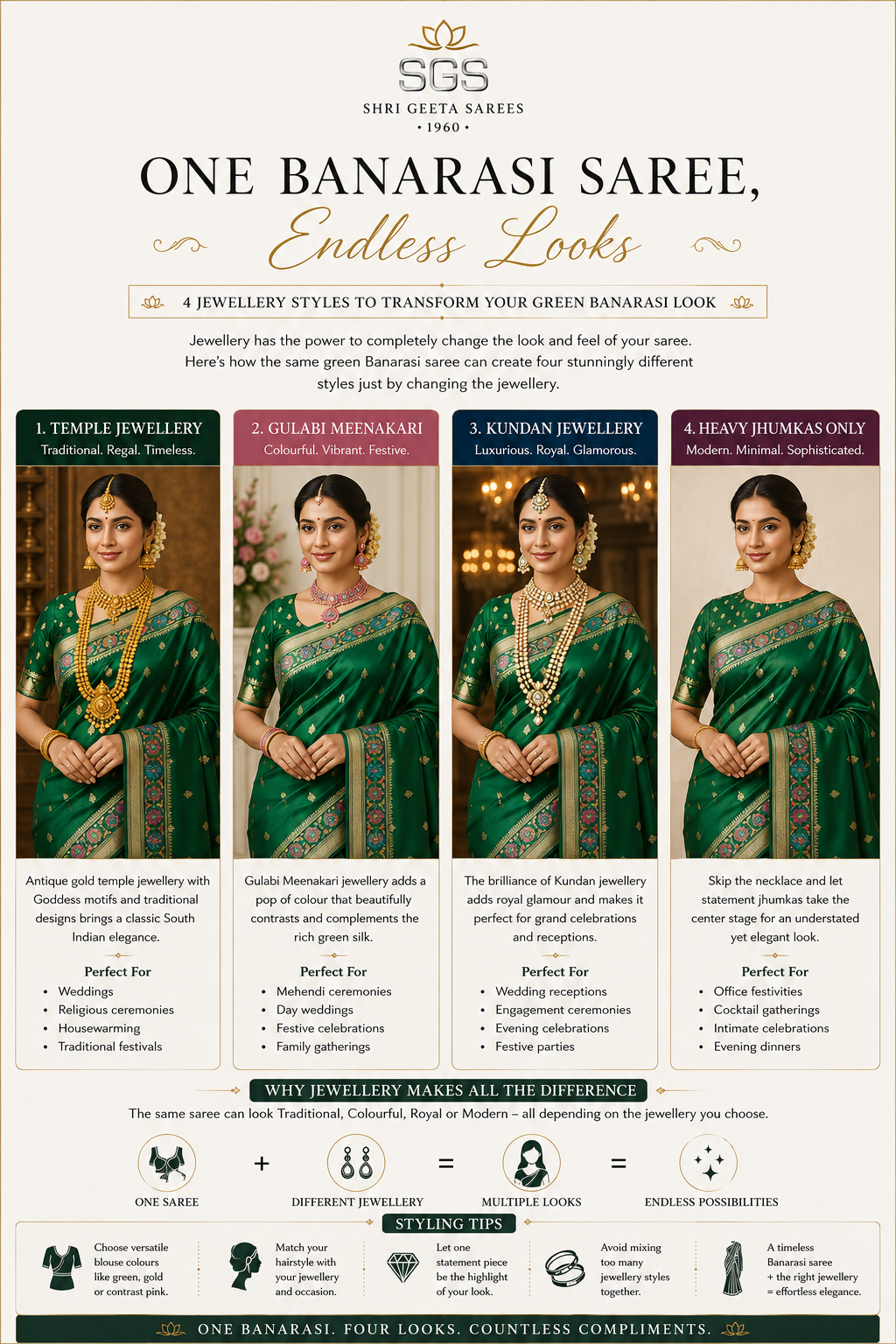
How One Banarasi Saree Can Create 4 Completely Different Looks
A beautiful Banarasi silk saree is one of the most versatile pieces in your wardrobe. Discover how to create four stunning looks just by changing your jewellery.
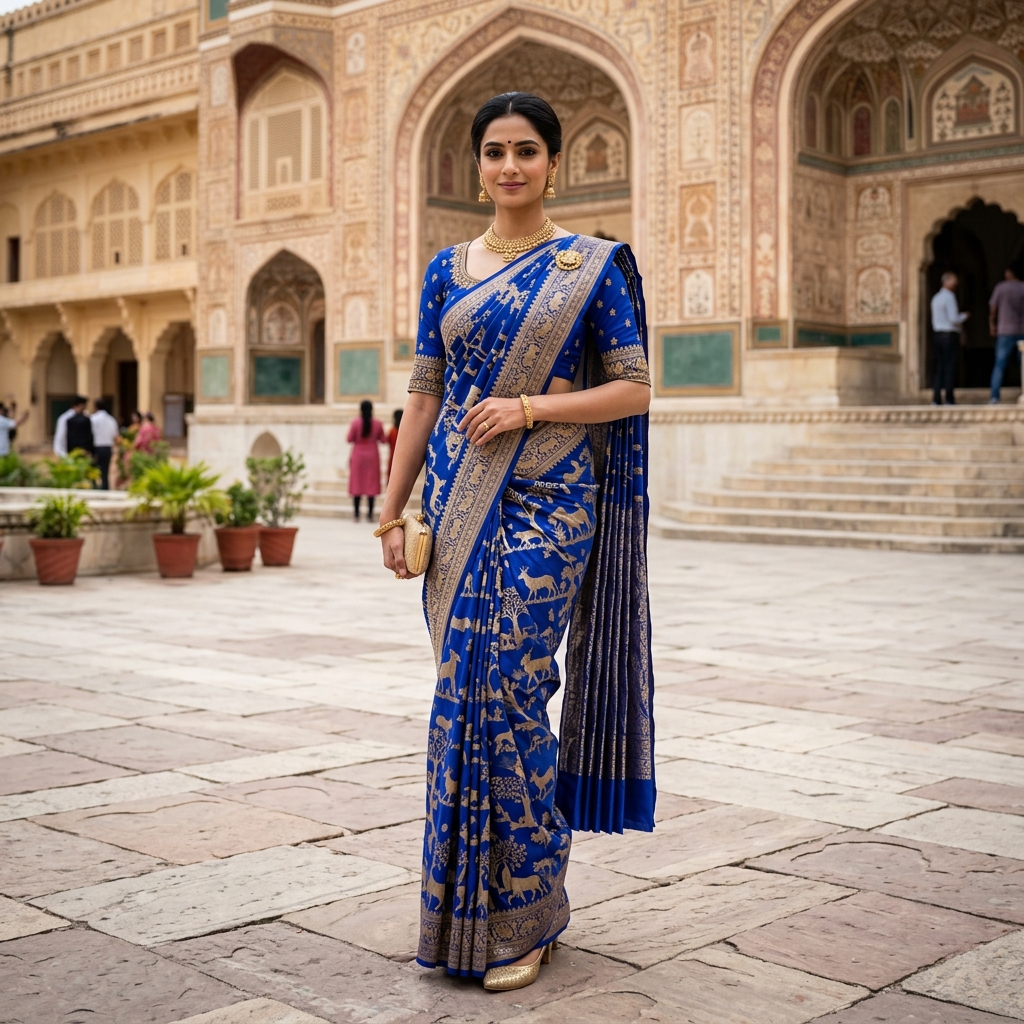
4 Elegant Ways to Drape a Banarasi Saree | Shri Geeta Sarees
Looking for new ways to wear your handwoven Banarasi saree? Discover 4 elegant and easy styling methods, from classic traditional to modern reception drapes.
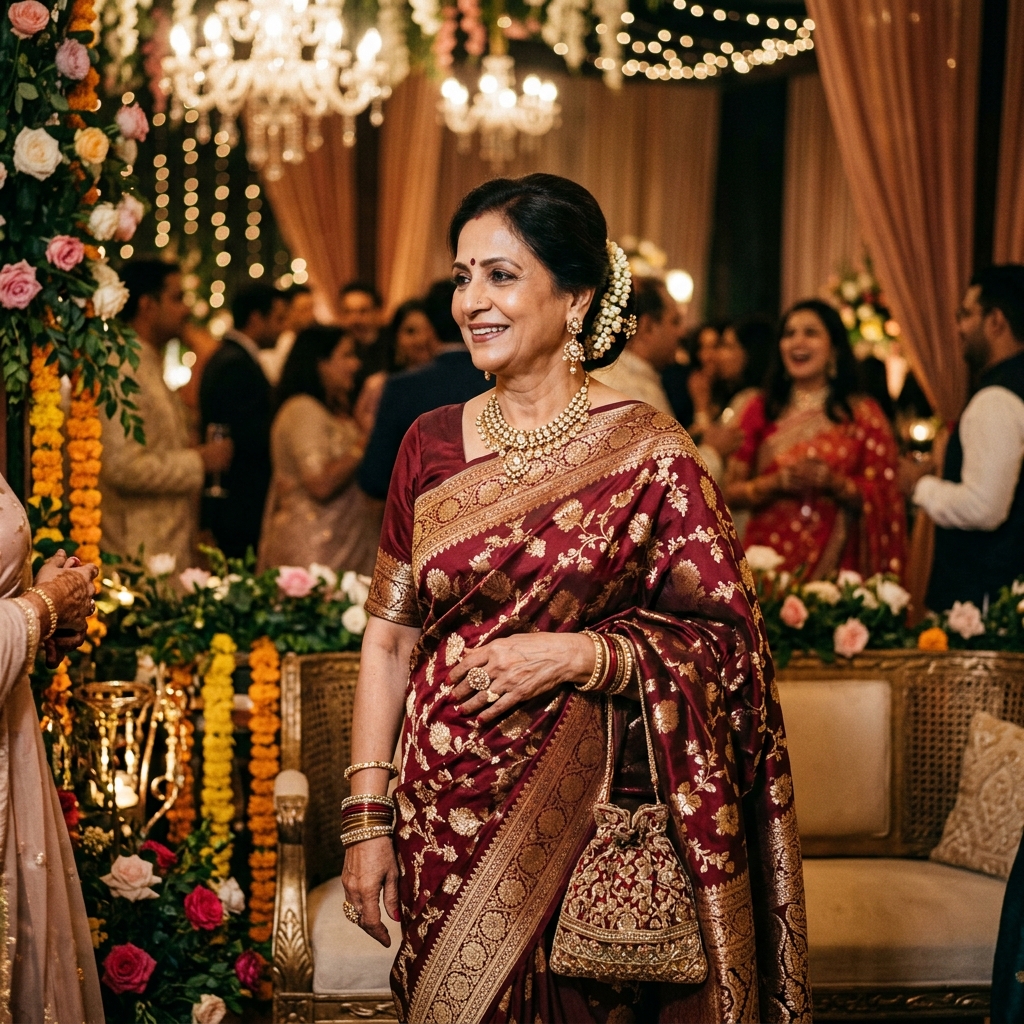
Banarasi Saree for Mother of the Bride: A Guide to Getting It Right
A comprehensive guide to choosing the perfect Banarasi saree for the mother of the bride, covering colors, weaves, and styling advice.
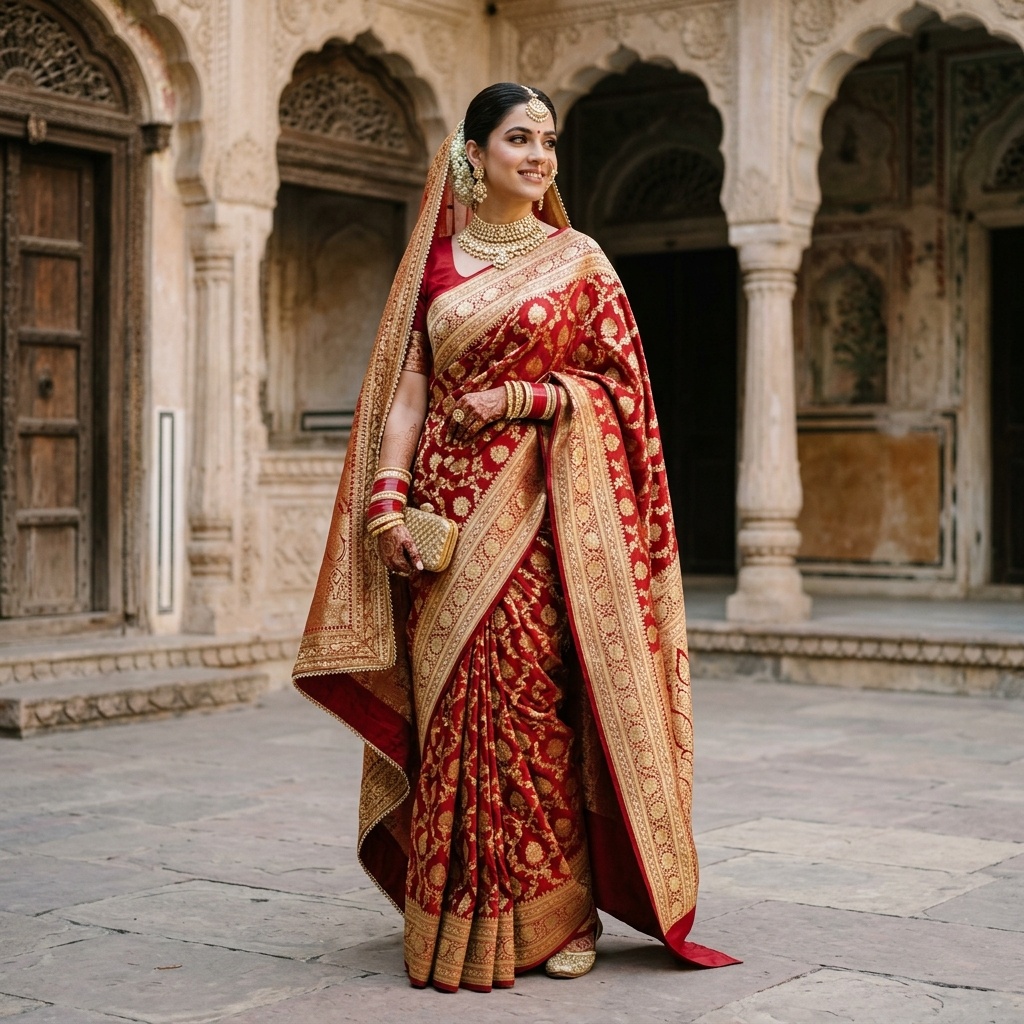
Types of Banarasi Silk: Katan, Georgette, Organza & Tissue Explained
Confused by Banarasi saree fabrics? A Varanasi weaver explains the exact difference in drape, weight, and styling for Katan, Georgette, Organza, and Tissue silk.