
Banarasi Saree for Mother of the Bride: A Guide to Getting It Right
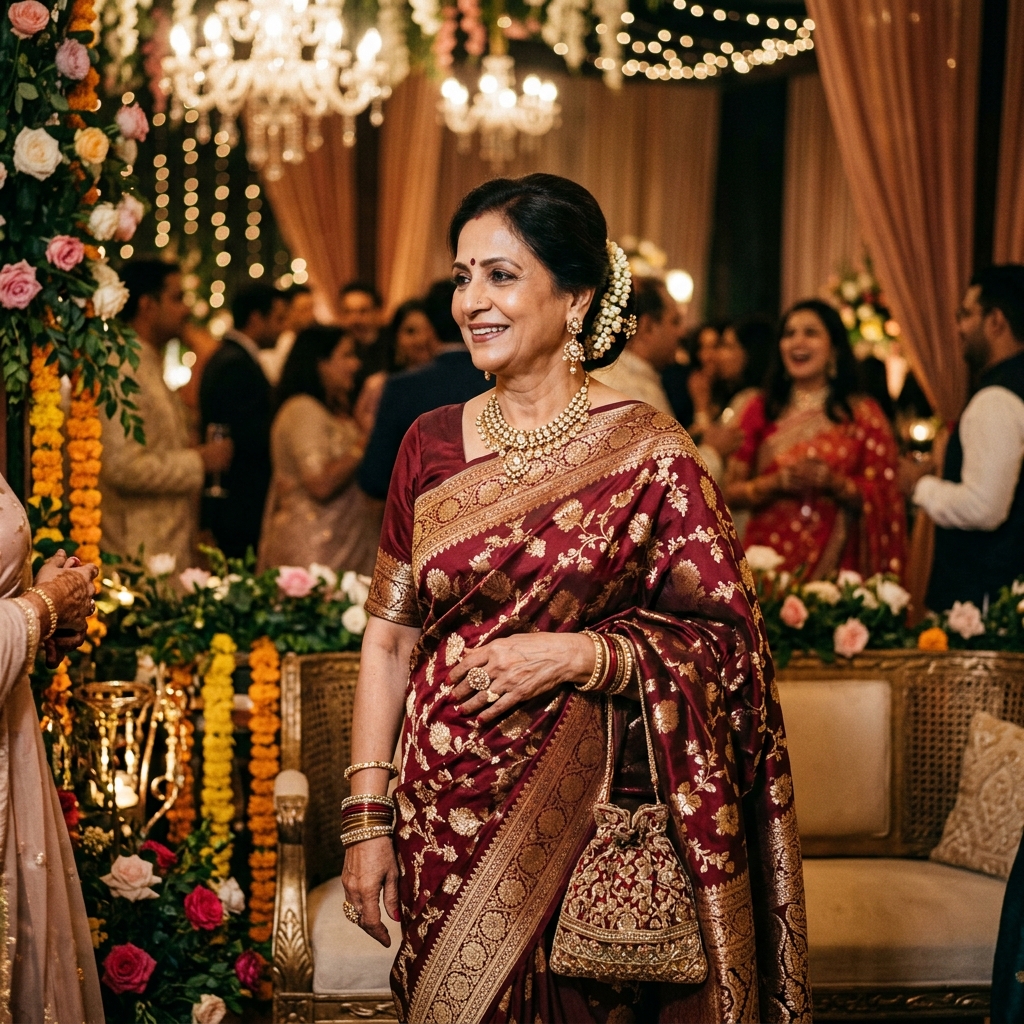
There is a particular kind of pressure that falls on the mother of the bride. The bride's outfit is planned for months, sometimes years. The mother's outfit is often decided in a week — squeezed in between vendor calls and guest lists, treated as an afterthought when it should be treated as a centrepiece in its own right.
At Shri Geeta Sarees, we have dressed three generations of mothers for their daughters' weddings, and we can say this plainly: a mother of the bride does not need a saree that competes with the bridal ensemble. She needs one that commands the room in its own register — quieter, richer, and unmistakably hers.
Why Mother-of-the-Bride Dressing Is Its Own Category
Most bridal content online is written for the bride. It talks about red, about heavy zari, about twelve-yard drapes for the wedding stage. None of it answers the question a mother actually asks her tailor or her saree seller: what do I wear that looks like the mother of the bride, and not like a guest, and not like I'm trying to outshine my daughter?
The mother of the bride is dressing for several events across several days — the sangeet, the haldi, the main ceremony, the reception — often in front of the same set of relatives and photographers each time. Her saree has to read as elegant on camera, comfortable enough to wear for eight or ten hours, and appropriate to her role: present, celebratory, but never competing with the bride.
This is a distinct styling problem from bridal dressing, and it deserves distinct guidance.
What Colour Should the Mother of the Bride Wear?
The mother of the bride is best served by deep, jewel-toned colours rather than bright or pastel shades — think deep maroon, bottle green, wine, aubergine, midnight blue, or antique gold. These tones photograph beautifully under mandap and reception lighting, convey seniority and grace, and sit comfortably alongside both a red bridal lehenga and a lighter-coloured groom's family palette.
Colours that tend to work well for mother-of-the-bride sarees:
- Deep maroon or wine — traditional, warm under both daylight and evening light
- Bottle green — increasingly popular for its richness without competing with bridal red
- Antique or old gold — pairs naturally with heavier zari work, reads as heirloom rather than trend
- Midnight or royal blue — a strong choice for daytime ceremonies, photographs sharply
- Aubergine or deep plum — sits between maroon and purple, flatters most skin tones
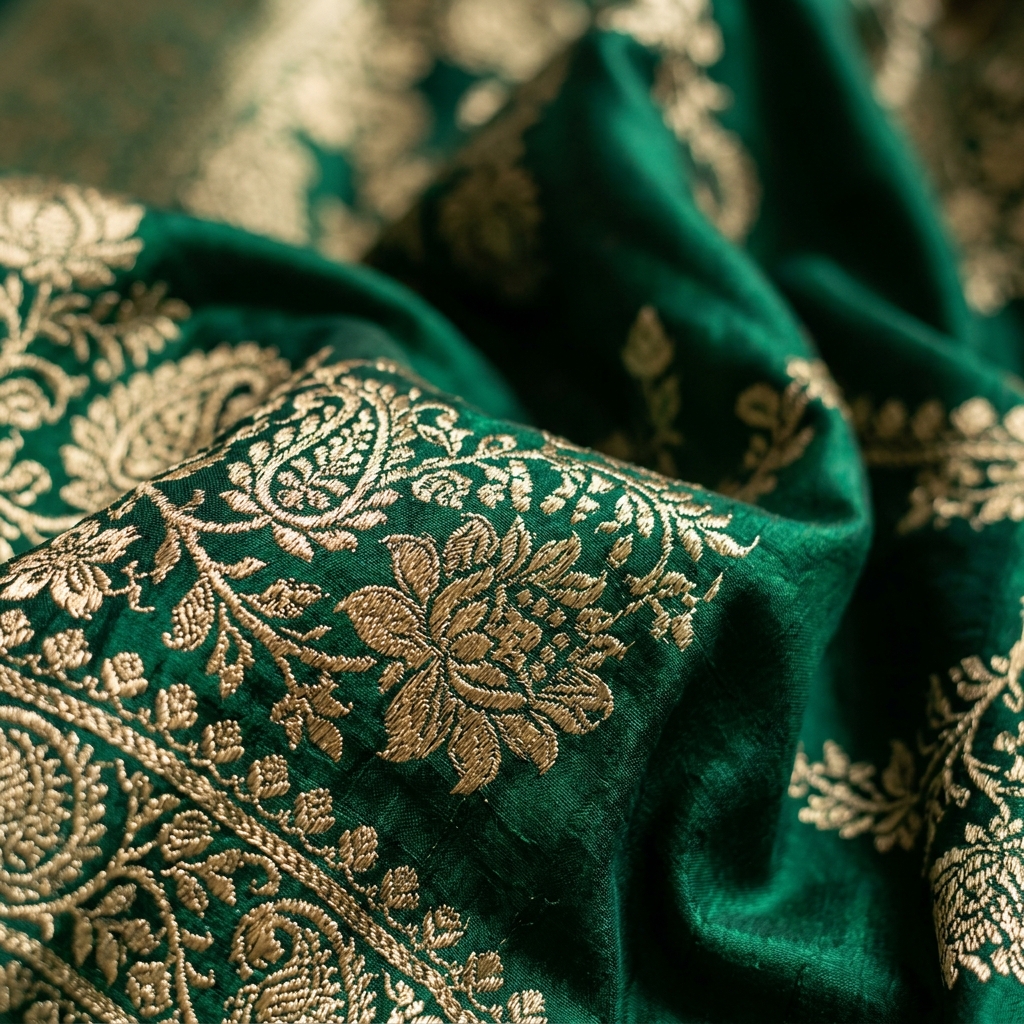
Colours generally best avoided: pure white or cream (associated with mourning in several Indian communities), and shades that closely match the bridal outfit, which can cause confusion in photographs.
Which Banarasi Weave Suits a Mother of the Bride
This is where weave choice matters more than most people realise. A mother of the bride is usually seated for long stretches, photographed at close range during rituals, and needs a saree that holds its shape and drape through a full day of movement. Three weaves consistently serve this brief well:
Katan silk with Kadhua zari — Kadhua work is created by hand, motif by motif, rather than woven continuously through the fabric like Jangla or Tanchoi. Because the zari sits with more relief and richness, a Kadhua Katan reads as substantial and formal even in a single solid colour, which suits a mother's understated authority. (For a full breakdown of how Katan and Kadhua differ from other Banarasi weaves, see our detailed comparison.)
Tissue silk with gold zari — Tissue's characteristic sheen catches light differently from matte silk, which makes it a strong choice for evening functions like the sangeet or reception, where a mother is often photographed under artificial lighting.
Khaddi Georgette with self or contrast zari — For mothers who prioritise comfort across a multi-day wedding, Khaddi Georgette drapes more fluidly and sits lighter on the body than a heavier Katan, without sacrificing the Banarasi identity.
We would rather steer a customer toward the weave that suits her event and her comfort than upsell the heaviest option in the store. That is not how a sixty-year-old weaving house stays trusted.
Draping and Fit Considerations Specific to Mothers of the Bride
A few practical points rarely covered in general bridal saree content:
- Pallu weight matters more than people expect. A mother of the bride is often on her feet for receiving guests, touching feet in blessing, and standing for photographs. A pallu with dense zari at the border but a lighter body fabric holds its pleats without dragging on the shoulder through a long event.
- Blouse sleeve length should match the ceremony, not just the trend. Elbow-length or three-quarter sleeves in a rich brocade or Banarasi fabric-matched blouse read as more appropriate for daytime rituals like haldi and mehndi than sleeveless cuts, which suit evening events better.
- Consider one saree for daytime rituals and a separate one for the evening reception. Lighter Khaddi Georgette or Chiffon for haldi and mehndi (heat, turmeric, movement), and a heavier Katan or Tissue for the main ceremony and reception, is a practical two-saree approach many mothers of the bride follow rather than trying to make one saree work for every function.
Styling: Jewellery and Accessories
The mother of the bride's jewellery should feel generational rather than trend-led. Polki or Kundan sets in gold, paired with a Banarasi saree in maroon, green, or gold tones, create a cohesive heirloom look. A single statement piece — a nose ring, a long haar, or a pair of jhumkas — tends to read better in photographs than layering multiple contemporary pieces against the visual richness of a Banarasi weave. Traditional gold bangles or a single kada, rather than diamond-heavy Western-style bracelets, keep the overall look anchored to the Banarasi silk rather than fighting it.
Caring for a Banarasi Silk Saree Before and After the Wedding
A saree bought for a wedding is often worn once and then stored for years before it resurfaces — sometimes for the next family wedding, sometimes to be passed down. A few essentials:
- Store folded in a breathable muslin or cotton cloth, never in plastic, which traps moisture and can yellow the silk over time.
- Refold along different lines every few months if kept long-term, to prevent permanent creasing along the zari.
- Dry clean only, and always with a cleaner experienced in zari and silk specifically — ordinary dry cleaning chemicals can dull real zari.
- Keep away from direct sunlight and humidity, both of which are common causes of silk discolouration in Indian storage conditions.
For more detailed maintenance instructions, read our full guide on Banarasi silk care.
A well-cared-for Banarasi silk saree from a wedding often becomes the one a mother later hands to her daughter or granddaughter — which is, in the end, the entire point of buying one that is genuinely handloom rather than mass-produced.
Continue Reading
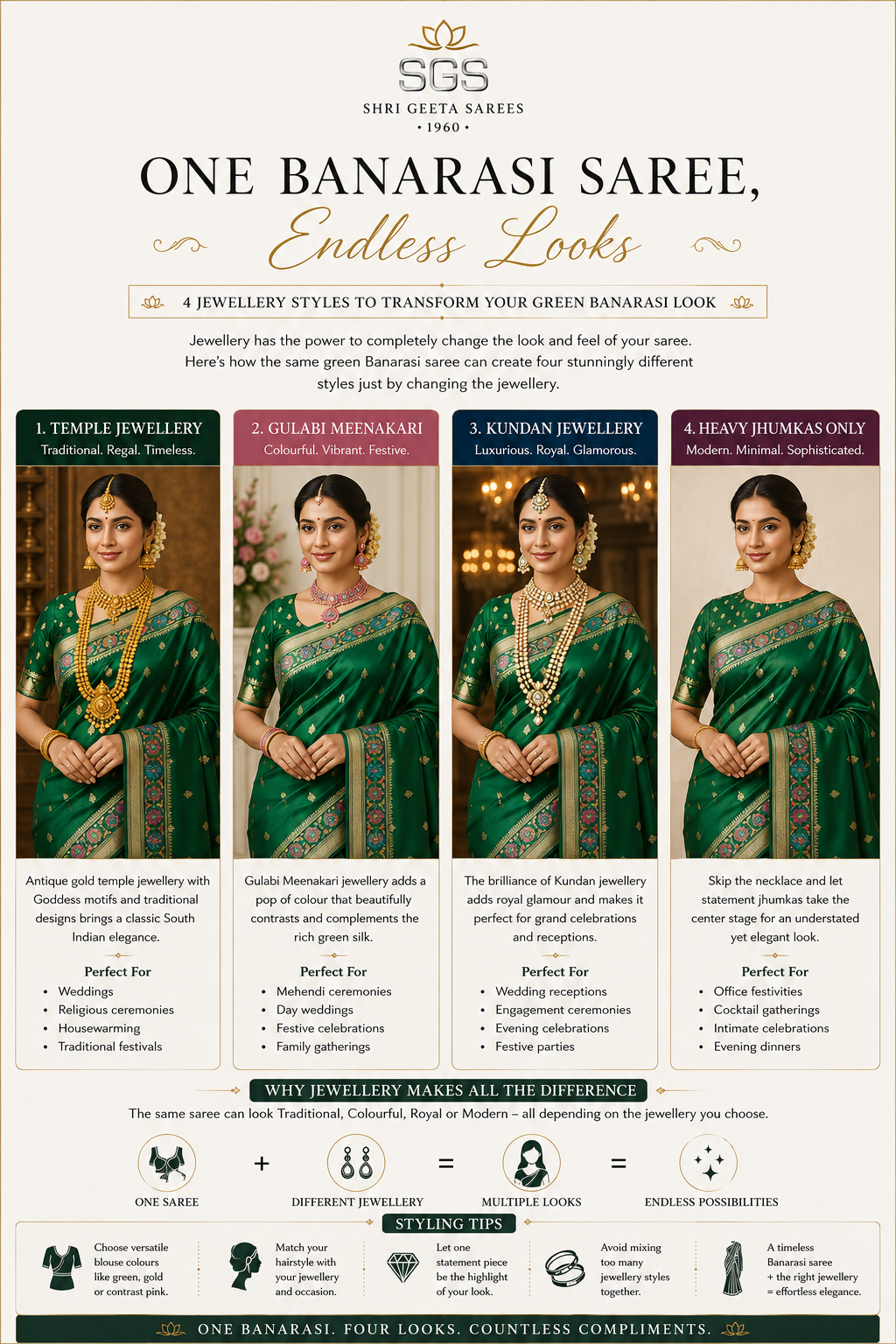
How One Banarasi Saree Can Create 4 Completely Different Looks
A beautiful Banarasi silk saree is one of the most versatile pieces in your wardrobe. Discover how to create four stunning looks just by changing your jewellery.
How to Evaluate a Banarasi Saree Wholesaler: A Boutique Buyer's Guide
A boutique owner's guide to vetting a Banarasi saree wholesale supplier — what to check for authenticity, consistency, and long-term reliability.
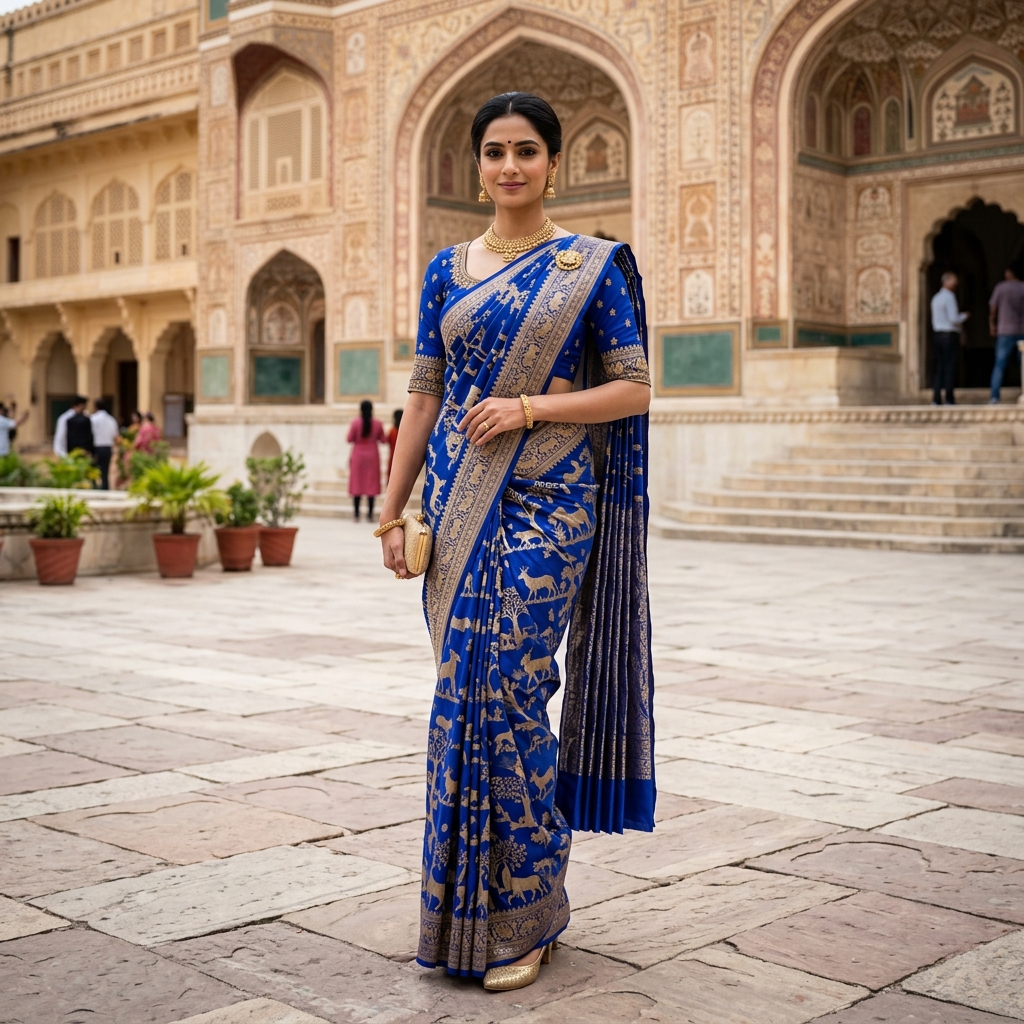
4 Elegant Ways to Drape a Banarasi Saree | Shri Geeta Sarees
Looking for new ways to wear your handwoven Banarasi saree? Discover 4 elegant and easy styling methods, from classic traditional to modern reception drapes.
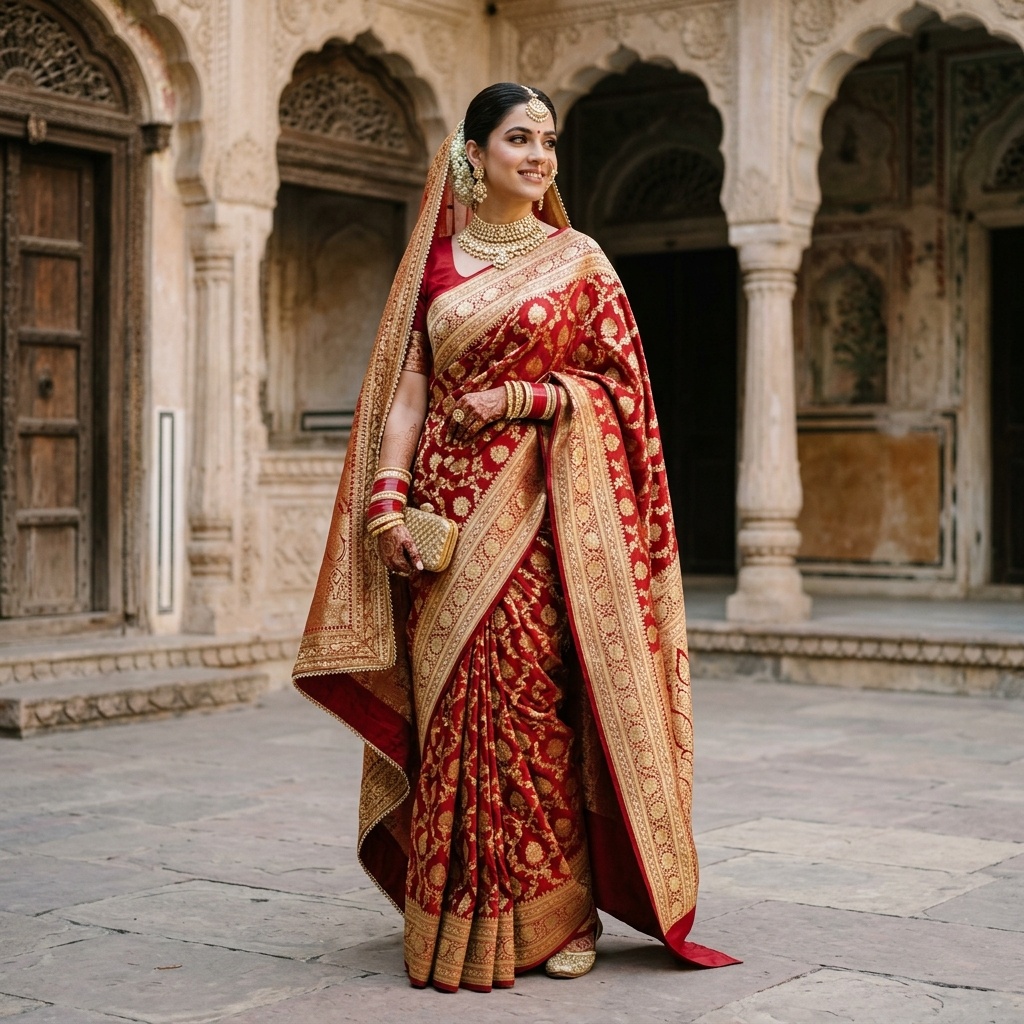
Types of Banarasi Silk: Katan, Georgette, Organza & Tissue Explained
Confused by Banarasi saree fabrics? A Varanasi weaver explains the exact difference in drape, weight, and styling for Katan, Georgette, Organza, and Tissue silk.