Types of Banarasi Silk: Katan, Georgette, Organza & Tissue Explained
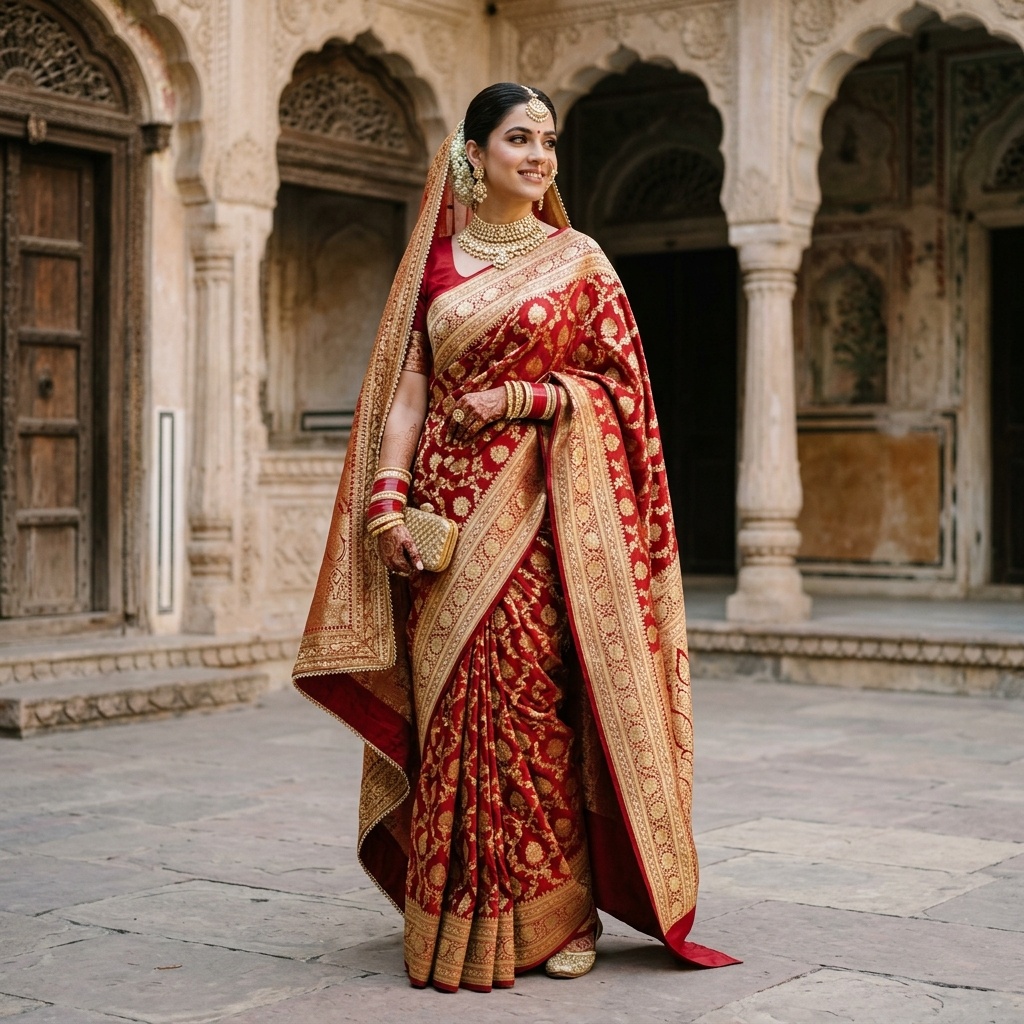
Title: Katan, Tissue, or Georgette? Understanding the Drapes of Authentic Banarasi Silk
When you walk into a Varanasi gaddi and ask to see a Banarasi saree, the first question a weaver will ask you is: "Which fabric?"
For most buyers, Banarasi is synonymous with a heavy, red bridal silk. But Banarasi is a geography and a weaving tradition, not a single material. The loom does not dictate the yarn. The drape, the weight, and how the garment moves with you depend entirely on the base fabric you choose.
If you are buying a pure Banarasi silk saree online, understanding these textiles is the difference between a garment that swallows you whole and one that feels like a second skin.
Here is exactly how Katan, Georgette, Organza, and Tissue behave, direct from the looms of Shri Geeta Sarees.
Katan Silk: The Heirloom Standard
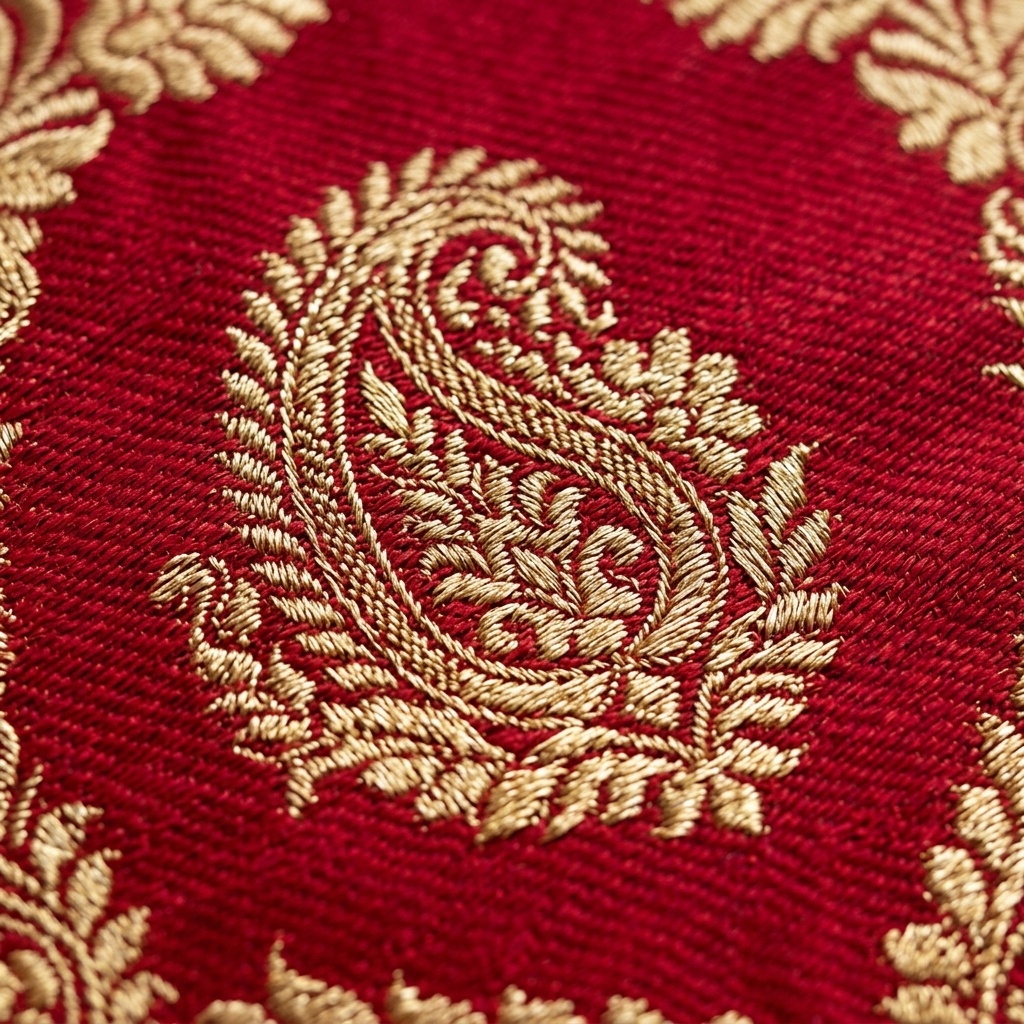
The result is a fabric with distinct structure. It holds pleats sharply and provides a solid foundation for heavy gold and silver zari work. Because Katan is robust, our weavers use it for complex Kadhua weaves, where each motif is woven individually without loose threads on the reverse.
- The Drape: Structured and substantial. It stands away from the body slightly, offering an architectural silhouette.
- Best For: Traditional bridal wear, winter weddings, and long-term heirloom preservation.
Banarasi Georgette: The Fluid Drape
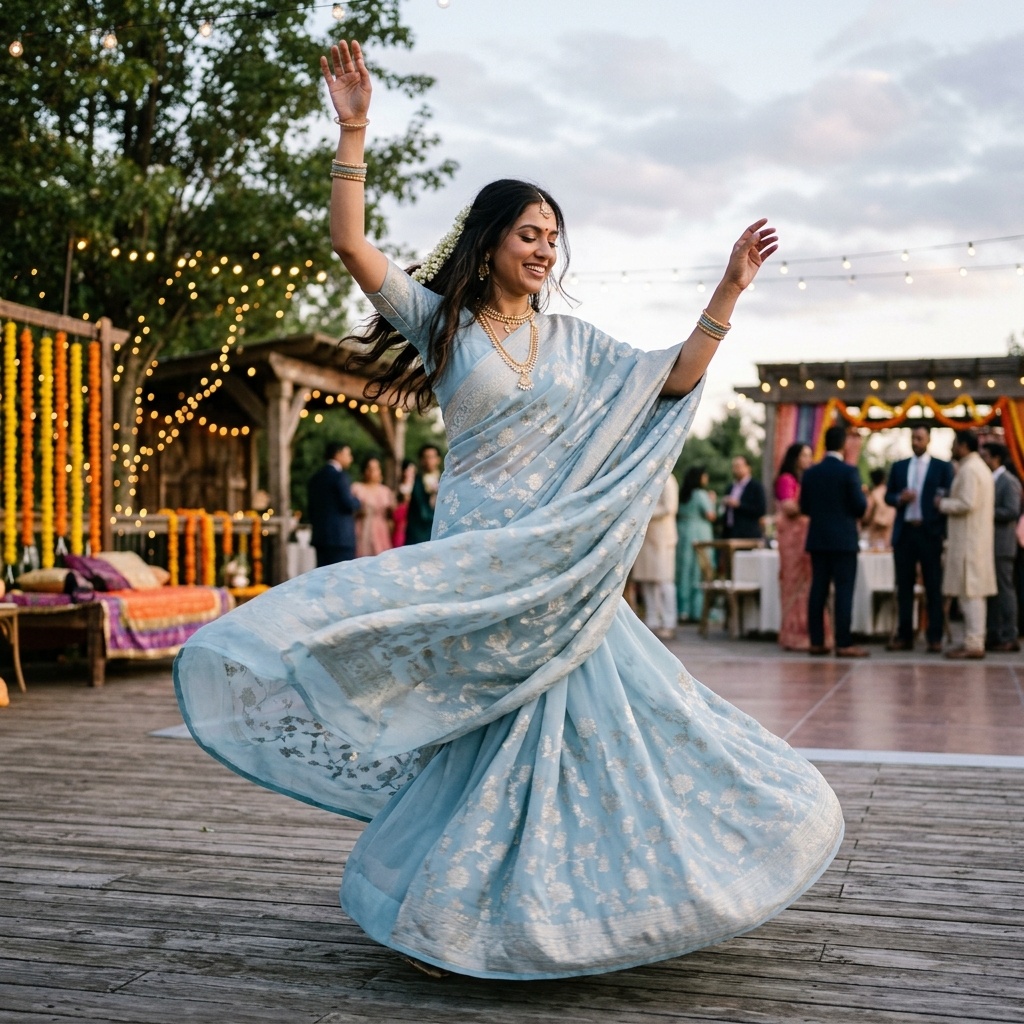
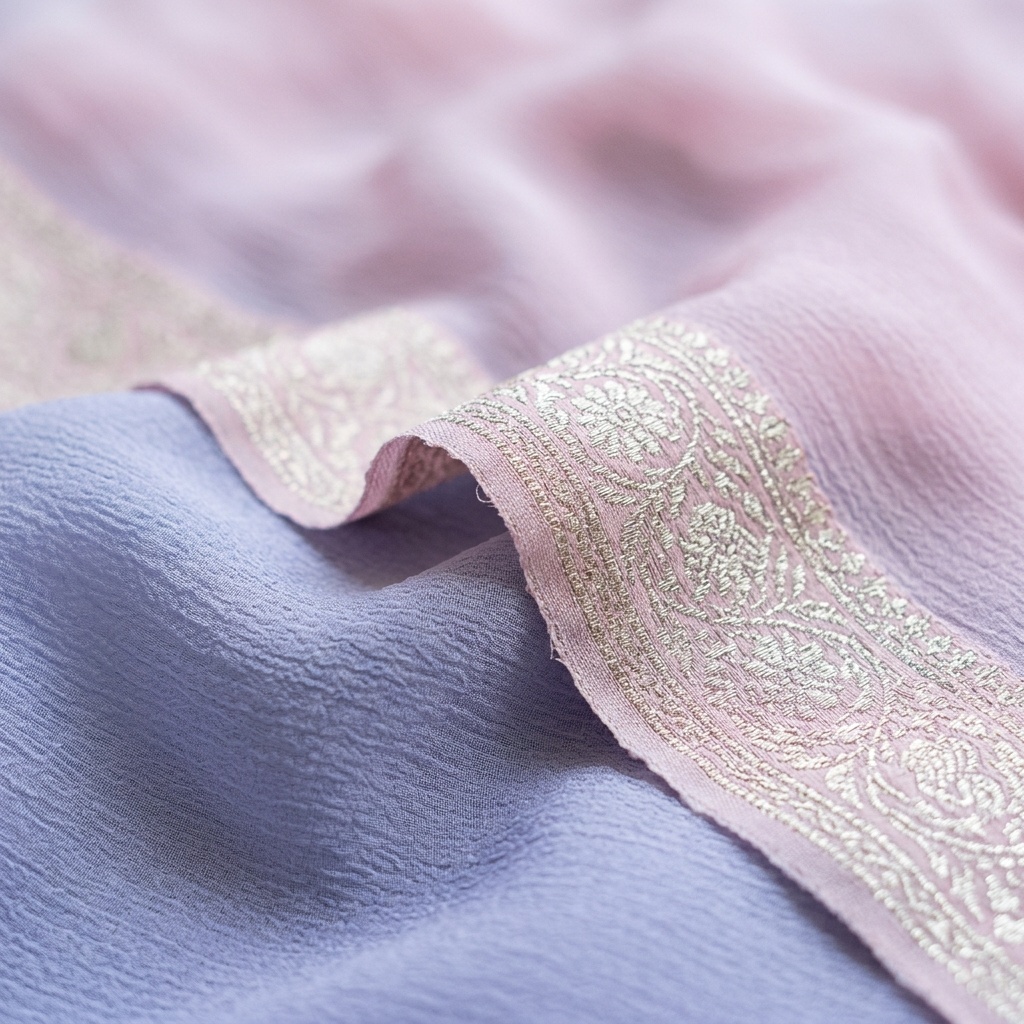
This is the saree for women who find Katan too stiff. It drapes closely to the body, making it universally flattering. Despite its lightness, a high-quality Georgette holds intricate zari borders and butis flawlessly.
- The Drape: Soft, clingy, and incredibly easy to carry for long hours.
- Best For: Sangeet nights, summer weddings, and bridesmaids who plan to dance.
Organza Silk: The Sheer Canvas
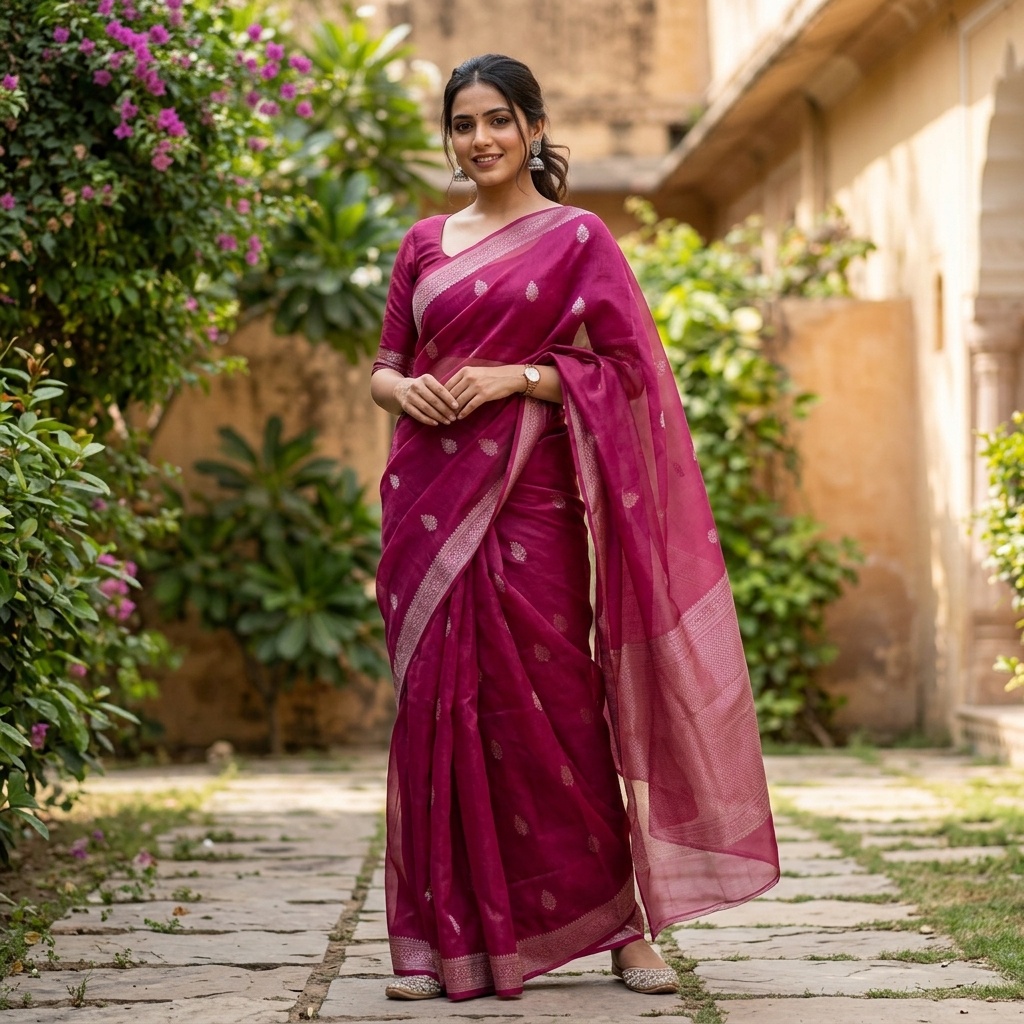
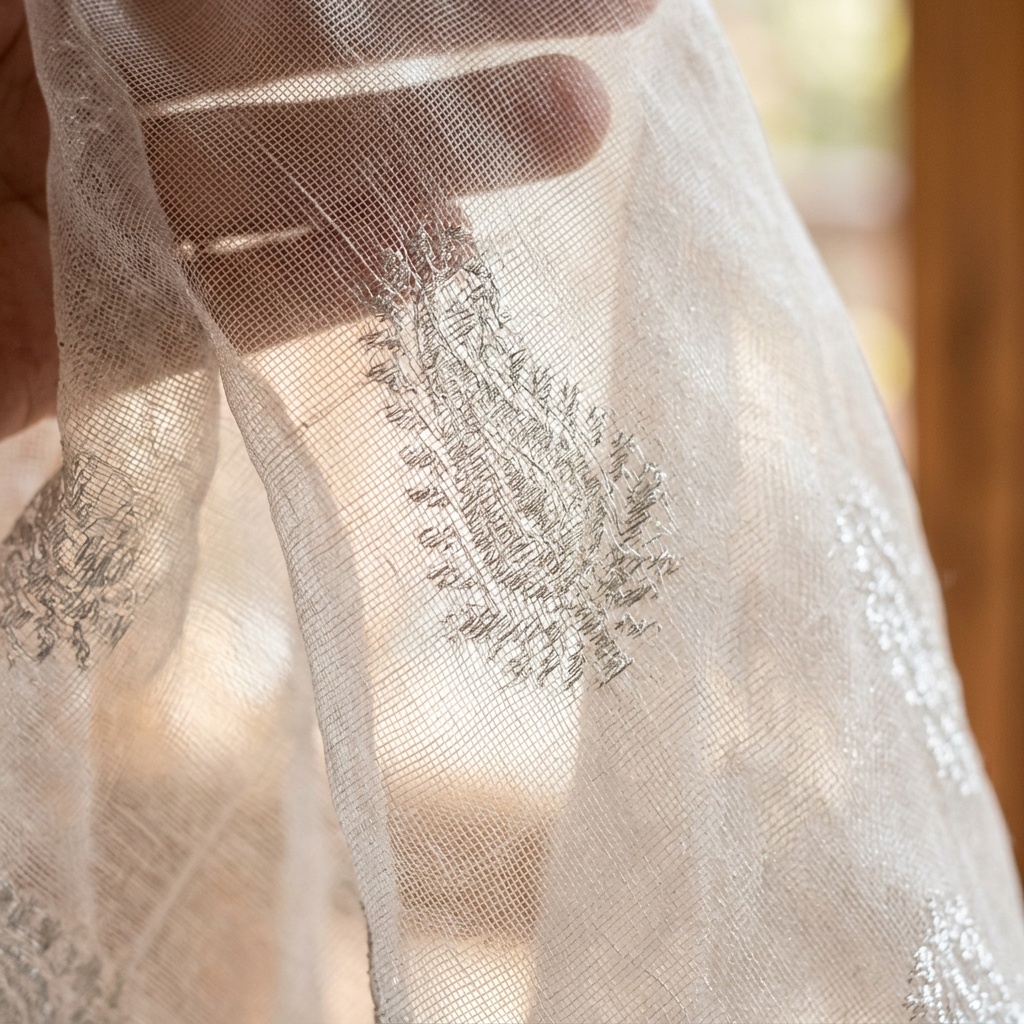
Organza sarees often feature subtle cutwork or delicate silver zari. The fabric creates natural volume. It requires a confident wearer who understands that the saree is meant to look airy and sculptural, not fitted.
- The Drape: Crisp and voluminous. It does not flow; it holds its shape.
- Best For: Daytime events, summer festivities, and modern, minimalist styling.
Tissue Banarasi: The Woven Gold
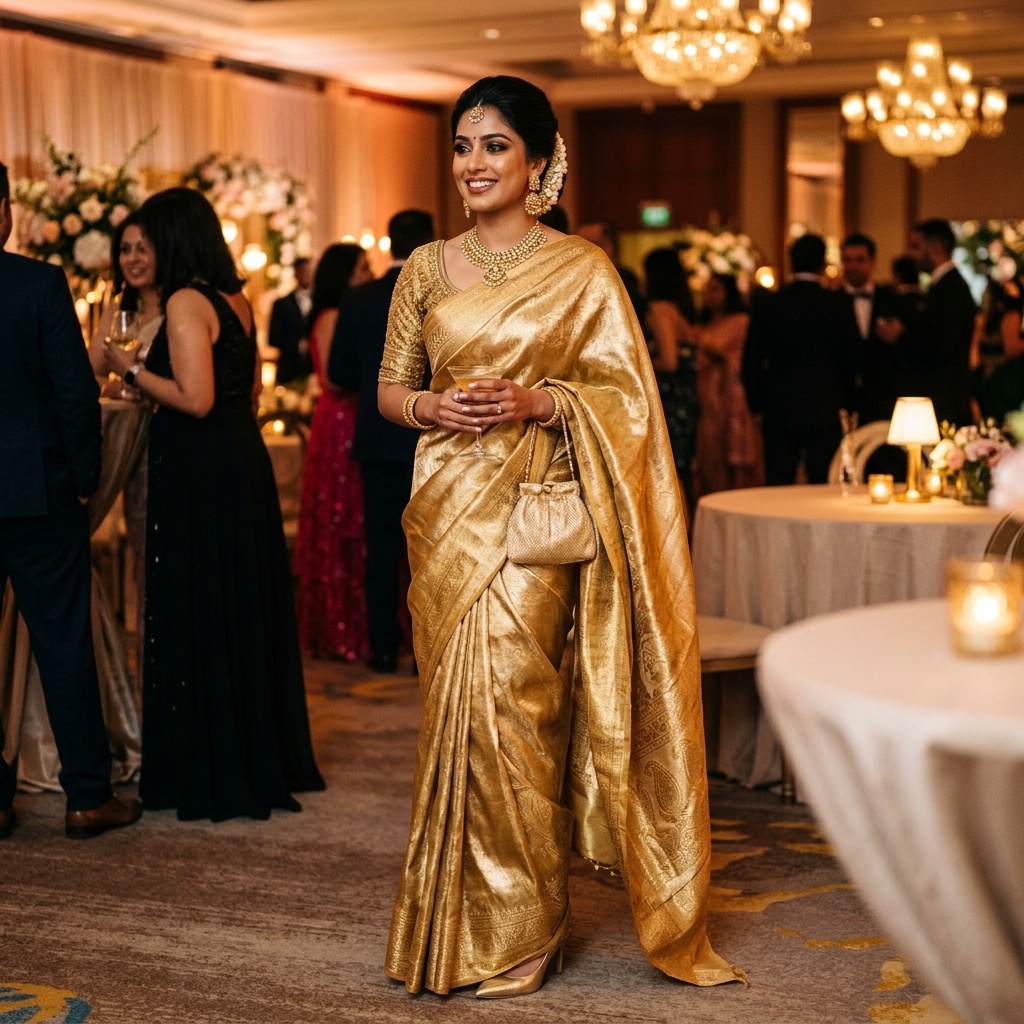
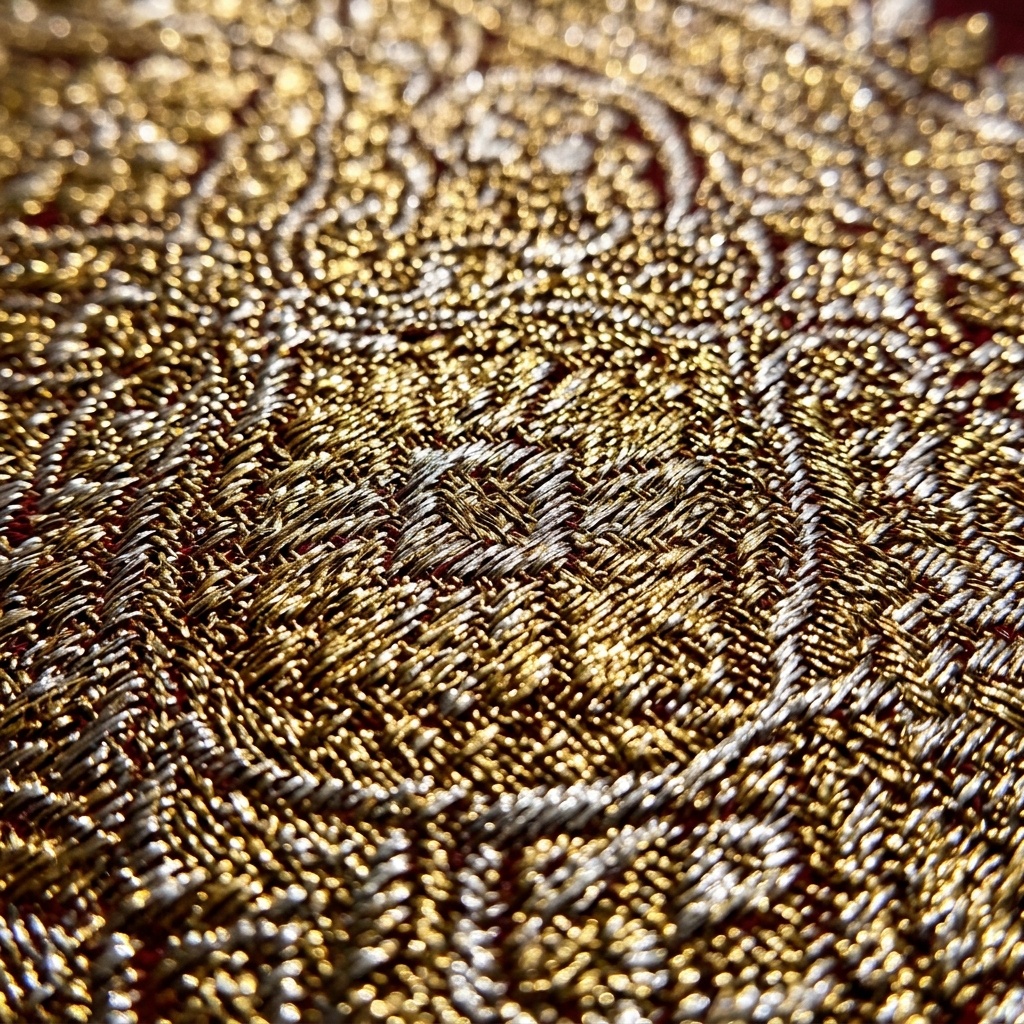
Tissue sarees are reserved for the most significant family milestones. They have a stiffer drape than Katan due to the density of the metallic threads, catching the light from every angle.
- The Drape: Stiff, sculptural, and undeniably heavy.
- Best For: Evening receptions and the bride's main trousseau.
How to Choose Your Fabric
Do not buy a saree just because the motifs look beautiful on a screen. Consider how you want it to feel when you wear it.
- If you want volume and tradition, choose Katan.
- If you want a saree that hugs your curves and flows, choose Georgette.
- If you are attending a morning event in high heat, choose Organza.
- If you want maximum impact and metallic shine, choose Tissue.
Caring for Handloom Silk
A pure handloom Banarasi silk saree will outlive you if treated correctly. Never hand-wash or machine-wash these fabrics; dry clean only. Store them wrapped in unbleached cotton cloth, away from direct sunlight and moisture. Most importantly, never spray perfume directly on the silk or zari. The alcohol will permanently tarnish the metallic threads.
The weavers in Chowk have spent centuries perfecting how silk behaves on the loom. When you know what you are looking for, you stop buying just a piece of cloth and start buying a textile engineered for your exact needs.
Frequently Asked Questions
Q: Which Banarasi saree fabric makes you look slim? A: Pure Banarasi Georgette is the most flattering for a slimming effect. Because of its highly twisted yarns, it drapes fluidly and clings to the body, unlike Katan or Organza which create volume.
Q: Is Katan silk the same as pure silk? A: Katan is a specific type of pure silk yarn. It is made by twisting multiple pure silk filaments together for durability. So while all Katan is pure silk, not all pure silk is Katan.
Q: Can you wear a Banarasi saree in the summer? A: Yes. For summer events, choose Banarasi Georgette or Organza silk. They are lighter and more breathable than heavily brocaded Katan silk.
Q: Why is Tissue Banarasi so stiff? A: Tissue fabric is woven with metallic zari threads running continuously through the warp or weft. This metal content gives the fabric its signature stiffness and brilliant shine.
Continue Reading
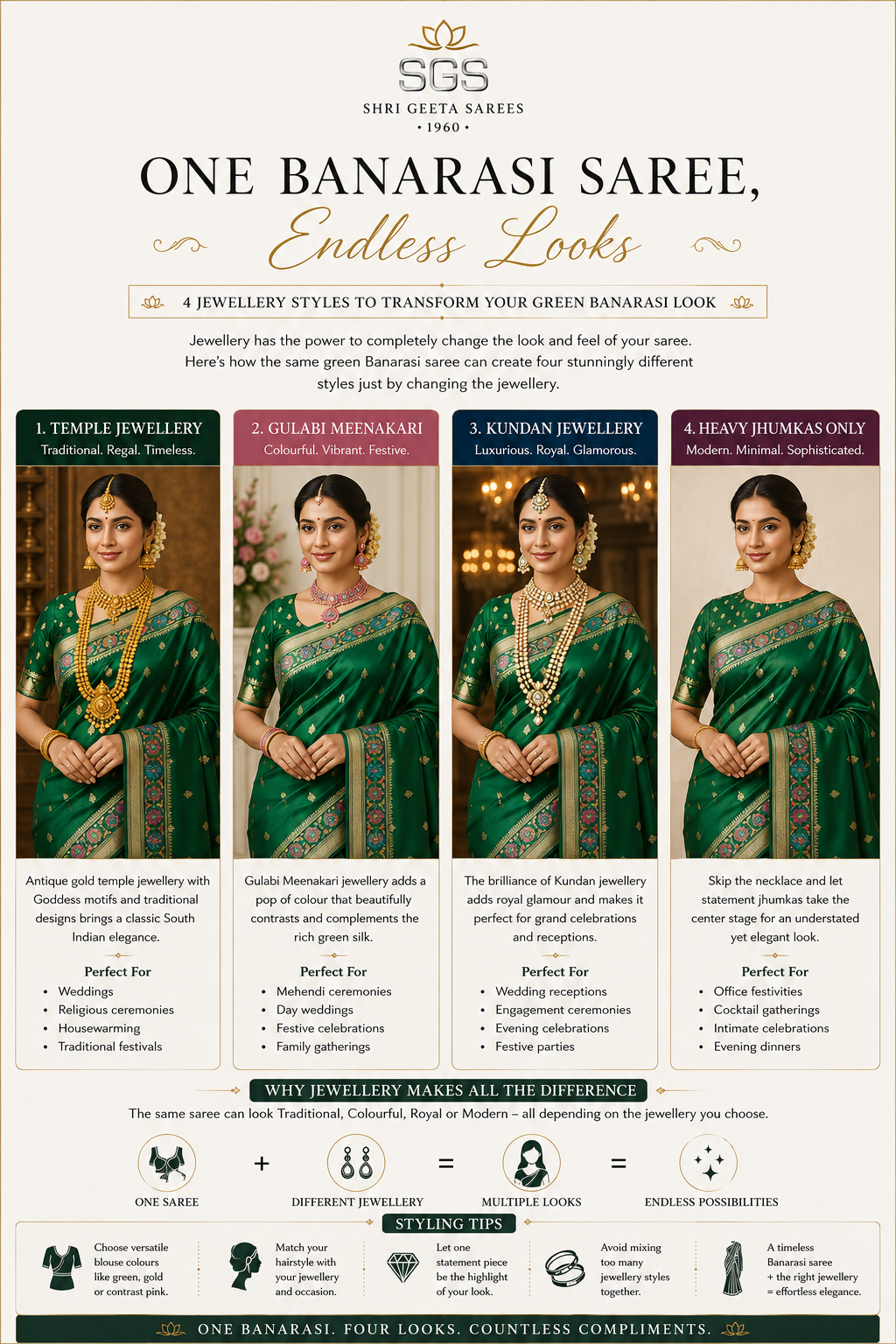
How One Banarasi Saree Can Create 4 Completely Different Looks
A beautiful Banarasi silk saree is one of the most versatile pieces in your wardrobe. Discover how to create four stunning looks just by changing your jewellery.
How to Evaluate a Banarasi Saree Wholesaler: A Boutique Buyer's Guide
A boutique owner's guide to vetting a Banarasi saree wholesale supplier — what to check for authenticity, consistency, and long-term reliability.
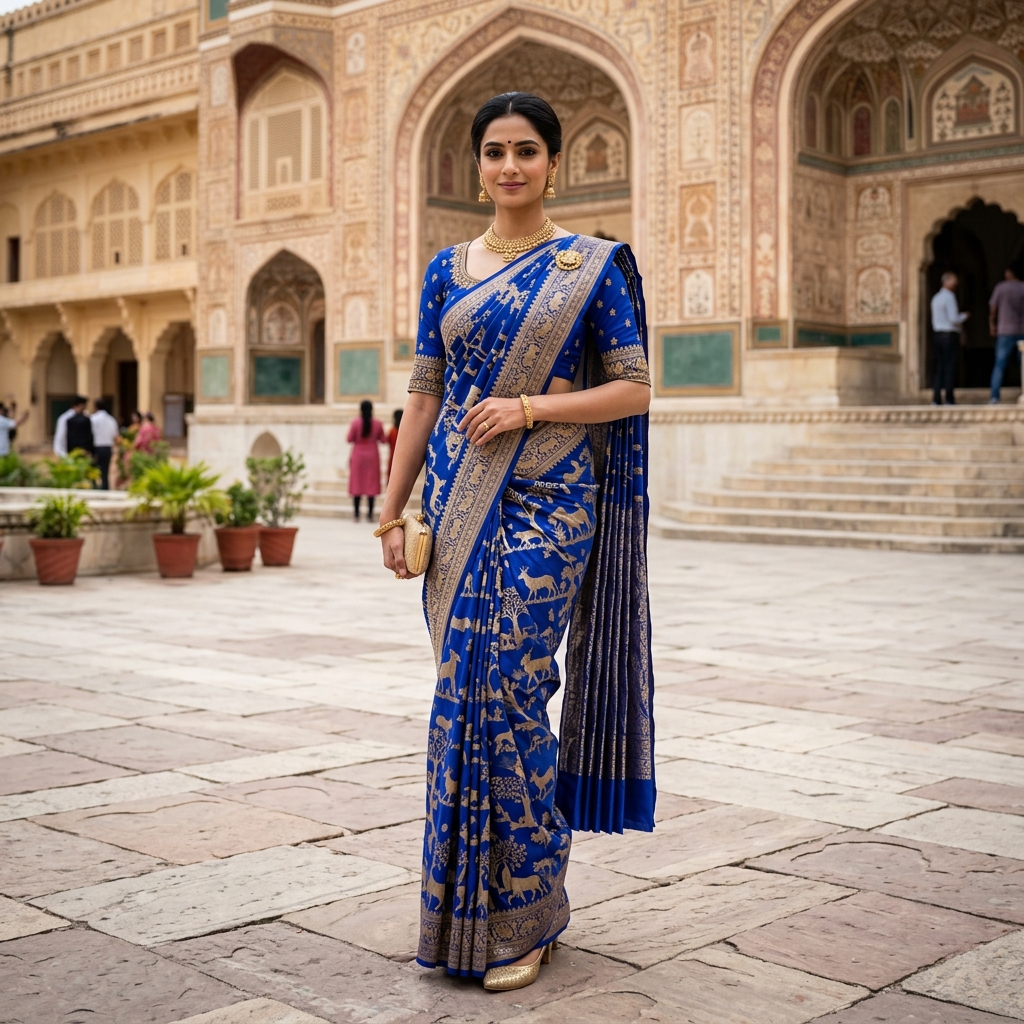
4 Elegant Ways to Drape a Banarasi Saree | Shri Geeta Sarees
Looking for new ways to wear your handwoven Banarasi saree? Discover 4 elegant and easy styling methods, from classic traditional to modern reception drapes.
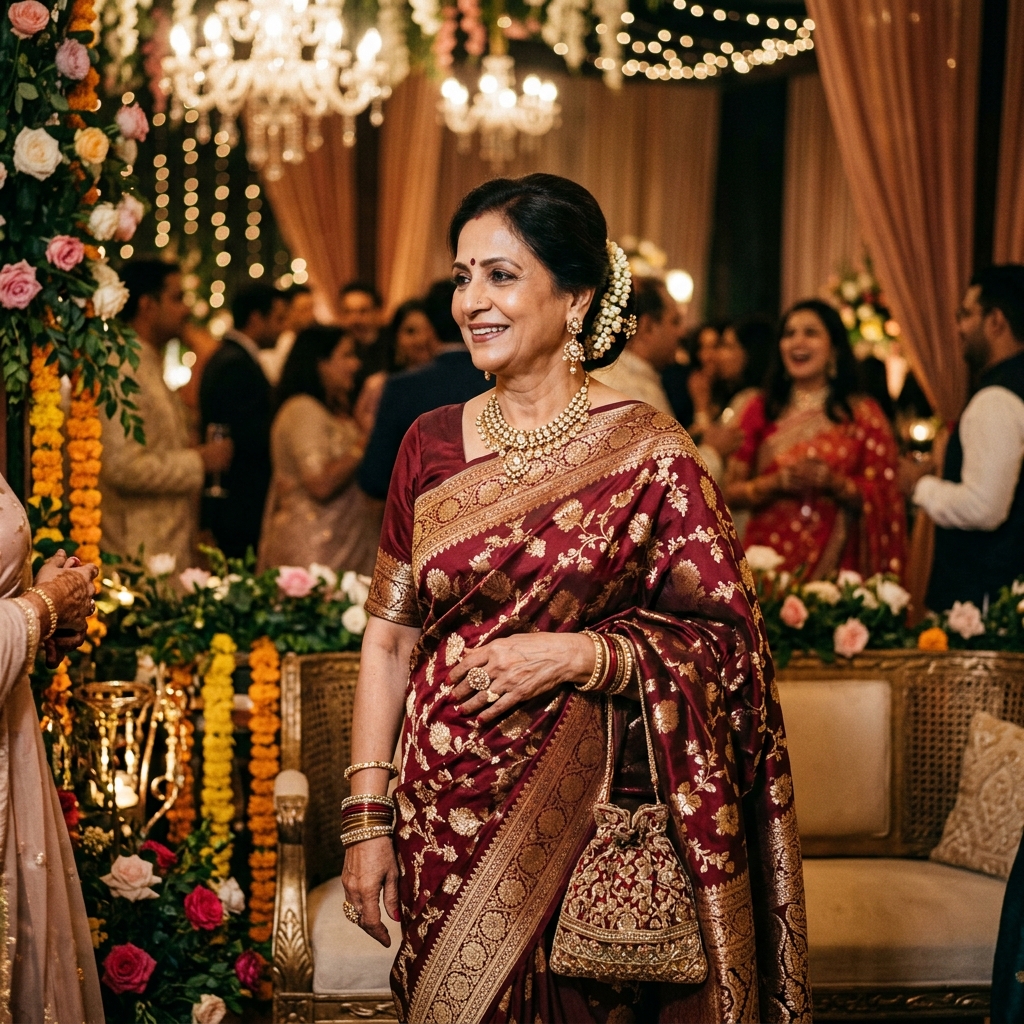
Banarasi Saree for Mother of the Bride: A Guide to Getting It Right
A comprehensive guide to choosing the perfect Banarasi saree for the mother of the bride, covering colors, weaves, and styling advice.