Handloom vs. Powerloom Banarasi: How to Actually Tell the Difference
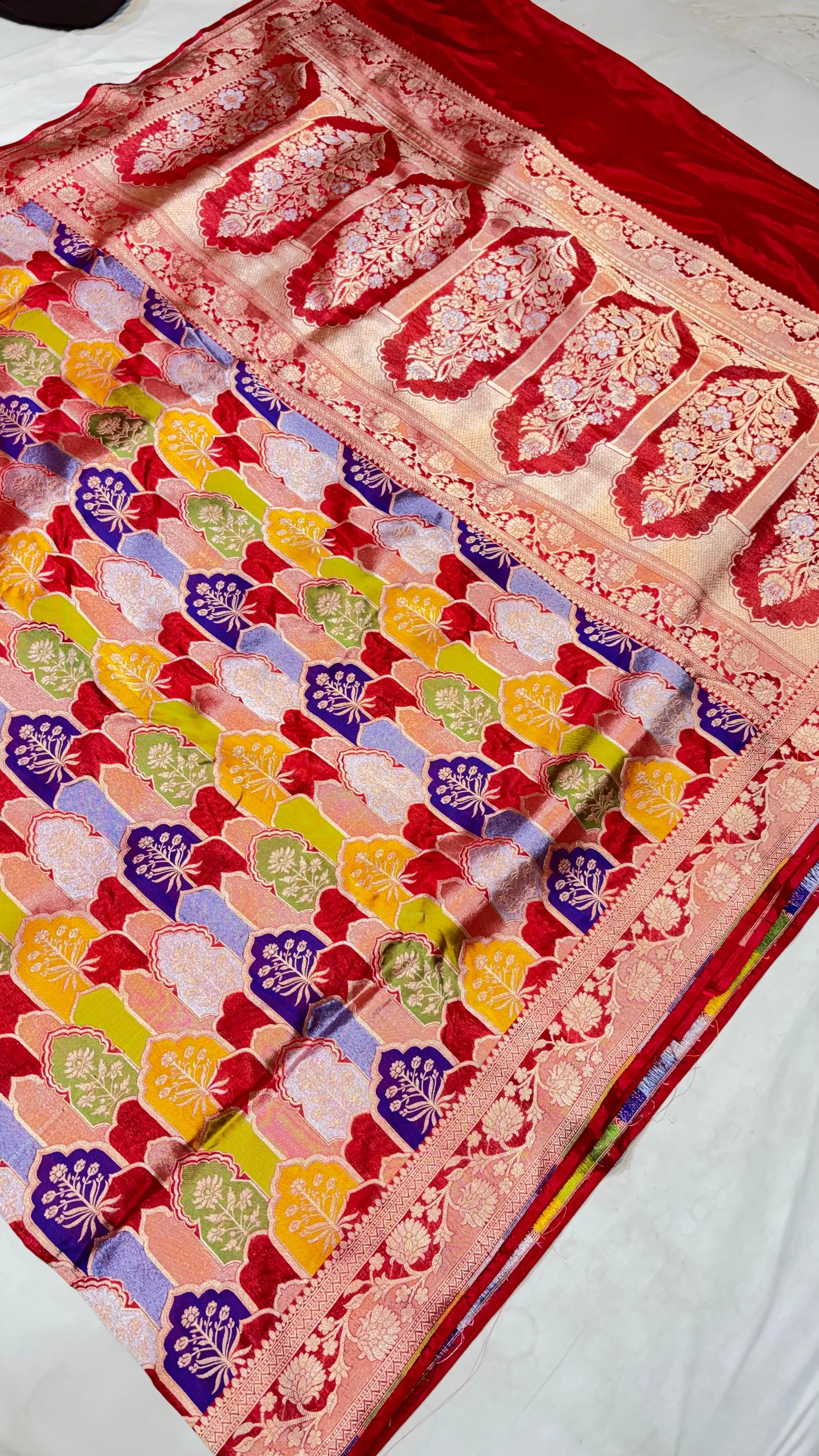
If you are shopping for a Pure Banarasi Silk Saree today, you are walking into a minefield. The market is currently flooded with extremely convincing, mass-produced machine copies being passed off as authentic handwoven textiles.
The assumption is that unless you are a weaver yourself, you cannot tell the difference. Unscrupulous sellers rely heavily on this assumption to sell you a $100 machine-made fabric for $1,000.
But distinguishing a true Handloom Banarasi Saree from a powerloom copy does not require a degree in textile design. It simply requires knowing exactly where to look.
Here is the exact framework we use at Shri Geeta Sarees to authenticate a weave.
1. The Reverse Side Anomaly
When you are handed a saree, immediately flip it over.
Powerloom machines operate with brutal efficiency, leaving the reverse side of the fabric incredibly smooth and uniform. Because a machine cuts the threads mechanically, the back will often look completely clean or have perfectly uniform fuzzy cut ends.
An authentic handloom saree is woven by a human being tossing a wooden shuttle back and forth. This manual process leaves "floats"—longer loops of thread bridging the motifs—or slightly uneven cutwork if the weaver manually snipped the excess threads. It should not look perfectly uniform. Human hands leave a beautiful, slightly chaotic signature on the reverse side.
2. The Pin Marks on the Selvedge
Look at the selvedge—the plain, unpatterned border running along the extreme top and bottom edges of the saree.
Powerlooms hold the fabric under immense, automated tension using a system of harsh metal pins. If you look closely at the selvedge of a powerloom saree, you will frequently see a continuous line of tiny, perfectly spaced pinholes.
Handlooms use traditional wooden beams and different tensioning systems that do not leave these aggressive, mechanical track marks.
3. The Fluidity of the Drape
True handloom silk is organic and pliant. It yields to the body. Even a heavy Katan silk will eventually mold to your shoulder and fall in deep, natural pleats.
Powerloom sarees are fundamentally rigid. To survive the violent tension of a mechanical loom, the yarn must be extremely strong. Consequently, powerloom weavers often mix synthetic fibers like polyester into the silk to prevent it from snapping. This synthetic blend, combined with the extreme mechanical tension, makes the saree stiff. If the pleats bounce back aggressively or stand away from your body like paper, you are likely holding a powerloom copy.
The Pricing Reality
There is no such thing as an authentic, pure silk Handloom Banarasi Saree for a few thousand rupees. A human artisan spends anywhere from 15 to 45 days meticulously weaving a single piece. If a seller offers you a massive discount on what they claim is a pure handloom bridal piece, the price itself is the red flag.
You do not have to be an expert to buy authentic Banarasi. You just need to refuse to be blinded by the front of the fabric, and start inspecting the back.
Frequently Asked Questions
Are powerloom sarees bad? No, powerloom sarees are highly affordable and accessible. The issue is not their existence; the issue is fraud—selling them at premium handloom prices to unsuspecting buyers.
Can a burn test prove a saree is handloom? A burn test only proves if the yarn is pure silk or synthetic (pure silk smells like burning hair and turns to ash; synthetics melt like plastic). It does not prove how the fabric was woven.
Do all handloom sarees have uneven borders? While they shouldn't be defective, a handloom saree will have subtle, organic inconsistencies in the tightness of the weave along the borders, unlike the laser-straight precision of a machine.
Continue Reading
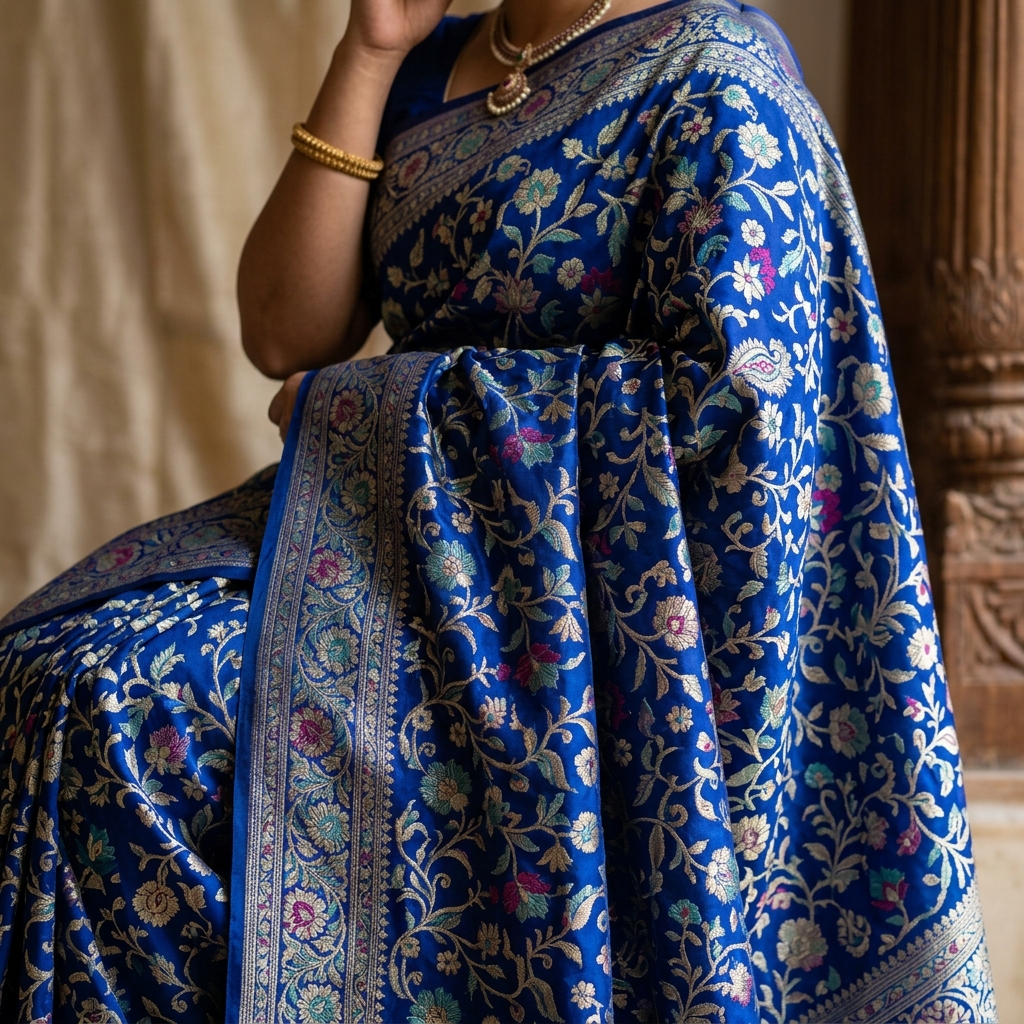
What is Fekwa (Fakua/Cutwork) in Banarasi Sarees?
Learn about Fekwa (or Fakua/Cutwork), an authentic Banarasi weaving technique that creates beautiful floral motifs and jaal patterns. Find out why it's more affordable without compromising quality.

The Silk Route Through Varanasi: History of Banarasi Weaving
Trace the centuries-old journey of silk into Varanasi — from ancient trade routes to Mughal courts to the handloom houses of today.
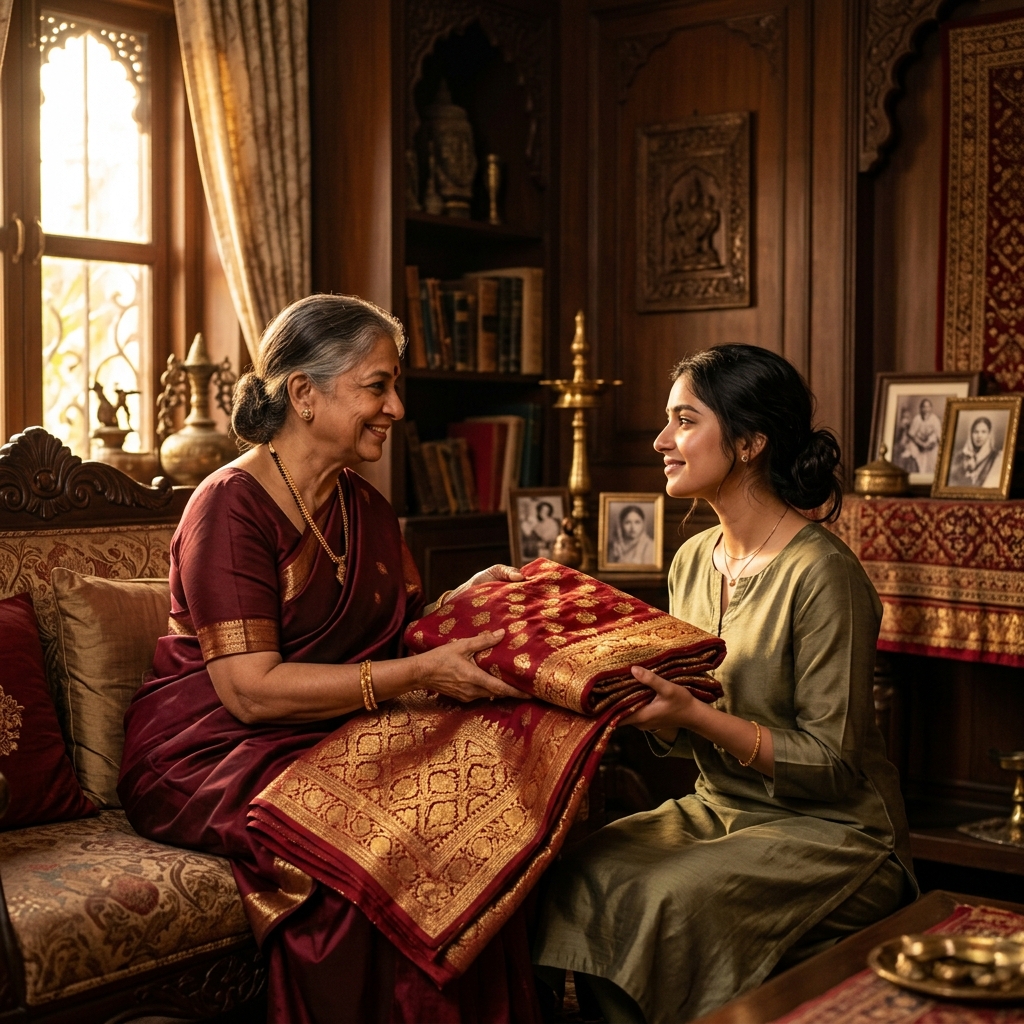
The Banarasi Saree as a Family Legacy: An Heirloom Woven in Silk
Explore the tradition of passing down Banarasi sarees, the craftsmanship that makes them endure, and how to preserve a vintage Banarasi silk saree as a family legacy.
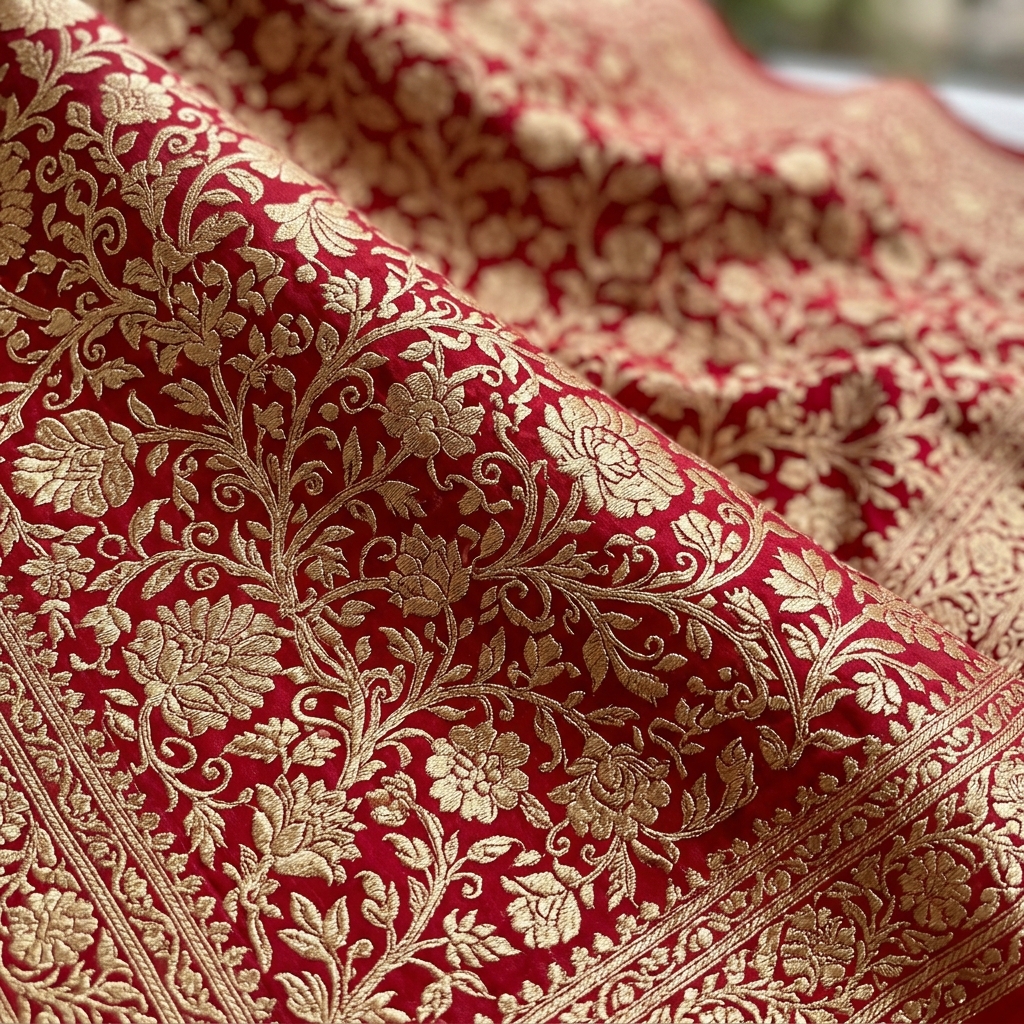
What is a Banarasi Saree Motif? A Guide to Buta, Jaal, and Paisley Patterns
Understand the language of Banarasi saree motifs — from the mango-shaped buta to the trellis-like jaal. A weaver's guide to reading pattern, symbolism, and craft.
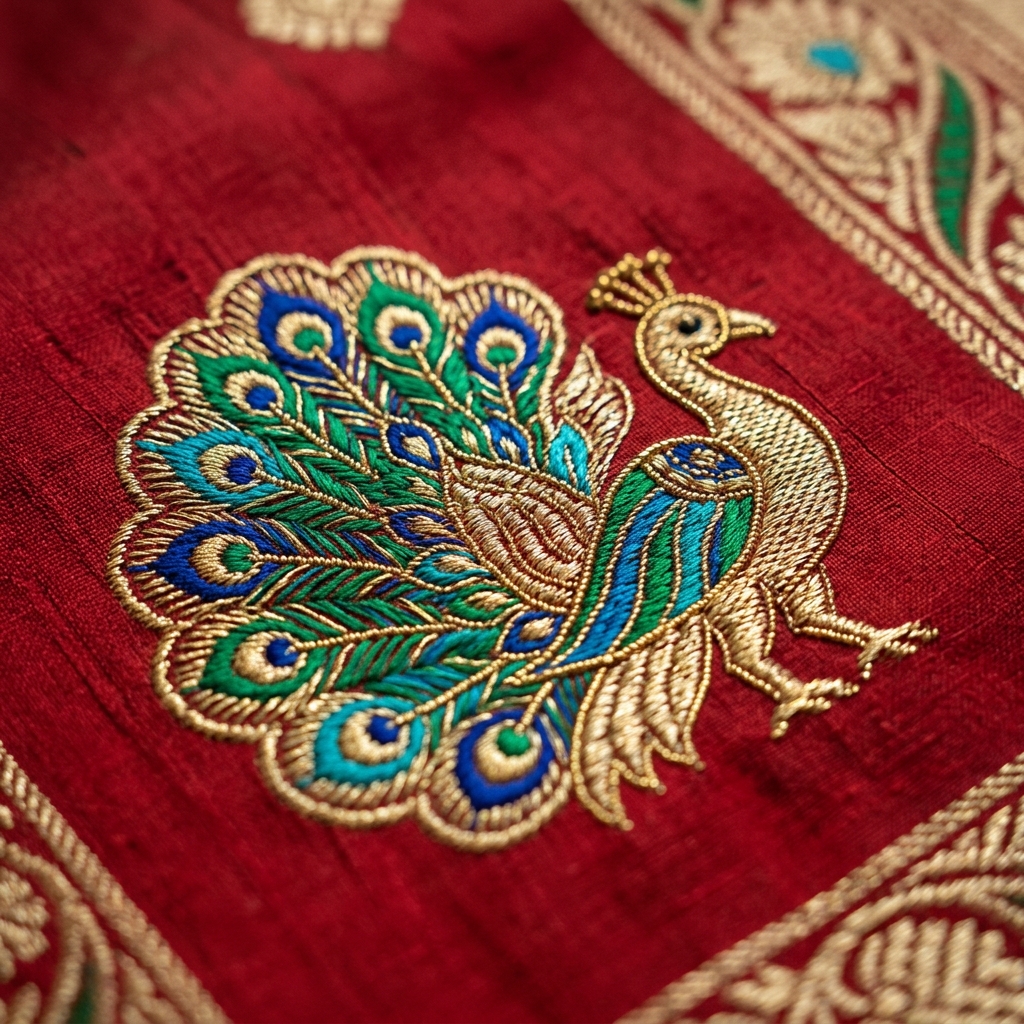
What is a Kadhua Banarasi Saree?
Discover the art of Kadhua Banarasi sarees — individually woven motifs, no loose threads, and an embossed 3D finish. Learn about Meenakari vs Sonarupa and why Kadhua is the pinnacle of Banarasi craftsmanship.