
13 Saree Styling Tips for an Elegant, Effortless Look
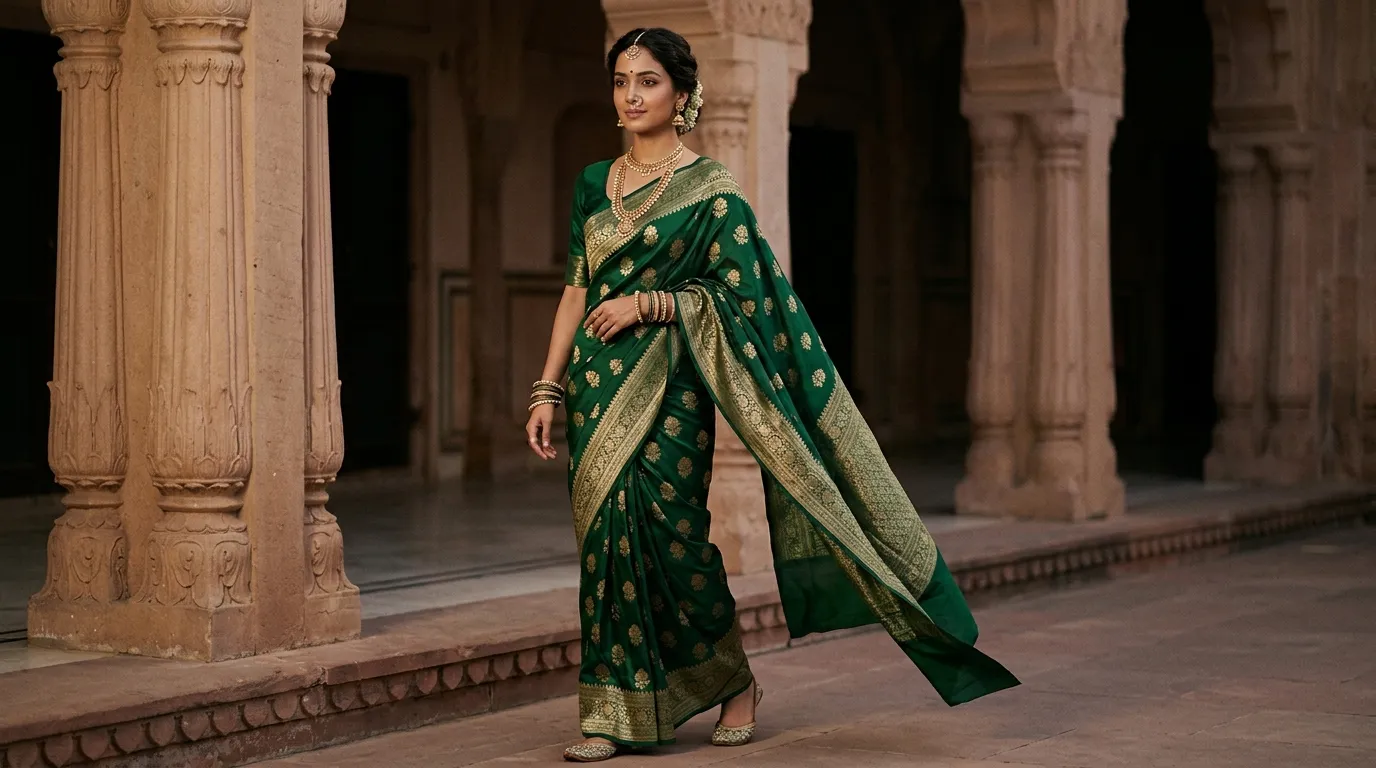
It is widely accepted that styling a saree for a grand occasion requires dramatic makeup, towering heels, and heavy layers of jewelry. Many women believe that a simple drape is not enough to stand out at a formal event or wedding, and they overcompensate by adding more accessories, heavier blouses, and complex draping techniques.
Although this maximalist approach is popular, it often creates a cluttered look. It is an anomaly in modern styling that true luxury is often buried under excess. The reality is quite the opposite: a beautiful saree does not need excessive styling to make an impression.
The secret to elegance is often in the restraint and the details: a well-fitted blouse, clean pleats, carefully selected jewelry, and a pallu that falls naturally. When these elements are perfectly balanced, even a richly woven pure silk katan saree feels effortless and refined.
Whether you are styling Banarasi sarees for weddings and festive occasions or wearing a lighter drape for an intimate gathering, these 13 simple tips can help you create a highly polished, commanding look.
1. Start with the Saree
Let the saree guide your entire styling direction. A richly woven Banarasi with an elaborate zari border or heavy pallu already possesses plenty of visual weight. It requires only a simple blouse and carefully chosen jewelry. Conversely, with a simpler, understated saree, you have much more freedom to introduce statement accessories or a heavily embroidered blouse. Think balance, not more.
2. Choose Colours That Complement You
A saree colour should work with your complexion, the specific occasion, and the mood you want to create. Deep jewel tones can feel incredibly dramatic and traditional, while ivory, blush, pastel, and muted shades create a softer, ethereal look. With Banarasi sarees, it is reported by stylists that you must consider how the zari interacts with the base colour. Gold zari warms a colour, while silver-toned detailing creates a cooler, highly contemporary impression.
3. Get the Saree Length Right
Your footwear must always be decided before you finish the drape. The saree should lightly skim the floor without dragging or revealing your ankles. A small heel can help create a graceful, elongated fall, but comfort matters more than height. The right length creates a clean, uninterrupted line from the waist to the floor.
4. Keep the Front Pleats Neat
Neat pleats can instantly make any saree look significantly more polished. Keep them reasonably even and strictly aligned so that they fall vertically rather than spreading out clumsily around the waist. With heavier silks and pure tissue sarees, avoid creating unnecessary bulk. Allow the rich fabric to retain its natural architectural structure.
5. Give the Pallu Some Attention
The pallu is one of the most noticeable and photographed parts of a saree drape. For a classic, refined look, try neatly pleating it and keeping the exquisite border visible. For a softer, more relaxed appearance, a gracefully open pallu can work beautifully. With an intricately woven Banarasi, avoid hiding the pallu—it is where the master weaver's finest craftsmanship is often displayed.
6. Choose a Well-Fitted Blouse
A blouse should structurally support the saree, not distract from it. Pay close attention to the shoulders, armholes, bust fit, and sleeve length. A meticulously fitted blouse creates a clean upper-body silhouette and makes the entire drape appear finished and bespoke. For a heavily woven saree, a minimalist, beautifully tailored blouse will often look more luxurious than an overly embellished one.
(For detailed advice tailored to fuller figures, explore our dedicated guide on how to style a saree for a heavy bust: blouse necklines, fits & draping tips).
7. Use the Blouse Neckline to Create Balance
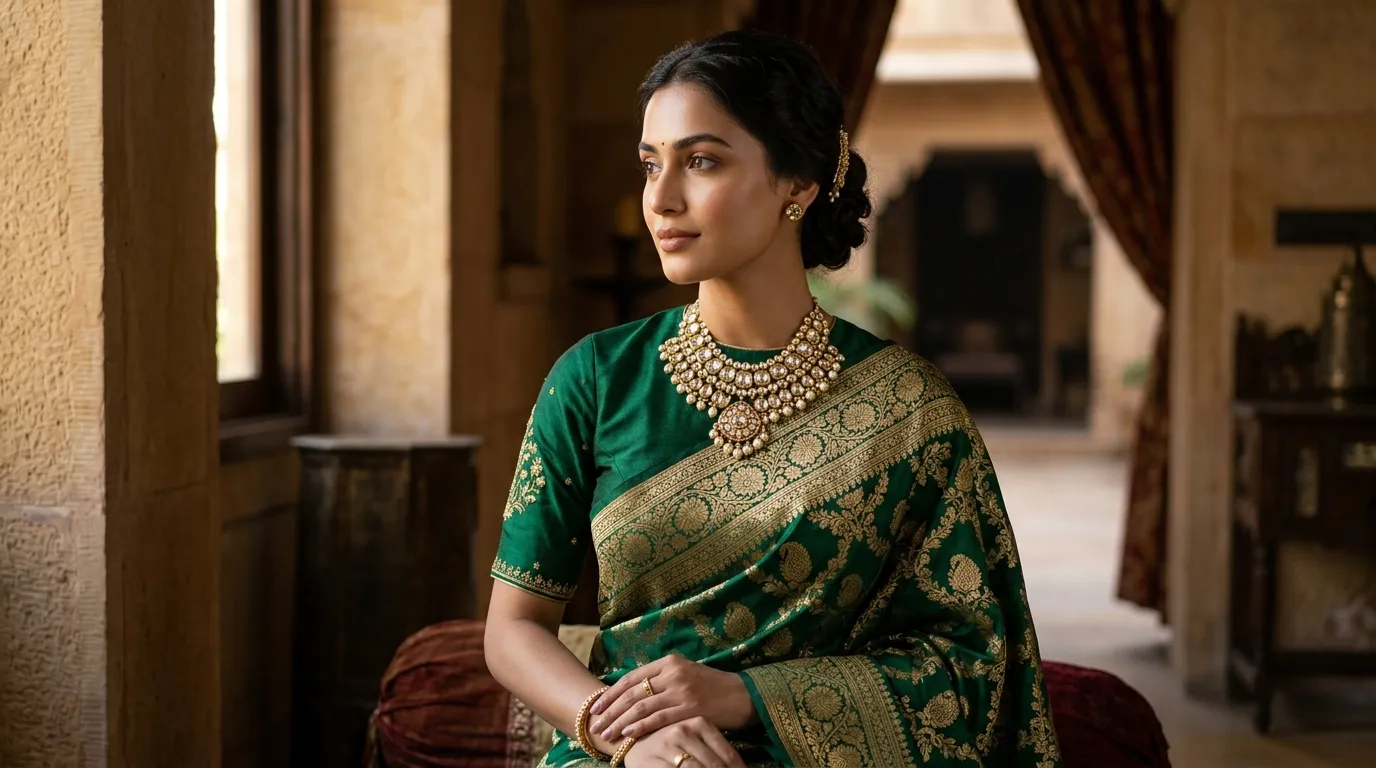
The neckline dictates the visual character of the entire saree look. V-necks can introduce an elongating vertical line, while rounded or sweetheart necklines create a softer, classic impression. Higher necklines or boat necks look particularly elegant when paired exclusively with statement earrings and a bare neck. There is no single perfect neckline; you must choose one that works proportionately with your face shape, hairstyle, jewelry, and the drape.
8. Let One Piece of Jewellery Lead
You do not need to wear every piece of jewelry you own at once. If the saree is elaborate, consider making the earrings, a statement necklace, or a stack of bangles the main focal point, keeping the rest intentionally understated. For traditional Banarasi sarees, pearls, antique gold, kundan, and heritage-inspired jewelry complement the woven textile beautifully. One strong focal point is widely accepted as more elegant than many competing ones.
9. Consider a Waist Belt or Kamarbandh
A slim metallic or fabric belt can give a contemporary saree drape much-needed structure, while a traditional kamarbandh reinforces a royal heritage look. The key here is proportion. If the saree already has heavy zari or large, intricate motifs, choose a sleek belt that adds definition to the waist without competing visually with the handloom weaving.
10. Choose the Foundation Carefully
What lies underneath dictates exactly how the saree falls. A well-fitted, structured petticoat or seamless saree shapewear creates a smooth foundation without adding unnecessary volume around the hips. The aim is not to artificially change your body; it is simply to help the silk fabric fall as cleanly and elegantly as possible.
11. Keep the Accessories in Conversation with the Saree
Think of your complete outfit as one cohesive composition. Your blouse, jewelry, footwear, handbag, and hairstyle must communicate with the saree rather than each demanding individual attention. If the saree has a vibrant colour or highly intricate weaving, quieter, more neutral accessories allow the loom craftsmanship to remain the undisputed focal point.
12. Secure the Drape, But Don't Over-Pin It
A few discreet safety pins are essential to keep the pleats and pallu securely in place, especially during a long, active event. However, excessive pinning makes the saree stiff and completely restricts its natural movement and flow. Before leaving, check the pleats, pallu, border, and waistline. A quick five-minute adjustment in front of a mirror can make a significant difference.
13. Let Your Posture Finish the Look
The final, most critical styling element is something you cannot buy: how you carry yourself. Stand comfortably, relax your shoulders, and allow the heavy silk saree to move naturally with your body. When the drape is comfortable and secure, you are significantly less likely to keep nervously adjusting it throughout the event. That quiet confidence is what ultimately makes a saree look elegant.
The SGS Rule: Balance Over Excess
There is no single saree styling formula that perfectly works for everyone. The most beautiful, iconic looks always come from understanding the saree first and then choosing everything around it thoughtfully.
A richly woven Banarasi may need nothing more than a beautifully fitted blouse and a few select pieces of heirloom jewelry. Conversely, a simple, solid-coloured saree may invite a heavily embroidered statement blouse or dramatic, cascading earrings.
The goal is not to strictly follow every passing styling trend. It is to create a harmonious relationship between the saree, the woman wearing it, and the occasion itself. True elegance is rarely about doing more; it is about making every single detail count.
Quick Saree Styling Checklist
Before you step out, verify:
- Is the saree length right for your footwear?
- Are the pleats perfectly neat and aligned?
- Is the pallu sitting comfortably on your shoulder?
- Does the blouse fit impeccably?
- Is there one clear jewelry focal point?
- Do the accessories and saree complement each other?
- Can you move freely and comfortably?
If yes, you are ready. Drape thoughtfully, style intentionally, and let the saree speak.
Continue Reading
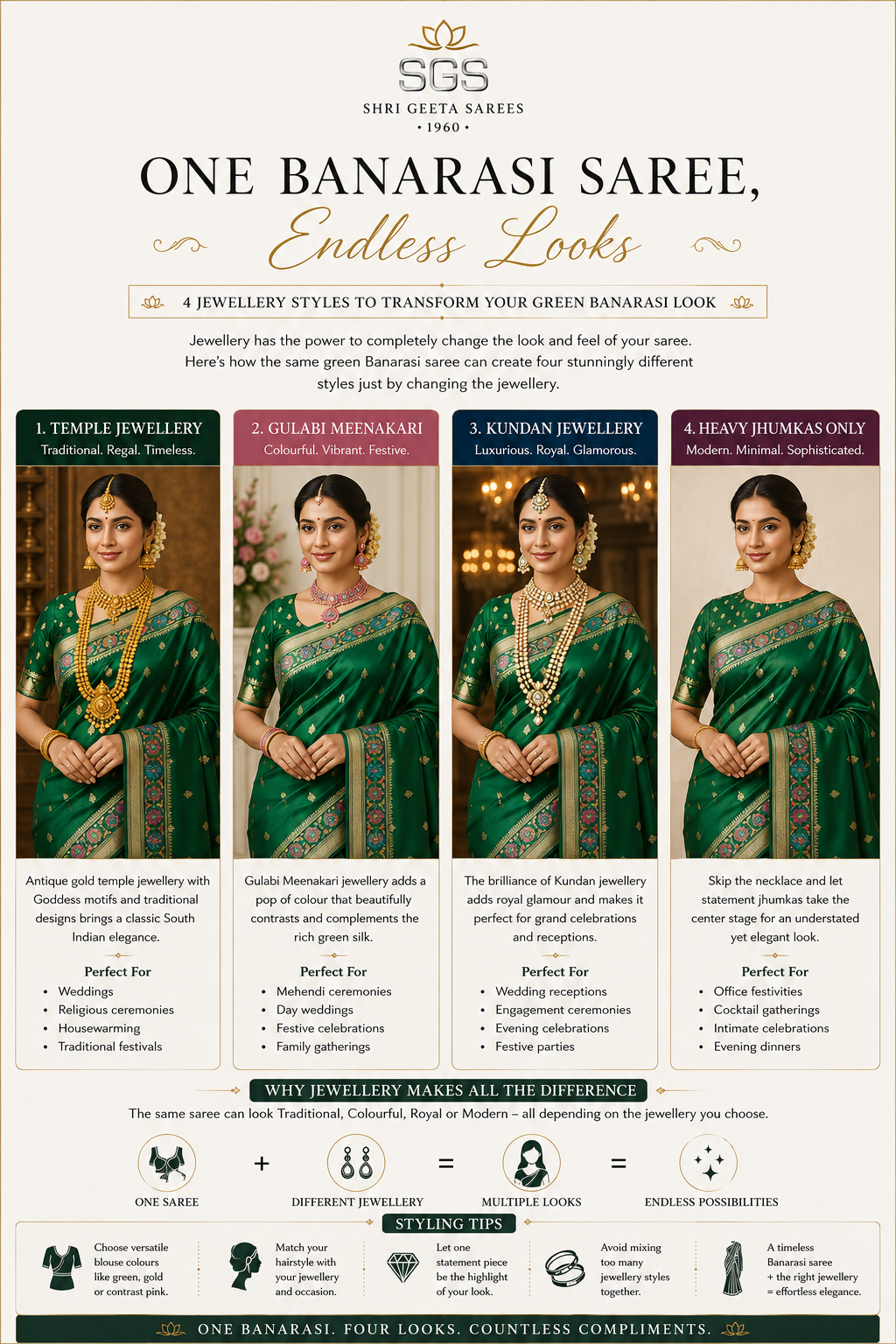
How One Banarasi Saree Can Create 4 Completely Different Looks
A beautiful Banarasi silk saree is one of the most versatile pieces in your wardrobe. Discover how to create four stunning looks just by changing your jewellery.
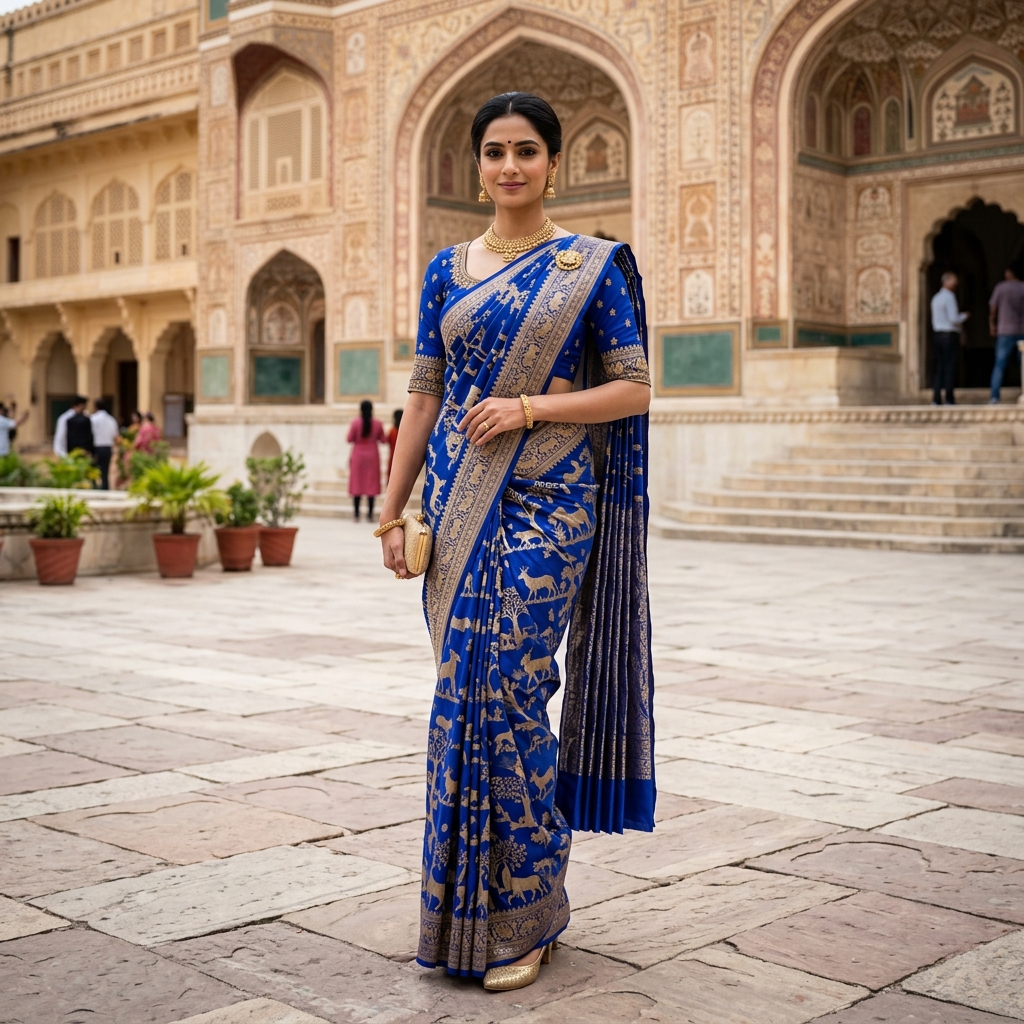
4 Elegant Ways to Drape a Banarasi Saree | Shri Geeta Sarees
Looking for new ways to wear your handwoven Banarasi saree? Discover 4 elegant and easy styling methods, from classic traditional to modern reception drapes.
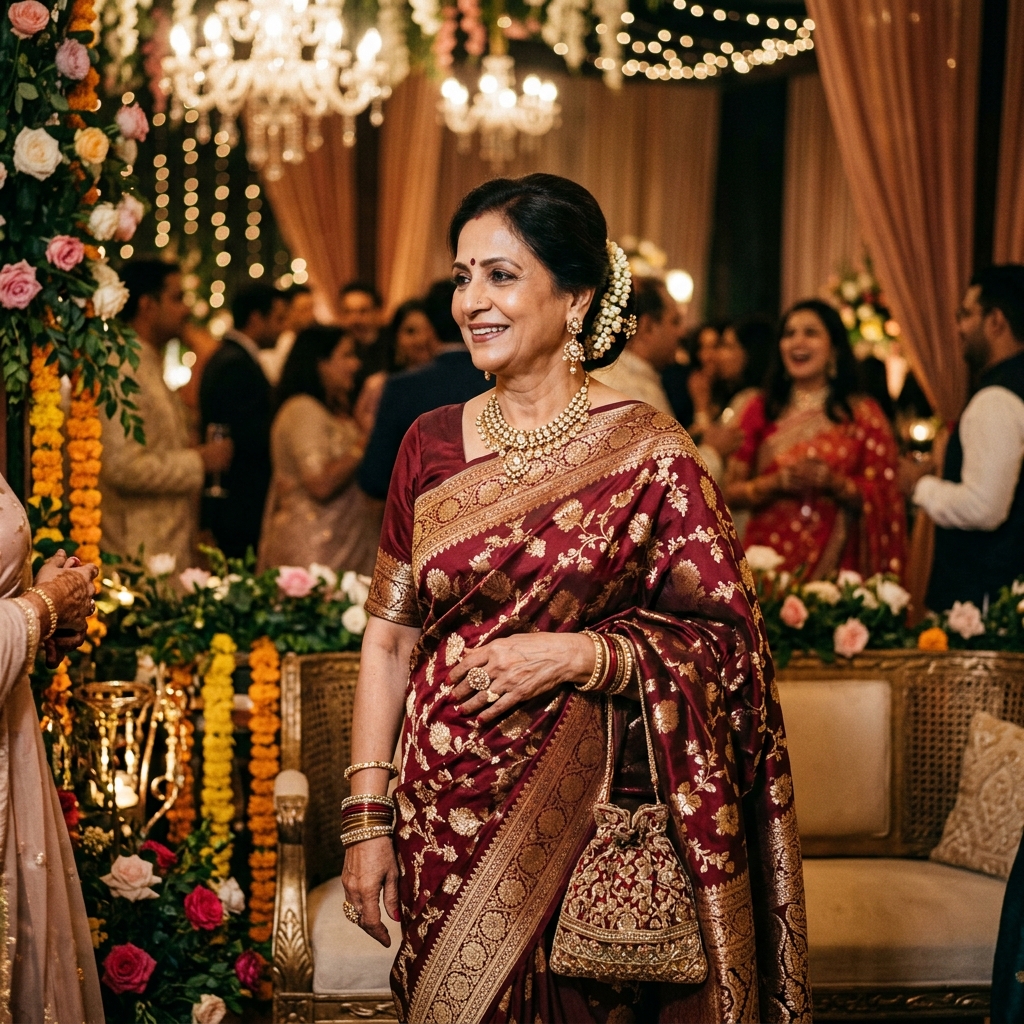
Banarasi Saree for Mother of the Bride: A Guide to Getting It Right
A comprehensive guide to choosing the perfect Banarasi saree for the mother of the bride, covering colors, weaves, and styling advice.
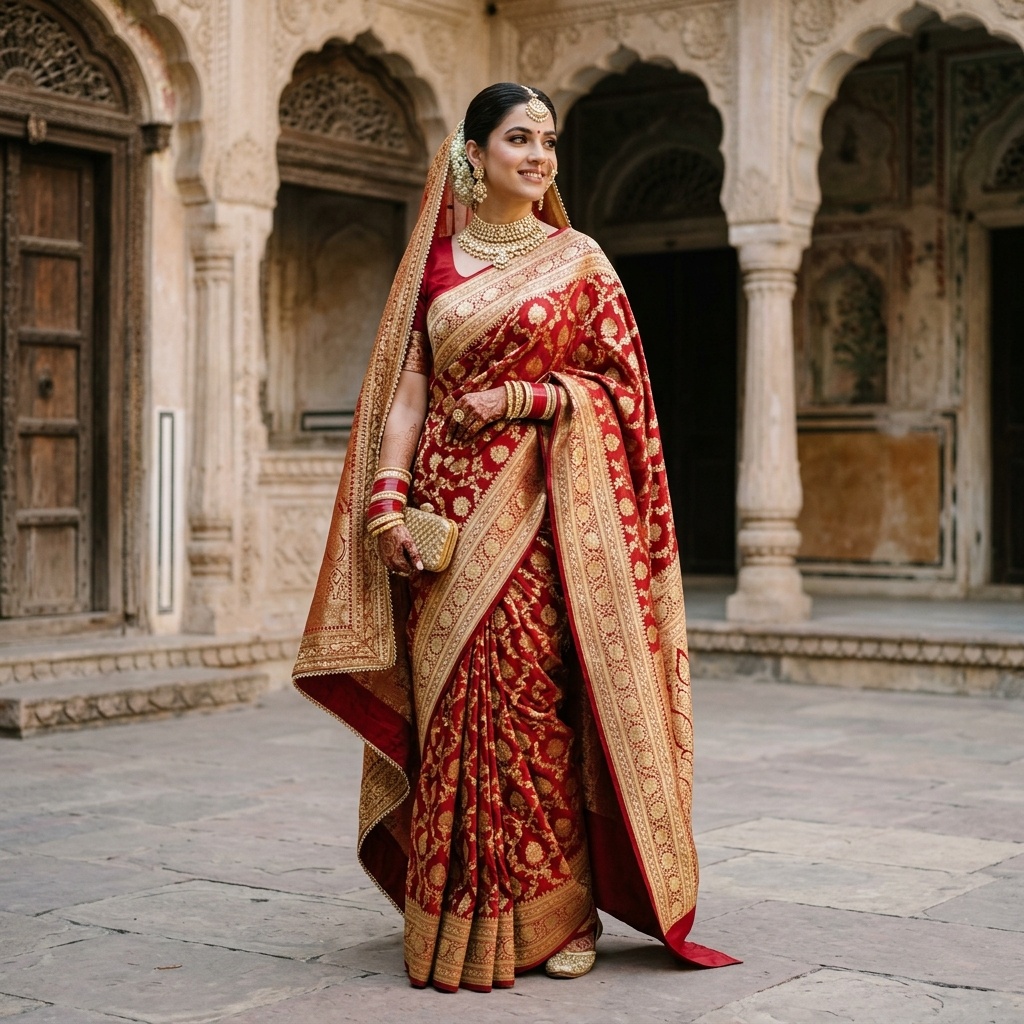
Types of Banarasi Silk: Katan, Georgette, Organza & Tissue Explained
Confused by Banarasi saree fabrics? A Varanasi weaver explains the exact difference in drape, weight, and styling for Katan, Georgette, Organza, and Tissue silk.