How to Style a Saree for a Heavy Bust: Blouse Necklines, Fits & Draping Tips
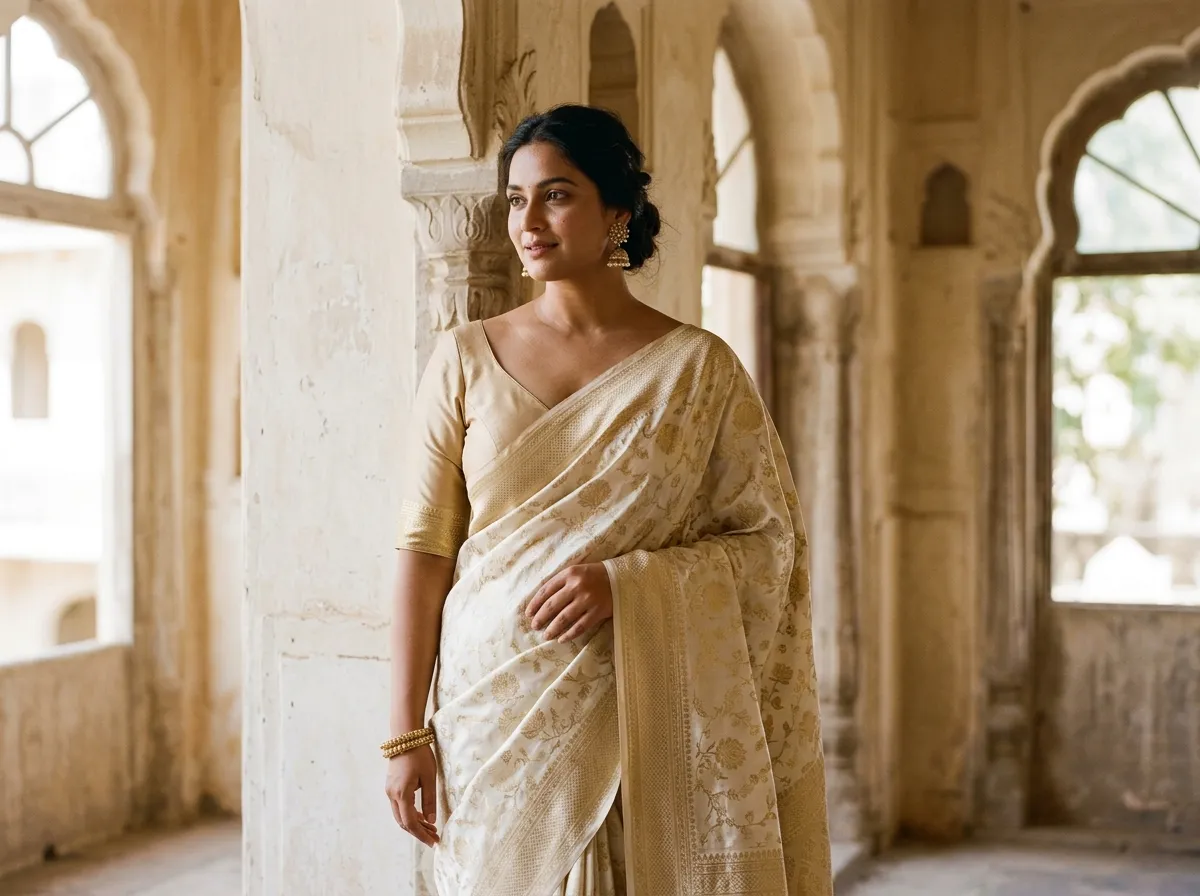
It is widely accepted that women with a fuller or heavy bust should try to "hide" their upper body under layers of loose fabric, high-collared necklines, or oversized drapes. Many women believe that having a larger bust restricts them from wearing majestic, richly woven sarees like authentic Banarasi silks, fearing that heavy fabrics will make them look bulky or disproportionate.
Although this conservative instinct is understandable, it is an anomaly in styling: trying to cover up with high collars, stiff fabrics, and loose drapes actually exaggerates upper-body volume.
The reality is quite the opposite. The goal is never to hide your body—it is about structural support, vertical elongation, and architectural balance. When tailored with precision and draped with intention, a saree creates one of the most flattering, statuesque, and elegant silhouettes in all of fashion.
Whether you are mastering our 13 Saree Styling Tips for an Elegant, Effortless Look or preparing for a grand wedding, here is the complete master guide to blouse necklines, structural tailoring, fluid fabric choices, and draping techniques for a heavy bust.
1. Best Blouse Necklines for a Heavy Bust (The Science of Vertical Lines)
The neckline is the single most critical structural element of your saree blouse. It commands where the viewer's eye travels and establishes the visual proportions of your upper torso. For a heavier bust, the secret lies in introducing verticality and open collarbone framing to break up horizontal width.
The Elongating V-Neck
The classic V-neck is the undisputed gold standard for a fuller bust. By angling downward toward the center, a V-neck creates an optical vertical diagonal that immediately elongates the neck and torso. It draws the eye downward, breaking up the broad expanse of the chest. A moderate-to-deep V-neck paired with a structured pure silk katan saree delivers instant royalty and grace.
The Sculpted Sweetheart Neckline
A sweetheart neckline features a gentle central dip and curved arches that frame the bust naturally. It provides contoured support while accentuating the collarbones. Unlike straight or horizontal cuts, the curved geometry of a sweetheart neckline softens the chest area and lends a regal, romantic bridal charm.
The Deep Scoop or Broad U-Neck
A well-cut, moderate-to-deep U-neck or scoop neckline provides balanced skin revelation without feeling overly exposed. It allows the bust to sit comfortably within the blouse cups without upward compression (which can cause the dreaded "spillover" effect). Ensure the scoop extends vertically rather than spreading excessively wide across the shoulders.
The Moderate Square Neck
A structured square neckline adds crisp architectural definition to your look. When cut with moderate depth and medium-width straps, it broadens the shoulders proportionately, balancing the volume of the chest while providing ample room for a delicate pendant or necklace.
2. Blouse Construction & Tailoring Rules That Deliver True Support
A great blouse is not merely a piece of clothing; it is a piece of structural engineering. If the foundation underneath is weak, even the most expensive designer saree will look untidy.
Structured Seams: Princess Cut Over Single Darts
Always choose blouses tailored with a princess cut (curved seams extending from the armhole down across the bust apex to the bottom hem) rather than simple single darts. Princess seams distribute volume evenly across three-dimensional panels, providing natural lift, gentle contouring, and eliminating awkward fabric bunching.
Custom Bust & Apex Measurements
Off-the-rack standard blouse sizes rarely fit a fuller bust properly because they assume standard proportions. Ensure your tailor measures three distinct dimensions:
- High Bust: Above the chest line, under the armpits.
- Full Bust (Apex): The fullest point of the bust.
- Under-Bust (Ribcage): Where the bottom band rests.
When the under-bust band fits snugly against your ribcage, it anchors the blouse, preventing the back from riding up and the front cups from shifting.
Wider Shoulder Straps (1.5 to 2 Inches)
Thin spaghetti straps can dig painfully into your shoulders, causing red marks and poor posture. Opt for broader shoulder straps measuring 1.5 to 2 inches. Wide straps distribute the physical weight of the bust comfortably, relieve pressure from the trapezius muscles, and effortlessly conceal supportive undergarment straps.
Supportive Sleeves & Precise Armhole Depth
Sleeves provide essential structural anchoring for the blouse. Elbow-length (3/4th) sleeves or structured short sleeves create a streamlined vertical line down the arms, framing the torso neatly. Ensure the armholes are cut cleanly with adequate ease—armholes that are cut too high or tight will cause the front of the blouse to pull horizontally.
Supportive Back Designs
A heavy bust requires counter-balancing support at the back. Opt for broad back panels, moderate U-backs, or reinforced tie-ups (latkans/doris) that allow you to customize the tightness across the shoulder blades. Sturdy back hooks or multiple closures provide far superior structural stability compared to flimsy side zippers.
(Looking for regal blouse ideas? Explore our dedicated guide on Designer Blouse Ideas for a Red Banarasi Saree for contrast pairings, sleeve embroidery, and heirloom styling).
3. Blouse Styles to Avoid (The Common Styling Traps)
Understanding what not to wear is just as important as knowing what flatters you. Steer clear of these four common design pitfalls:
| Blouse Style | Why It Fails | Better Alternative |
|---|---|---|
| High Collars & Boat Necks | Creates an unbroken, solid block of fabric across the chest, exaggerating fullness. | Open V-neck, sweetheart, or deep scoop necklines. |
| Spaghetti Straps & Halters | Offers zero structural lift; thin straps dig in and cause shoulder strain. | 1.5–2 inch broad straps with supportive shoulder seams. |
| Stretchy Lycra / Pull-on Blouses | Lacks internal boning and darts; flattens the chest into an unflattering "monobust". | Tailored woven silk or cotton blouses with princess seams. |
| Excessive Front 3D Embellishment | Dense zardozi, patch pockets, and heavy buta across the apex add physical bulk. | Minimalist front with intricate embroidery concentrated on sleeves and back. |
| Extreme Backless Without Band Support | Eliminates the under-bust anchoring band, shifting all weight onto the neck. | Deep U-back with wide bottom band and reinforced tie-ups. |
4. Masterful Saree Draping Techniques for Fuller Figures
How you drape and pin your saree makes a dramatic difference in how light and balanced your silhouette appears.
1. The Single-Shoulder Floating Pallu (The Ultimate Slimming Drape)
Draping the pallu neatly over one shoulder and letting it fall open in a fluid, single cascade is one of the most flattering techniques for a heavy bust. The vertical sweep of the fabric gracefully covers one side of the chest while exposing the elongating neckline on the other, instantly bisecting the upper body and creating a tall, streamlined profile.
2. Controlled, Narrow Shoulder Pleats
If you prefer the mobility of a pleated pallu, avoid wide, fanning pleats. Instead:
- Fold your pleats neatly into narrow 2.5 to 3-inch folds.
- Ensure the top border rests precisely along your shoulder bone rather than spreading outward over the bust.
- Pin the pleats securely at the back of your shoulder rather than the top, allowing the pleats to drape vertically downward in a crisp line.
3. Why to Avoid the Front Pallu (Seedha Pallu / Gujarati Drape)
Draping the pallu across the front of your chest (Seedha Pallu) is a cherished tradition in many Indian regions, but it spreads heavy, multi-layered zari directly across the bust. If you are styling a saree for a wedding where this drape is customary, keep the front pleats tightly gathered and vertically pinned to prevent excess bulk.
4. Clean Front Pleats & Seamless Foundation
Keep your lower skirt pleats flat and centered at the navel. A smooth, seamless saree shapewear or a well-fitted cotton petticoat creates a clean column foundation from the waist down, balancing your upper and lower proportions effortlessly.
(To learn how to transform one drape into multiple distinct looks, check out How One Banarasi Saree Can Create 4 Completely Different Looks).
5. Fabric & Saree Selection: Fluidity vs Grand Silks
The weight, weave, and fall of the saree fabric dictate how closely it conforms to your silhouette.
          [ SAREE FABRICS FOR A HEAVY BUST ]
                         |
      +------------------+------------------+
      |                                     |
[ FLUID & BODY-SKIMMING ]            [ HEIRLOOM SILKS & WEAVES ]
• Khaddi Chiffon                     • Pure Silk Katan (Fine Kadhua)
• Pure Georgette                     • Banarasi Tanchoi (Flat Weave)
• Soft Satin Silk                    • Banarsi Cotton (Soft Fall)
• Pure Tissue Silk (Supple Fall)     • Lightweight Pastel Handlooms
Fluid, Body-Skimming Drapes (The Everyday Favorites)
Fabrics with high natural drape and zero stiffness are the most forgiving for fuller figures:
- Khaddi Chiffon Sarees: Pure handloom georgette/chiffon drapes like liquid water, hugging the waist while falling gently away from the chest.
- Satin Silk Sarees: Offers a luxurious, lustrous sheen with an exceptionally supple, non-bulky drape.
- Banarsi Cotton Sarees: Breathable, lightweight, and structured without the stiffness of heavily starched commercial cottons.
How to Wear Heavy Banarasi Handlooms Elegantly
You do not need to give up rich bridal silks like Pure Silk Katan or Pure Handloom Silk. Simply choose the right weaving technique:
- Opt for Kadhua or Tanchoi Weaves: In authentic Kadhua weaving, motifs are engraved individually with no floating threads on the reverse, making the drape much flatter and lighter than machine-made jacquards.
- Choose Fine Pure Tissue Sarees: Pure metallic tissue with fine silk wefts delivers immense festive radiance without stiff, cardboard-like volume.
- Avoid Rigid Starched Synthetics & Stiff Net: Synthetic art silks and rigid organzas stand away from the body, adding artificial volume.
(Read our comprehensive breakdown on Types of Banarasi Silk: Katan, Georgette, Organza & Tissue Explained to pick the perfect textile).
6. Jewellery & Styling Balance: Framing Without Clutter
When styling a heavy bust, the goal of accessorizing is drawing the eye upward toward your face and collarbones.
- Choose Statement Earrings Over Heavy Chokers: Pairing a plunging V-neck or scoop blouse with dramatic Chandbalis, Jhumkas, or Polki drop earrings draws all attention upward to your eyes and smile while keeping the neck area clean.
- Embrace the Long Rani Haar: If you wish to wear a necklace, opt for a long layered necklace (Rani Haar, multi-strand pearl Mala, or Sautoir chain). A long necklace creates a powerful vertical 'V' or 'Y' line down the torso, reinforcing the slimming effect of the drape.
- Avoid Cluttered Bib Necklaces: Wide, rigid bib necklaces cover the entire collarbone area and rest heavily on the upper chest, creating unnecessary visual crowding.
- Select the Right Palette for Your Complexion: Harmonize your saree's zari with your natural skin tone. Discover your ideal shades in our 30-Second Guide on How to Find Your Skin Undertone & Choose Saree Colors.
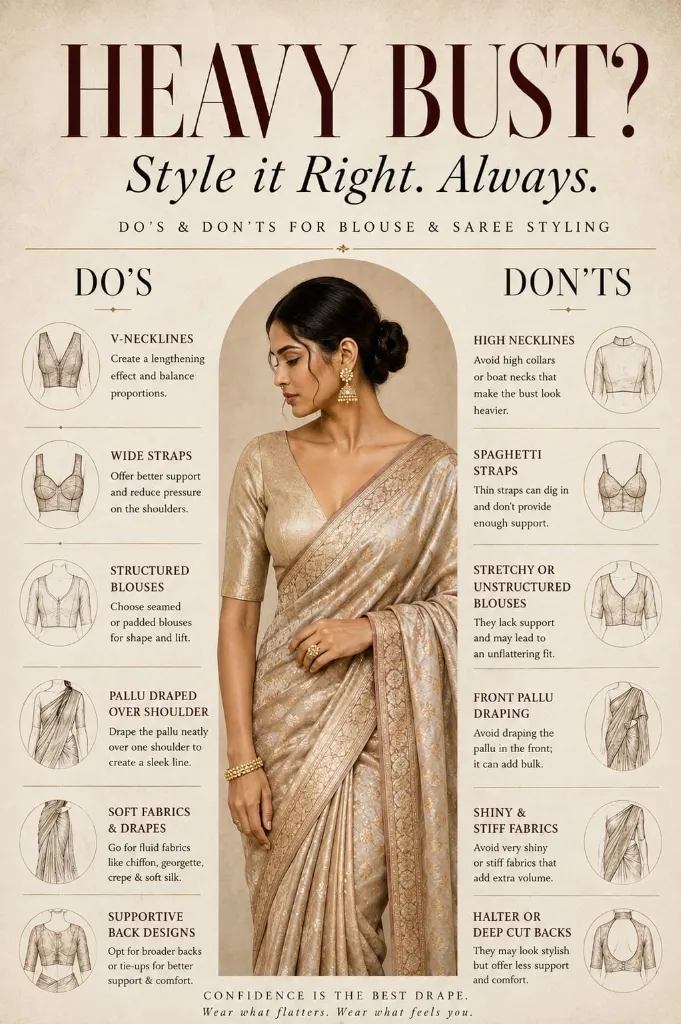
7. Do's and Don'ts — Quick Cheat Sheet
Revisit this essential checklist before finalizing your saree and blouse ensemble:
| Category | DO's (What to Embrace) | DON'Ts (What to Avoid) |
|---|---|---|
| Necklines | V-Necklines: Create a lengthening effect and balance proportions. Sweetheart & Scoop: Flattering contour and gentle framing. | High Necklines & Collars: Make the bust look heavier. Boat Necks: Expand horizontal width. |
| Straps & Back | Wide Straps (1.5"–2"): Better support, reduces shoulder pressure. Supportive Backs: Broad backs with sturdy tie-ups. | Spaghetti Straps: Dig in painfully and lack support. Halter / Deep Backless: Loss of under-bust anchoring band. |
| Construction | Structured Blouses: Princess-cut seams and proper apex fitting for shape and lift. | Stretchy or Unstructured Blouses: Lack support and create a flattening, saggy fit. |
| Draping | Pallu Draped Over Shoulder: Sleek single-shoulder drape creating a continuous vertical line. | Front Pallu Draping: Spreads heavy fabric flat across the chest, adding bulk. |
| Fabrics | Soft Fabrics & Drapes: Fluid textiles like chiffon, georgette, crepe, soft silk, and fine Katan. | Shiny & Stiff Fabrics: Rigid synthetics or heavily starched fabrics that add extra volume. |
8. Shop the Look: Handcrafted Silks from Shri Geeta Sarees
At Shri Geeta Sarees, we believe that true luxury lies in handloom authenticity, master tailoring, and personal confidence. Discover our handpicked drapes that flatter every silhouette:
- Pure Silk Katan Sarees: Iconic bridal handlooms woven with timeless Kadhua and Tanchoi craftsmanship.
- Khaddi Chiffon Collection: Ethereal, featherlight pure georgette and chiffon drapes that fall like liquid gold.
- Pure Handloom Silk Sarees: Heritage weaves designed for lasting comfort, balance, and regal opulence.
- Satin Silk Sarees: Ultra-smooth, fluid drapes with rich lustrous falls for festive evenings.
- Pure Tissue Sarees: Luminous metallic weaves with supple softness for modern receptions.
- Banarsi Cotton Sarees: Everyday artisanal elegance with effortless breathability.
Visiting Varanasi? Experience our 60-year handloom heritage in person at our flagship store in Chowk. Follow our local directions in How to Reach Shri Geeta Sarees in Chowk, Varanasi.
The SGS Philosophy: Confidence Is the Best Drape
Fashion rules are not meant to restrict you; they are designed to give you clarity and confidence. A heavier bust is not a flaw to conceal—it is a beautiful, feminine proportion that looks breathtaking when paired with supportive tailoring, open vertical necklines, and fluid handloom silks.
Wear what flatters. Wear what feels you. Drape with pride.
Frequently Asked Questions (FAQs)
Which blouse neckline is most flattering for a heavy bust?
A moderate-to-deep V-neck is widely considered the most flattering neckline for a heavy bust. It creates an optical vertical line that elongates the neck and torso while breaking up the horizontal breadth of the chest. Sculpted sweetheart necklines and broad scoop necklines are also exceptionally flattering as they provide balanced structure and graceful framing without feeling restrictive.
Can I wear a traditional Banarasi silk saree if I have a heavy bust?
Yes! A pure Banarasi silk saree looks regal on a fuller figure when styled with architectural balance. Opt for finely woven Katan or Tanchoi silks where the zari lies flat and supple against the body. Pair the saree with a minimalist, well-tailored blouse featuring clean princess-cut seams, and drape the pallu neatly over one shoulder in narrow pleats or an open single drape.
Why should I avoid high-neck or boat-neck blouses with a fuller bust?
High-neck, closed mandarin collar, and boat-neck blouses create an unbroken horizontal expanse of fabric from the collarbone to the waist. This optical block traps volume in the upper torso, making the bust appear larger and heavier. Plunging or open necklines break up this surface area, restoring proportion and visual lightness.
Should I drape the saree pallu in pleats or keep it open over one shoulder?
Both methods work beautifully when executed correctly. An open, floating pallu draped neatly over one shoulder creates an uninterrupted vertical line that covers half the torso, creating a slimming, statuesque effect. If you prefer pleated pallus, ensure the pleats are crisp, narrow (2.5 to 3 inches), and pinned securely on the shoulder seam rather than spread wide across the chest.
What type of blouse construction and innerwear is best for a heavy bust?
Choose a blouse tailored with princess-cut seams or reinforced multi-dart tailoring for contoured lift and shape. Ensure the shoulder straps are at least 1.5 to 2 inches wide to distribute weight evenly and prevent shoulder strain. Pair your blouse with high-support, non-padded, full-coverage minimizer bras or molded underwire foundations that anchor the bust without adding bulk.
What fabrics are best suited for women with a fuller bust?
Fluid, lightweight, body-skimming fabrics like Khaddi chiffon, pure georgette, and soft satin silk are ideal because they drape close to the natural contours without adding artificial stiffness or puffiness. When choosing rich handlooms, opt for supple pure silk Katan or soft Banarsi cotton instead of overly stiff or starched materials.
Is front pallu (Seedha Pallu / Gujarati drape) recommended for heavy busts?
Generally, the traditional front pallu (Seedha Pallu) drape is best avoided for fuller busts because spreading a richly woven, heavy zari pallu flat across the chest adds layers of visual weight. However, if required for cultural ceremonies, you can balance it by pleating the front pallu very neatly and securing the pleats closely in a vertical cascade.
Continue Reading
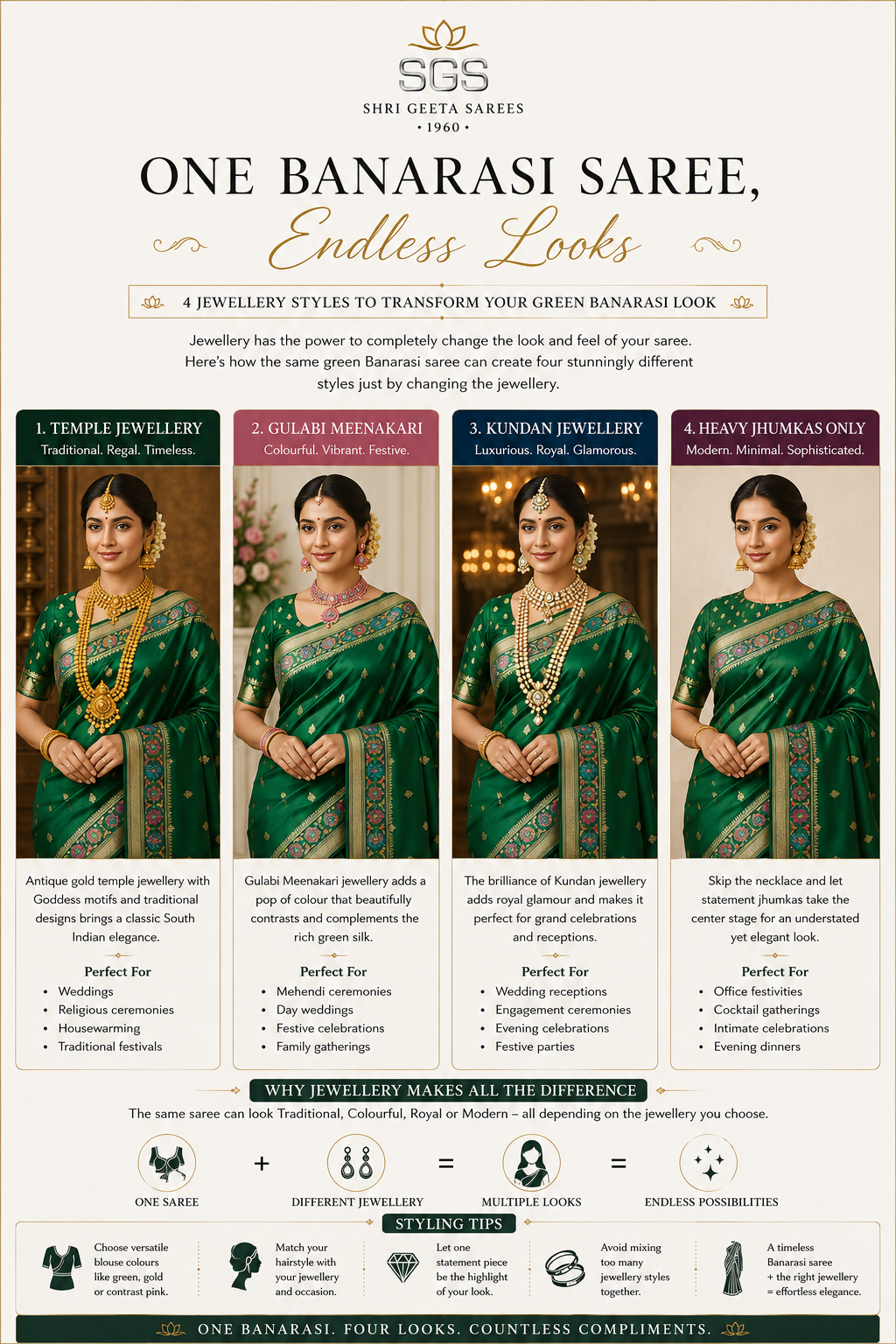
How One Banarasi Saree Can Create 4 Completely Different Looks
A beautiful Banarasi silk saree is one of the most versatile pieces in your wardrobe. Discover how to create four stunning looks just by changing your jewellery.
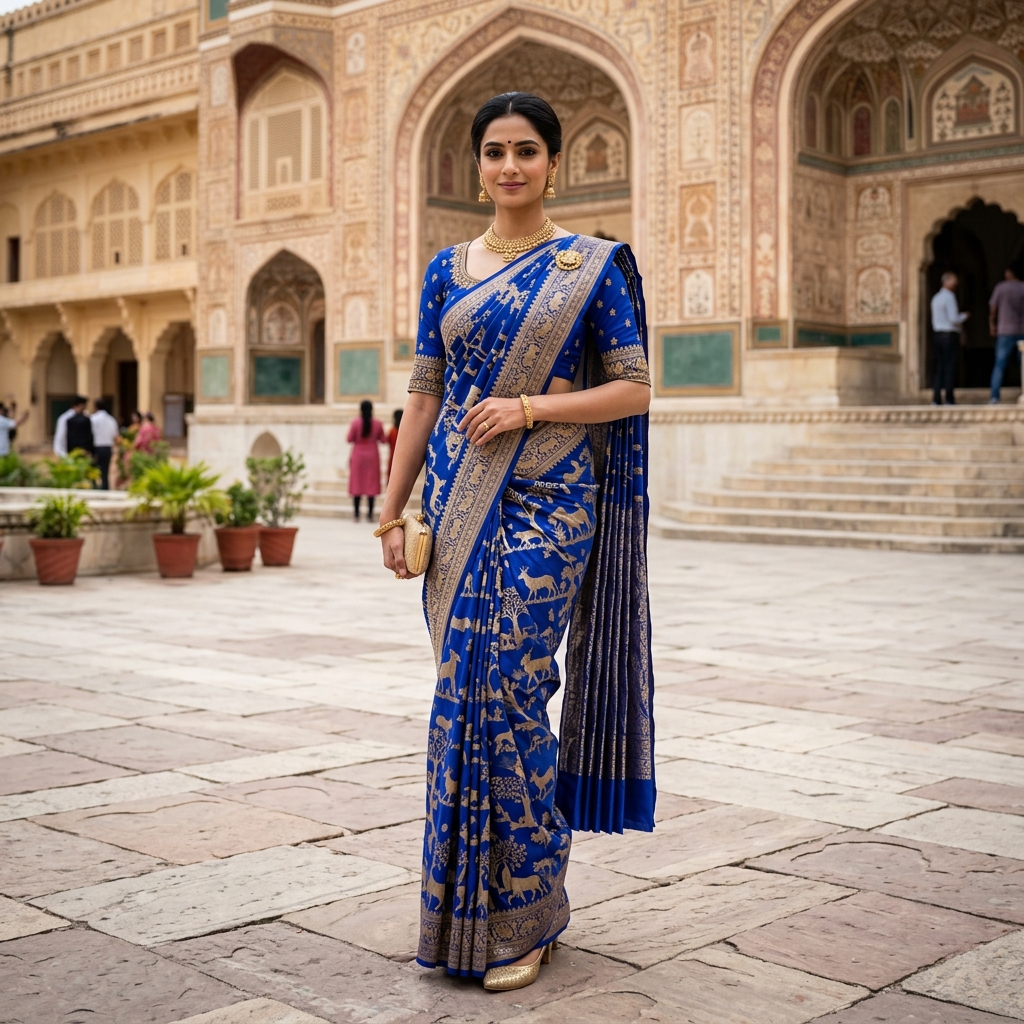
4 Elegant Ways to Drape a Banarasi Saree | Shri Geeta Sarees
Looking for new ways to wear your handwoven Banarasi saree? Discover 4 elegant and easy styling methods, from classic traditional to modern reception drapes.
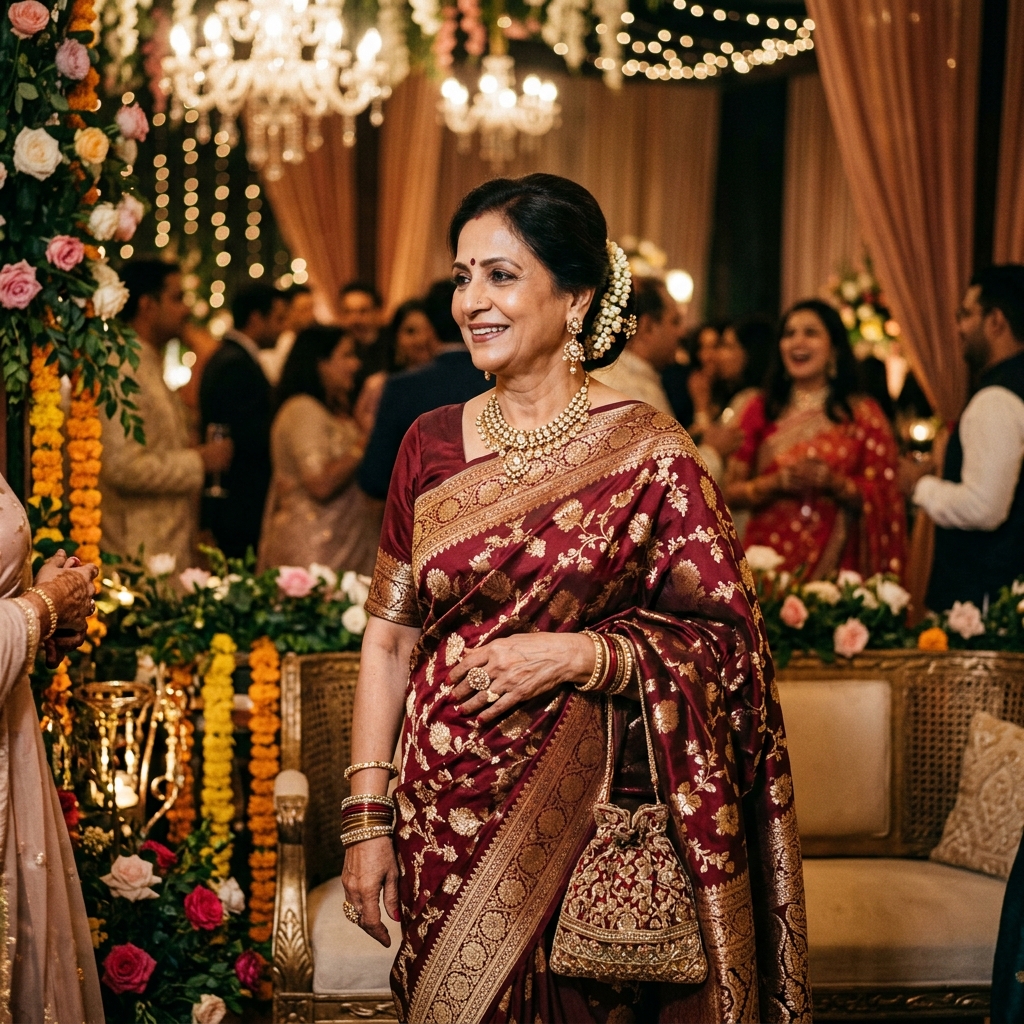
Banarasi Saree for Mother of the Bride: A Guide to Getting It Right
A comprehensive guide to choosing the perfect Banarasi saree for the mother of the bride, covering colors, weaves, and styling advice.
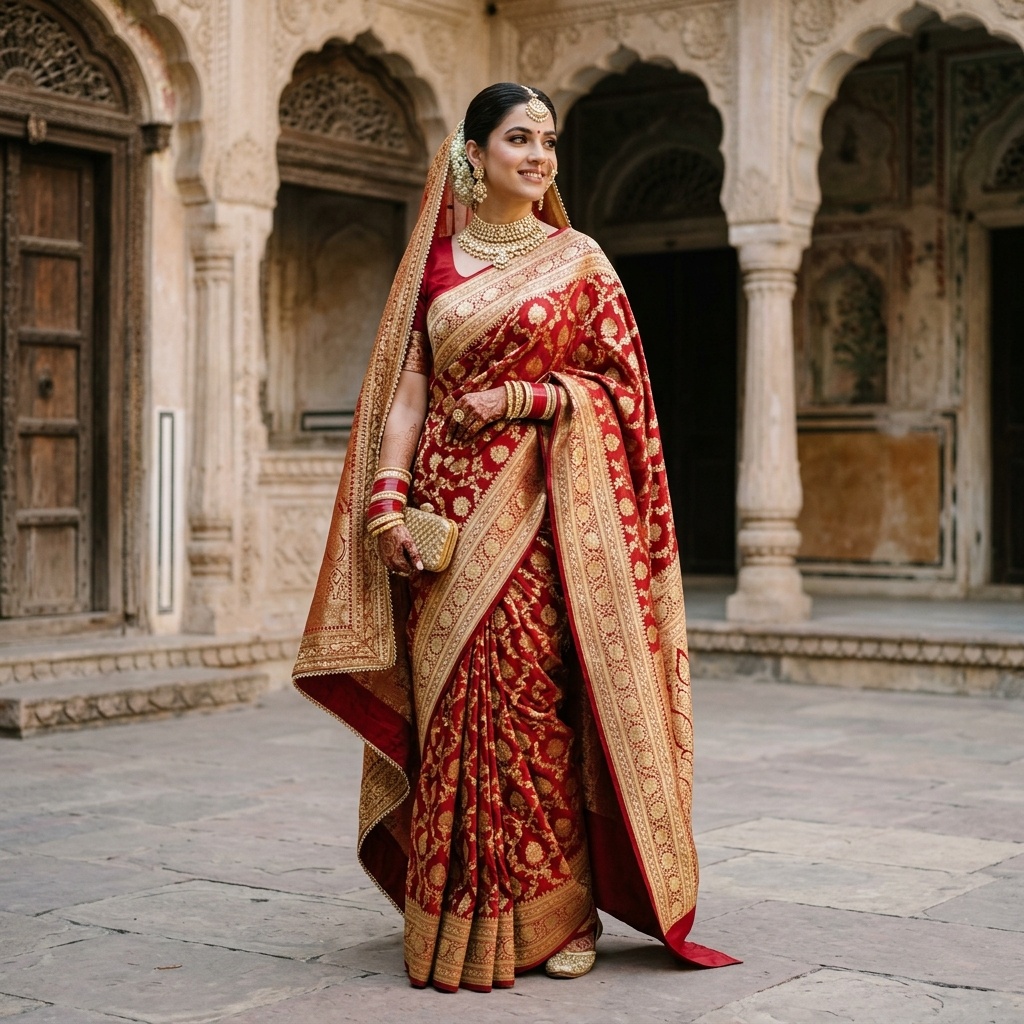
Types of Banarasi Silk: Katan, Georgette, Organza & Tissue Explained
Confused by Banarasi saree fabrics? A Varanasi weaver explains the exact difference in drape, weight, and styling for Katan, Georgette, Organza, and Tissue silk.