The Silk Route Through Varanasi: History of Banarasi Weaving
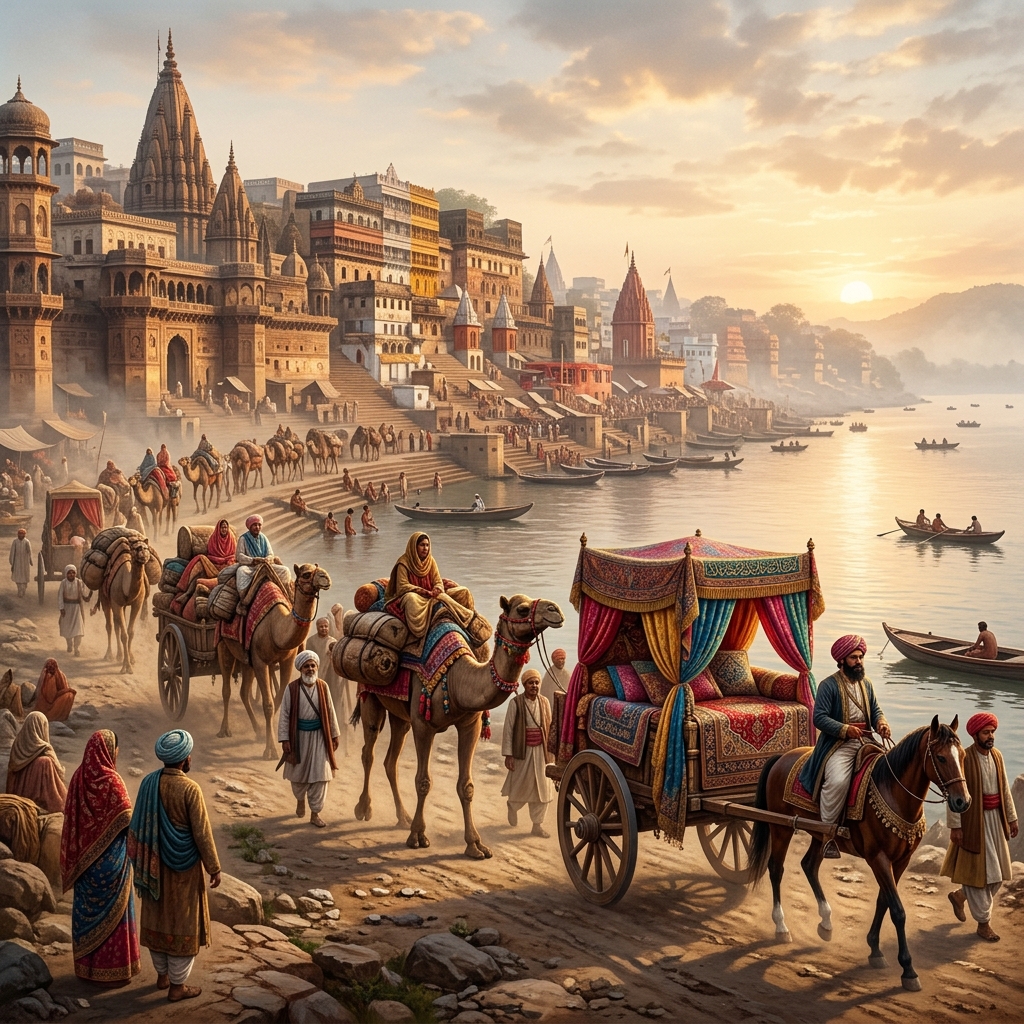
Long before Varanasi was called the silk capital of India, it was something else first: a crossroads. Caravans moving between the Gangetic plains and the trade routes of Central Asia passed through this bend in the river, carrying not just silk thread, but ideas — motifs, techniques, and a taste for ornamentation that would take root here and never quite leave.
Every Banarasi saree woven today carries a trace of that history. The gold zari, the Persian-inflected florals, the density of the brocade — none of it happened by accident. It happened because a city on a river became a meeting point for cultures who all, in their own way, loved silk.
This is the short version of that long story.
Varanasi Before the Loom
Varanasi's importance as a trade and pilgrimage center predates the saree entirely. As one of the oldest continuously inhabited cities in the world, it sat along routes that connected northern India to trade networks stretching toward Central Asia and beyond. Textiles moved through the city long before Banarasi weaving, as a distinct craft, existed — cotton weaving traditions were already established in the region.
Silk itself is generally understood to have entered India through a combination of overland trade routes and, later, coastal trade — with the term "Silk Route" describing not one road but a network of trade corridors that linked China, Central Asia, Persia, and India over many centuries. Varanasi's position made it a natural inland hub for this movement of goods.
The Mughal Influence — Where the Banarasi Saree Truly Takes Shape
The Banarasi saree as it's recognized today owes its defining character to the Mughal period, particularly from the 16th century onward. Mughal patronage brought Persian textile traditions — intricate florals, paisley (kalga and buta), and elaborate brocade weaving — into direct contact with Varanasi's existing weaving communities.
This is where the marriage happened: Persian ornamentation met Indian weaving technique. Motifs like the paisley, which has Persian origins, were absorbed into Banarasi vocabulary alongside distinctly Indian elements, and the result was a textile language unlike anything produced elsewhere in India.
Zari work — gold and silver zari brocade — also gained prominence during this period, as royal courts demanded textiles that reflected imperial wealth and status. This laid the foundation for what would eventually become the Banarasi saree's most recognizable feature: dense, luminous zari brocade.
From Royal Courts to Everyday Heritage
As Mughal patronage waned, Banarasi weaving didn't disappear — it spread. Weaving families, many of them from artisan communities that remain the backbone of the craft in Varanasi today, carried the tradition forward across generations, adapting it for a broader clientele beyond royal courts.
By the time India entered the colonial and early independence periods, Banarasi weaving had become deeply embedded in the region's identity — practiced largely by hereditary weaving families working on handlooms passed down within the same households for generations. The saree had transformed from an object of court patronage into a symbol of celebration, bridal tradition, and heirloom value for families across India.
The Handloom Itself — A Living Piece of History
The pit loom and the frame loom used by Banarasi weavers today are, in their essential mechanics, direct descendants of techniques that have been refined over centuries. The Kadhwa and Jamdani-style extra-weft techniques used to create motifs by hand — bobbin by bobbin, without the aid of mechanization — represent the same fundamental craft logic that Mughal-era weavers would recognize, even as tools and materials have evolved.
This is part of why handloom Banarasi weaving is protected under India's Geographical Indication (GI) tag system — it isn't just a manufacturing process, it's a living historical craft, tied to a specific place and a specific lineage of skill that cannot be replicated by powerloom production.
Why This History Matters When You Choose a Saree
Understanding where Banarasi weaving comes from changes how you see the saree in front of you. A handwoven Banarasi silk isn't simply "traditional" in a vague sense — it's the current chapter in a documented lineage stretching back through Mughal courts to the earliest trade routes that brought silk into this region at all.
At Shri Geeta Sarees, this history isn't a marketing backdrop. It's the reason a fourth-generation family business still exists in Chowk, Varanasi — because the craft itself demanded continuity, family by family, loom by loom, since 1960 in our case, and centuries longer for the tradition as a whole.
The Silk Route may no longer run through Varanasi in name — but it never really left. It lives on in every loom still working in Chowk, in every zari thread still passed by hand, and in every Banarasi saree that carries centuries of trade, craft, and patronage into a single length of silk.
Continue Reading
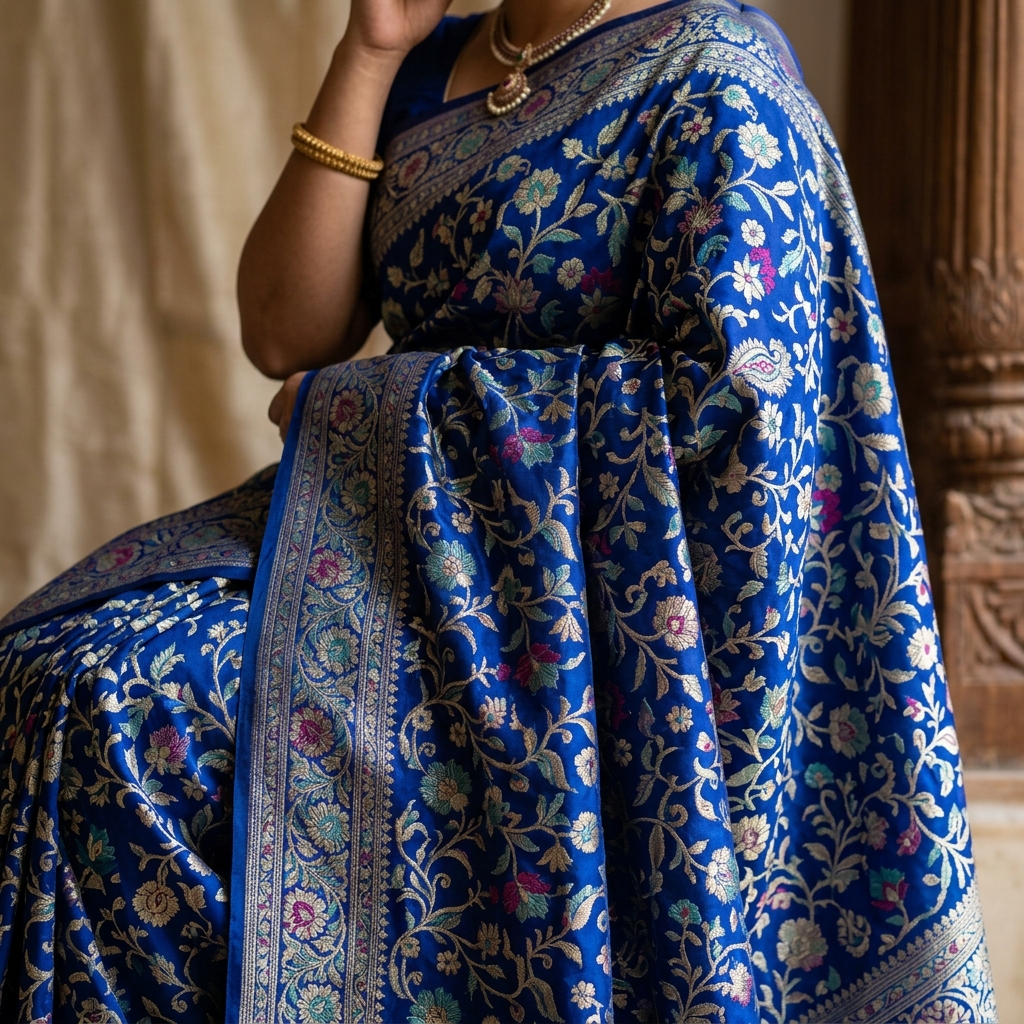
What is Fekwa (Fakua/Cutwork) in Banarasi Sarees?
Learn about Fekwa (or Fakua/Cutwork), an authentic Banarasi weaving technique that creates beautiful floral motifs and jaal patterns. Find out why it's more affordable without compromising quality.
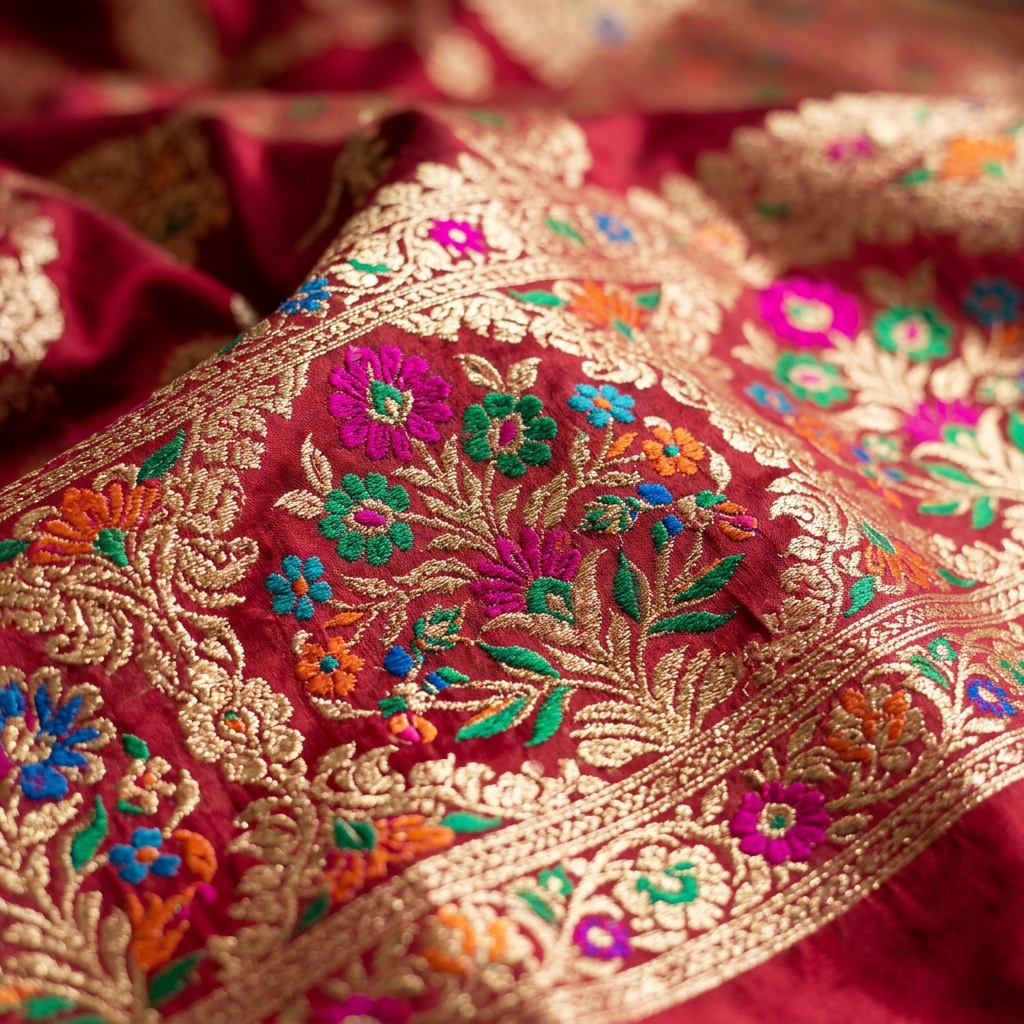
Meenabooti: A Heritage Woven in Every Buta
Discover the exquisite art of Meenabooti weaving. Learn about the intricate Banarasi techniques of Alfi and Tilfi that bring pure silk to life.
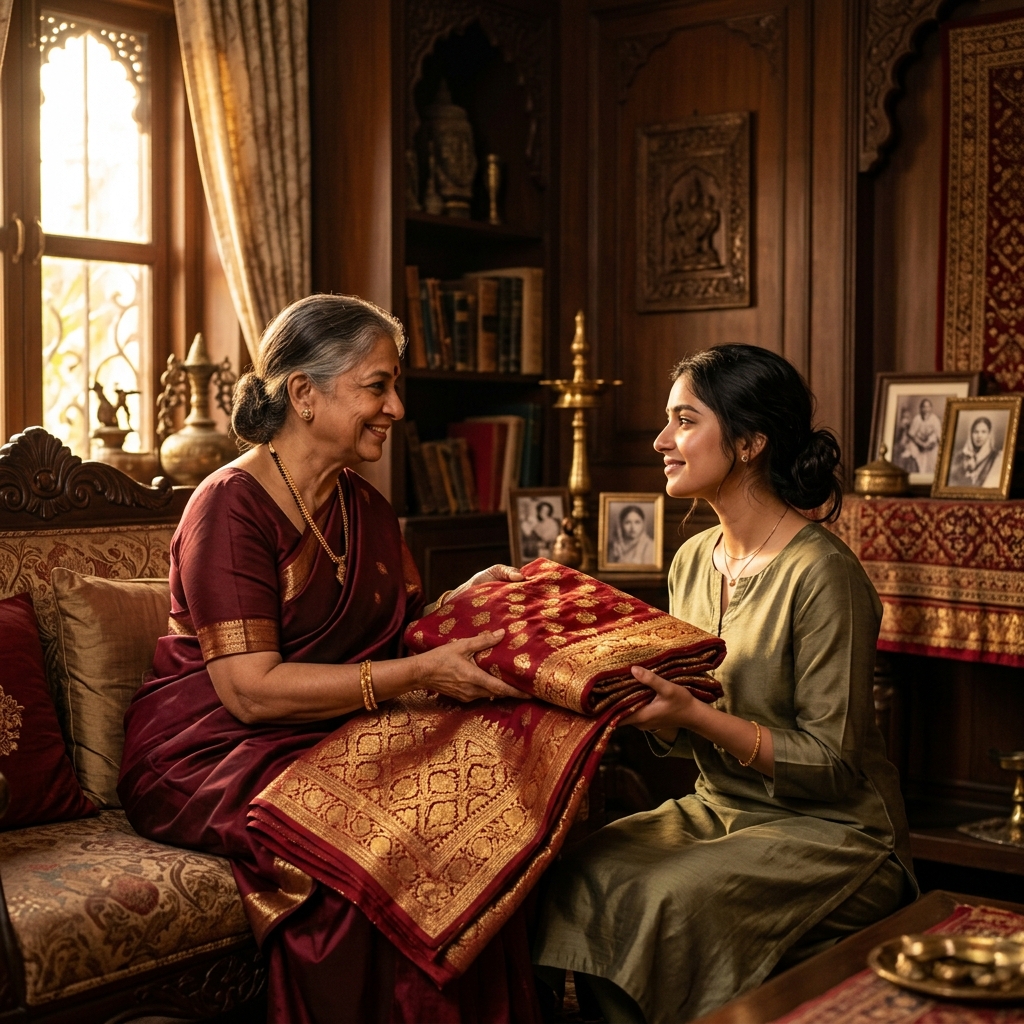
The Banarasi Saree as a Family Legacy: An Heirloom Woven in Silk
Explore the tradition of passing down Banarasi sarees, the craftsmanship that makes them endure, and how to preserve a vintage Banarasi silk saree as a family legacy.
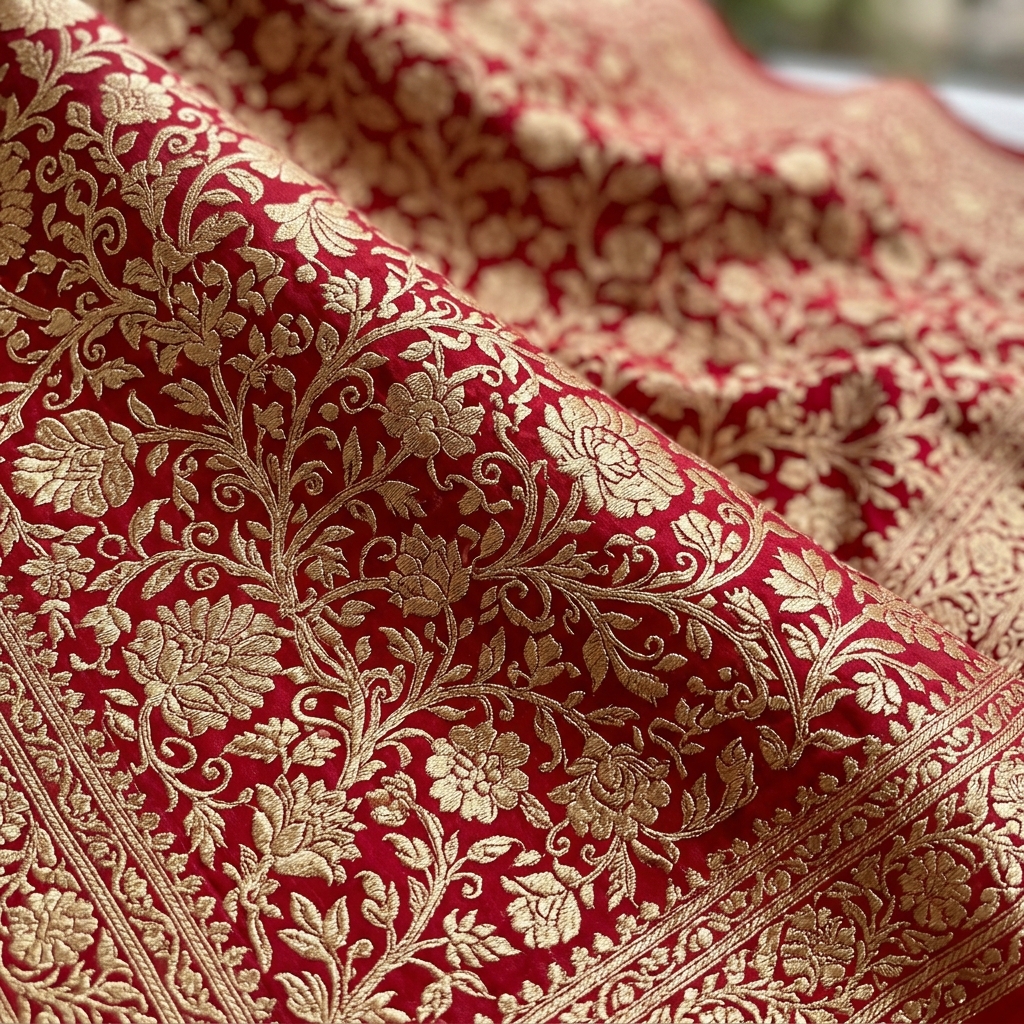
What is a Banarasi Saree Motif? A Guide to Buta, Jaal, and Paisley Patterns
Understand the language of Banarasi saree motifs — from the mango-shaped buta to the trellis-like jaal. A weaver's guide to reading pattern, symbolism, and craft.
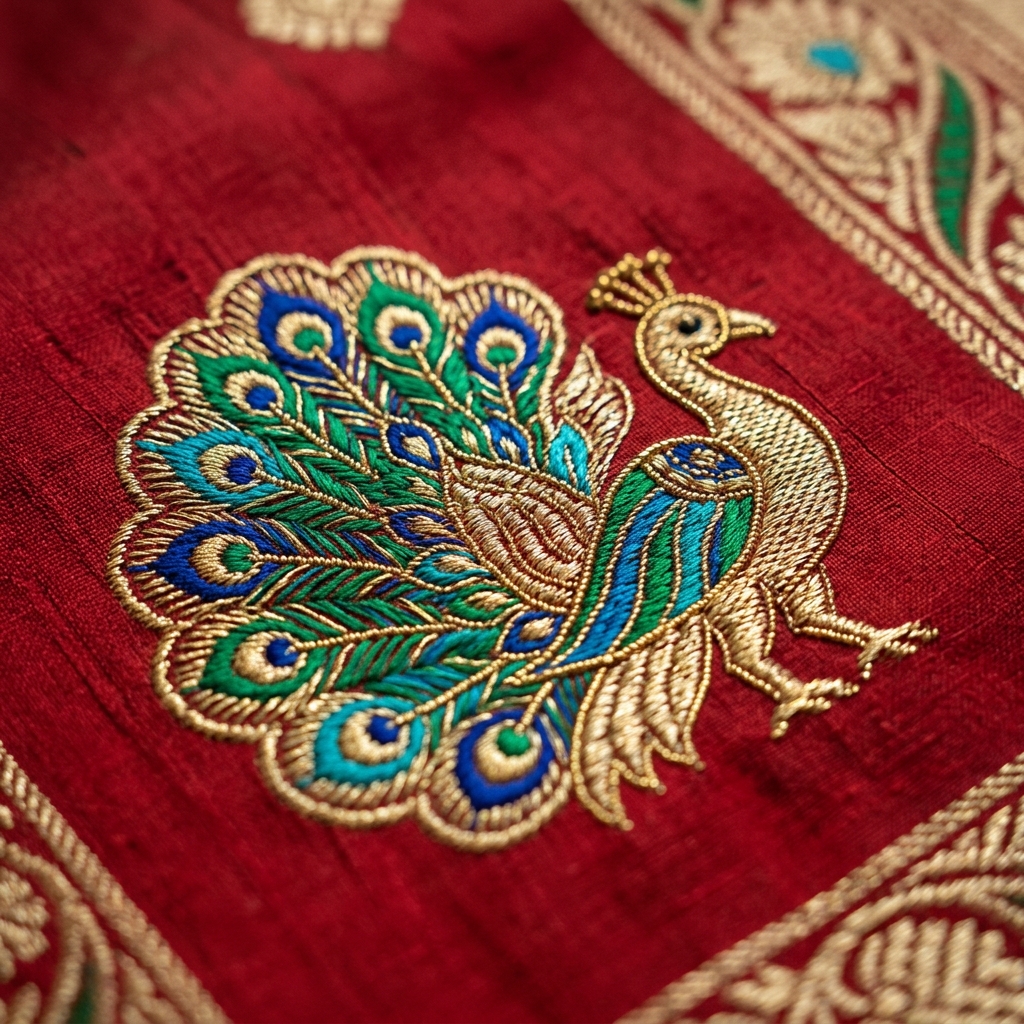
What is a Kadhua Banarasi Saree?
Discover the art of Kadhua Banarasi sarees — individually woven motifs, no loose threads, and an embossed 3D finish. Learn about Meenakari vs Sonarupa and why Kadhua is the pinnacle of Banarasi craftsmanship.