
How a Traditional Handloom Works: The Mechanics of Banarasi Silk Weaving
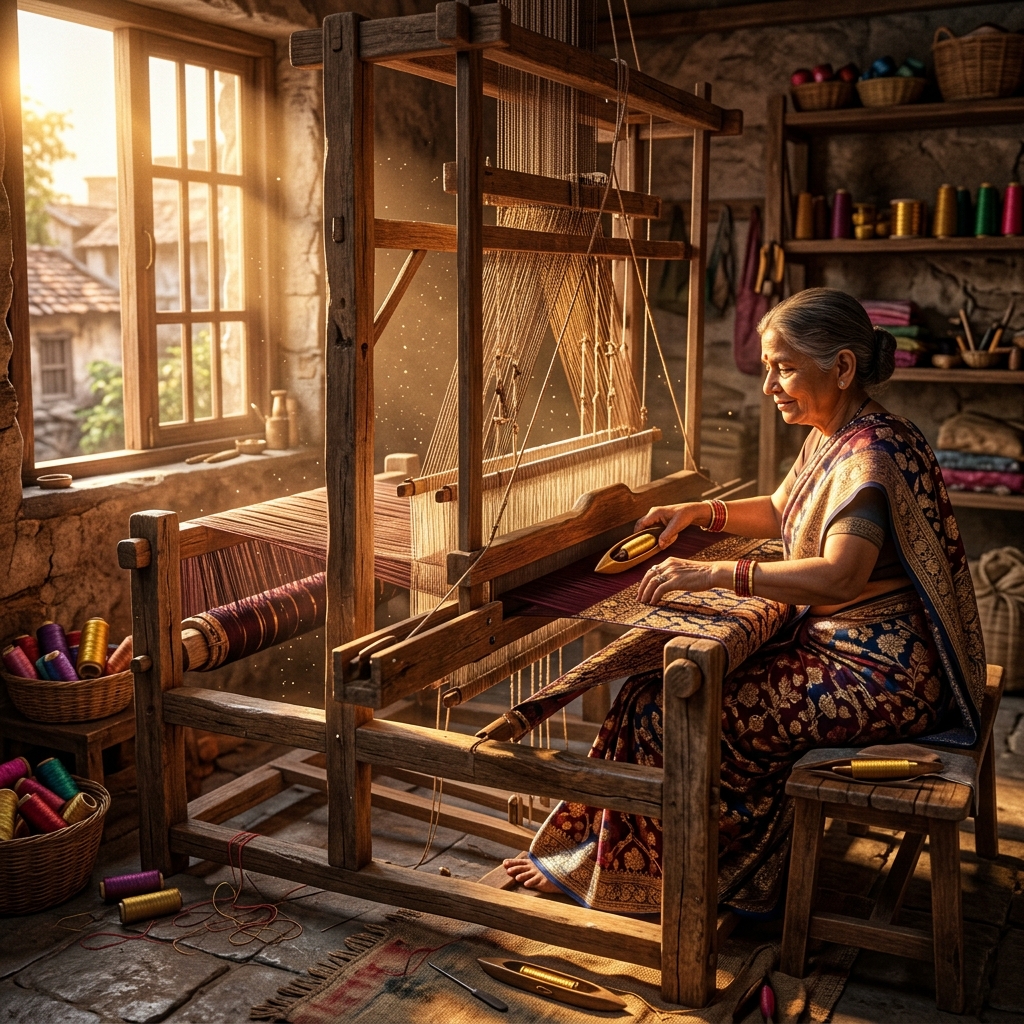
How a Traditional Handloom Works: The Mechanics of Banarasi Silk Weaving
The traditional handloom is one of humanity’s most ingenious machines. For centuries, it has remained fundamentally unchanged—relying entirely on human skill, rhythmic limb coordination, and mathematical precision to transform raw silk threads into royal Banarasi sarees.
At the heart of Varanasi’s weaving quarters—from Chowk to Madanpura—the rhythmic clack-clack of the wooden pit loom marks the creation of some of the world’s most exquisite textiles.
The Anatomy of a Banarasi Pit Loom
Unlike automated industrial machines, a traditional Banarasi pit loom is set into a trench dug into the floor of the weaver’s home. This keeps the warp threads close to the earth, maintaining natural moisture and optimal silk yarn tension.
Key Mechanical Components:
- The Warp (Tana): Thousands of lengthwise silk threads stretched taut along the length of the loom frame.
- The Weft (Bana): The crosswise silk or zari thread passed horizontally through the opened warp shed.
- The Shedding Mechanism (Treadles / Foot Pedals): The weaver presses wooden pedals with their feet to alternate warp thread layers, opening a gap (shed) for the shuttle.
- The Shuttle (Nal): A smooth boat-shaped wooden tool carrying the weft spool (pirn) swiftly across the warp.
- The Reed and Beater (Hatha): A heavy wooden comb swung by the artisan's hand to press each new weft thread tightly against the growing fabric.
The Step-by-Step Weaving Process
- Step 1: Shed Opening – The weaver depresses the treadle, splitting the 10,000+ warp threads into top and bottom layers.
- Step 2: Weft Passage – With a flick of the wrist, the shuttle glides smoothly through the tunnel, laying down a single row of silk or zari.
- Step 3: Beating the Weft – The weaver pulls the beater firmly toward themselves to lock the newly inserted thread into place.
- Step 4: Hand-Engraved Motifs – For Kadhua Weave Motifs or multi-coloured Rangkat Segments, the weaver pauses to insert individual pattern threads by hand before pressing the next weft row.
Why Handloom Craftsmanship Is Irreplaceable
While powerlooms can generate flat patterns in hours, they lack the delicate human touch that gives handloom silk its soul:
- Organic Tension: Hand-tensioned silk breathes with the wearer, draping naturally over curves.
- Locked Kadhwa Motifs: Each motif is hand-tied without scratchy cut threads on the reverse side.
- Generational Legacy: Every saree represents months of living artistry from Varanasi ustaads.
Learn more about our six-decade commitment to pure handloom craft at Shri Geeta Sarees.
Continue Reading

What is Fekwa (Fakua/Cutwork) in Banarasi Sarees?
Learn about Fekwa (or Fakua/Cutwork), an authentic Banarasi weaving technique that creates beautiful floral motifs and jaal patterns. Find out why it's more affordable without compromising quality.

The Silk Route Through Varanasi: History of Banarasi Weaving
Trace the centuries-old journey of silk into Varanasi — from ancient trade routes to Mughal courts to the handloom houses of today.

The Banarasi Saree as a Family Legacy: An Heirloom Woven in Silk
Explore the tradition of passing down Banarasi sarees, the craftsmanship that makes them endure, and how to preserve a vintage Banarasi silk saree as a family legacy.
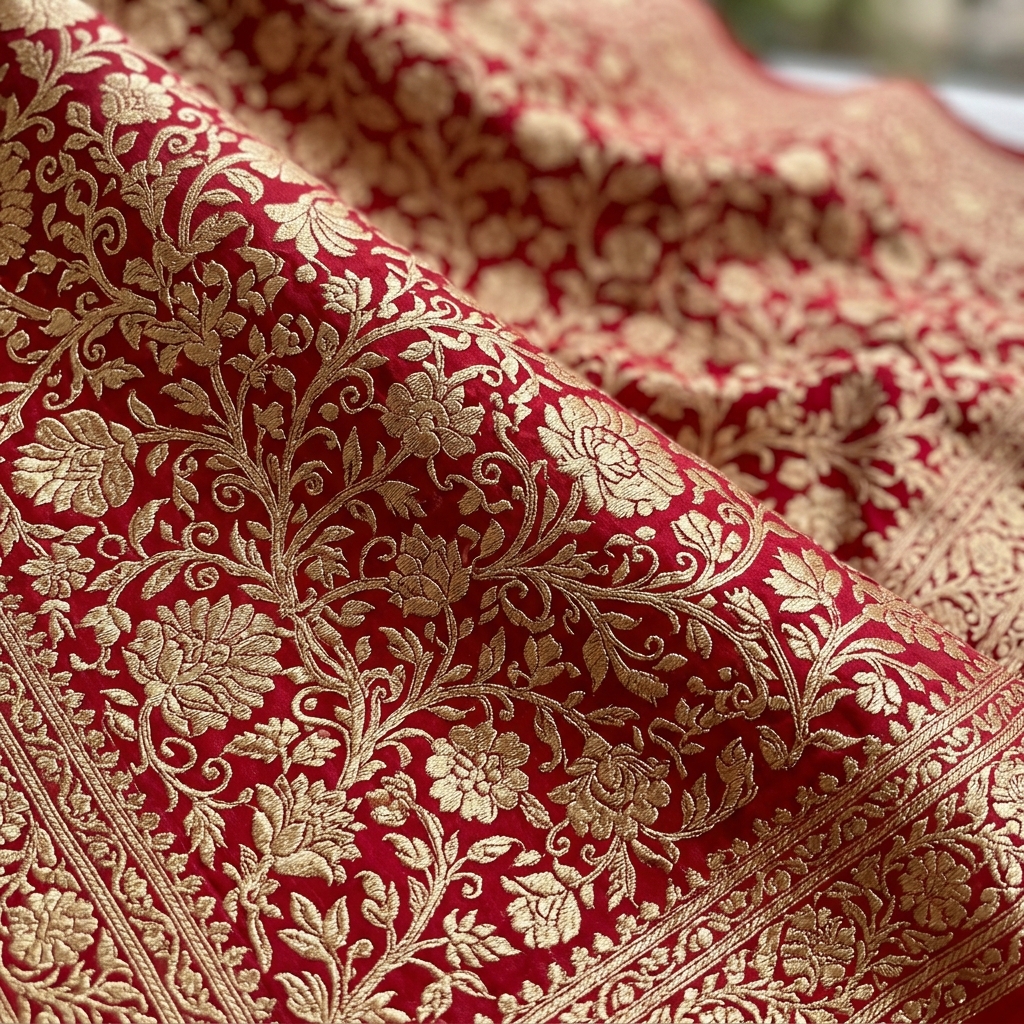
What is a Banarasi Saree Motif? A Guide to Buta, Jaal, and Paisley Patterns
Understand the language of Banarasi saree motifs — from the mango-shaped buta to the trellis-like jaal. A weaver's guide to reading pattern, symbolism, and craft.
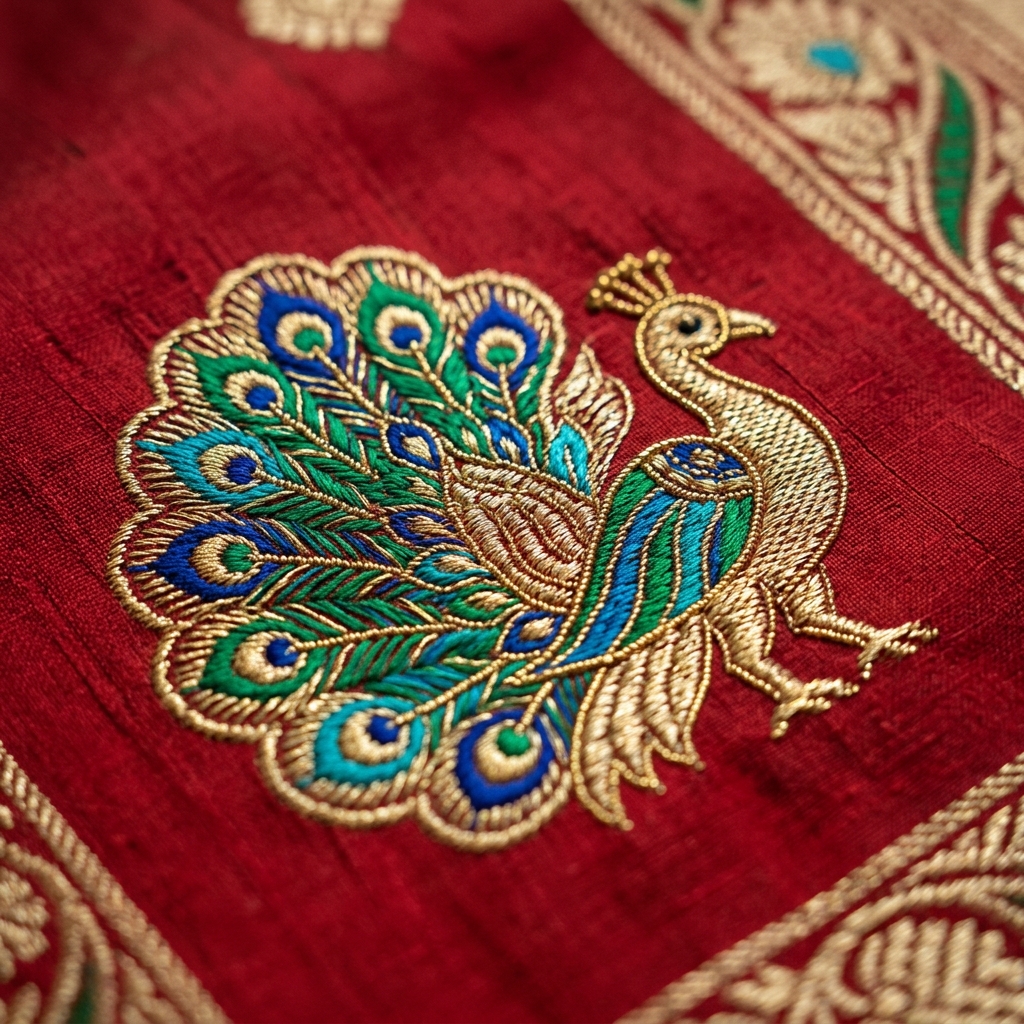
What is a Kadhua Banarasi Saree?
Discover the art of Kadhua Banarasi sarees — individually woven motifs, no loose threads, and an embossed 3D finish. Learn about Meenakari vs Sonarupa and why Kadhua is the pinnacle of Banarasi craftsmanship.