The Anatomy of a Banarasi Tissue Saree: Why It Shines Like Liquid Metal
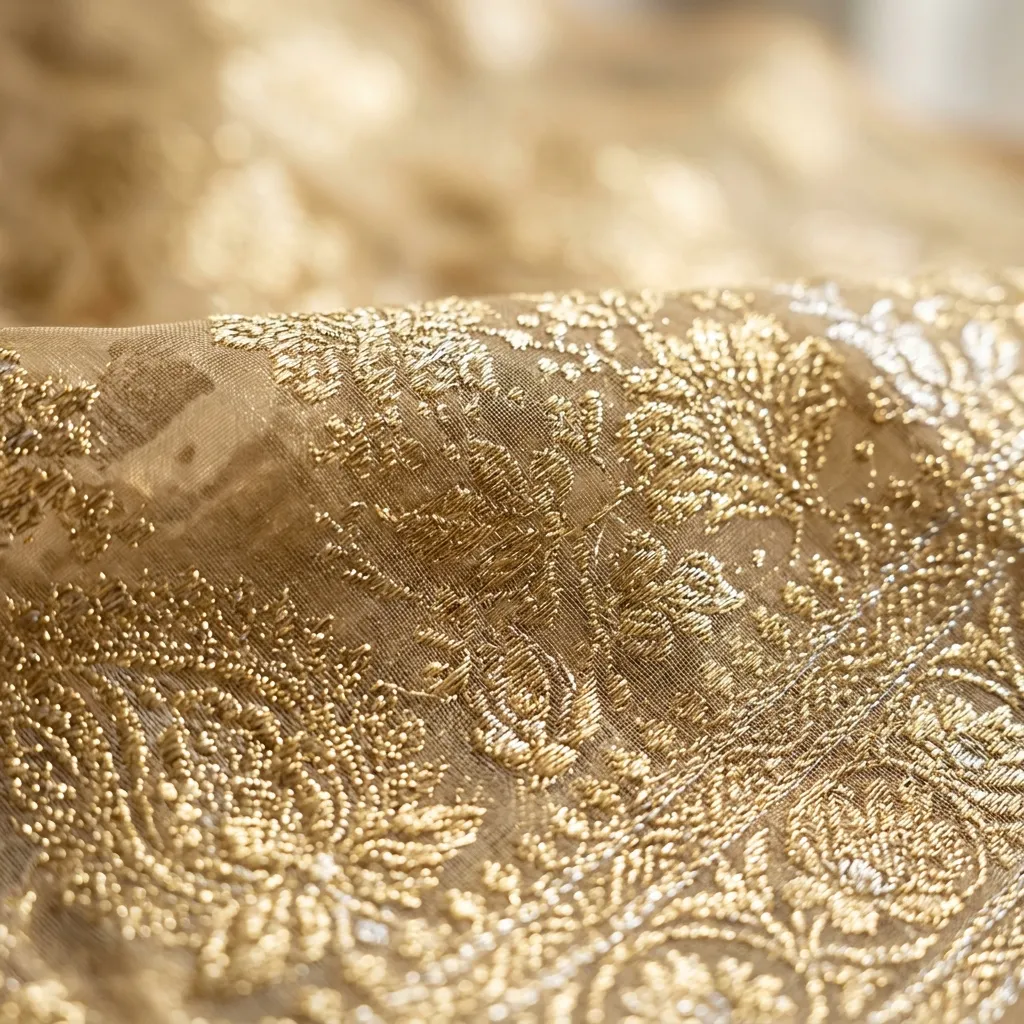
You have seen them catching the light at evening receptions, practically glowing from within. The common assumption within the Indian fashion community is that a saree with this level of metallic sheen must be heavily embellished with sequins, or coated with a stiff, synthetic finish.
But when you examine an authentic Banarasi Tissue saree closely, a striking contradiction emerges: the surface is entirely flat. The glow isn't applied to the fabric; it is the fabric.
To understand why a Tissue saree drapes like crisp organza but reflects light like liquid metal, we have to look past the surface and dissect the fundamental mechanics of the loom itself.
The Secret is in the Weave, Not the Embellishment
Most handloom silk sarees use pure silk threads for both the vertical warp (the base structure) and the horizontal weft (the threads woven across). Zari—metallic thread wrapped in gold or silver—is typically reserved for weaving specific motifs or heavy borders.
Tissue Banarasi breaks this rule entirely.
The anatomy of a Tissue weave relies on a highly specific dual-thread architecture:
- The Warp (Tana): Weavers set the vertical base using extremely fine, colored silk threads. This gives the saree its underlying strength, structure, and a subtle hue.
- The Weft (Bana): Instead of using silk to weave across the warp, the weaver uses pure metallic zari thread for every single horizontal pass.
Because the metallic zari dominates the horizontal plane, it sits predominantly on the surface of the fabric. The result is a textile that acts like a mirror, catching and reflecting light from every single angle.
The Drape: Crisp, Sheer, and Weightless
There is a widely held belief that anything woven with so much metal must be heavy, stiff, and uncomfortable to wear.
Although older or powerloom imitations can indeed feel like wearing plastic mesh, a genuine handwoven Banarasi Tissue saree behaves differently. Because the silk warp is so exceptionally fine, the resulting fabric is semi-translucent—resembling delicate tissue paper, which is exactly how it earned its name.
The drape is distinctly architectural. Unlike the fluid fall of Georgette or the heavy collapse of Katan silk, Tissue holds its shape. It creates crisp, structured pleats that stand away from the body slightly, offering a regal silhouette that photographs beautifully.
When to Wear a Tissue Saree
Because of its highly reflective nature, Tissue is unapologetically glamorous. It is highly recommended for evening wear, cocktail functions, or sangeet ceremonies where artificial lighting will interact with the zari weft.
For daytime events, lighter pastel tissues (like silver zari woven over a powder blue or blush pink silk warp) create a softer, pearlescent effect rather than a blinding metallic shine.
If you are looking for a textile that challenges the idea of what a handloom silk can do—offering the weightlessness of organza with the visual impact of solid gold—the Tissue Banarasi remains unmatched.
Frequently Asked Questions (FAQs)
Is a Tissue saree hard to maintain? Tissue sarees require careful maintenance because the metallic zari can snag or tarnish if stored improperly. Always dry clean, and store them wrapped in unbleached cotton muslin away from direct moisture.
Does a Tissue saree make you look heavier? Because Tissue has a crisp, structured drape, it does not cling to the body. It tends to add a slight volume to the silhouette. If you prefer a slimming, body-hugging drape, a Georgette or Crepe Banarasi is a better choice.
What is the difference between Tissue and Organza? Both are sheer and crisp, but Organza is woven entirely from highly twisted silk yarns, giving it a matte, papery finish. Tissue uses metallic zari in the weft, giving it a metallic, glass-like sheen.
How do I identify a real handwoven Tissue Banarasi? Turn the saree over. A genuine handloom piece will show the interplay of the silk warp and zari weft on the reverse side, and it will feel softer against the skin compared to the stiff, scratchy back of a mass-produced powerloom synthetic.
Continue Reading
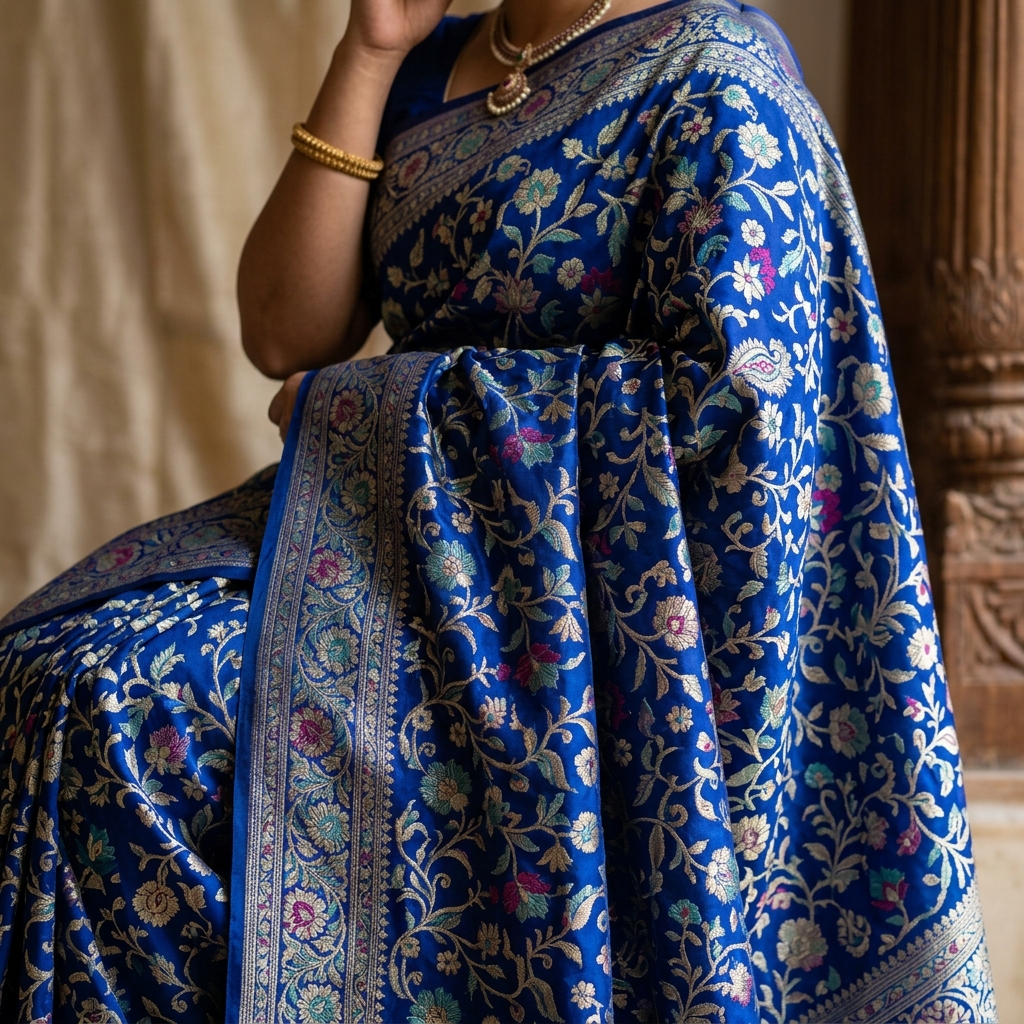
What is Fekwa (Fakua/Cutwork) in Banarasi Sarees?
Learn about Fekwa (or Fakua/Cutwork), an authentic Banarasi weaving technique that creates beautiful floral motifs and jaal patterns. Find out why it's more affordable without compromising quality.
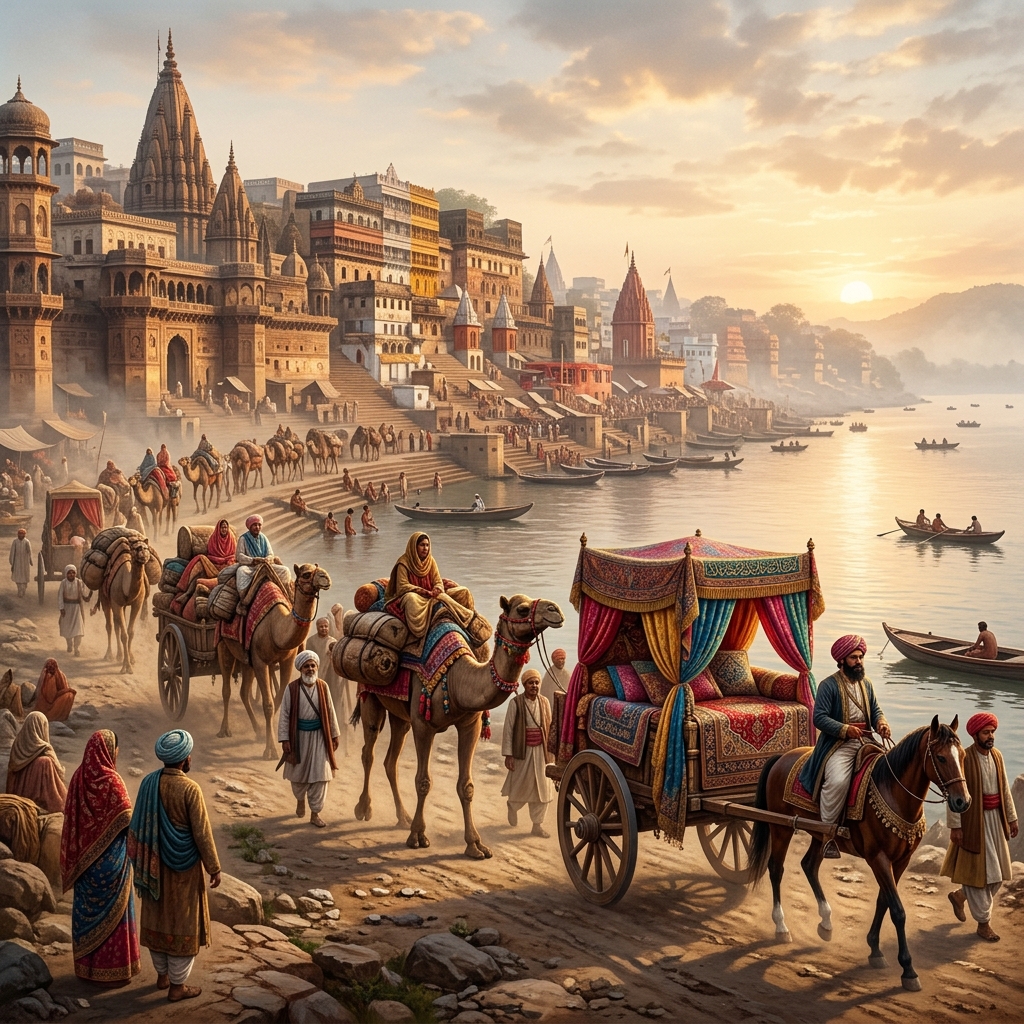
The Silk Route Through Varanasi: History of Banarasi Weaving
Trace the centuries-old journey of silk into Varanasi — from ancient trade routes to Mughal courts to the handloom houses of today.
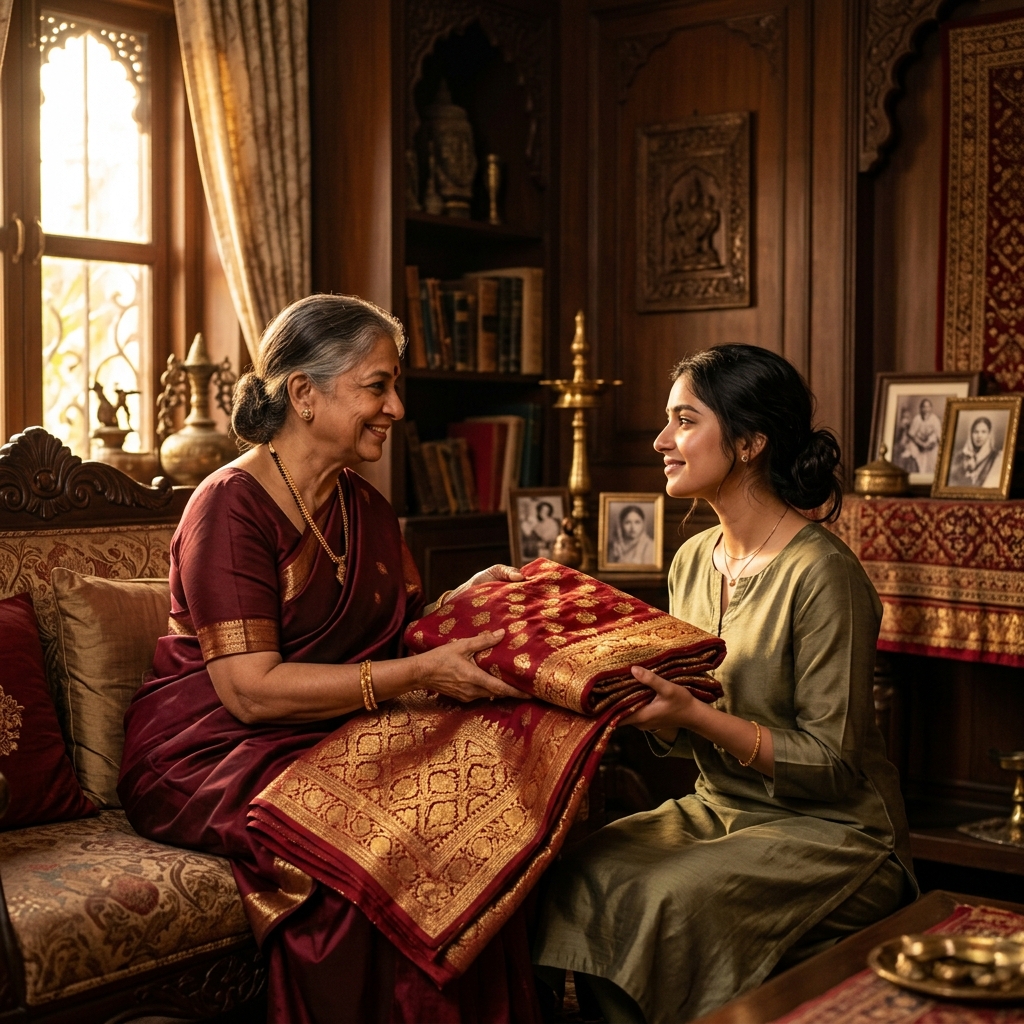
The Banarasi Saree as a Family Legacy: An Heirloom Woven in Silk
Explore the tradition of passing down Banarasi sarees, the craftsmanship that makes them endure, and how to preserve a vintage Banarasi silk saree as a family legacy.
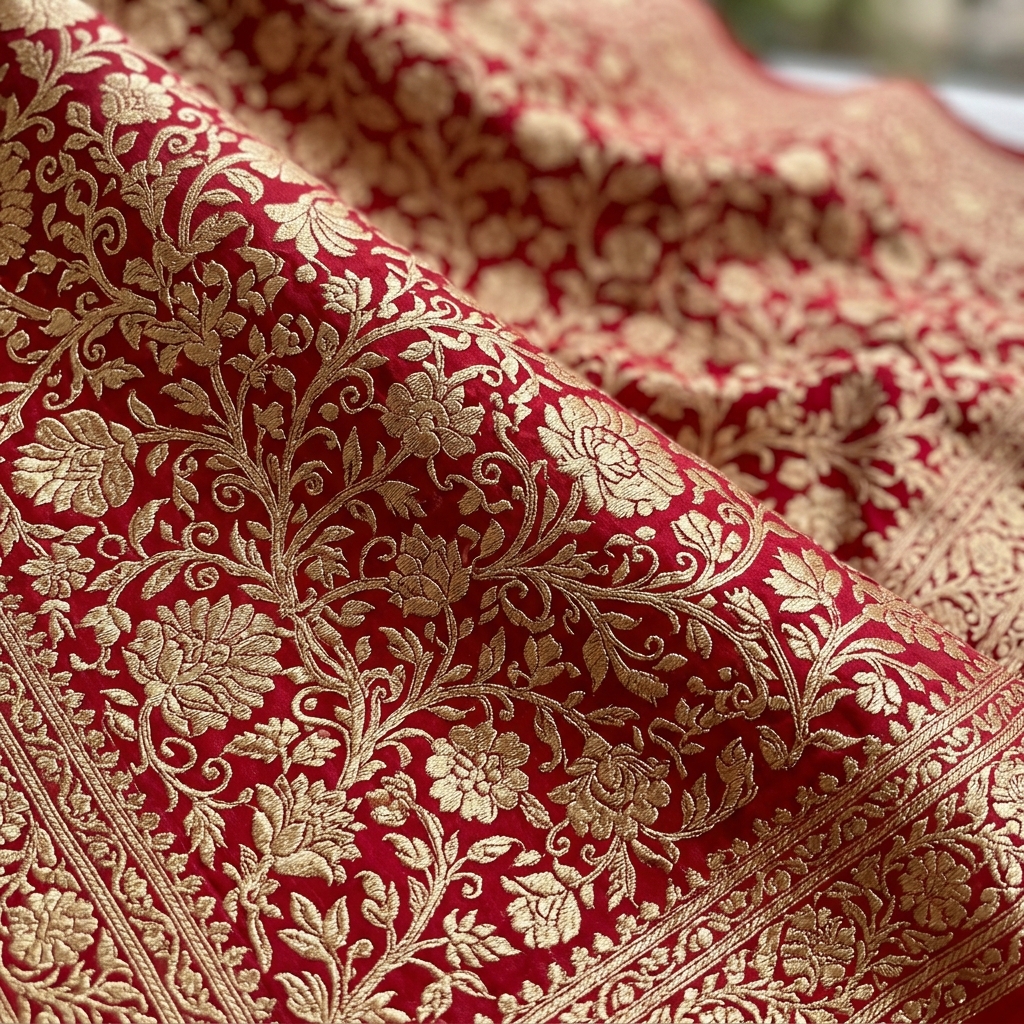
What is a Banarasi Saree Motif? A Guide to Buta, Jaal, and Paisley Patterns
Understand the language of Banarasi saree motifs — from the mango-shaped buta to the trellis-like jaal. A weaver's guide to reading pattern, symbolism, and craft.
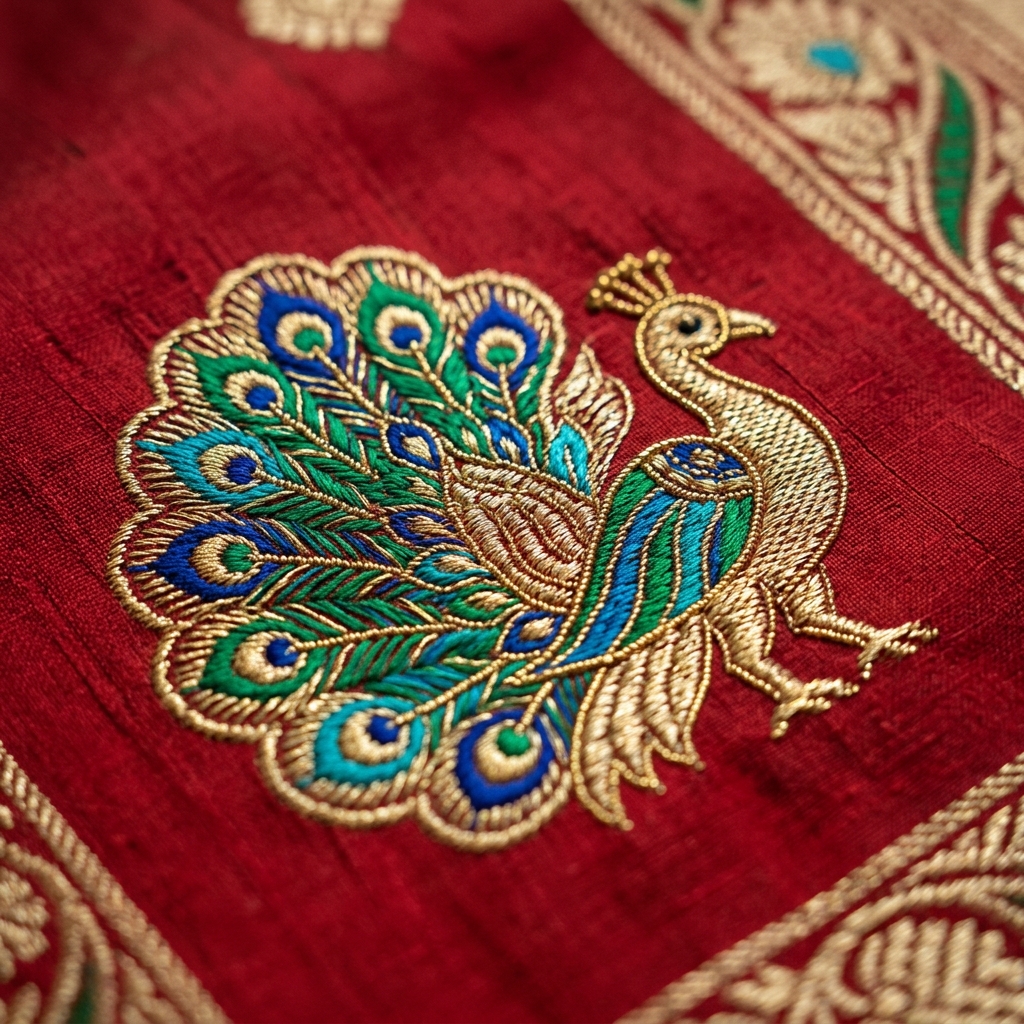
What is a Kadhua Banarasi Saree?
Discover the art of Kadhua Banarasi sarees — individually woven motifs, no loose threads, and an embossed 3D finish. Learn about Meenakari vs Sonarupa and why Kadhua is the pinnacle of Banarasi craftsmanship.