Tanchoi Sarees: The Silk Story That Began in China & Found Its Soul in Varanasi
Some sarees are simply worn, while others are remembered forever. The Tanchoi saree undeniably belongs to the latter category.
If you’ve ever explored the world of Banarasi weaves, you’ve likely noticed a distinct difference between traditional Banarasi sarees and Tanchoi. While most associate Banarasi weaving with the heavy glitter of zari and metallic gold threads, Tanchoi quietly stands apart. There is no zari, and no metallic shine—just pure resham (silk), speaking volumes entirely on its own.
A Tanchoi saree is a breathtakingly fine brocade, where detailed, all-over designs are crafted using solely silk yarn. The result? A surface that feels wonderfully satin-smooth, looks incredibly rich in detail, and carries a weight so light you’ll almost forget you're draped in a handwoven masterpiece.
It’s the kind of saree that doesn’t announce itself loudly. Instead, it effortlessly commands attention.
The Fascinating Story Behind the Name: What Does "Tanchoi" Mean?
This is a question we hear often, and the answer is as captivating as the weave itself.
The word "Tanchoi" actually has Chinese origins. Tan means "three" in Chinese, and Choi is a family surname. Legend has it that three brothers from the Choi family—weavers by craft and travellers by destiny—brought this unique weaving style from China all the way to the ancient city of Varanasi.
Varanasi's weavers, legendary for their ability to absorb and elevate every beautiful technique that touched their city, embraced it. They refined the Chinese methods, infused them with local sensibilities, and made the craft their own. The name "Tanchoi" stayed. And so did the technique, surviving centuries, passing through generations of hands, and still being meticulously woven today in the narrow, busy lanes of Banaras.
When you drape a Tanchoi saree, you aren’t just wearing a beautiful piece of fabric; you are wearing a story that bridges two cultures and spans two continents.
What Makes a Tanchoi Saree Truly Special?
1. Pure Resham, Nothing Else
The defining characteristic of an authentic Tanchoi saree is the absolute absence of zari. Every single thread—both in the base fabric and the woven design—is pure resham silk. This creates a texture that is impossibly smooth and almost luminous. It catches the light with a soft, understated sheen. There is a quiet confidence in a silk saree that doesn't rely on gold to look regal.
2. All-Over Brocade That Tells a Story
In most traditional brocade sarees, the heavy design is concentrated along the border and the pallu. But in Tanchoi, the entire saree is the canvas. Delicate florals, precise geometric patterns, and subtle traditional motifs flow smoothly across the full length of the fabric. Weaving these continuous, all-over patterns demands immense discipline. Not a single pass of the shuttle can be careless. This is precisely why every genuine Tanchoi saree carries within it hundreds of hours of focused, meditative labor.
3. The Double-Sided Finish
If you turn a Tanchoi saree over and examine the reverse side, you’ll discover something exceptionally rare: a finish almost as clean as the front. You won't find loose threads, rough undersides, or dangling yarns. This double-sided neatness isn’t just aesthetic; it’s a hallmark of true mastery. It shows exactly how much care and skill the weaver poured into the loom.
4. Feather-Light to Wear
Because it lacks the heavy metallic zari yarn that weighs down other fabrics, a Tanchoi saree is significantly lighter than most traditional Banarasi weaves. For women who adore silk sarees but struggle with the heft of a heavily embellished Banarasi, Tanchoi has always been the perfect answer. You can comfortably wear it through a full day of celebrations and still feel completely at ease by the end of the night.
Who Should Wear a Tanchoi Saree?
Honestly? Anyone who appreciates quiet elegance over loud glamour.
Tanchoi is crafted for the woman who understands that restraint is its own kind of luxury. It’s for the bride who wants to wear silk that moves gracefully with her. It’s for the wedding guest who wants to be noticed, but never overdressed. And it’s for the professional who wishes to carry Banarasi heritage into a formal setting without feeling weighed down.
Whether it's a wedding, a festive gathering, or an occasion where you just want to feel like yourself—beautifully dressed—Tanchoi works effortlessly.
How to Identify an Authentic Tanchoi Saree
Not everything sold under the label is genuinely Tanchoi. If you're looking to invest in a real piece, here is exactly what to look for:
- No Zari Anywhere: If you see any metallic thread (gold or silver zari) woven into the design, it is not a traditional Tanchoi.
- All-Over Brocade Pattern: The detailed design should flow continuously across the entire saree, not just the borders or the pallu.
- Satin-Smooth Texture: Run your hand over the fabric. An authentic Tanchoi has a very distinctive, buttery silk-satin feel.
- Clean Reverse Side: Both sides of the fabric should be remarkably neat, with no loose or hanging threads.
- Handwoven in Varanasi: Genuine Tanchoi comes exclusively from the traditional looms of Banaras.
If your saree checks all five boxes, you are holding a genuine piece of heritage.
Frequently Asked Questions About Tanchoi Sarees
What is a Tanchoi saree? A Tanchoi saree is a handwoven Banarasi saree made entirely from pure resham (silk) yarn. It features detailed brocade designs woven all over the fabric without any zari thread. It is celebrated for its satin-like finish, lightweight drape, and remarkably clean double-sided weave.
Why is it called Tanchoi? The name originates from three Chinese brothers (surname Choi) who introduced this specific weaving style to Varanasi. In Chinese, tan means "three"—so Tanchoi literally translates to "three Chois." The Varanasi weavers absorbed the technique, and the name became a permanent part of the city's textile legacy.
Is Tanchoi a pure silk saree? Yes. Authentic Tanchoi sarees use only pure resham silk throughout the entire garment—in both the base weave and the brocade designs. There are no synthetic threads, no zari, and no shortcuts.
What makes Tanchoi sarees lightweight? The complete absence of heavy metallic zari yarn is what makes Tanchoi significantly lighter than most other Banarasi weaves. Because the entire fabric is 100% silk, it is incredibly easy to drape and comfortable to wear for long periods.
Are Tanchoi sarees reversible? While they aren't technically reversible in terms of the design pattern, both sides of a Tanchoi saree have a clean, finished look with no loose threads. This meticulous underside is a hallmark of authentic Tanchoi craftsmanship.
How do I care for a Tanchoi saree? Dry cleaning is always the safest option to maintain the fabric's integrity. If you must hand wash, use cold water with a mild detergent and never wring the fabric. Store it carefully wrapped in a soft muslin cloth, away from direct sunlight, to preserve the silk's natural, luminous sheen.
Are Tanchoi sarees suitable for weddings? Absolutely. Their understated elegance makes them a beautiful choice for weddings, festivals, and formal events. In fact, many brides today specifically choose Tanchoi because it allows them to wear a genuine Banarasi without the exhausting heaviness of a heavily zari-laden saree.
What is the price of a Tanchoi saree? Authentic, handwoven Tanchoi sarees from Varanasi are priced based on the complexity of the design and the premium quality of the silk used. Because every single centimetre is woven by hand with sustained, meditative precision, they are a genuine artisan product and a true heirloom worth investing in.
Continue Reading
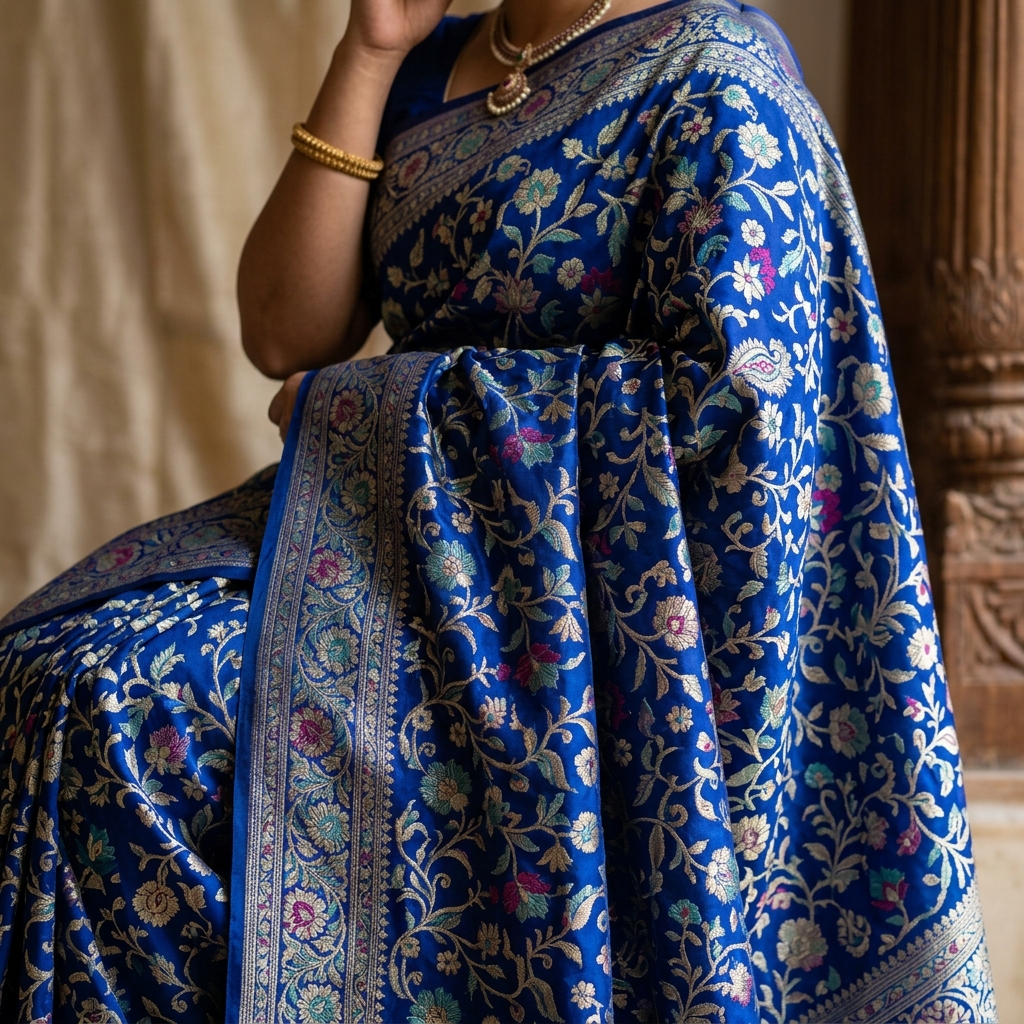
What is Fekwa (Fakua/Cutwork) in Banarasi Sarees?
Learn about Fekwa (or Fakua/Cutwork), an authentic Banarasi weaving technique that creates beautiful floral motifs and jaal patterns. Find out why it's more affordable without compromising quality.
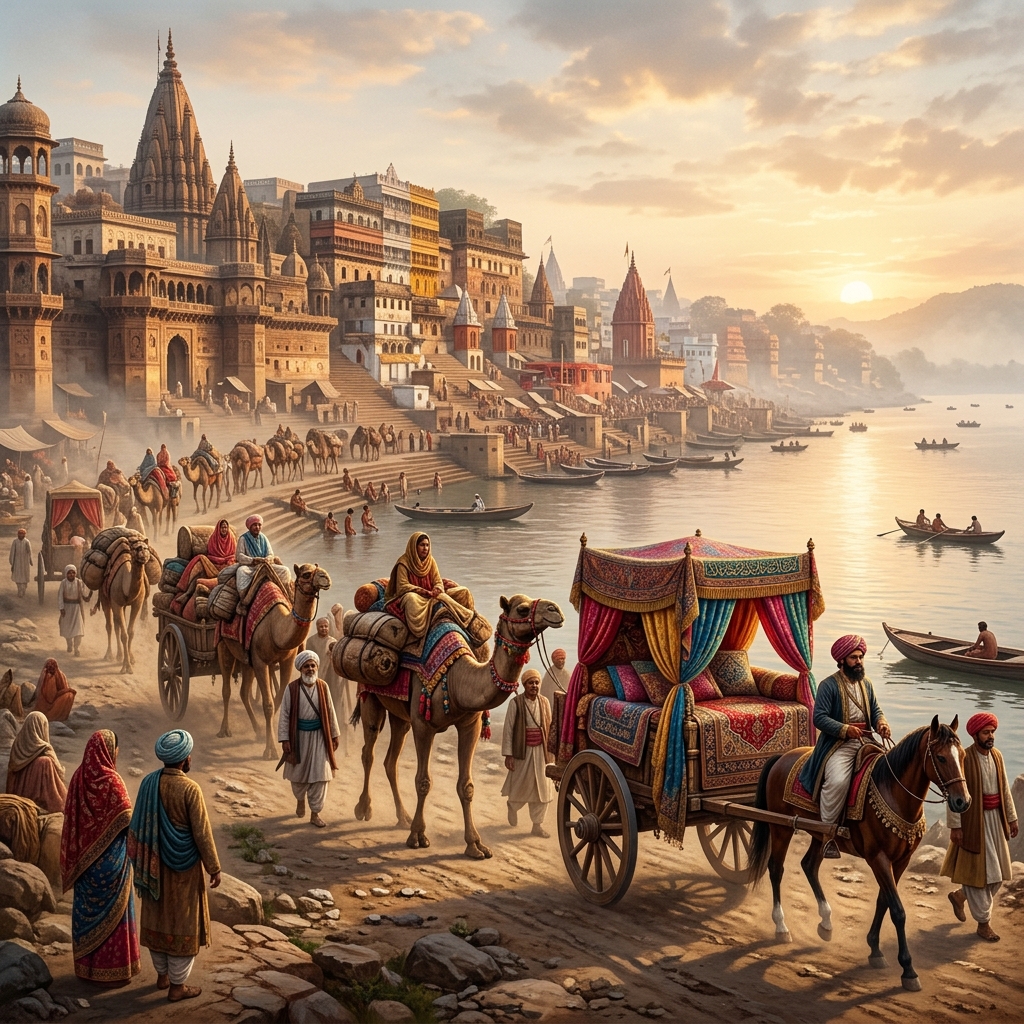
The Silk Route Through Varanasi: History of Banarasi Weaving
Trace the centuries-old journey of silk into Varanasi — from ancient trade routes to Mughal courts to the handloom houses of today.
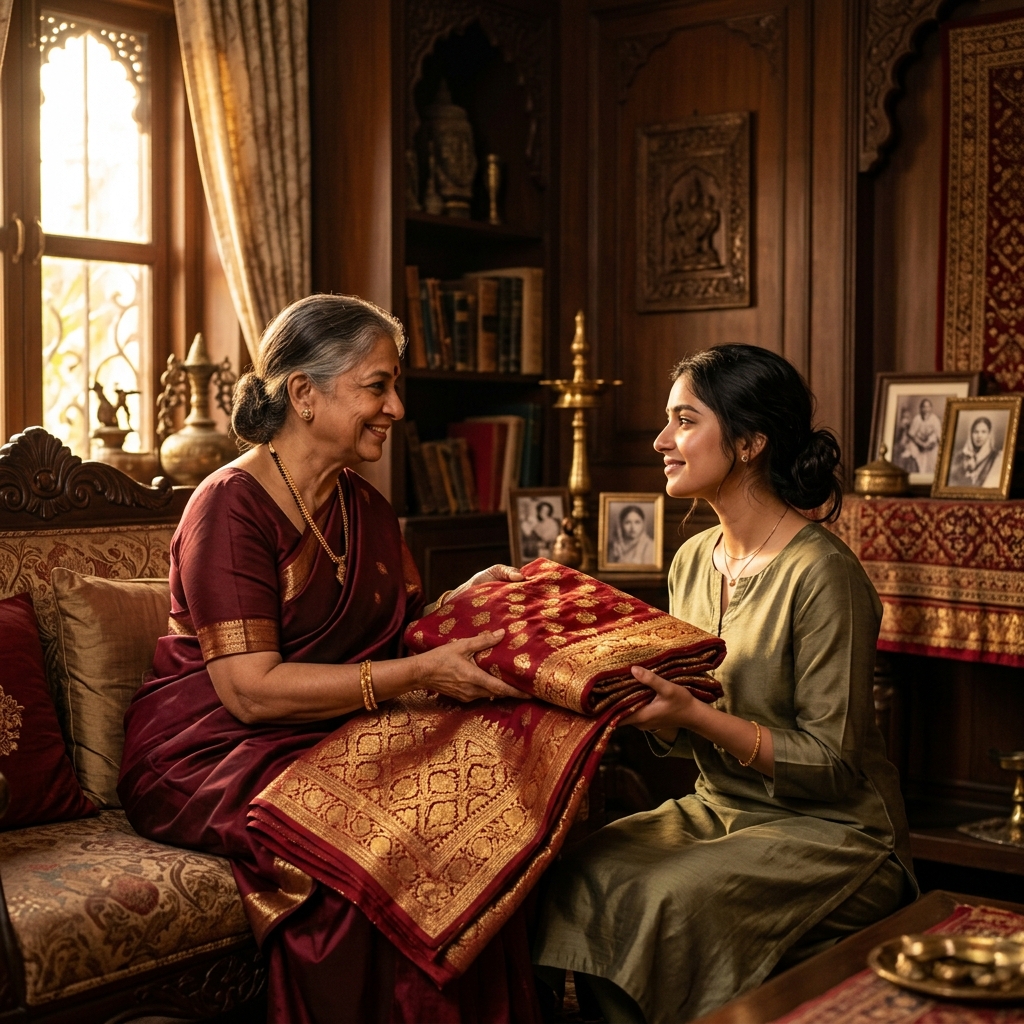
The Banarasi Saree as a Family Legacy: An Heirloom Woven in Silk
Explore the tradition of passing down Banarasi sarees, the craftsmanship that makes them endure, and how to preserve a vintage Banarasi silk saree as a family legacy.
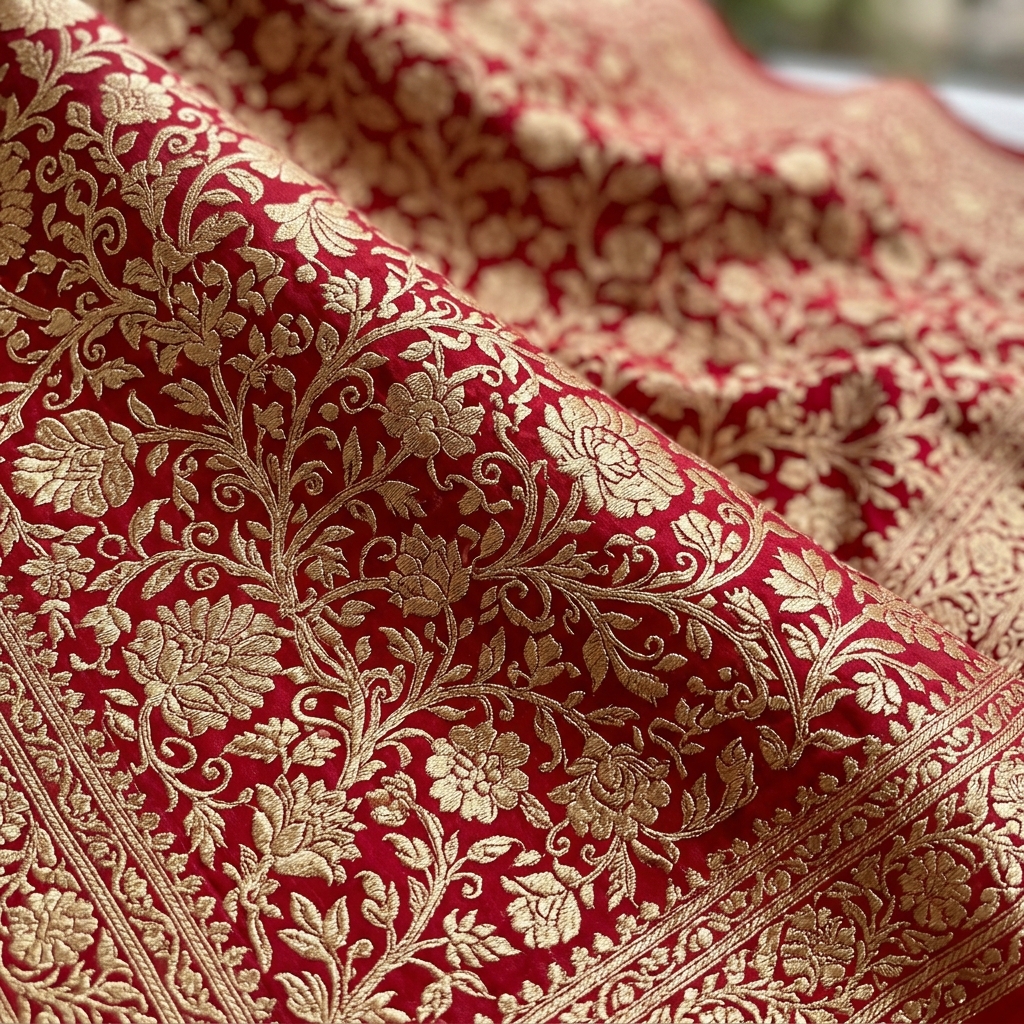
What is a Banarasi Saree Motif? A Guide to Buta, Jaal, and Paisley Patterns
Understand the language of Banarasi saree motifs — from the mango-shaped buta to the trellis-like jaal. A weaver's guide to reading pattern, symbolism, and craft.
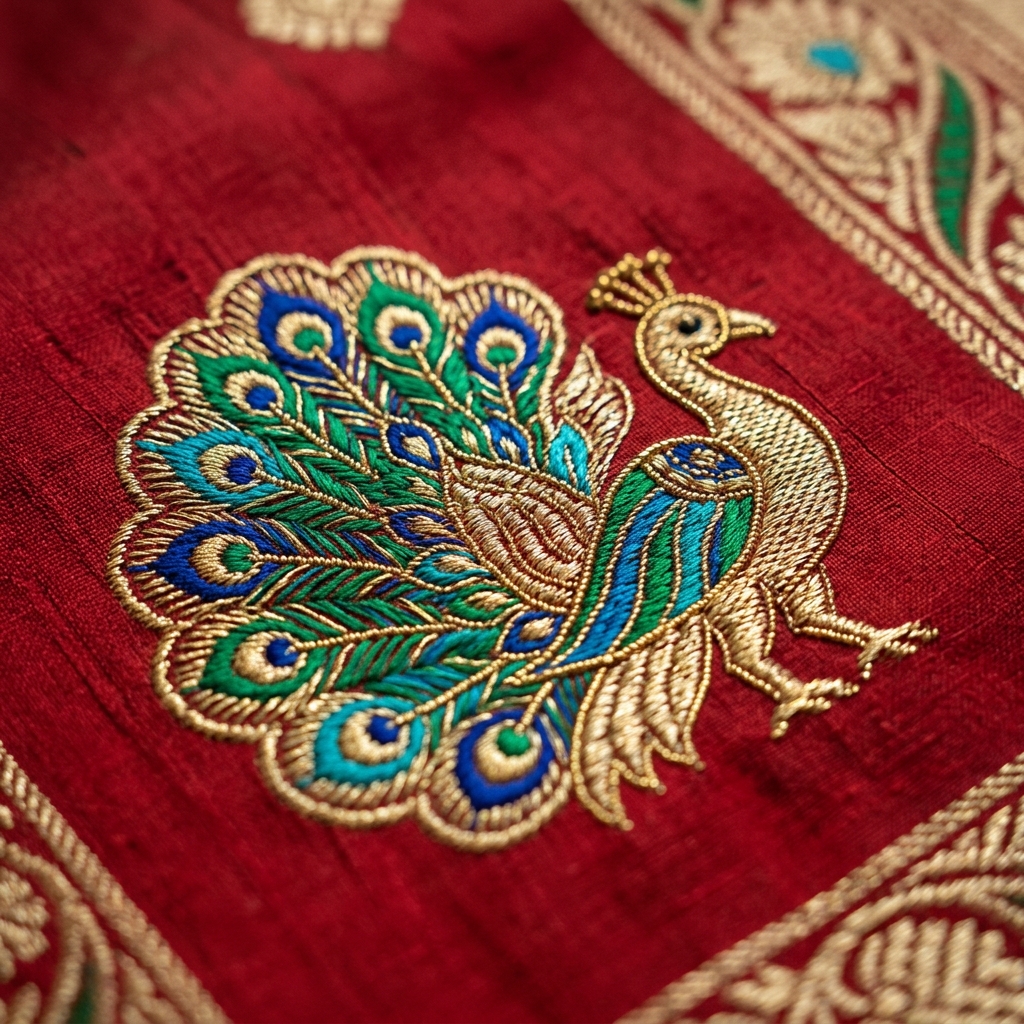
What is a Kadhua Banarasi Saree?
Discover the art of Kadhua Banarasi sarees — individually woven motifs, no loose threads, and an embossed 3D finish. Learn about Meenakari vs Sonarupa and why Kadhua is the pinnacle of Banarasi craftsmanship.