
How to Hang and Store Silk Sarees Properly (Without Ruining the Fabric or Snapping Gold Zari)
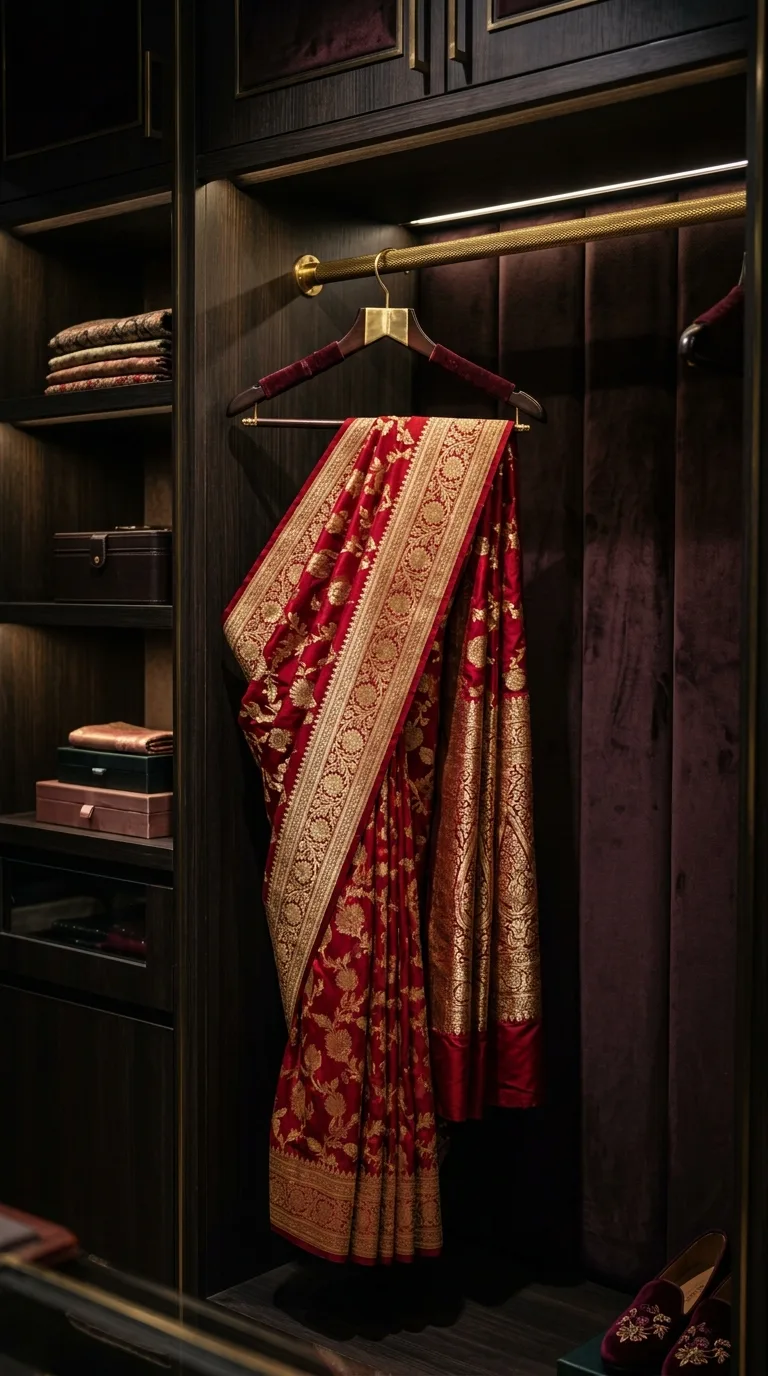
There is a specific kind of heartbreak every saree lover experiences at least once in her life.
You receive an invitation to a family wedding. You open your wardrobe, reach for that treasured pure Banarasi Katan Silk Saree—the one you bought for a special occasion or inherited from your mother—only to find a stiff, sharp, permanent white crease mark right across the middle of the drape.
You send it for gentle steam pressing, you try ironing it from the reverse side under a damp cloth, but that stubborn horizontal line refuses to budge. Worse, upon closer inspection, the intricate metallic gold zari threads along that fold appear dull, frayed, and separated.
The culprit behind this damage is almost never age or wear. In nine out of ten cases, it is the hanger inside your closet.
In this master guide, we break down why standard hanging methods destroy heavy handloom sarees, the structural science of why gold zari fractures under pressure, and the 5-second muslin wrap hack used by master weavers and celebrity stylists to keep heirlooms pristine for decades.
1. The Wire Hanger Trap: Why Bare Metal Acts Like a Dull Blade
When you hang shirts, trousers, or lightweight chiffon dresses, standard wire or thin plastic hangers work just fine. But a pure Banarasi Brocade or heavy bridal Katan saree is an entirely different creation:
- A genuine pure silk saree woven with real or tested gold-silver zari weighs between 750 grams to 1.4 kilograms.
- The fabric consists of thousands of ultra-fine silk warp filaments interlocked with delicate metallic weft threads.
When you fold that entire 6-yard saree in half and drape it over a thin 2mm wire hanger, all 1,000 grams of fabric weight concentrate onto a razor-thin contact line.
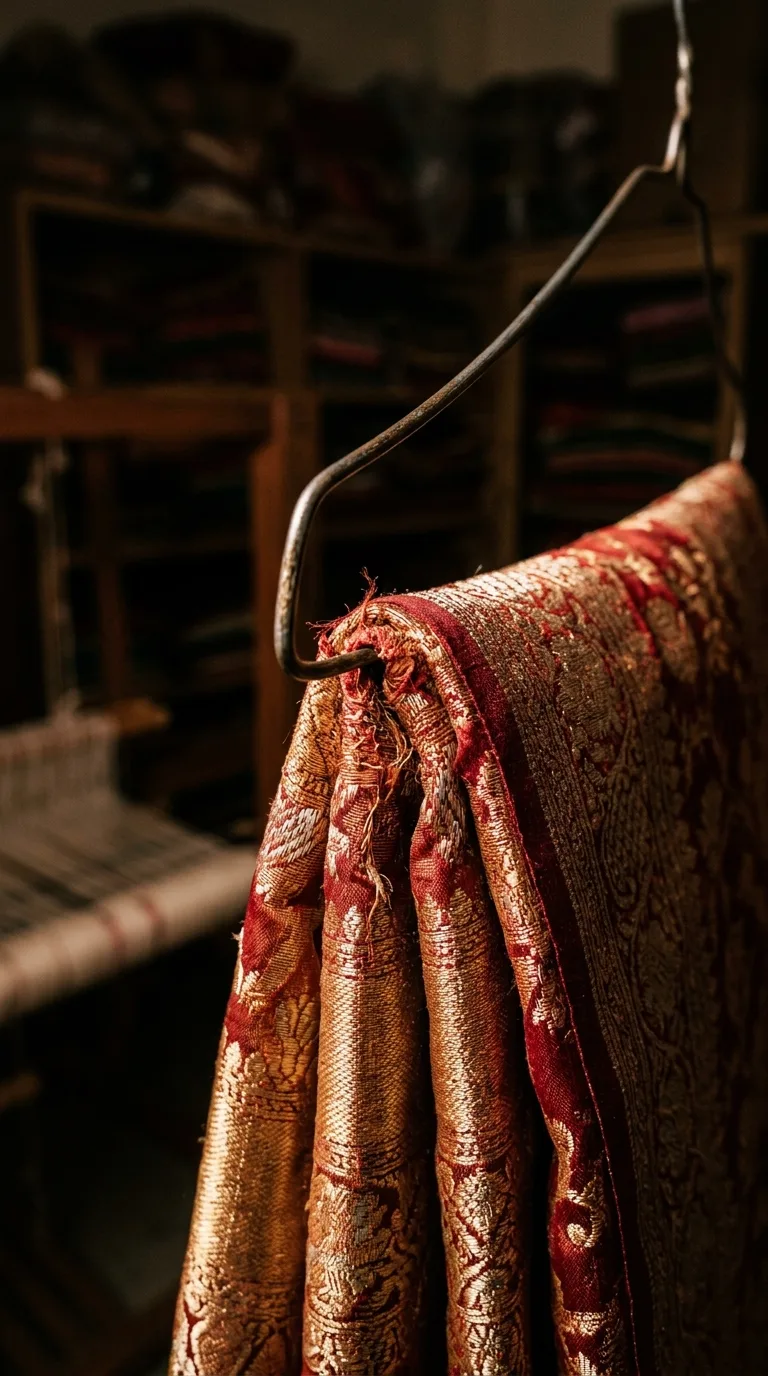
The Three Silent Destroyers in Your Closet:
- Gravitational Shear Stress: Over weeks and months of hanging undisturbed, the downward pull of the heavy lower fall pinches the top fold against the thin metal bar, crushing the delicate silk fibroin fibers.
- Metallic Zari Fatigue: Pure zari is crafted by wrapping micro-thin silver-plated gold leaf around a silk core yarn. When bent tightly at a 180° sharp angle over bare wire, the metallic foil stretches, cracks, and permanently snaps.
- Moisture & Chemical Transfer: Bare metal hangers (especially cheap dry-cleaner wire) react with ambient humidity and closet moisture, oxidizing and transferring subtle rust marks or chemical residues directly onto the silk.
2. Why That White Crease Never Irons Out
Many women believe that a stubborn crease in a silk saree can be smoothed out with enough heat and steam. Unfortunately, what looks like a simple crease is often permanent microscopic thread fracture.
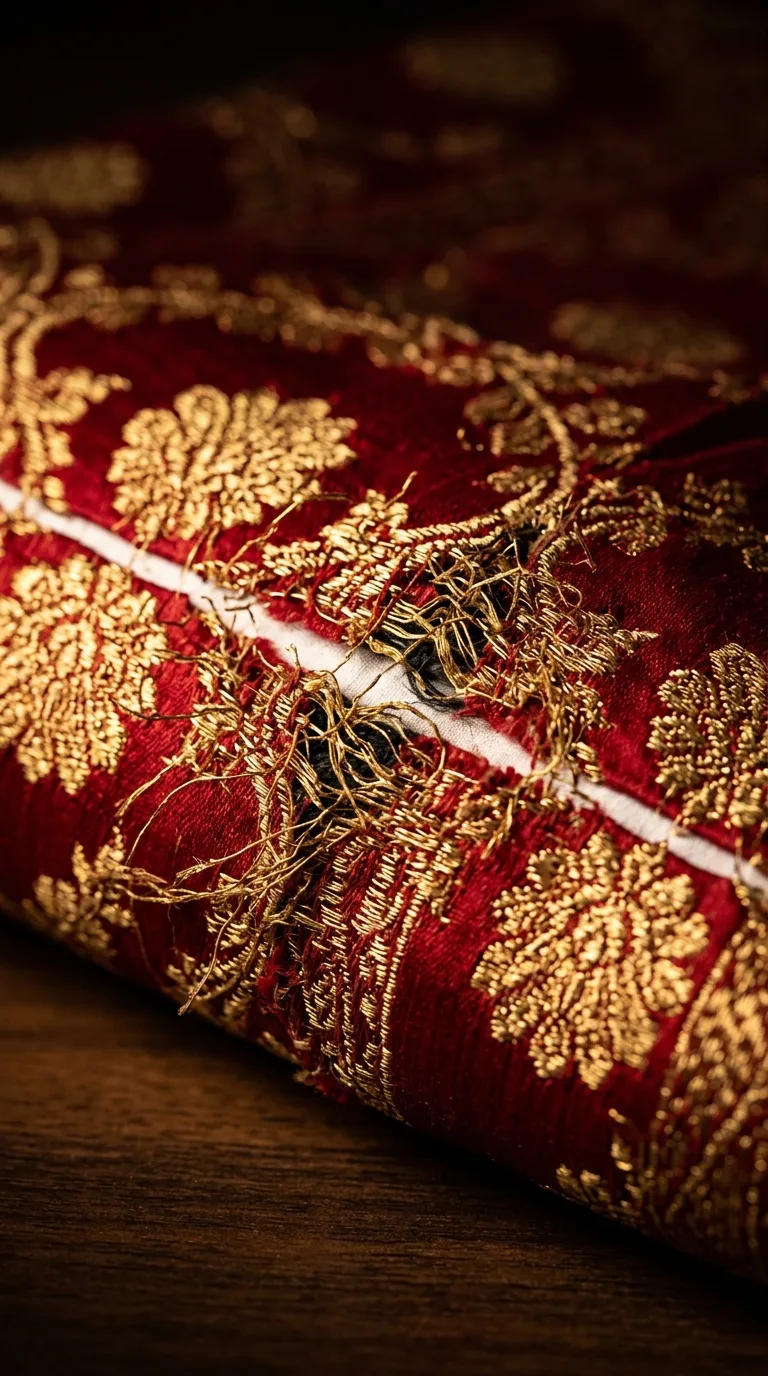
When a heavy saree remains folded sharply over a thin bar for more than three to six months:
- The vertical warp threads are pulled apart, leaving a visible gap in the weave density.
- The snapped metallic zari threads cannot "re-knit" themselves under heat; they remain separated, catching light differently than the surrounding fabric. This creates the optical illusion of a permanent "white chalk line" across your saree.
- The Dry Cleaner Dilemma: Taking a fractured saree to a dry cleaner for heavy mechanical roller-ironing will only crush the broken fibers further, flattening the rich three-dimensional texture of the handloom motifs.
3. The 5-Second Stylist Fix: The Muslin-Wrapped Cylinder Hack
You do not need to invest in expensive modular wardrobe organizers or heavy specialty racks to protect your sarees. The safest, most effective method is a simple boutique technique that costs virtually nothing.
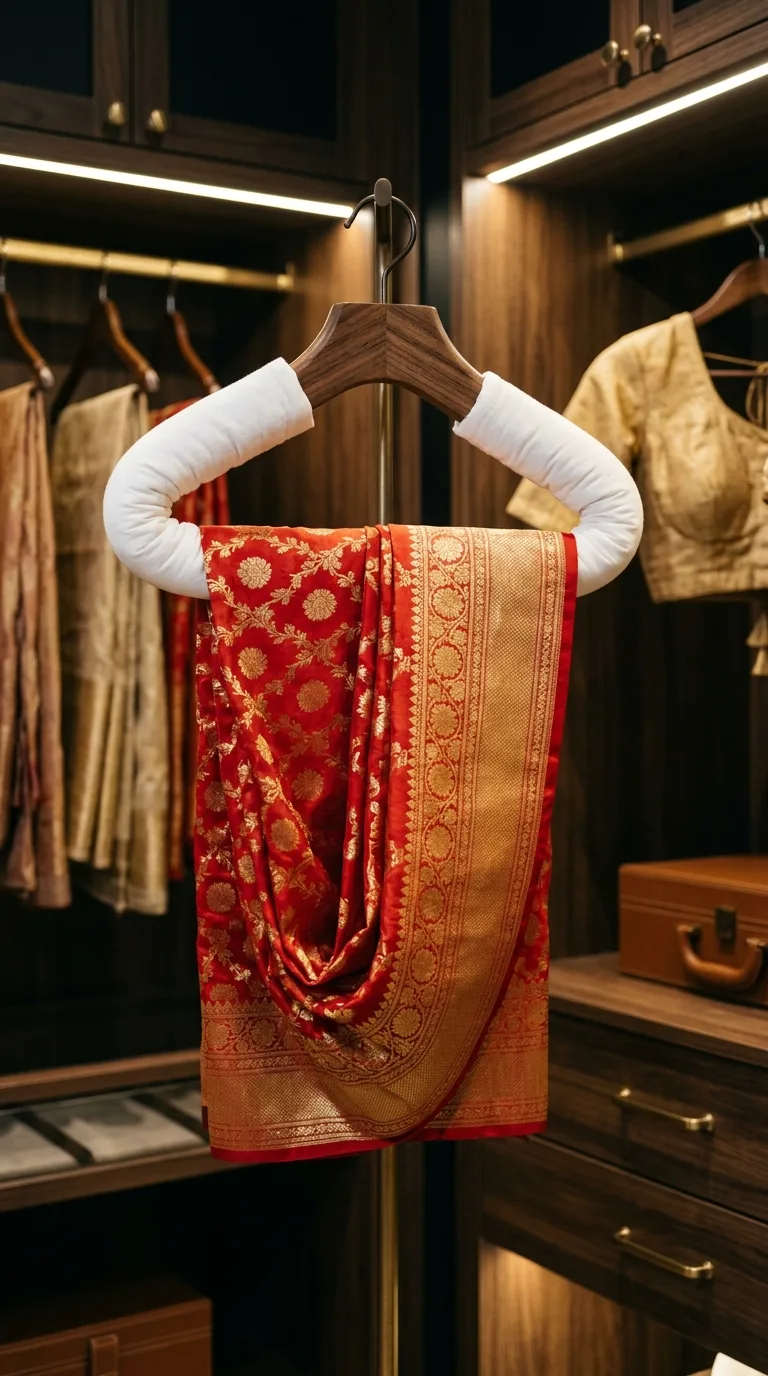
How to Create a Zero-Crease Muslin Hanger in 3 Steps:
- Choose the Right Base: Use a wide-shouldered wooden hanger or a sturdy broad plastic hanger with a round horizontal bar (at least 1.5 cm diameter). Avoid wire hangers entirely.
- Add the Cushioning Buffer: Take a length of clean, unbleached 100% cotton muslin cloth (or a clean cotton mulmul dupatta / small soft towel). Wrap it tightly around the horizontal crossbar until the bar becomes a thick, plush cylinder (approx. 2 to 3 inches in diameter).
- Secure the Ends: Tie the muslin ends neatly or secure them with a safety pin (pinned inside the padding so the metal pin never touches your saree).
Why This Works:
- Spreads Weight Evenly: Instead of 1,000 grams pressing into a 2mm wire edge, the weight is distributed smoothly across a wide, curved 3-inch cushion.
- Zero Sharp Folds: The saree rests in a gentle, rounded arch with zero angular pinching.
- Breathable Protection: Pure cotton muslin absorbs residual closet humidity and prevents synthetic chemical off-gassing from touching the silk.
4. Hanging vs. Folding: When Should You Hang and When Should You Box?
Not every saree should be hung on a hanger. Follow this master rule based on fabric weight and embroidery structure:
| Saree Type & Weave | Recommended Storage Method | Storage Precautions |
|---|---|---|
| Heavy Bridal Banarasi, Kadhua, Jangla (800g – 1.5kg) | Folded in Cotton/Muslin Bag inside Box | Refold every 3 to 4 months along fresh fold lines to prevent permanent creases. |
| Light-to-Medium Katan Silk, Tanchoi, Tussar (500g – 750g) | Muslin-Padded Broad Hanger | Ensure the hanger has a plush 2-3 inch diameter cushion. Space hangers 1 inch apart for air circulation. |
| Organza, Kora Silk, Chiffon with Heavy Borders | Flat Folded on Wooden Shelves | Heavy hanging weight will stretch sheer organza meshes and distort the border alignment. |
| Pure Tissue Silk & Zari Jaal Sarees | Rolled on Acid-Free Cardboard Tubes | Roll with the embroidered zari facing inward, wrapped in a pure cotton sheet. |
5. The Master Saree Storage Checklist for Lifelong Preservation
To ensure your silk heirlooms look as radiant for your daughters as they do today, incorporate these golden wardrobe habits:
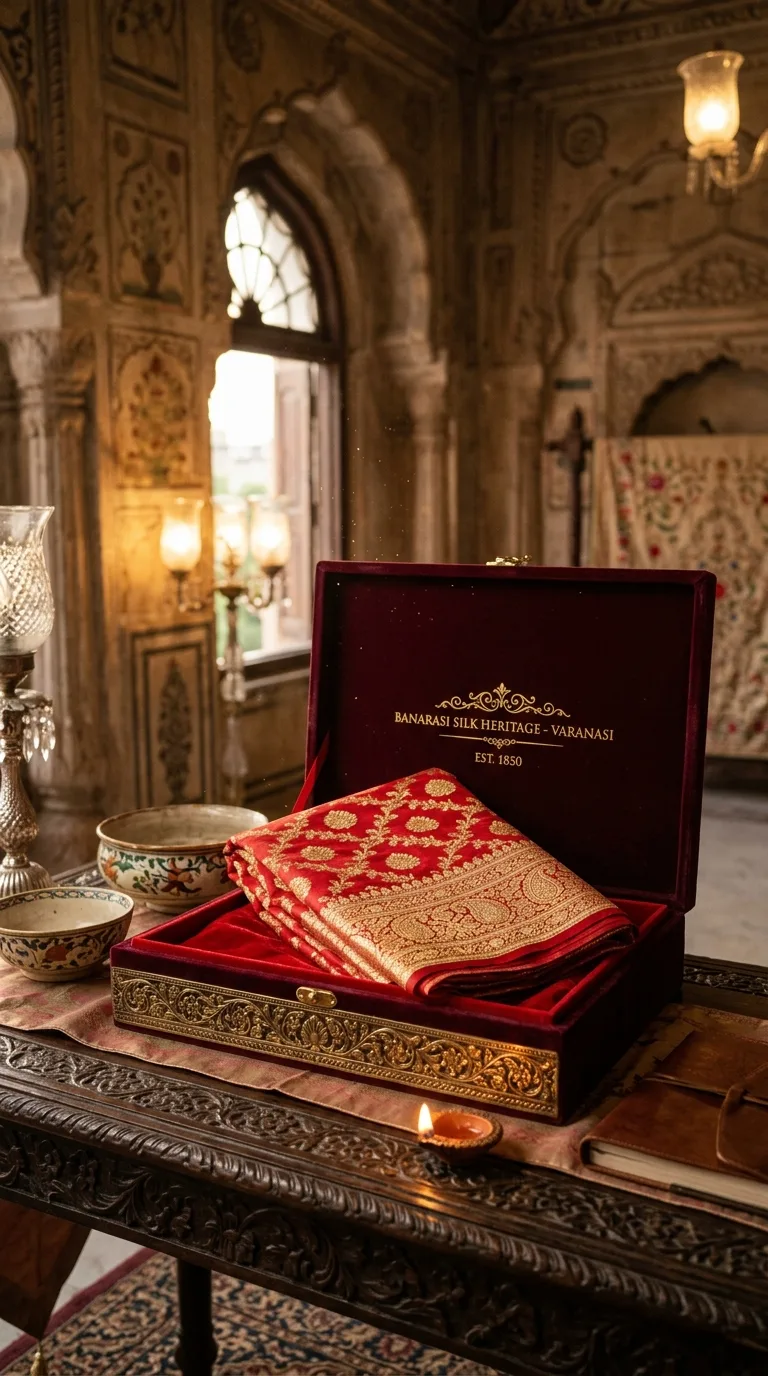
1. The 90-Day Refold Rule
Pure silk needs to breathe. Every three to four months, take your stored silk sarees out of their wardrobe bags:
- Gently shake out the fabric in a shaded, well-ventilated room for 15 minutes.
- Change the fold lines. If the saree was folded horizontally, refold it vertically. This ensures the metallic zari is never subjected to constant pressure in the exact same spot.
2. Never Use Plastic Dry-Cleaning Bags
Plastic bags trap moisture, accelerate humidity buildup, and emit synthetic gases that cause pure silver and gold zari to tarnish black over time. Always store your sarees in breathable, unbleached cotton muslin bags or wrap them in pure cotton sarees.
3. Keep Naphthalene Balls Away from Direct Silk
Never place mothballs, naphthalene balls, or synthetic perfume sachets in direct contact with pure silk or zari. The chemicals will chemically react with metallic leafing, turning 24K gold zari into a dull greyish-black hue.
- Natural Alternative: Place dried neem leaves wrapped in small cotton pouches, whole cloves, or pure cedarwood blocks in the corners of your wardrobe (away from direct fabric contact).
4. Post-Event Airing Protocol
Never pack a saree away immediately after attending a wedding or dinner. Body heat, perspiration, and perfume residues can degrade silk proteins if trapped in dark closets.
- Hang the saree in a shaded, air-conditioned room for 12 to 24 hours to let all moisture evaporate before storing it in its muslin bag.
Frequently Asked Questions (FAQs)
Can I hang my pure Banarasi silk saree on a regular hanger?
Only if the hanger is wide, sturdy, and wrapped in thick cotton muslin padding. Never hang heavy silk on bare metal, thin wire, or sharp-edged plastic hangers, as the concentrated weight will cut into the fabric and permanently snap the gold zari threads.
How do I remove an old hanger crease from a silk saree?
Do not apply a direct hot iron to the crease. Instead, lay the saree flat on an ironing table, place a clean, slightly damp white cotton cloth over the crease, and use a steam iron on the lowest silk setting on the reverse side of the fabric. Move the iron gently without pressing down aggressively.
How often should I take silk sarees out of storage?
Every 3 to 4 months. Unfold the saree, allow it to air out in a shaded room for 15–20 minutes, and refold it along different lines to redistribute gravitational tension.
Why does the gold zari on my old saree turn black?
Zari contains pure silver electroplated with gold. Exposure to trapped moisture, plastic bags, sweat residues, and synthetic naphthalene chemicals causes silver oxidation (tarnish). Storing sarees in breathable cotton muslin with cedarwood blocks keeps zari gleaming bright.
Continue Reading

How One Banarasi Saree Can Create 4 Completely Different Looks
A beautiful Banarasi silk saree is one of the most versatile pieces in your wardrobe. Discover how to create four stunning looks just by changing your jewellery.
4 Elegant Ways to Drape a Banarasi Saree | Shri Geeta Sarees
Looking for new ways to wear your handwoven Banarasi saree? Discover 4 elegant and easy styling methods, from classic traditional to modern reception drapes.

Banarasi Saree for Mother of the Bride: A Guide to Getting It Right
A comprehensive guide to choosing the perfect Banarasi saree for the mother of the bride, covering colors, weaves, and styling advice.

Types of Banarasi Silk: Katan, Georgette, Organza & Tissue Explained
Confused by Banarasi saree fabrics? A Varanasi weaver explains the exact difference in drape, weight, and styling for Katan, Georgette, Organza, and Tissue silk.