What is Art Silk? The Unbiased Truth About Artificial Silk
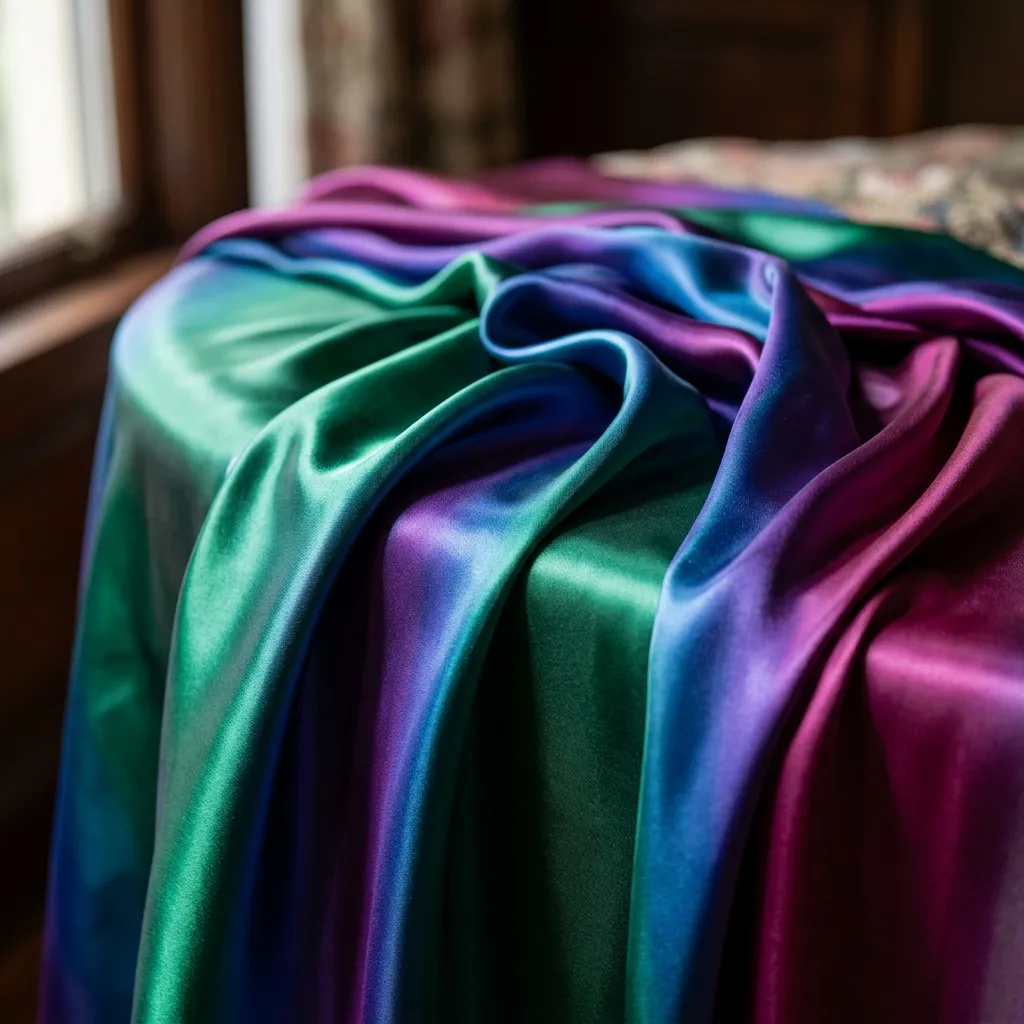
When stepping into the world of ethnic fashion, you will inevitably encounter the term "art silk." It is widely assumed by many consumers that art silk is simply a cheap knock-off, a fabric to be avoided at all costs by purists. On the other end of the spectrum, some sellers aggressively promote it as the perfect, indistinguishable alternative to real silk that will save you money.
Start with this reality: both of these widely accepted narratives are flawed.
This creates a fundamental problem for buyers. The background noise of aggressive marketing and traditionalist snobbery makes it nearly impossible to understand what you are actually buying. The goal here is not to promote art silk, nor is it to villainize it. Instead, we need to address the inconsistency in how this fabric is discussed and look at the objective facts.
The Reality Behind the Thread
"Art silk" is short for artificial silk. It is typically manufactured using synthetic fibers like rayon, polyester, or nylon. Unlike pure handloom silk which is spun by silkworms and woven meticulously on a loom, art silk is a product of modern industrial chemistry.
It is reported by textile experts that rayon, one of the most common materials used for art silk, is semi-synthetic—made from regenerated cellulose (wood pulp). This gives it a drape and luster that is remarkably close to natural silk. Although it mimics the visual appeal, an anomaly occurs when you consider the fabric's breathability and lifespan. Art silk does not regulate temperature the way natural silk does, meaning it can feel warmer and less breathable against the skin during hot weather.
Challenging the Extremes
If you look at online forums and boutique reviews, you will see a divide. Traditionalists will claim that only pure silk katan is worth your investment. But this ignores the practical reality of modern consumers.
Not every occasion demands a heavy financial investment. If you are attending a one-off event where you want a rich look without the worry of maintaining a delicate heirloom, art silk serves a very practical purpose. It is more durable against spills and easier to dry clean.
However, promoting it as a direct substitute for the real thing is equally deceptive. An art silk saree will never age like pure silk. It lacks the quintessential crispness, the unique sound of pure silk rubbing against itself (the scroop), and the cultural heritage woven into every thread. If you are buying a bridal piece or a family heirloom, art silk is simply the wrong tool for the job.
If you are unsure of what you are holding, reading our guide on Art Silk vs Real Silk will provide you with physical tests to distinguish between the two. Furthermore, learning how to identify an authentic Banarasi saree is crucial so that you never pay pure silk prices for artificial fabric.
The Verdict
Art silk is not the villain of the textile world, nor is it its savior. It is a tool. Once you strip away the marketing fluff and the traditionalist stigma, you are left with a versatile, accessible fabric that has a specific place in a modern wardrobe. Buy it when it makes sense for your budget and lifestyle, but always demand transparency from your seller so you know exactly what you are paying for.
Frequently Asked Questions (FAQs)
What exactly is art silk made of? Art silk is primarily made from synthetic or semi-synthetic fibers like rayon (viscose), polyester, or nylon. It is manufactured to mimic the sheen and texture of natural silk.
Is art silk comfortable to wear in summer? Although it looks like silk, art silk is generally less breathable than natural silk or cotton. It can trap heat, making it less comfortable for prolonged wear in hot and humid weather.
How can you tell the difference between art silk and pure silk? The most reliable method is the burn test. Pure silk burns slowly, smells like burnt hair, and turns into a brittle ash. Art silk (especially if made from polyester) will melt, smell like burning plastic, and form a hard bead.
Is art silk cheaper than pure silk? Yes, it is widely accepted that art silk is significantly more affordable because it is mass-produced in factories, whereas pure silk requires a labor-intensive, natural production process.
Can art silk sarees be dry cleaned? Yes. In fact, dry cleaning is often recommended to maintain the fabric's sheen and prevent the synthetic fibers from losing their shape or pilling over time.
Continue Reading
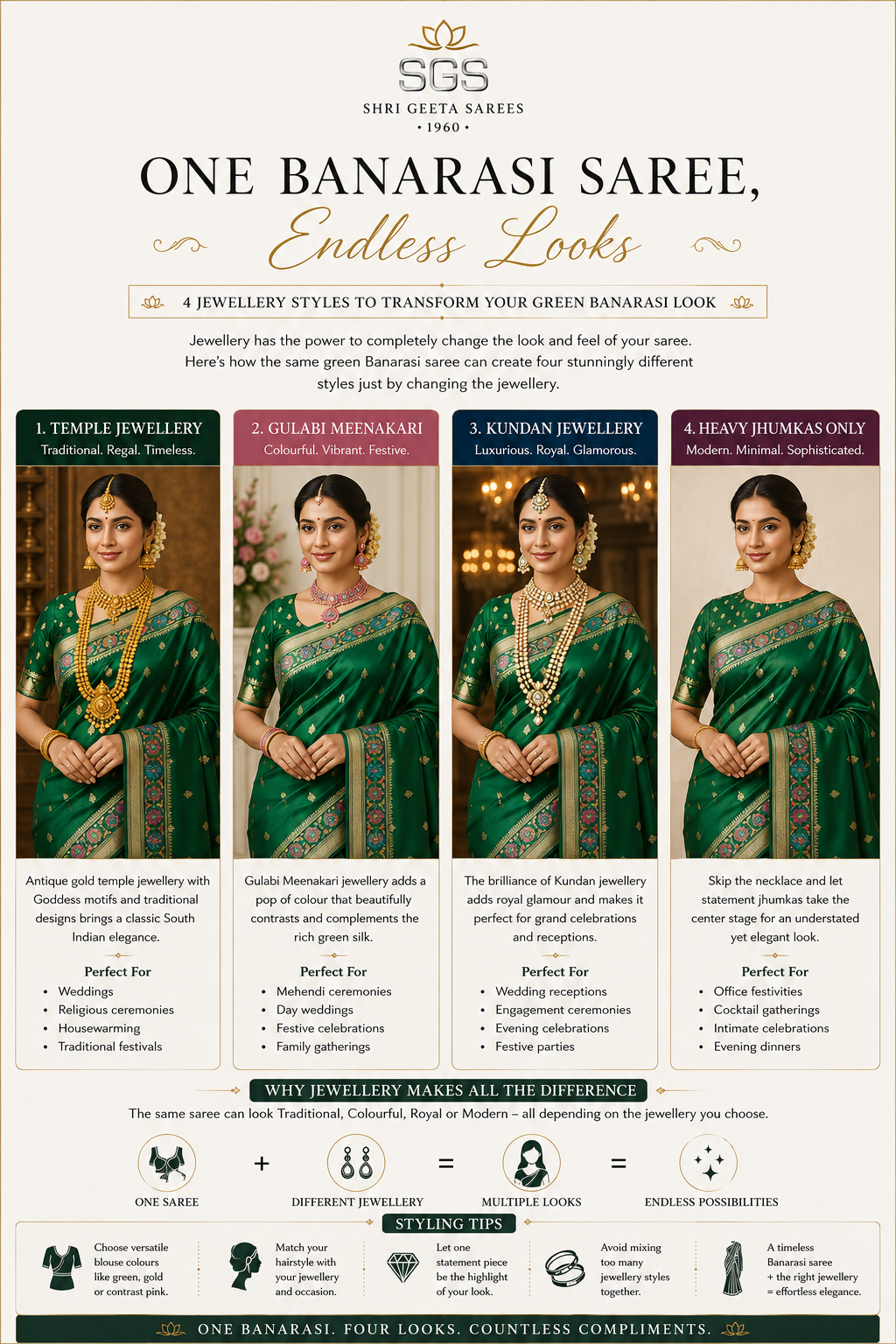
How One Banarasi Saree Can Create 4 Completely Different Looks
A beautiful Banarasi silk saree is one of the most versatile pieces in your wardrobe. Discover how to create four stunning looks just by changing your jewellery.
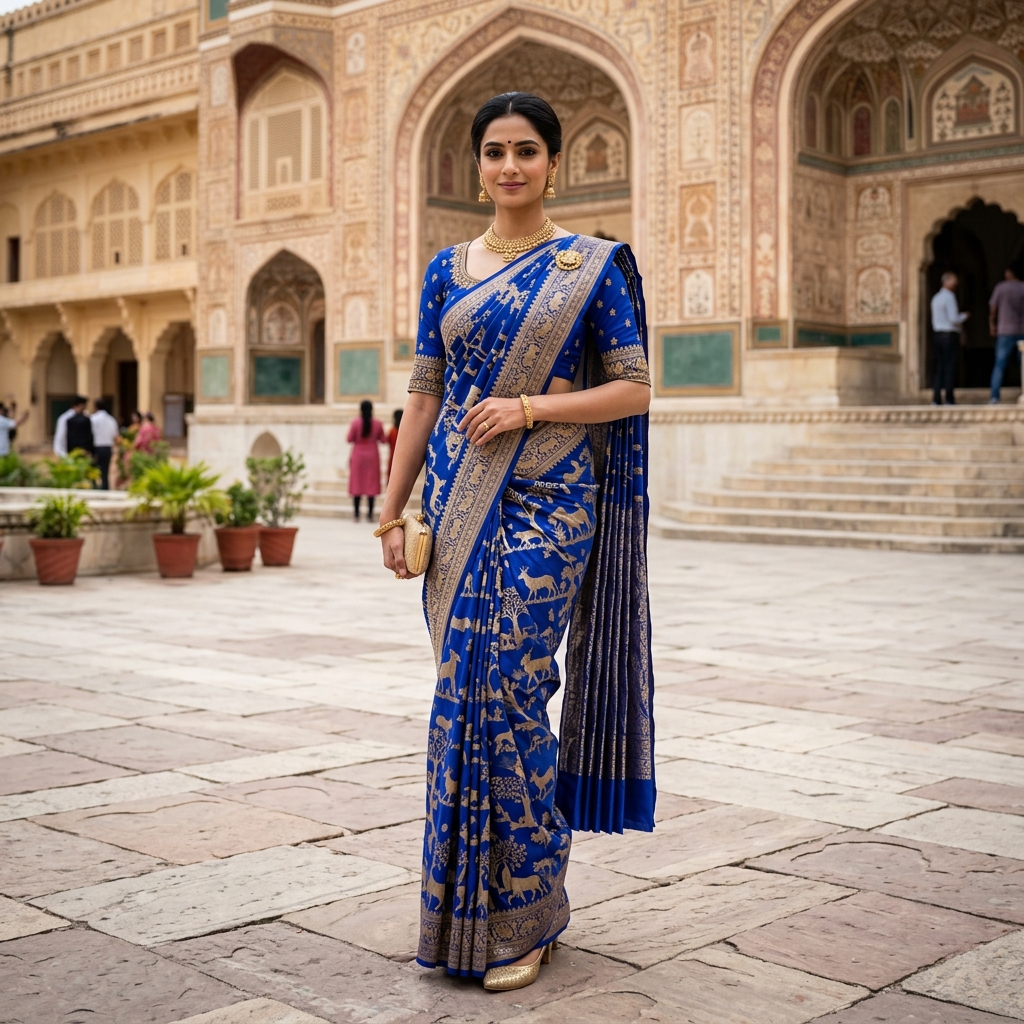
4 Elegant Ways to Drape a Banarasi Saree | Shri Geeta Sarees
Looking for new ways to wear your handwoven Banarasi saree? Discover 4 elegant and easy styling methods, from classic traditional to modern reception drapes.
Banarasi Saree for Mother of the Bride: A Guide to Getting It Right
A comprehensive guide to choosing the perfect Banarasi saree for the mother of the bride, covering colors, weaves, and styling advice.
Types of Banarasi Silk: Katan, Georgette, Organza & Tissue Explained
Confused by Banarasi saree fabrics? A Varanasi weaver explains the exact difference in drape, weight, and styling for Katan, Georgette, Organza, and Tissue silk.