The Ultimate Guide to Identifying an Authentic Handloom Banarasi Saree (2026 Edition)
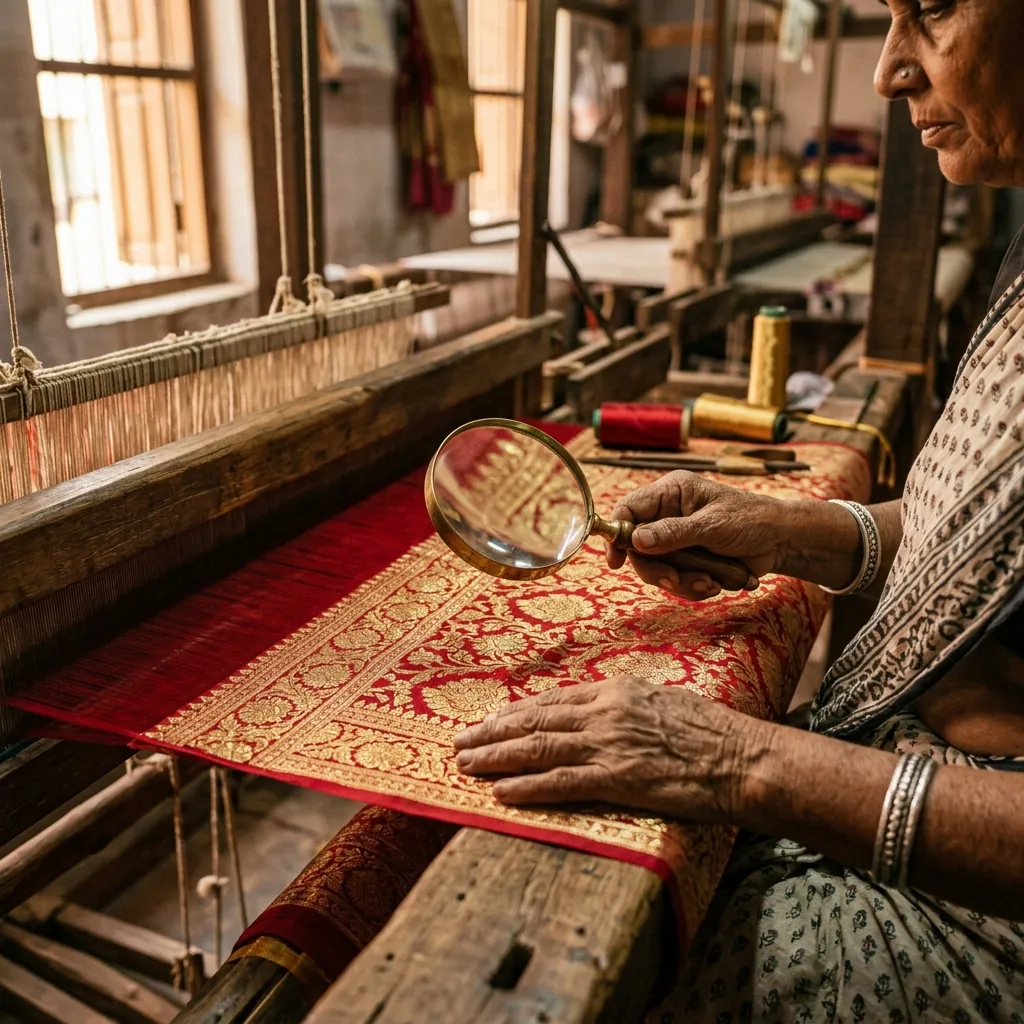
Buying a Banarasi saree is no longer just a purchase; it is an investment in Indian heritage. However, with the rise of power looms and synthetic fabrics flooding the market, the biggest question on every buyer's mind in 2026 is: "How do I know this Banarasi saree is actually real?"
If you are investing your hard-earned money into a pure Katan silk Banarasi for your wedding or a family heirloom, you deserve the absolute truth. At Shri Geeta Sarees, our family has been working directly with Varanasi's master weavers since 1960. We know every thread, every warp, and every weft.
In this definitive guide, we will teach you the foolproof methods to identify an authentic handloom Banarasi saree so you never get duped by a machine-made copy.
1. The "Reverse Side" Test (The Weaver's Signature)
The most reliable way to tell if a Banarasi saree is handwoven is to flip it over and look at the back (the reverse side) of the fabric. Machine-made sarees often look flawless on the back because they are programmed by computers. Human hands leave a signature.
- Kadhua Weave: If the saree claims to be a Kadhua Banarasi, the reverse side should have absolutely no floating threads. Each motif is woven individually, and the threads are cut cleanly. The front of the motif will feel slightly raised (embossed).
- Fekwa (Cutwork) Weave: If the saree is a Fekwa weave, you will see small, fuzzy cut threads outlining the back of the motifs where the artisan manually trimmed the excess silk.
- The Machine Fake: Power loom sarees often have a thick, messy web of completely continuous threads across the entire back, or they are suspiciously flawless and flat without any tactile texture.
2. The Pure Silk Burn Test (For the Brave)
If you have purchased a saree that claims to be Pure Katan Silk, there is a traditional method to test the yarn. (Note: Only do this on a single loose thread pulled from the edge of the saree!)
Light the single silk thread with a match.
- Pure Silk: It will smell exactly like burning hair (because silk is a natural protein). The ash will turn into a brittle, crushable black powder in your fingers.
- Synthetic/Polyester Fake: It will smell like burning plastic. It will melt rather than burn, and it will leave behind a hard, sticky plastic bead.
3. The Weight and Temperature Test
Authentic Banarasi silk is a natural fabric. It has a distinctive, luxurious weight to it, but it drapes beautifully.
- The Touch: When you first touch pure silk, it should feel naturally cool against your skin. As you hold it, it will gradually warm up to your body temperature. Synthetic polyester sarees will feel room-temperature and slightly rough or slippery, and they do not breathe.
- The Drape: A handloom saree falls with a heavy, graceful fluidity. Power loom fakes often feel stiff, papery, or unnaturally bouncy.
4. The "Mughal Motif" Irregularity
Handloom weaving is art, and art is inherently human. When you look closely at the detailed zari motifs (the paisleys, the shikargah hunting scenes, the florals), look for tiny, almost microscopic irregularities.
A power loom will weave 1,000 paisleys that are mathematically identical. A handloom weaver, working the loom with their hands and feet, will weave 1,000 paisleys that are almost identical, but carry the beautiful, subtle variations of human pressure and rhythm. These tiny imperfections are not flaws; they are the ultimate proof of authenticity.
5. The Price Reality Check
Let's address the elephant in the room: Pure handloom Banarasi sarees are luxury items. Weaving a Kadhua Banarasi saree takes a master artisan anywhere from 15 days to 6 months. It requires pure silk yarn and tested zari.
If you see a website selling a "Pure Katan Silk Bridal Banarasi" for ₹3,000 or $50, it is a fake. It is mathematically impossible to pay a weaver a living wage and source pure silk for that price. Authentic handloom sarees are investments that reflect the time, skill, and precious materials poured into them.
Buy with Absolute Confidence
Identifying a genuine Banarasi saree doesn't have to be intimidating. By checking the reverse side, examining the motifs, and trusting reputable, legacy weavers, you can ensure your purchase is a true piece of Indian heritage.
At Shri Geeta Sarees, we don't just sell sarees; we preserve a 60-year legacy of Varanasi craftsmanship. Every pure silk saree in our collection is woven by authentic Banarasi artisans.
Explore our Handloom Banarasi Collection today, and bring home an heirloom you can trust.
Continue Reading
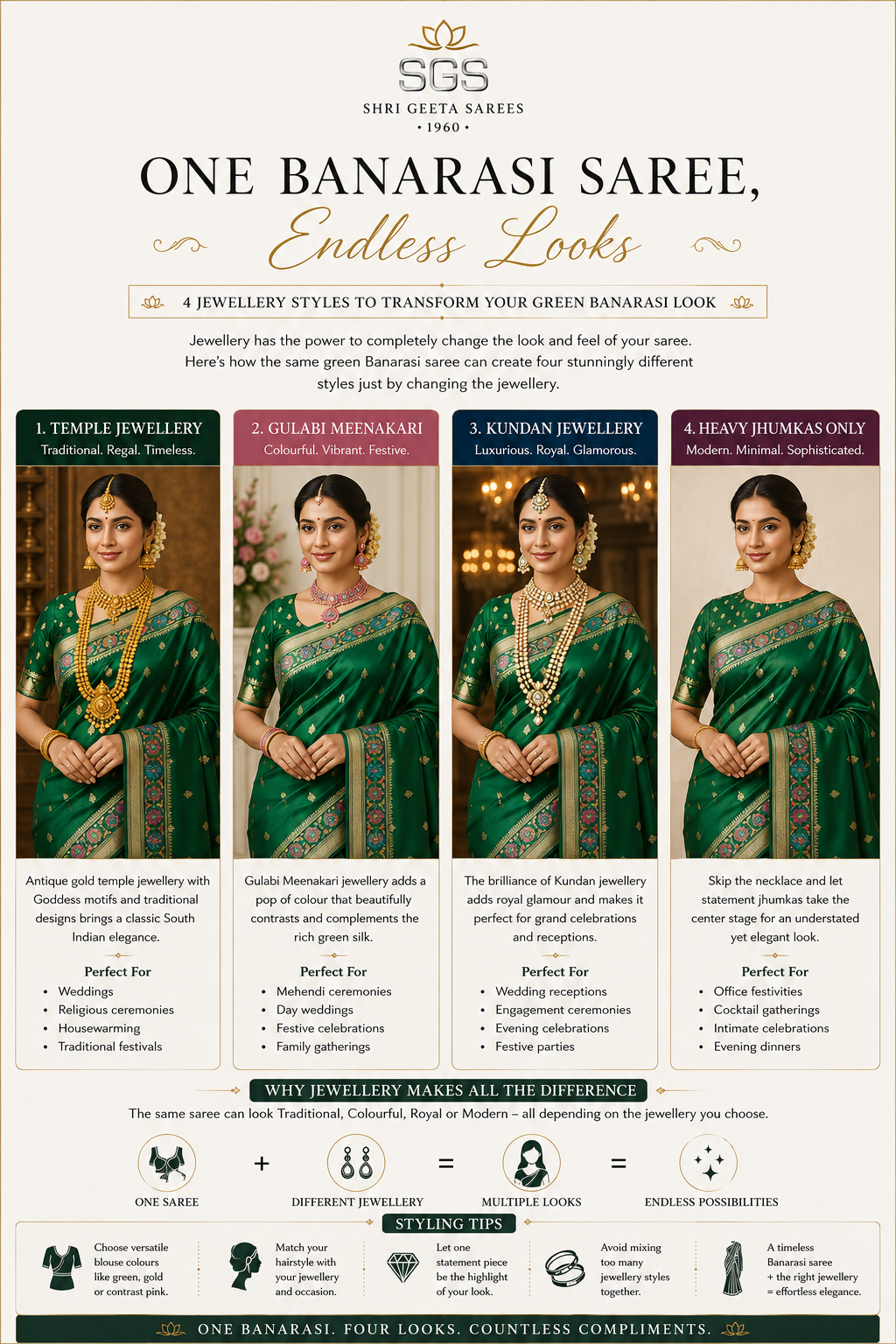
How One Banarasi Saree Can Create 4 Completely Different Looks
A beautiful Banarasi silk saree is one of the most versatile pieces in your wardrobe. Discover how to create four stunning looks just by changing your jewellery.
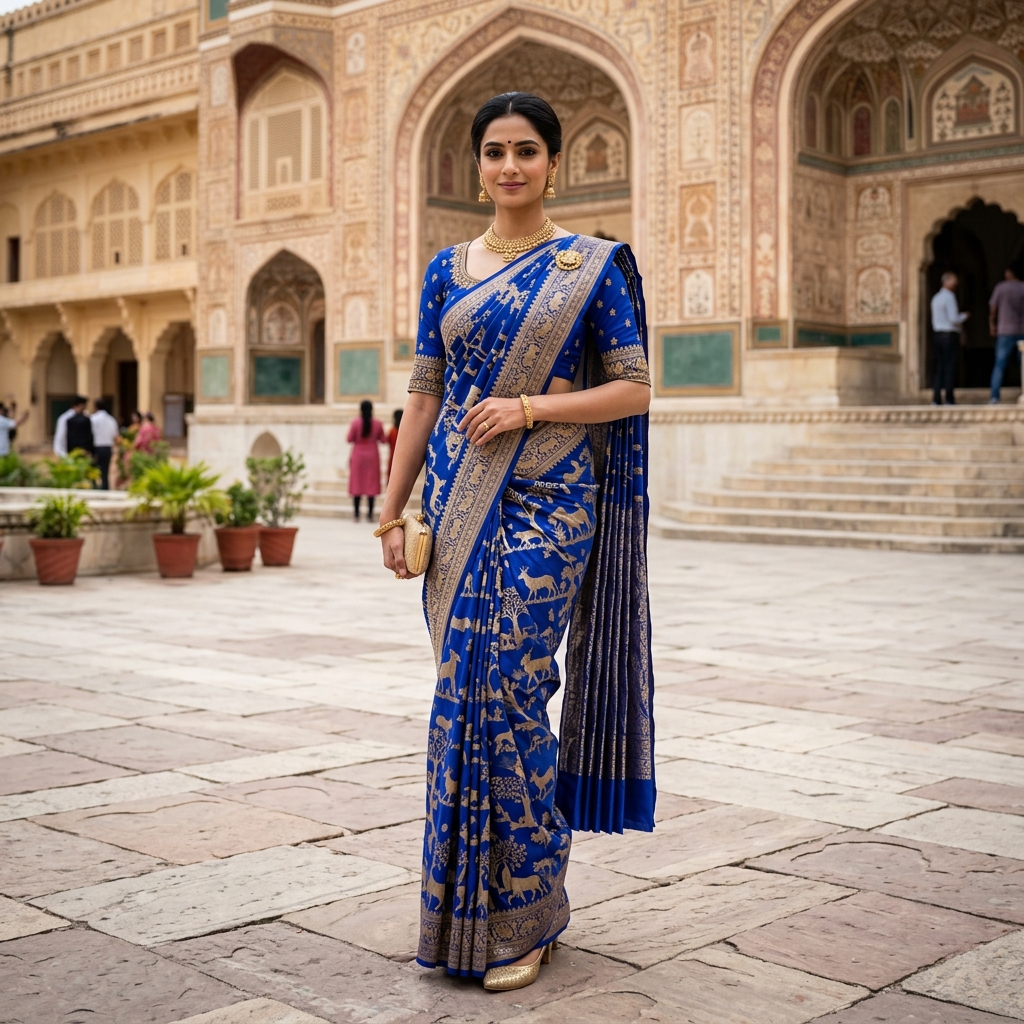
4 Elegant Ways to Drape a Banarasi Saree | Shri Geeta Sarees
Looking for new ways to wear your handwoven Banarasi saree? Discover 4 elegant and easy styling methods, from classic traditional to modern reception drapes.
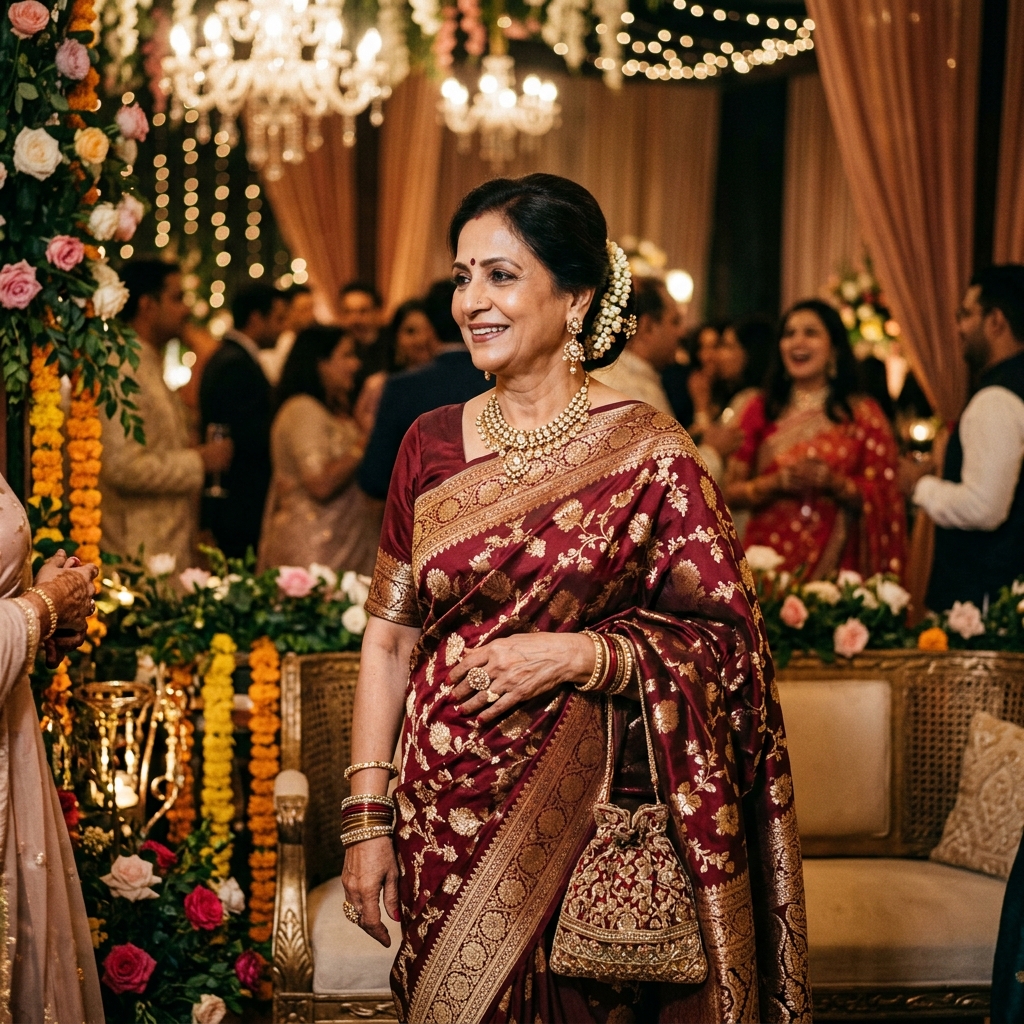
Banarasi Saree for Mother of the Bride: A Guide to Getting It Right
A comprehensive guide to choosing the perfect Banarasi saree for the mother of the bride, covering colors, weaves, and styling advice.
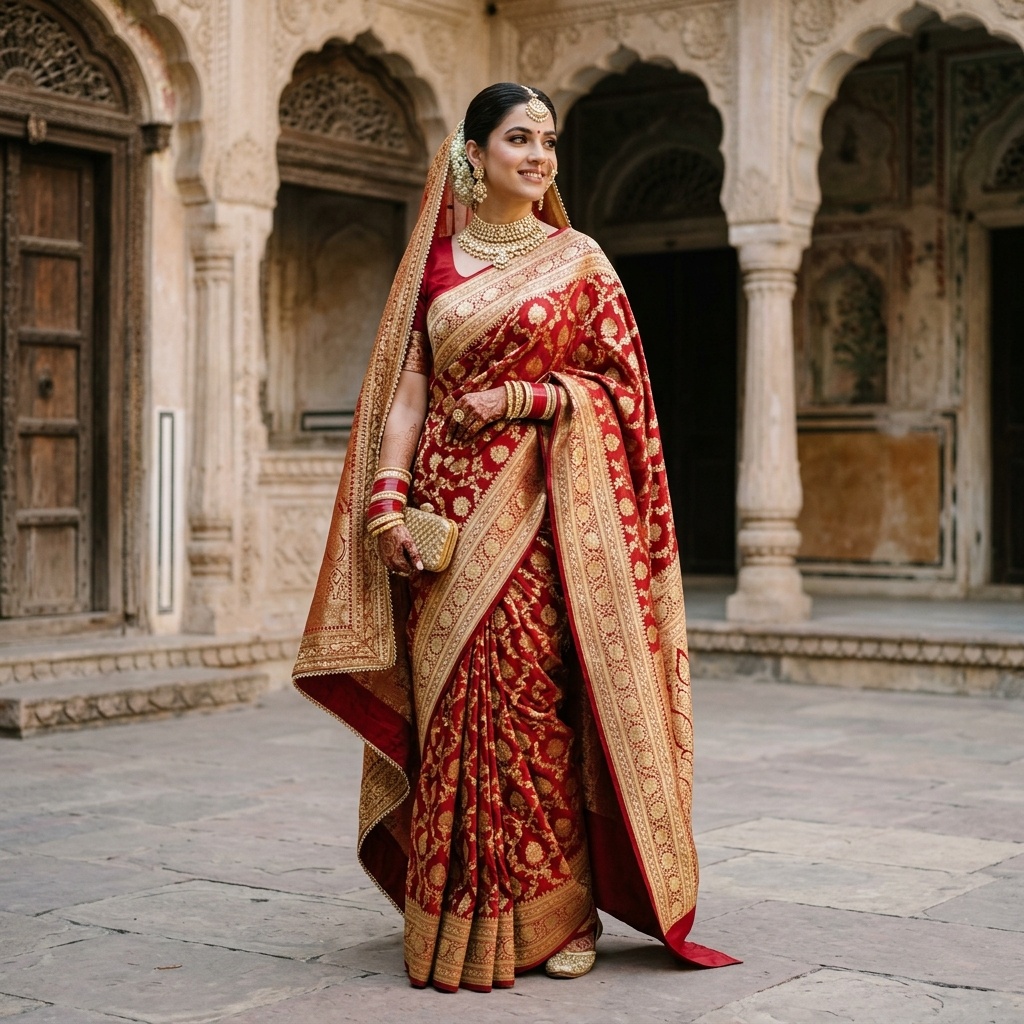
Types of Banarasi Silk: Katan, Georgette, Organza & Tissue Explained
Confused by Banarasi saree fabrics? A Varanasi weaver explains the exact difference in drape, weight, and styling for Katan, Georgette, Organza, and Tissue silk.