
The Ultimate Care Guide: How to Store and Clean Your Pure Banarasi Silk Saree
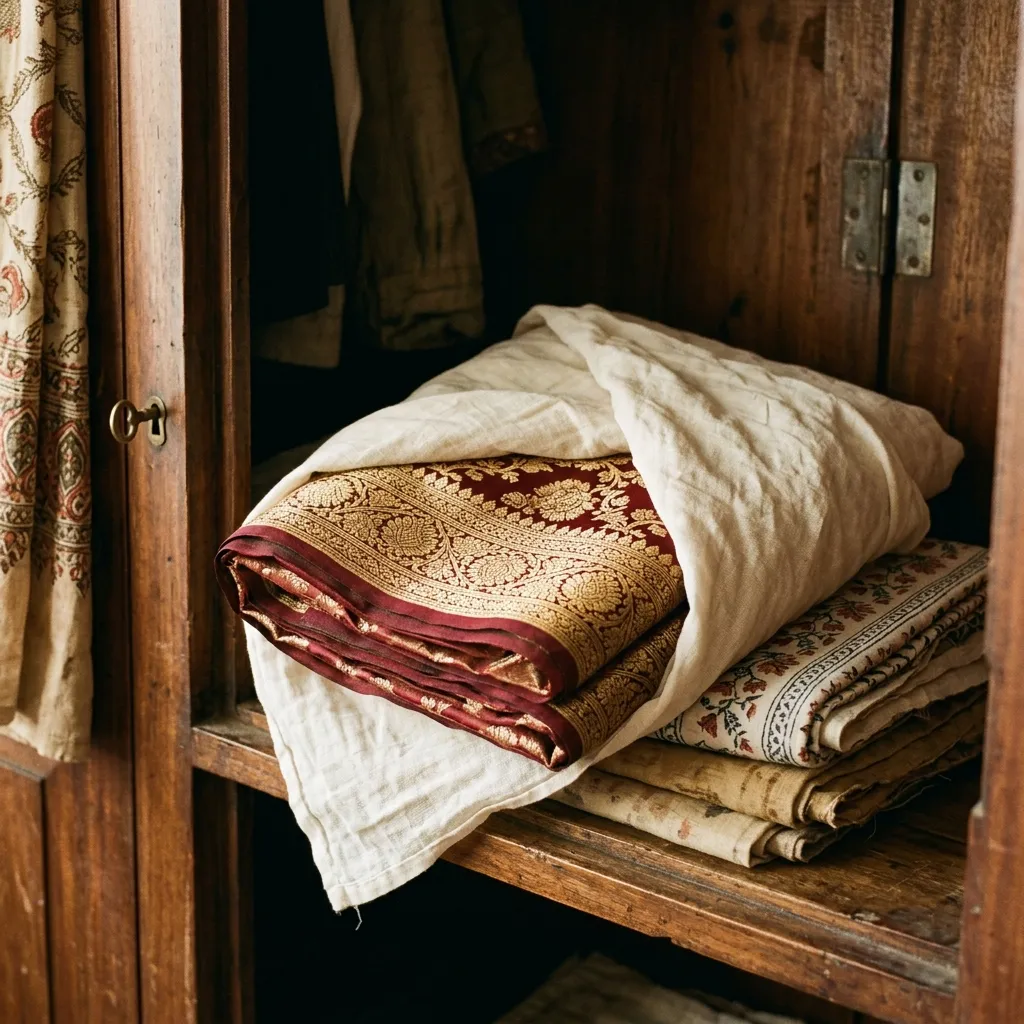
A pure handloom Banarasi saree is not just a piece of clothing; it is a woven piece of art. Crafted from pure mulberry Katan silk and delicate metallic zari, these sarees are designed to be heirlooms passed down from mothers to daughters.
However, pure silk and real zari require meticulous care. Improper storage or washing can lead to torn silk, oxidized (blackened) zari, and faded colors.
At Shri Geeta Sarees, we have been weaving and handling pure silk in the Chowk district of Varanasi since 1960. Here are the traditional secrets our family uses to ensure a Banarasi saree looks as radiant fifty years later as the day it came off the loom.
1. The Golden Rule of Cleaning: Never Hand Wash
The most common mistake new saree owners make is attempting to hand wash their pure silk sarees at home. Water can permanently ruin the delicate tension of the handloom weave, cause the rich dyes to bleed, and tarnish the zari.
- Dry Clean Only: Your Banarasi saree should only be professionally dry cleaned.
- Airing it Out: You do not need to dry clean the saree after every single wear. If you wore it for a few hours to a wedding or function, simply hang it on a padded hanger in a shaded, well-ventilated room for 6 to 8 hours. This allows any sweat or moisture to evaporate naturally before you pack it away.
- Spot Treatment: Never use water or soap to scrub a stain on pure silk. Take it to a professional dry cleaner immediately and point out the exact spot.
2. Wrapping: The Muslin Cloth Technique
Plastic covers are the enemy of pure silk. Plastic traps moisture, which can cause the silk fibers to rot and the metallic zari to oxidize and turn black.
- The Traditional Method: Always wrap your pure silk sarees in an unbleached, white cotton muslin cloth (malmal). Muslin is breathable, allowing the fabric to receive air while protecting it from dust and humidity.
- Avoid Colors: Make sure the cotton wrapping cloth is pure white. Colored cloths can transfer dye onto your expensive silk if the wardrobe gets humid.
3. Protecting the Real Zari
The shimmering floral motifs on an authentic Banarasi saree are woven using "tested zari"—fine copper wire electroplated with silver or gold. Because it is real metal, it can tarnish if exposed to chemicals or harsh environments.
- No Perfumes: Never spray perfume directly onto a Banarasi saree. The alcohol and chemicals in the perfume will immediately oxidize the zari, turning it black permanently. Always apply perfume to your body and let it dry completely before draping the saree.
- Natural Repellents: To keep moths and insects away, avoid using chemical naphthalene balls directly touching the fabric. Instead, wrap a few dry cloves or dried neem leaves in a small piece of cotton and place them in the corners of your wardrobe.
4. The 6-Month Rule (Changing the Fold)
Pure silk is a natural fiber. If it is kept folded in the exact same position for years, the fibers at the creases will eventually become brittle and tear.
We advise our clients to take their heavy Banarasi sarees out of the wardrobe every six months.
- Open the saree completely and let it breathe in mild, indirect sunlight (never harsh afternoon sun) for an hour.
- When folding it back, ensure you create new creases. Do not fold it along the exact same lines as before.
A Heritage of Quality
Caring for a pure Banarasi requires a little extra attention, but the reward is a timeless garment that appreciates in emotional and artistic value over time.
If you are looking to invest in a genuine heirloom, visit us at Shri Geeta Sarees in the heart of Chowk, Varanasi. We guarantee the purity of our Katan silk and are always happy to guide you on how to cherish your handloom for decades to come.
Continue Reading
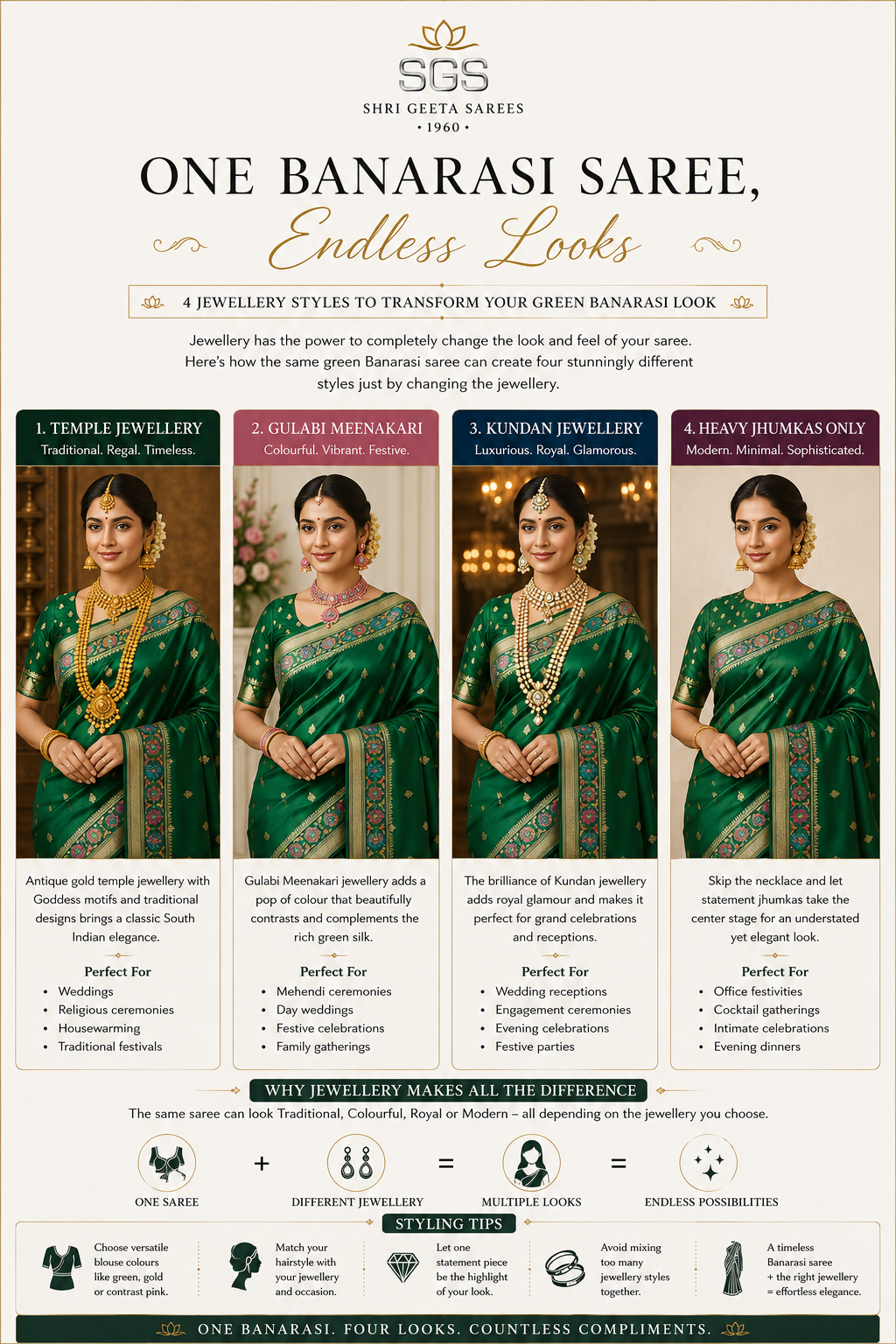
How One Banarasi Saree Can Create 4 Completely Different Looks
A beautiful Banarasi silk saree is one of the most versatile pieces in your wardrobe. Discover how to create four stunning looks just by changing your jewellery.
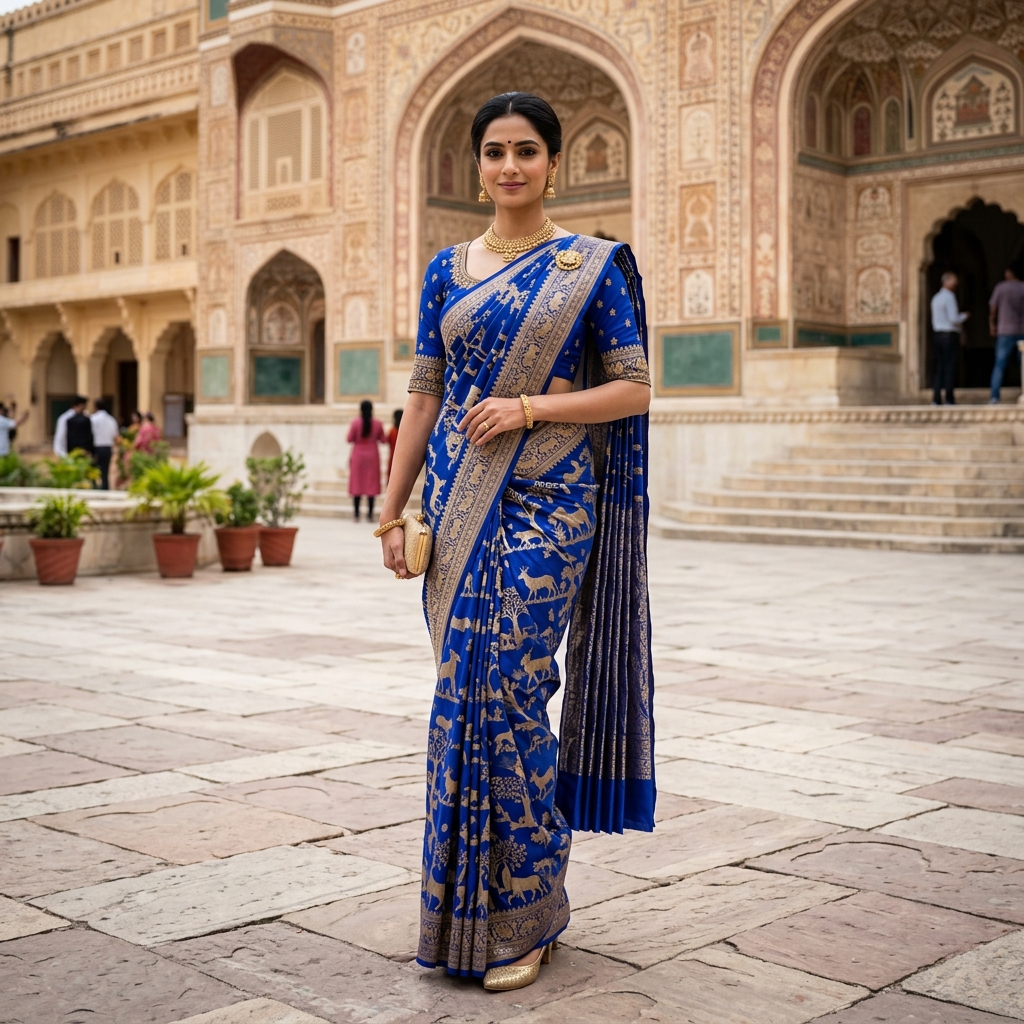
4 Elegant Ways to Drape a Banarasi Saree | Shri Geeta Sarees
Looking for new ways to wear your handwoven Banarasi saree? Discover 4 elegant and easy styling methods, from classic traditional to modern reception drapes.

Banarasi Saree for Mother of the Bride: A Guide to Getting It Right
A comprehensive guide to choosing the perfect Banarasi saree for the mother of the bride, covering colors, weaves, and styling advice.
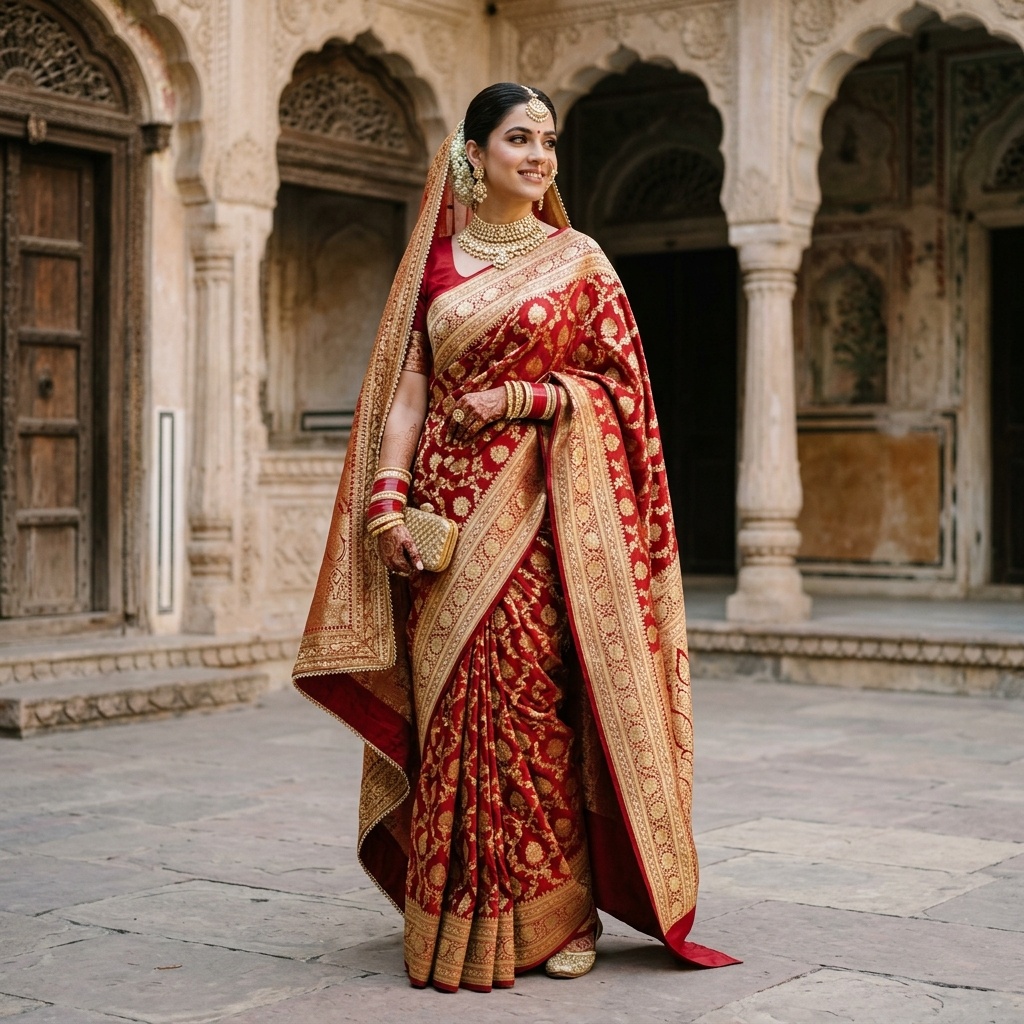
Types of Banarasi Silk: Katan, Georgette, Organza & Tissue Explained
Confused by Banarasi saree fabrics? A Varanasi weaver explains the exact difference in drape, weight, and styling for Katan, Georgette, Organza, and Tissue silk.