Jamawar Banarasi Sarees: Kashmir's Royal Legacy Meets Varanasi Looms
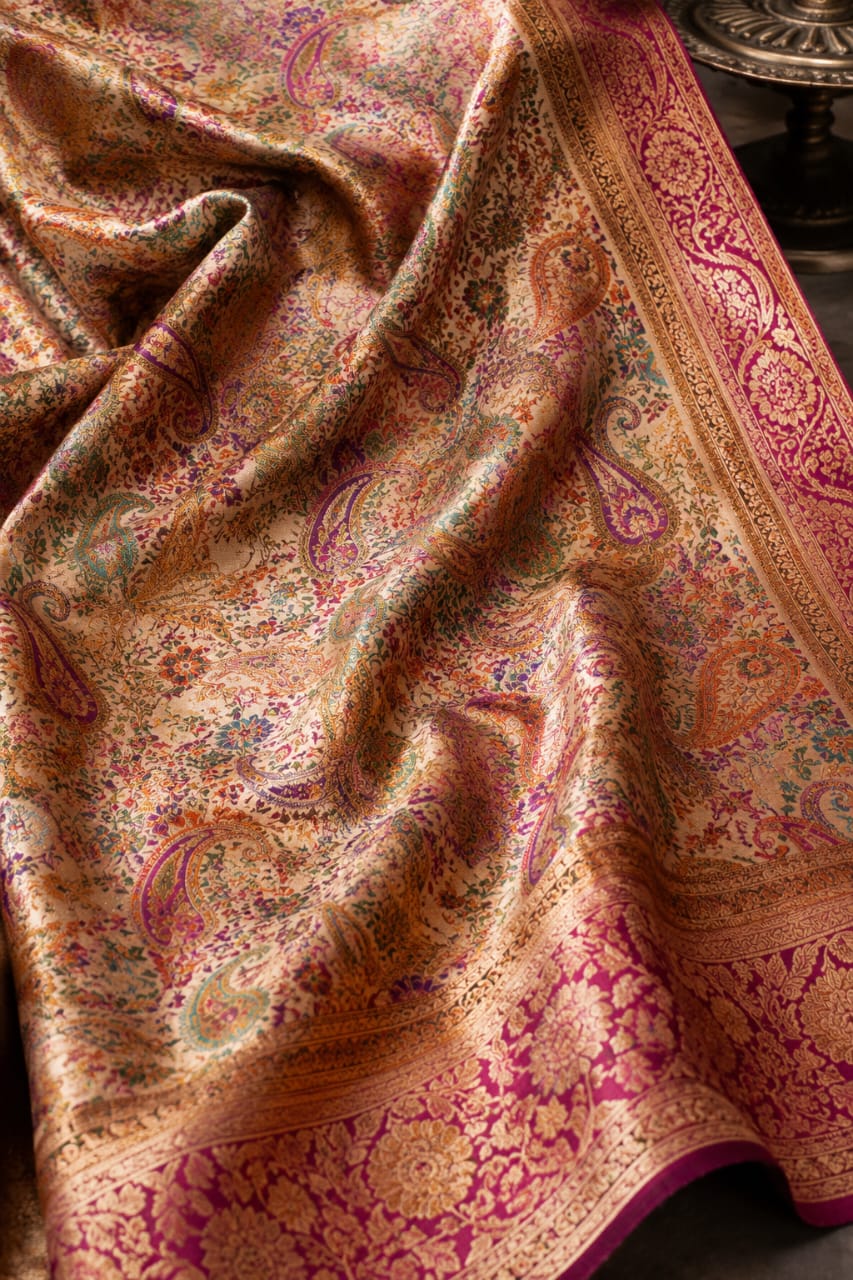
Jamawar Banarasi Sarees: Where Kashmir's Royal Legacy Meets the Looms of Varanasi
It is widely accepted that traditional Banarasi brocade represents the pinnacle of Indian handloom weaving. However, there is a fascinating anomaly in Varanasi's textile history: one of its most luxurious and sought-after creations—the Jamawar Banarasi Saree—isn't originally from Banaras at all. Although rooted in the royal courts of Kashmir and Persia, these dense, intricate designs found an unexpected home on the looms of Varanasi, challenging our understanding of regional textile boundaries.
While many buyers naturally gravitate toward standard floral or geometric brocades, the Jamawar Banarasi offers something entirely different. It creates a beautiful tension between two distinct artistic worlds: the delicate, nature-inspired aesthetics of Kashmiri shawls and the opulent silk weaving techniques of Banaras. But what exactly makes this "painting woven in thread" so unique, and why is it considered the ultimate heirloom?
The Unexpected Origins of Jamawar
The term Jamawar is derived from the Persian words Jama (robe) and War (yard or fabric). Historically, Jamawars were not sarees. They were luxurious woollen shawls and royal robes reserved exclusively for emperors and nobility.
But over time, the master weavers of Varanasi achieved something remarkable. They adapted these regal Kashmiri motifs—elegant paisleys (kairy), curling vines, blooming lotuses, flowering branches, and ornate geometric medallions—onto pure silk. This transition from winter wool to fluid silk might seem inconsistent with the heavy nature of traditional Jamawars. Yet, the result is the exquisite Jamawar Banarasi Saree, seamlessly blending two distinct cultural legacies.
The Weaving Anomaly: Depth Without the Bulk
A Jamawar Banarasi Saree is characterized by its exceptionally dense, continuous patterns. Elaborate paisleys and intertwining vines flow seamlessly across the fabric, creating a rich tapestry that leaves virtually no empty space.
In traditional brocade weaving, such dense patterns would typically result in a heavy, stiff fabric with loose floating threads on the reverse side. Although one might expect a Jamawar saree to be rigid and uncomfortable because of this dense ornamentation, the reality is entirely different. This is because many Jamawar Banarasi sarees employ the complex Tanchoi weaving technique.
This technique introduces a brilliant contradiction: it uses numerous small bobbins (tilli) to weave the elaborate motifs directly into the fabric, eliminating the loose threads on the back. The result? A remarkably smooth, refined finish that is as beautiful on the inside as it is on the outside. This dense weave not only enhances its regal appearance but also imparts a graceful fluidity and a highly substantial drape that contours perfectly to the body.
Why You Should Invest in a Jamawar Banarasi
No matter how organized, persuasive, and clear the marketing for modern machine-made textiles is, it simply cannot replicate the profound depth and historical weight of a handwoven Jamawar Banarasi.
When you wear a Jamawar, you are not merely conveying an appreciation for fashion; you are participating in a living legacy. Owing to their exceptional craftsmanship and timeless appeal, these sarees are universally treasured as heirloom textiles. They are particularly cherished for bridal trousseaus, wedding celebrations, and grand formal occasions where their understated grandeur can truly command the room.
The next time you are evaluating a bridal or heirloom saree, look beyond the standard motifs. Challenge the ordinary by exploring the rich, dense artistry of a Jamawar Banarasi—a textile that doesn't just decorate, but tells a story of cultural unity.
Continue Reading
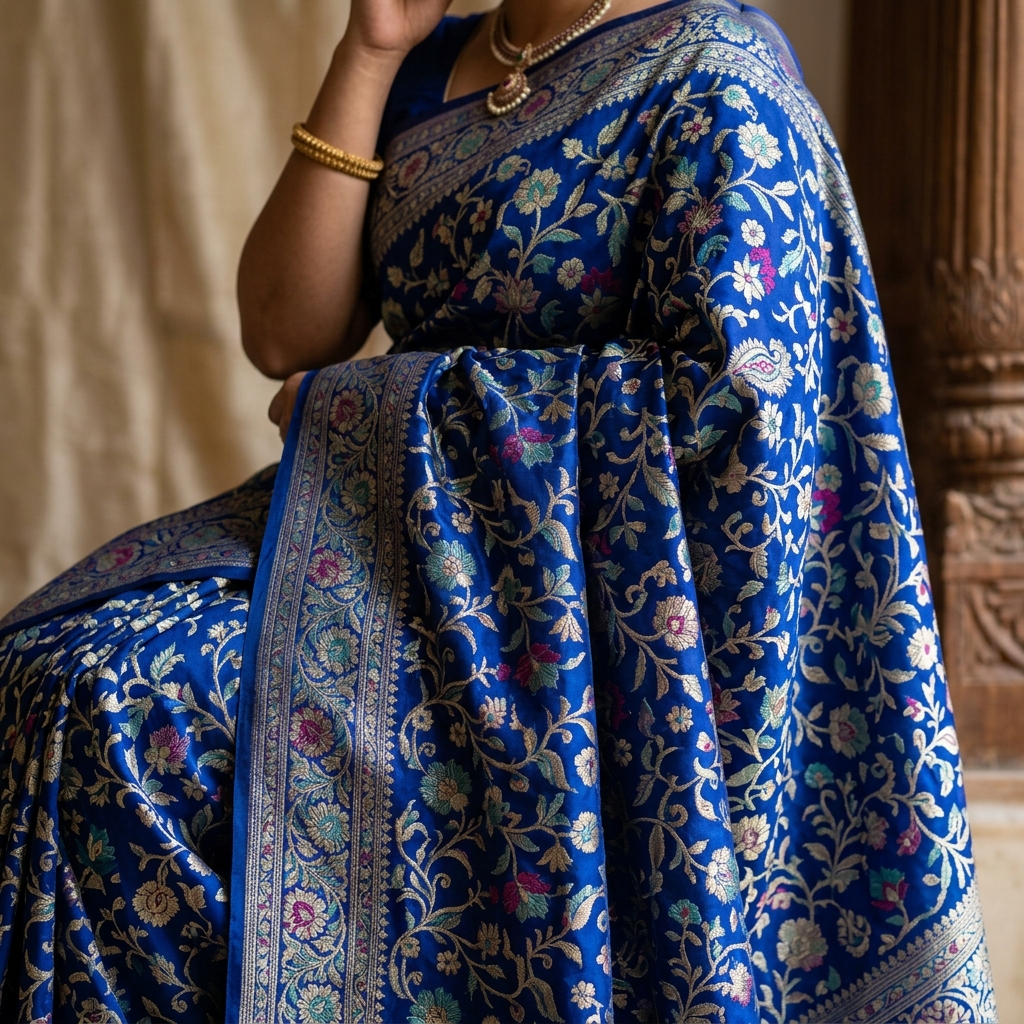
What is Fekwa (Fakua/Cutwork) in Banarasi Sarees?
Learn about Fekwa (or Fakua/Cutwork), an authentic Banarasi weaving technique that creates beautiful floral motifs and jaal patterns. Find out why it's more affordable without compromising quality.
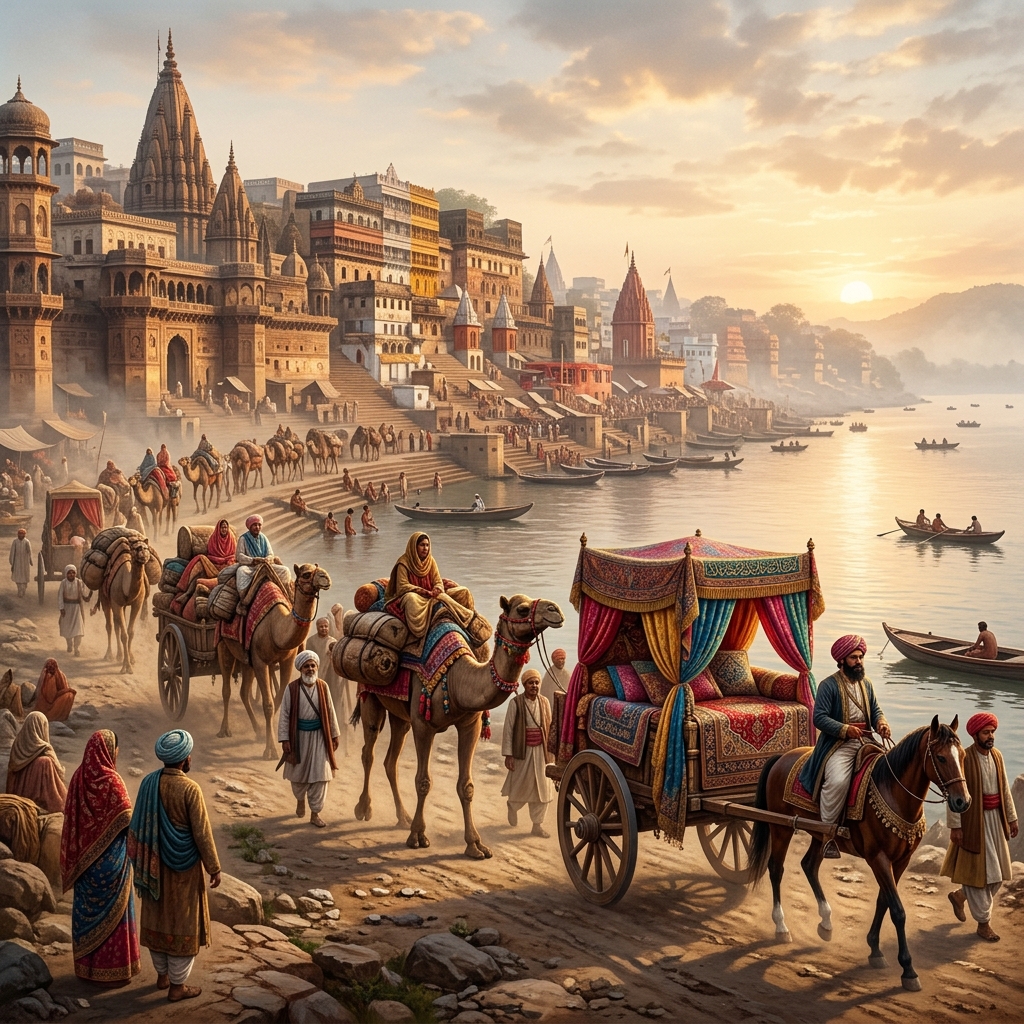
The Silk Route Through Varanasi: History of Banarasi Weaving
Trace the centuries-old journey of silk into Varanasi — from ancient trade routes to Mughal courts to the handloom houses of today.
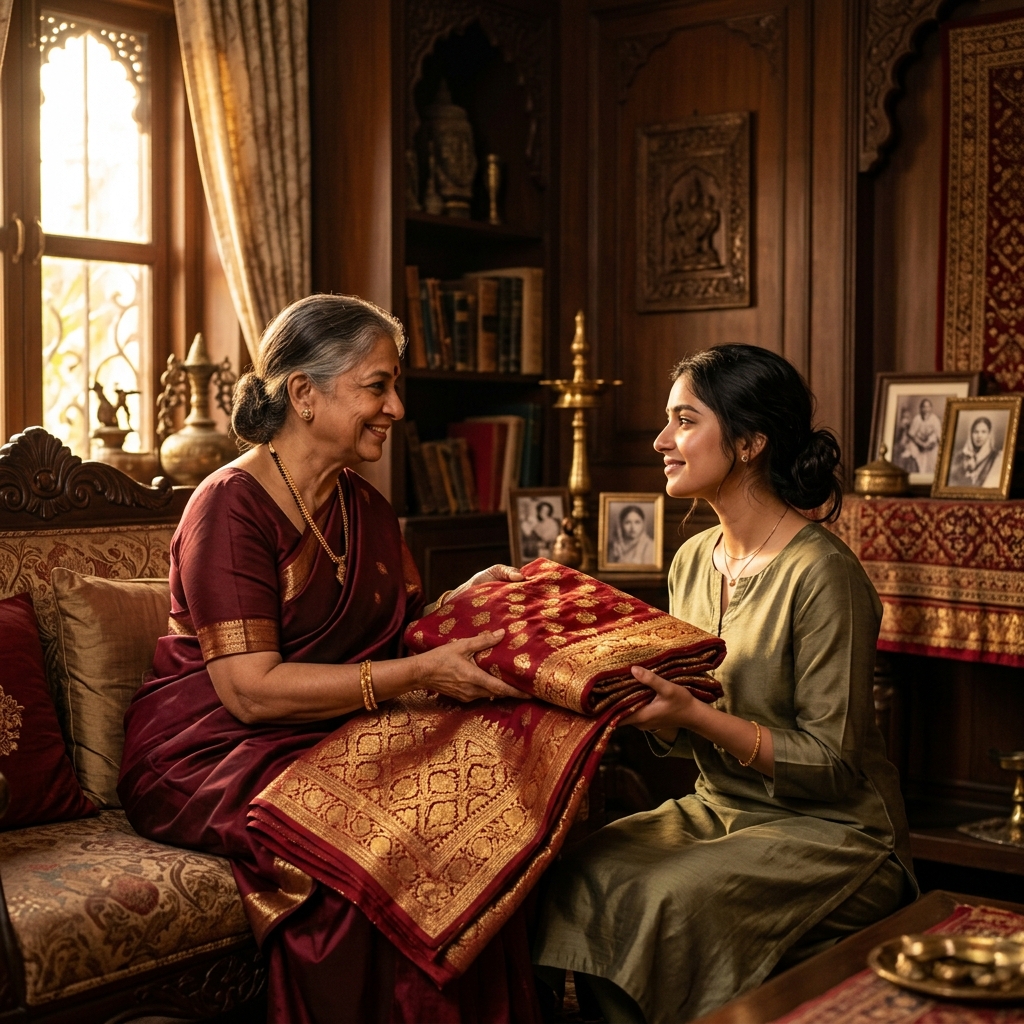
The Banarasi Saree as a Family Legacy: An Heirloom Woven in Silk
Explore the tradition of passing down Banarasi sarees, the craftsmanship that makes them endure, and how to preserve a vintage Banarasi silk saree as a family legacy.
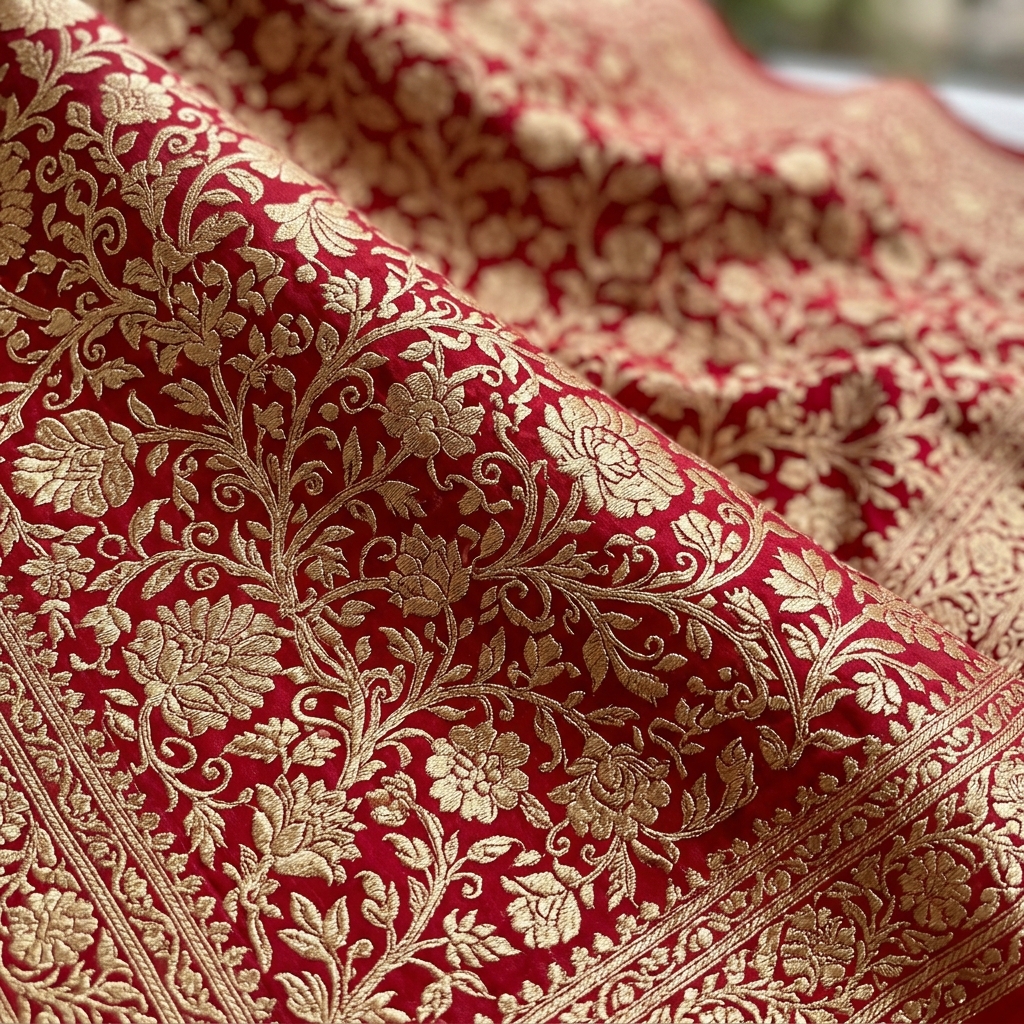
What is a Banarasi Saree Motif? A Guide to Buta, Jaal, and Paisley Patterns
Understand the language of Banarasi saree motifs — from the mango-shaped buta to the trellis-like jaal. A weaver's guide to reading pattern, symbolism, and craft.
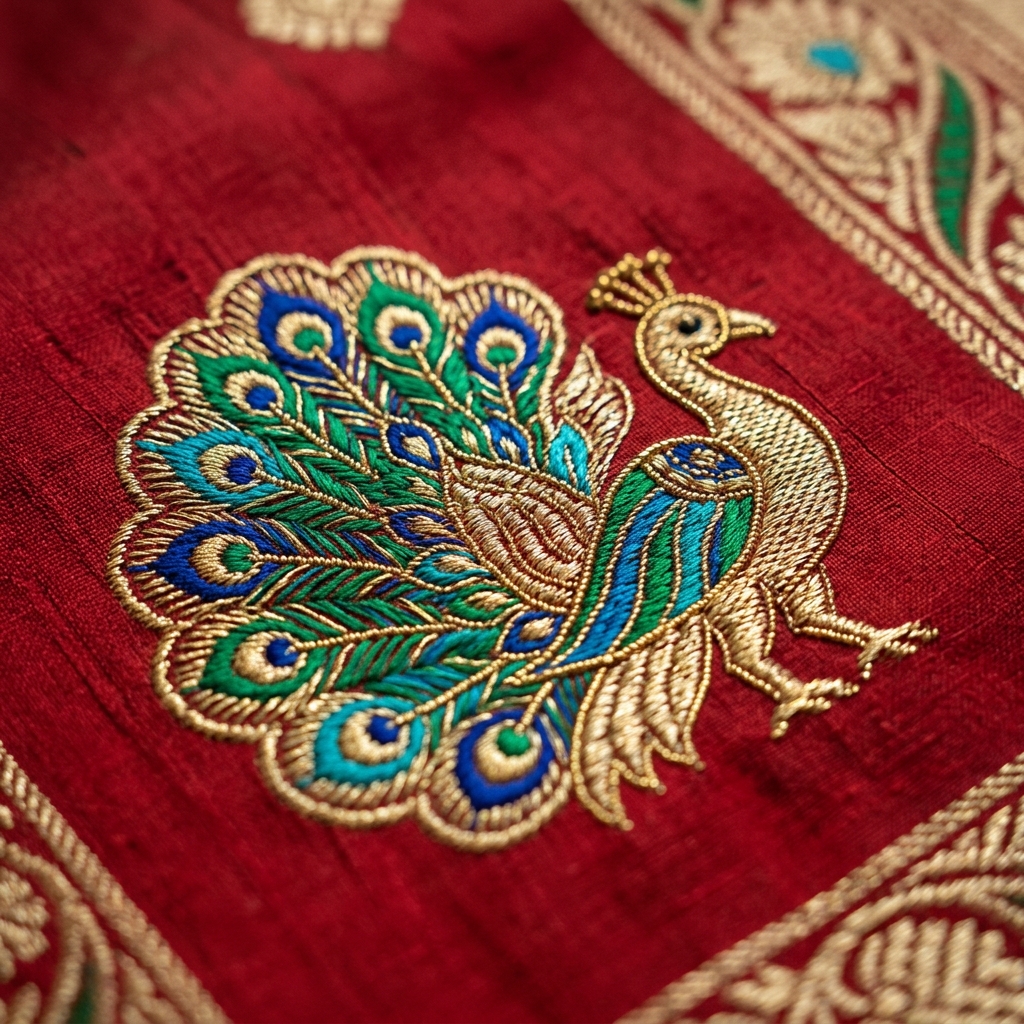
What is a Kadhua Banarasi Saree?
Discover the art of Kadhua Banarasi sarees — individually woven motifs, no loose threads, and an embossed 3D finish. Learn about Meenakari vs Sonarupa and why Kadhua is the pinnacle of Banarasi craftsmanship.