
The Complete Banarasi Bridal Trousseau: What to Wear from Haldi to Reception
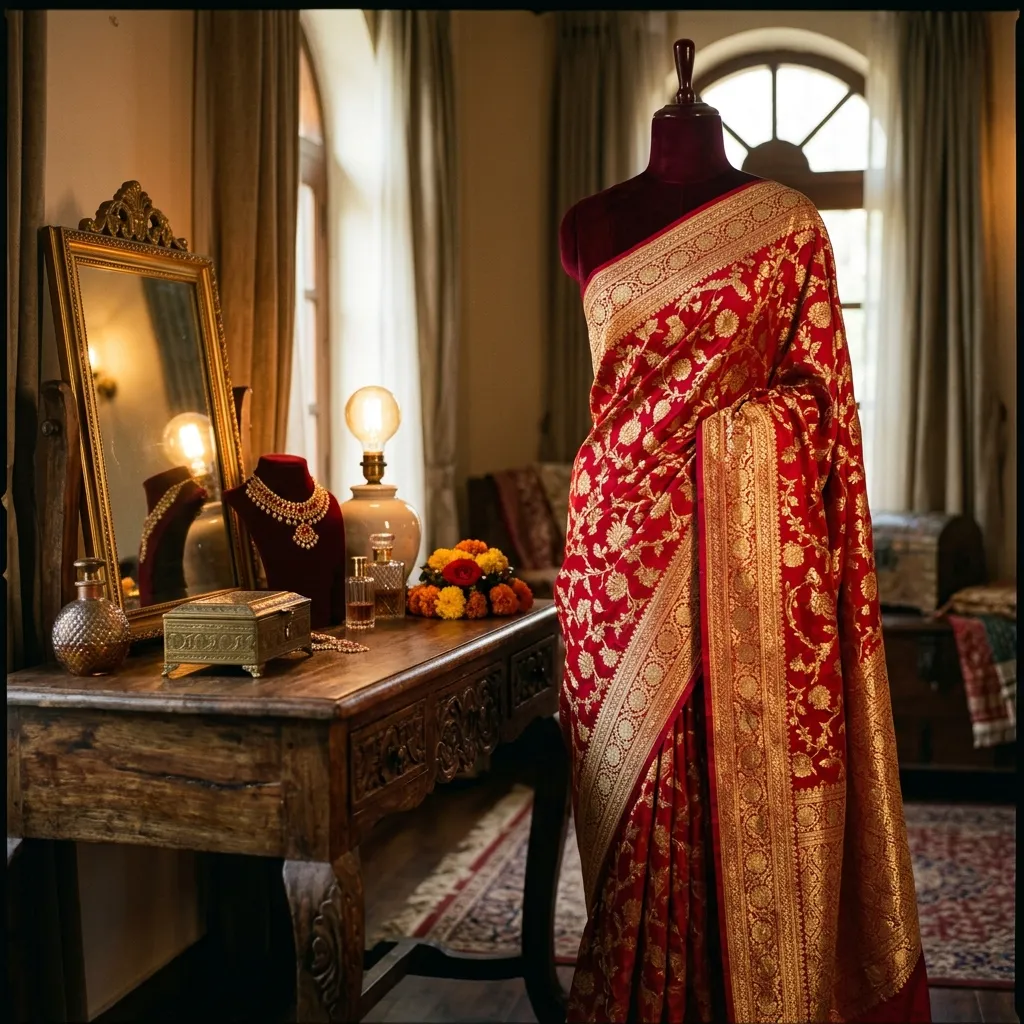
A bridal trousseau is not just a collection of outfits for a four-day event. It is the foundation of a woman’s heirloom wardrobe. Long after the wedding celebrations end, these are the sarees that will be worn for first Diwali pujas, milestone anniversaries, and eventually passed down to the next generation.
At Shri Geeta Sarees, we have spent decades sitting with families in our Chowk showroom, helping them curate the perfect balance of weaves. The secret to a perfect Banarasi trousseau is not just buying heavy silks—it is knowing exactly which fabric and weave matches the physical demands and the cultural mood of each specific wedding function.
Here is the definitive guide to curating a Banarasi trousseau that balances opulence with comfort, from the Haldi to the Reception.
The Haldi & Mehendi: Breathable Heritage
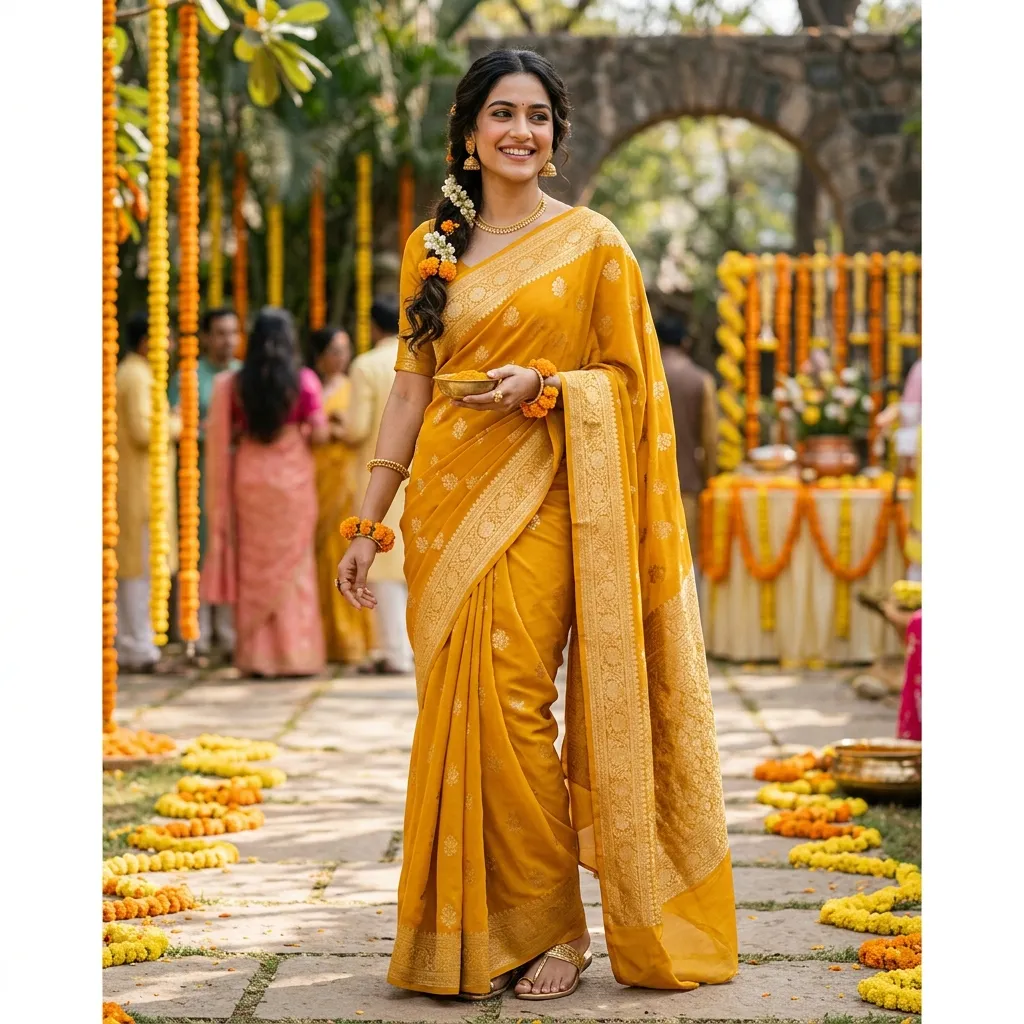
Pre-wedding functions are active, long, and often outdoors. The biggest mistake a bride can make is choosing a stiff, unyielding fabric for these events. You need movement, breathability, and vibrant color.
The Fabric: Khaddi Georgette or Pure Banarasi Organza. Khaddi Georgette flows like water. It hugs the body beautifully, allowing the bride to sit for hours during the Mehendi without feeling weighed down. Organza offers a slightly crisper, more modern silhouette while remaining incredibly lightweight. The Look: For the Haldi, look for a mustard or marigold yellow Georgette with subtle silver zari. For the Mehendi, a lush emerald or parrot green Organza with delicate Cutwork motifs provides a stunning contrast against henna.
The Pheras: The Weight of Tradition
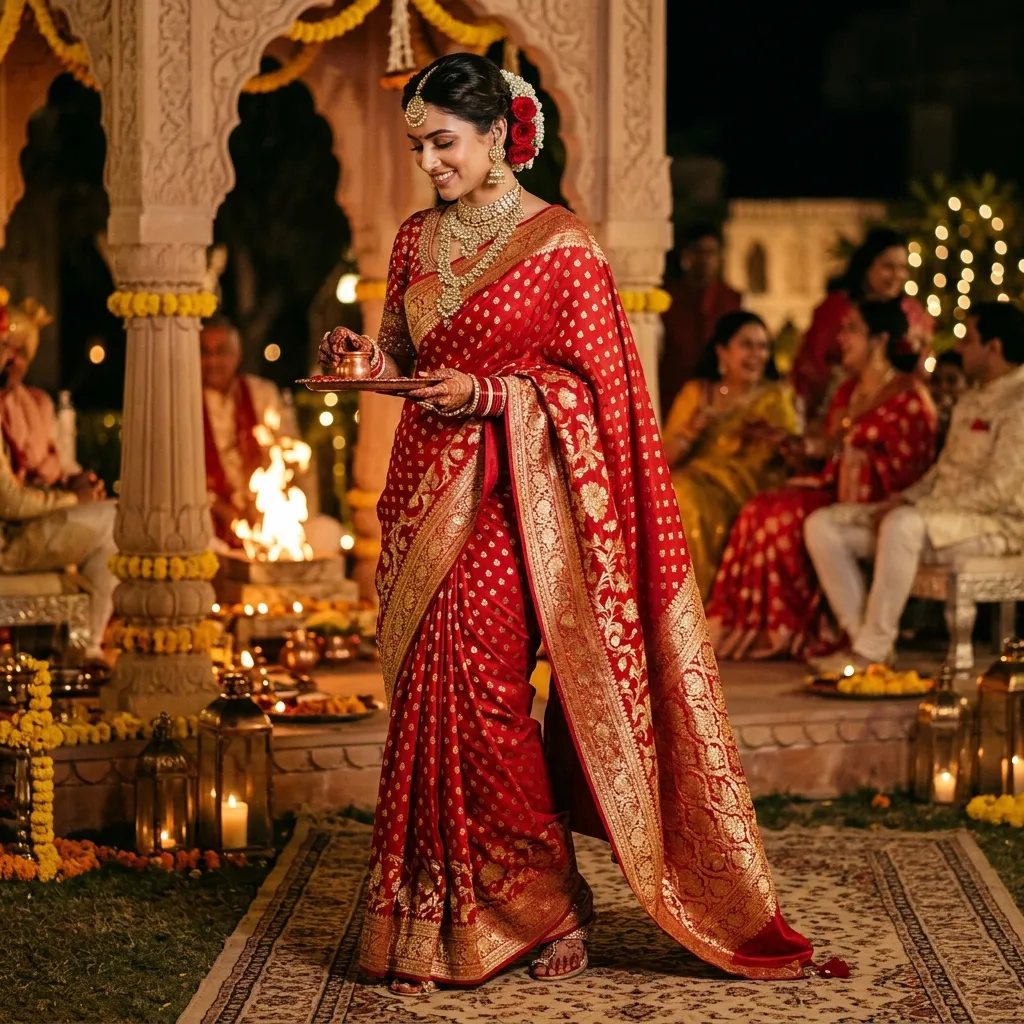
For the main wedding ceremony, the drape must command absolute authority. This is where you bring out the heavy heritage weaves. The saree needs to hold sharp, structured pleats that will stay perfectly in place throughout the rituals.
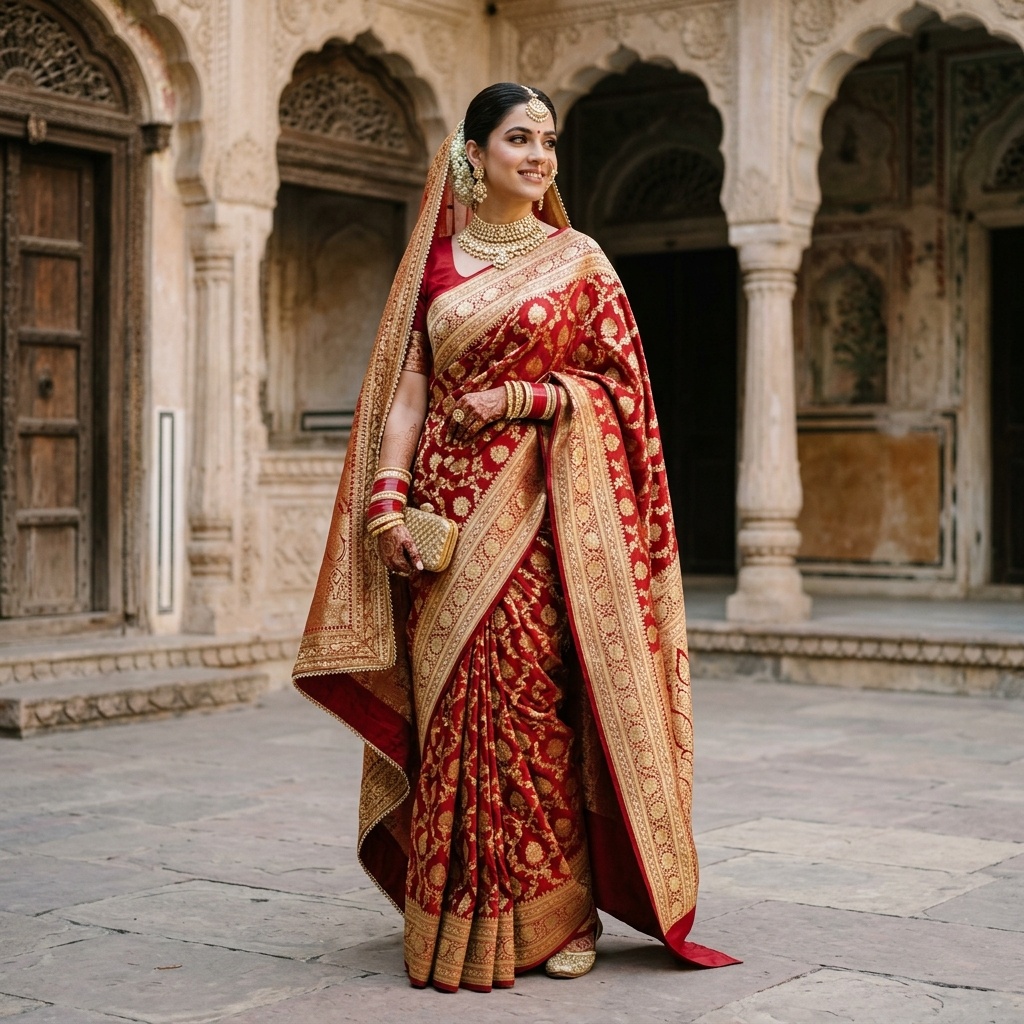
The Fabric: Pure Katan Silk with Kadhua Weaving. Katan silk is the undisputed king of bridal handlooms. It is woven by twisting multiple pure silk filaments together, creating a dense, highly durable fabric with a rich, natural luster. Demand the Kadhua technique—an ancient, painstaking process where each motif is woven individually into the fabric, leaving no loose threads on the back. The Look: Classic Crimson Red, Sindoori Red, or deep Rani Pink. Look for traditional Jangla patterns (an intricate, all-over floral vine design) that cover the body in rich gold or silver zari.
The Reception: Unapologetic Opulence
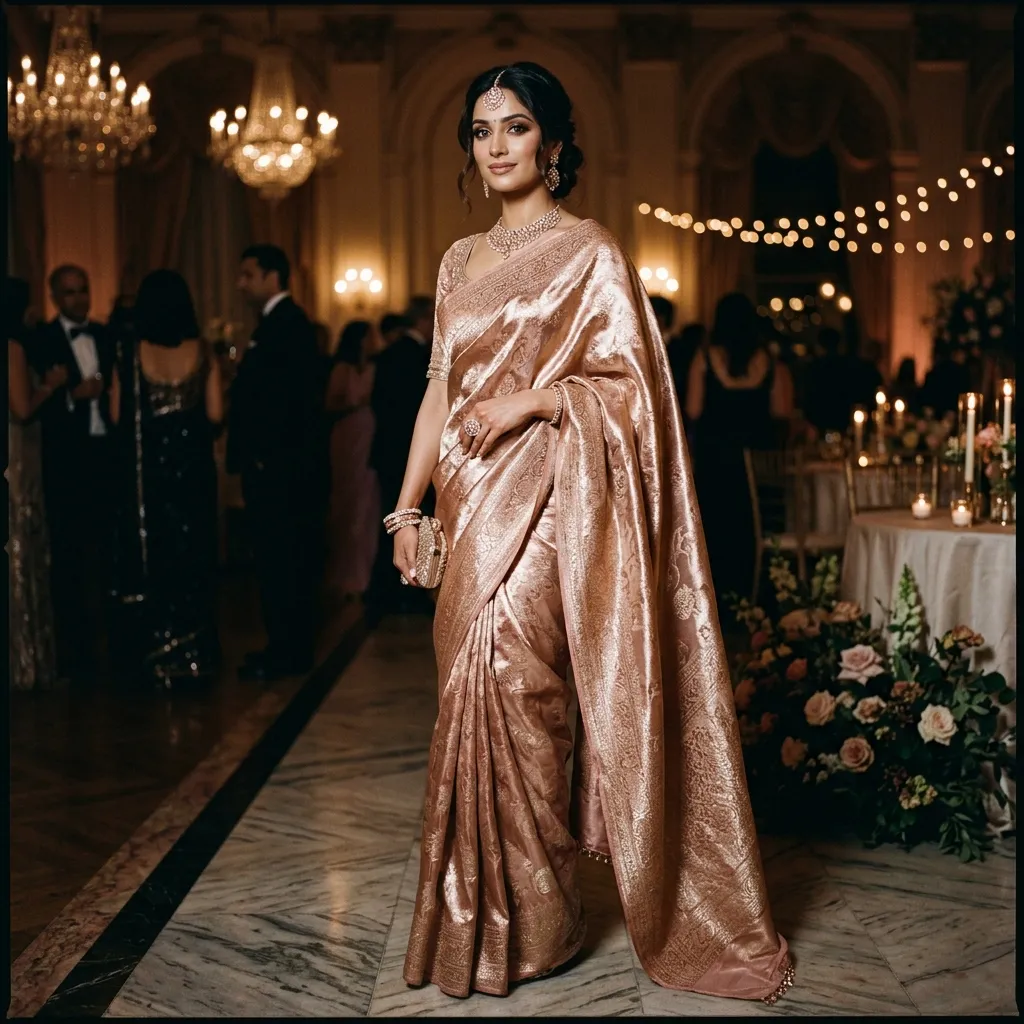
The reception is a celebration of the newlywed couple in evening lighting. Tradition softens here, making room for absolute glamour and dramatic silhouettes.
The Fabric: Tissue Banarasi or Tanchoi Silk. Tissue Banarasi is woven by running metallic zari threads directly through the warp and weft of the fabric, alongside the silk. The result is a saree that looks like it is spun entirely from liquid gold or silver. If you prefer threadwork over metallic shine, a dense, satin-finish Tanchoi silk offers a sophisticated, regal alternative. The Look: Steer away from bridal reds. Opt for Rose Gold, Antique Silver, or deep, striking jewel tones like Midnight Blue or Royal Aubergine (Jamuni).
The Post-Wedding Visits (Pag Phera)
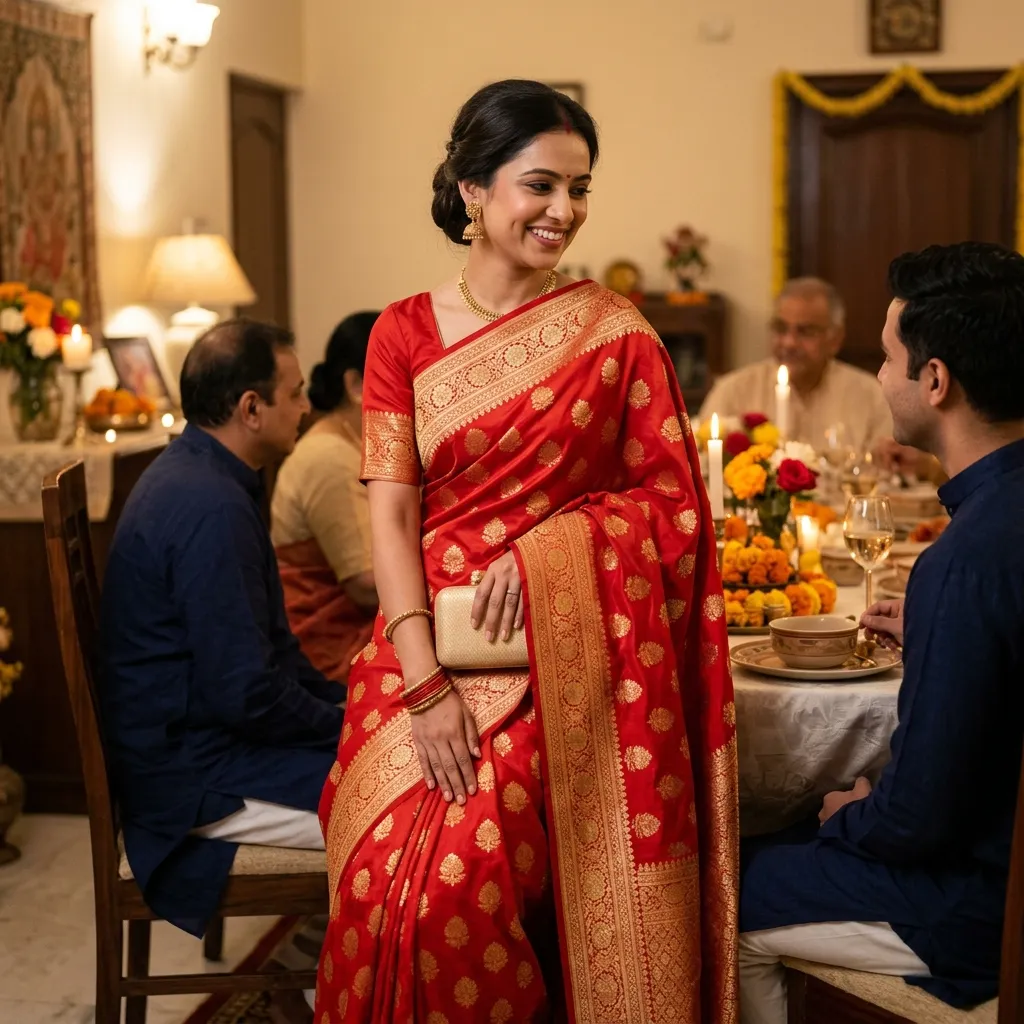
In the weeks following the wedding, a new bride attends multiple family dinners and pujas. She needs sarees that look undeniably bridal but are practical enough to wear without an hour of professional draping.
The Fabric: Pure Silk Butidar. A Butidar saree features small, spaced-out motifs (butas) across the body rather than a heavy, continuous pattern. This makes the saree significantly lighter and easier to carry while retaining the rich Banarasi borders and pallu. The Look: Warm, auspicious tones like Vermillion, Magenta, or Haldi Yellow.
Curating a trousseau is an intimate process. It requires absolute trust that the silks you are buying are pure handloom, not powerloom synthetics. When you are ready to build your heirloom collection, bypass the mass-market boutiques. Visit a heritage weaver who can tell you exactly what goes into the warp and weft of your silk.
Continue Reading
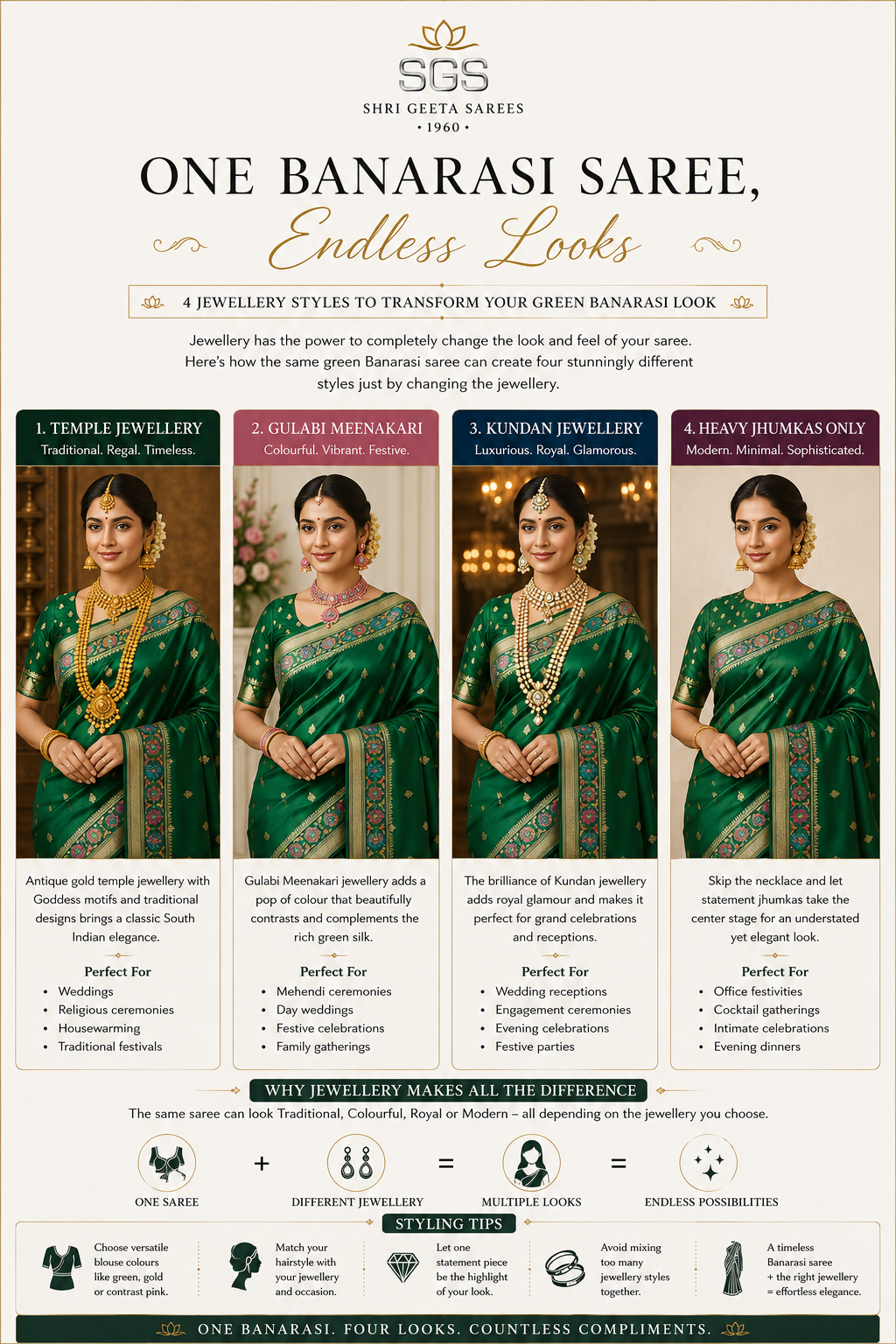
How One Banarasi Saree Can Create 4 Completely Different Looks
A beautiful Banarasi silk saree is one of the most versatile pieces in your wardrobe. Discover how to create four stunning looks just by changing your jewellery.
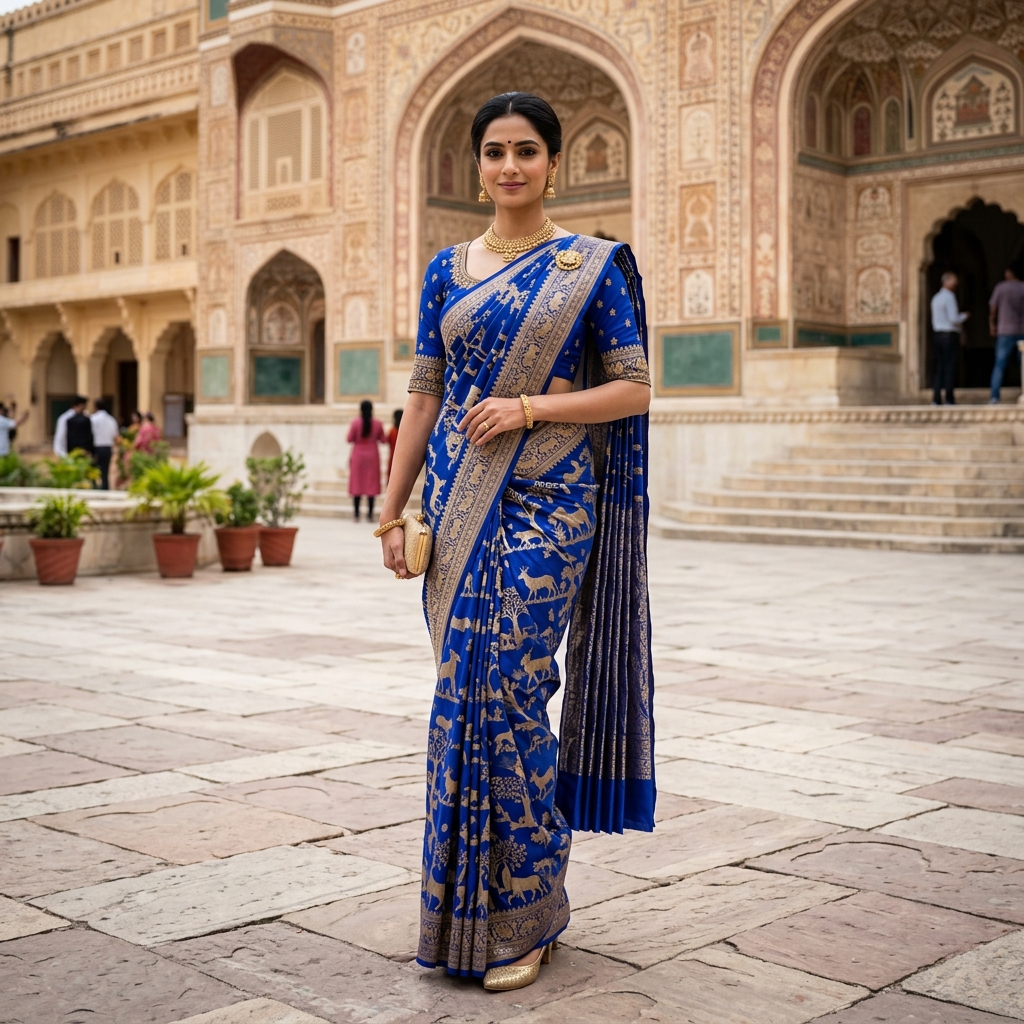
4 Elegant Ways to Drape a Banarasi Saree | Shri Geeta Sarees
Looking for new ways to wear your handwoven Banarasi saree? Discover 4 elegant and easy styling methods, from classic traditional to modern reception drapes.
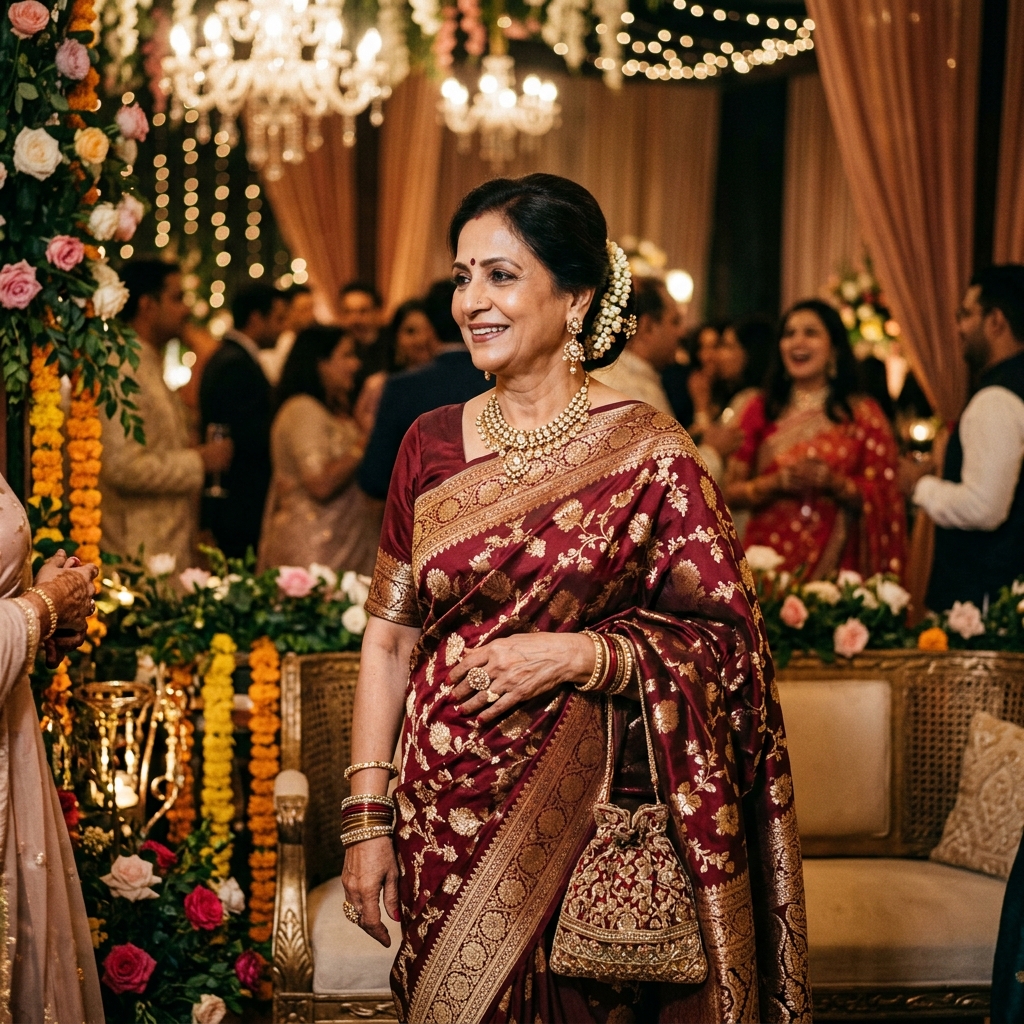
Banarasi Saree for Mother of the Bride: A Guide to Getting It Right
A comprehensive guide to choosing the perfect Banarasi saree for the mother of the bride, covering colors, weaves, and styling advice.
Types of Banarasi Silk: Katan, Georgette, Organza & Tissue Explained
Confused by Banarasi saree fabrics? A Varanasi weaver explains the exact difference in drape, weight, and styling for Katan, Georgette, Organza, and Tissue silk.