Banarasi vs Kanjivaram Saree: Which Silk Saree Should You Choose?
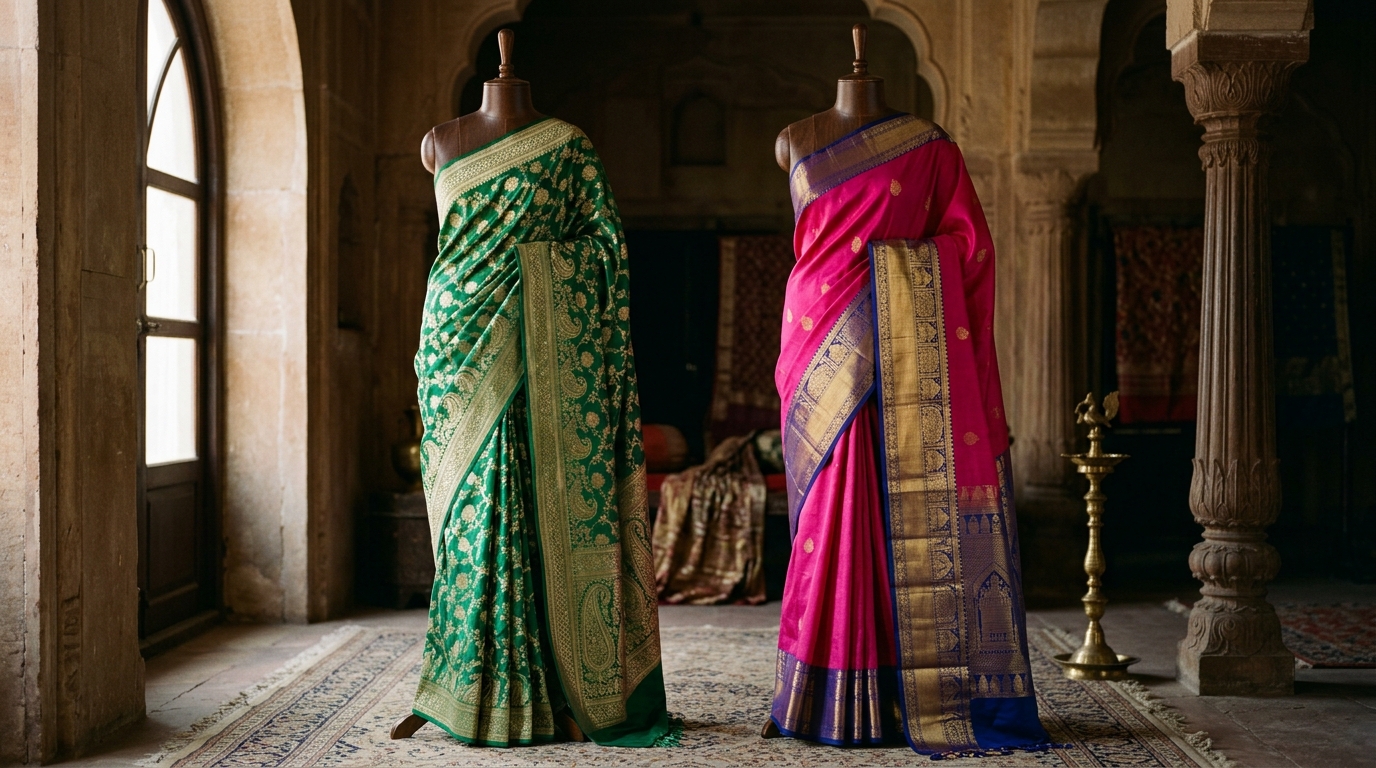
If you could own only one authentic silk saree for the rest of your life, would you choose a Banarasi or a Kanjivaram?
It is widely accepted within the Indian fashion community that these two pure handloom silk sarees occupy the absolute pinnacle of traditional wear. Both are treasured as family heirlooms, both boast Geographical Indication (GI) protection, and they are frequently reported as the ultimate choices for bridal trousseaus.
However, although they are constantly compared and grouped together simply as "heavy silk sarees," this common assumption is fundamentally flawed. When you look closely at their heritage and construction, a striking contradiction emerges: despite both being woven from pure silk, their core design philosophies are entirely inconsistent.
The choice between a Banarasi and Kanjivaram saree isn’t merely about which one is "better." It is about challenging what you think you know about handloom silk and deciding which centuries-old story, craftsmanship, and drape actually solves your sartorial needs.
Banarasi vs Kanjivaram at a Glance
To understand the anomaly of how two pure silk sarees can feel so drastically different, let's look at the foundational elements:
| Feature | Banarasi Saree | Kanjivaram Saree |
|---|---|---|
| Origin | Varanasi, Uttar Pradesh | Kanchipuram, Tamil Nadu |
| Known For | Intricate brocade and delicate gold/silver zari | Rich mulberry silk, bold contrasting borders, and durability |
| Design Influence | Mughal floral vines (bel), butidar, miniature art | Temple architecture, geometric patterns, peacocks, mythological motifs |
| Drape & Feel | Softer, fluid, and graceful drape | Structured, firm, and shape-holding drape |
| Best Occasions | Receptions, festive wear, North Indian weddings | Ceremonial rituals, South Indian weddings, grand events |
Two Cities, Two Completely Different Design Languages
Most buyers start with the assumption that all traditional sarees share a unified Indian aesthetic. But to truly appreciate the Banarasi vs Kanjivaram debate, you must recognize that they speak entirely different visual languages.
A Banarasi saree reflects the layered, artistic heritage of Varanasi. Over centuries, the local weaving community absorbed Persian and Mughal influences. This fusion gave rise to delicate floral vines (bel), the kalga motif, and intricate brocade patterns that look like fine jewellery woven directly into the fabric. The subtle, romantic nature of these motifs is widely accepted as the defining characteristic of authentic Banaras brocades.
A Kanjivaram saree (or Kanchipuram silk), on the other hand, is deeply rooted in the majestic temple architecture of Tamil Nadu. Its visual language is deliberately bold and commanding. Broad contrasting borders (korvai), geometric checks, and grand temple-inspired motifs like peacocks and elephants are standard.
One feels like an intricate piece of miniature art. The other feels like monumental temple architecture translated into silk.
The Biggest Difference Isn't the Silk—It's the Weave
When choosing between the two, many people think the difference lies solely in the type or quality of the silk yarn. It doesn't. (If you are curious about silk purity, read our guide on Art Silk vs Real Silk).
The true difference lies in the weaving philosophy itself.
Banarasi sarees are globally celebrated for their elaborate brocade weaving technique. Here, intricate motifs are meticulously woven across the body using metallic zari threads. Depending on the complexity of the weave, creating a single handwoven Banarasi saree can take weeks or even months of painstaking labor, resulting in a fabric that feels intensely detailed. There are actually multiple types of Banarasi fabrics that dictate the final weight and drape.
Kanjivaram sarees are renowned for their robust, almost indestructible construction. A distinguishing hallmark of a true Kanjivaram is the traditional interlocking weaving technique. The body, border, and pallu are woven independently and interlocked so securely that they form a strong, unified structure rather than stitched sections. This creates a fabric that is structurally heavier and incredibly durable.
Drape and Silhouette: Which Feels Better to Wear?
No matter how persuasive a saree's history is, if it doesn't offer value and comfort to the wearer, it is useless to them. The "better" choice depends entirely on the silhouette you wish to achieve.
Choose a Banarasi Saree if you value:
- A graceful, flowing, and softer drape that moves with you.
- Intricate detailing that rewards a closer look.
- Elegant reception or festive wear that balances richness with a lightweight feel.
Choose a Kanjivaram Saree if you value:
- A more structured, architectural silhouette that naturally holds its shape.
- Bold, vibrant colors with striking, contrasting borders.
- A saree that commands attention from across the room.
Neither weave is objectively superior; they simply fulfill different visual goals.
The Ultimate Bridal Saree: Banarasi or Kanjivaram?
There is a widely held belief that one must be better for weddings than the other. In reality, the answer is inconsistent across regions.
Traditionally, Banarasi silk sarees have been the definitive choice for North Indian bridal wear, while Kanjivaram silks remain the iconic, non-negotiable choice for South Indian brides.
However, modern brides are increasingly challenging these community norms. Today, it is highly recommended to own both—perhaps a heavily structured Kanjivaram for the main wedding ceremony where tradition takes precedence, and a fluid Pure Silk Katan Banarasi for the reception or sangeet, allowing for easier movement and a different aesthetic.
Heirloom Value: Which Saree Ages Better?
Both sarees are heavily marketed as heirloom investments. But does one actually outlast the other?
Although Kanjivarams are technically heavier and structurally robust, when cared for properly, both weaves will easily last for decades. Their longevity is less about the origin of the silk and more about how you maintain them. (Read our comprehensive guide on How to Care for a Banarasi Silk Saree for best practices).
This is why genuine handwoven silks, regardless of their origin, seamlessly become cherished family heirlooms.
Final Verdict: Which Story Do You Want to Wear?
Comparing a Banarasi and a Kanjivaram is a bit like comparing two distinct classical music traditions. Both require extraordinary, generational skill. Both represent centuries of Indian craftsmanship. Both deserve their legendary status.
The real question isn't "Which saree is better?" The question is: "Which narrative do you want to embody?"
For the woman who loves delicate artistry, intricate brocade, and flowing elegance, a Banarasi saree offers a wearing experience unlike any other. For the woman drawn to bold structure, vibrant color blocking, and temple-inspired grandeur, a Kanjivaram will feel like coming home.
Either way, you are not simply buying six yards of silk. You are wrapping yourself in a tradition that has survived generations of master weavers and continues to define India's textile legacy. Browse our handwoven catalog to find the perfect saree for your story.
Frequently Asked Questions (FAQs)
Which is more expensive: Banarasi or Kanjivaram? Both can range significantly depending on the purity of the silk, the amount of zari used, and the complexity of the weave. Generally, pure handloom versions of both are priced similarly as premium heritage pieces.
Can I wear a Banarasi saree for a South Indian wedding? Absolutely. While Kanjivaram is the traditional choice, many modern brides are challenging these norms and choosing a pure Banarasi silk saree for reception or pre-wedding festivities due to its lighter drape.
How do I identify a pure silk Banarasi saree? Look for the GI tag, check the reverse side for floating warp/weft threads, and assess the weight and warmth of the fabric. For a detailed breakdown, read our guide on How to Identify an Authentic Banarasi Saree.
Are Art Silk Kanjivarams and Banarasis as good as real silk? Art silk offers a similar look at a lower price point but lacks the drape, breathability, and heirloom longevity of pure silk. Learn more about the differences in our Art Silk vs Real Silk comparison.
Where can I buy authentic Banarasi sarees online? You can explore Shri Geeta Sarees' curated catalog of authentic handloom Banarasi sarees, featuring everything from traditional pure silk to lightweight modern weaves.
Continue Reading
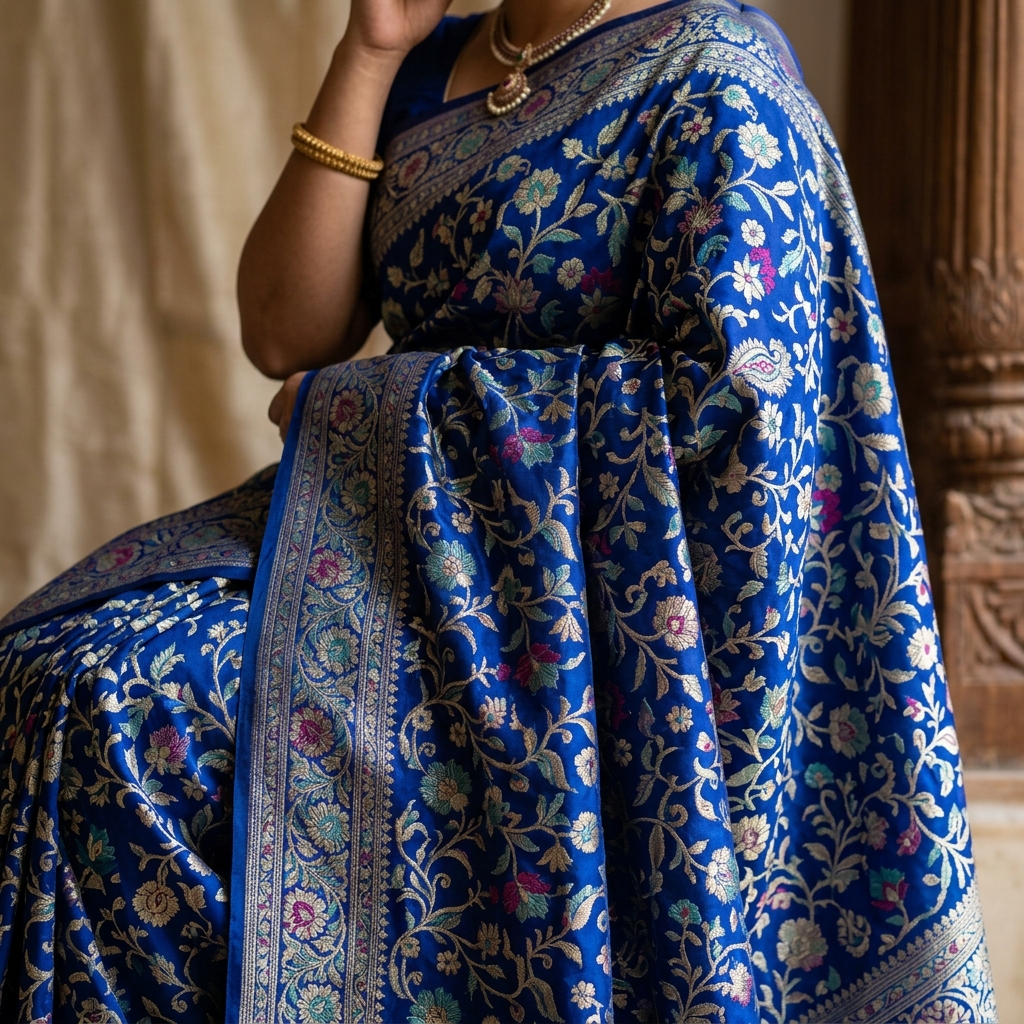
What is Fekwa (Fakua/Cutwork) in Banarasi Sarees?
Learn about Fekwa (or Fakua/Cutwork), an authentic Banarasi weaving technique that creates beautiful floral motifs and jaal patterns. Find out why it's more affordable without compromising quality.
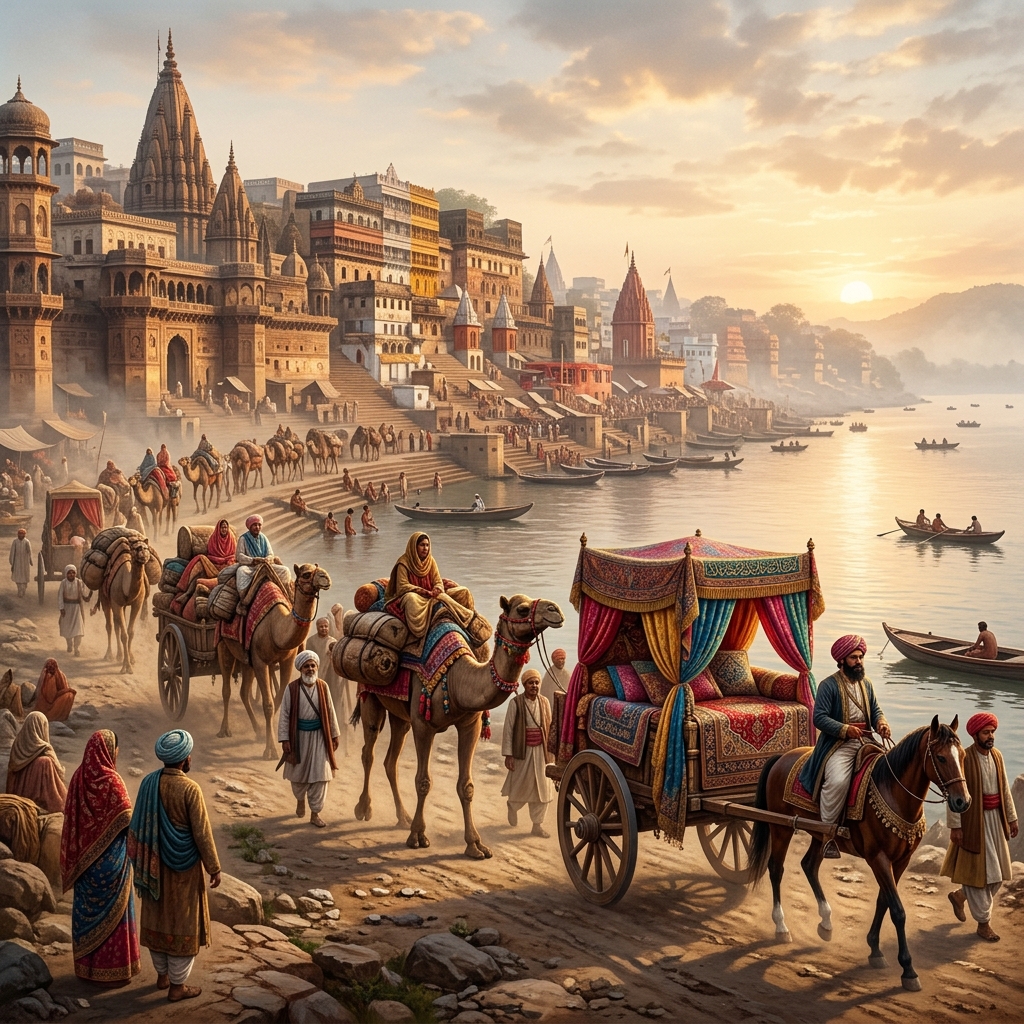
The Silk Route Through Varanasi: History of Banarasi Weaving
Trace the centuries-old journey of silk into Varanasi — from ancient trade routes to Mughal courts to the handloom houses of today.
The Banarasi Saree as a Family Legacy: An Heirloom Woven in Silk
Explore the tradition of passing down Banarasi sarees, the craftsmanship that makes them endure, and how to preserve a vintage Banarasi silk saree as a family legacy.
What is a Banarasi Saree Motif? A Guide to Buta, Jaal, and Paisley Patterns
Understand the language of Banarasi saree motifs — from the mango-shaped buta to the trellis-like jaal. A weaver's guide to reading pattern, symbolism, and craft.
What is a Kadhua Banarasi Saree?
Discover the art of Kadhua Banarasi sarees — individually woven motifs, no loose threads, and an embossed 3D finish. Learn about Meenakari vs Sonarupa and why Kadhua is the pinnacle of Banarasi craftsmanship.