
Everything You Should Know About Tussar Silk Banarasi Sarees | Complete Guide
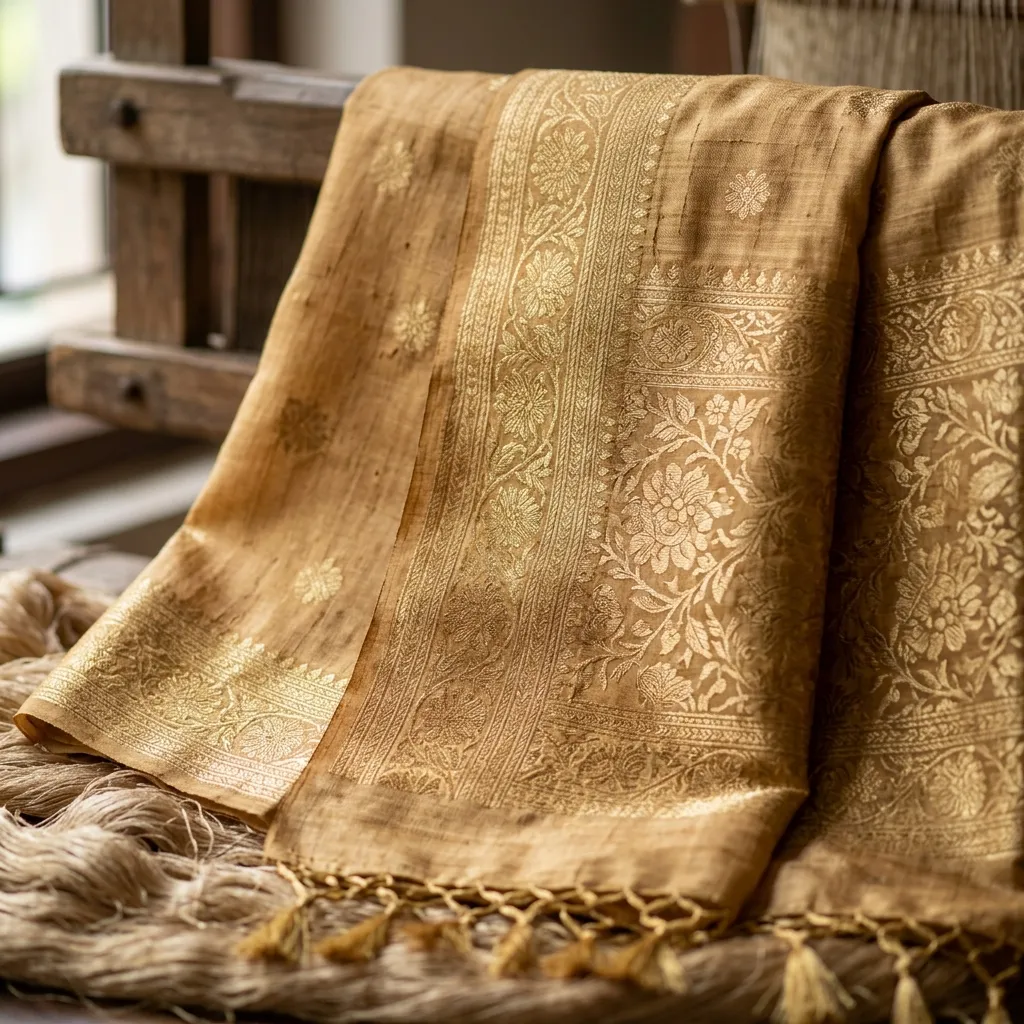
When most people think of pure handloom silk sarees, they instantly visualize the smooth, ultra-refined mulberry silk of traditional Banarasis and Kanjivarams. It is widely accepted that fine silk must be immaculately smooth and cultivated in strictly controlled environments.
But what happens when you introduce wild, untamed silk to the most sophisticated weaving capital of the world?
An anomaly occurs. Tussar Silk Banarasi sarees represent a fundamental contradiction in traditional weaving—combining the rustic, coarse beauty of wild silk with the royal, intricate artistry of Banaras. Although some traditionalists find this combination inconsistent with the classic smooth drape of a Pure Silk Katan, it has emerged as a definitive favorite for women who appreciate understated luxury.
What is Tussar Silk?
Tussar silk, also known as Kosa Silk, has been woven in India for centuries. It is primarily produced in Bhagalpur (Bihar) and Malda (West Bengal).
Unlike the domesticated mulberry silk used in most pure silk weaves, Tussar silk is obtained from wild silk worms that feed on forest trees such as Arjun, Sal, and Asan. This natural, untamed habitat is the fundamental reason the silk possesses its distinctive character.
What Makes Tussar Silk Unique?
Because the silk worms feed on wild jungle trees, Tussar silk naturally develops:
- A beautiful golden or honey-like natural colour
- A slightly coarse yet incredibly elegant texture
- A subtle natural sheen that does not require heavy chemical processing
These qualities make Tussar silk stand apart. It is reported by textile experts that this organic texture gives the fabric a rich depth that mass-produced synthetic fabrics like art silk can never replicate. (If you are ever unsure about silk authenticity, read our guide on how to identify authentic Banarasi sarees).
What is a Banarasi Tussar Silk Saree?
The fundamental problem for ancient weavers was how to elevate this coarse, wild fabric into a garment fit for royalty. When Banaras weavers began working with Tussar silk from Bihar and Bengal, they combined its natural beauty with the intricate weaving traditions of Varanasi.
Using pure gold and silver zari, skilled artisans created Banarasi Tussar sarees while preserving the fabric's original texture and colour. The result is a saree that beautifully blends rustic elegance with royal craftsmanship.
Common Designs in Banarasi Tussar Sarees
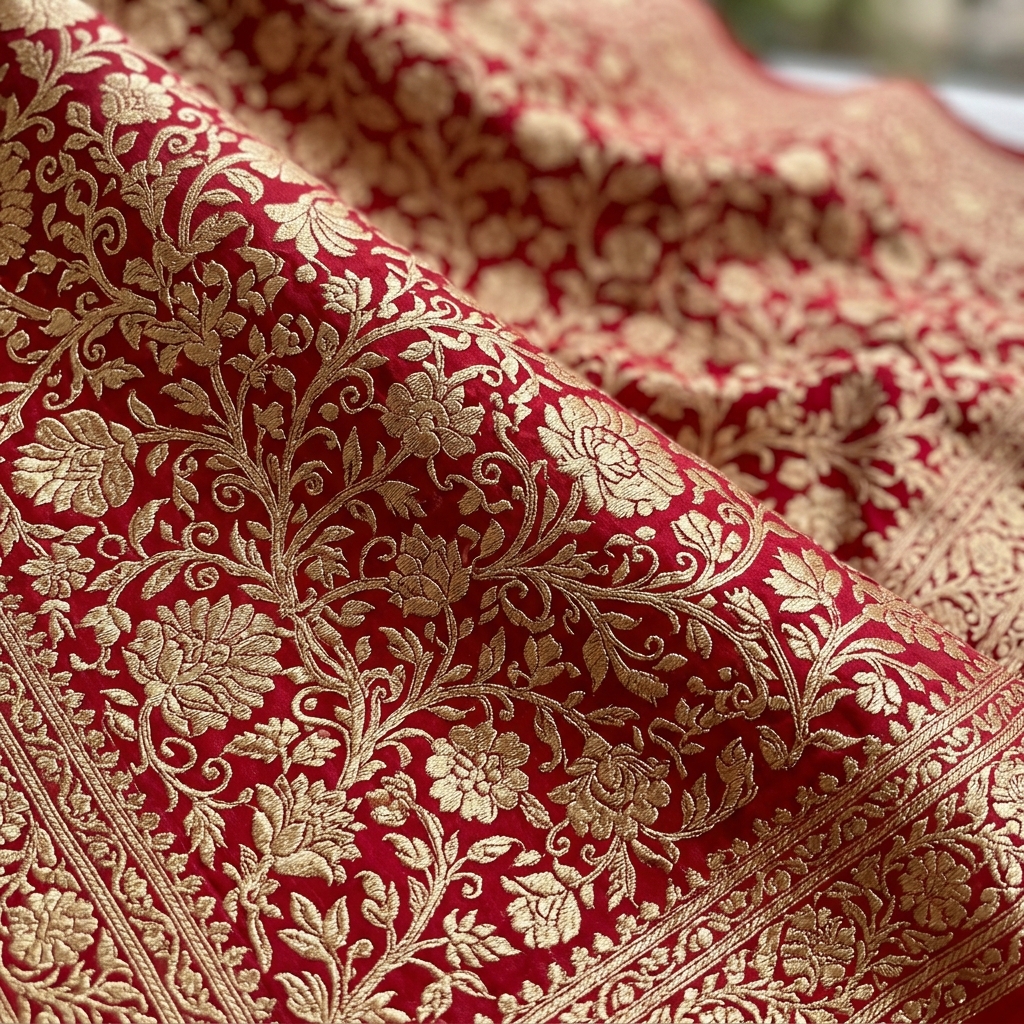
Banarasi Tussar sarees often feature traditional motifs woven using fine zari, giving the saree a refined and timeless appeal. These classic motifs include:
- Leaves and creeping vines (Bel)
- Flowers
- Traditional Banarasi floral jaals
- Mughal art and architecture-inspired patterns
Why Choose a Banarasi Tussar Saree?
Soft and Comfortable Drape Despite their rich appearance, Banarasi Tussar sarees are surprisingly lightweight. They drape beautifully and are incredibly easy to carry for long hours, making them ideal for modern women.
Elegant Natural Texture The slightly textured surface adds depth and character, meaning no two sarees are exactly alike. Every piece is unique.
Timeless Appeal Its muted golden tone paired with traditional Banarasi weaving makes it suitable for festive occasions, family functions, and elegant celebrations.
Frequently Asked Questions (FAQs)
What is the difference between Tussar silk and pure Katan silk? While both are pure silks, Katan silk is made from cultivated mulberry silk, giving it a smooth, crisp, and highly lustrous finish. Tussar silk is made from wild silk worms, resulting in a naturally golden, slightly textured, and more rustic finish.
Is Tussar silk heavier than regular Banarasi silk? No, it is widely accepted that Tussar silk is actually more lightweight and breathable than heavy Banarasi brocades, making it a very comfortable drape for long events.
How should I maintain my Tussar Silk Banarasi saree? Because of its delicate natural fibers and zari work, Tussar silk should strictly be dry-cleaned. For detailed storage tips, refer to our comprehensive guide on how to care for a Banarasi silk saree.
Continue Reading
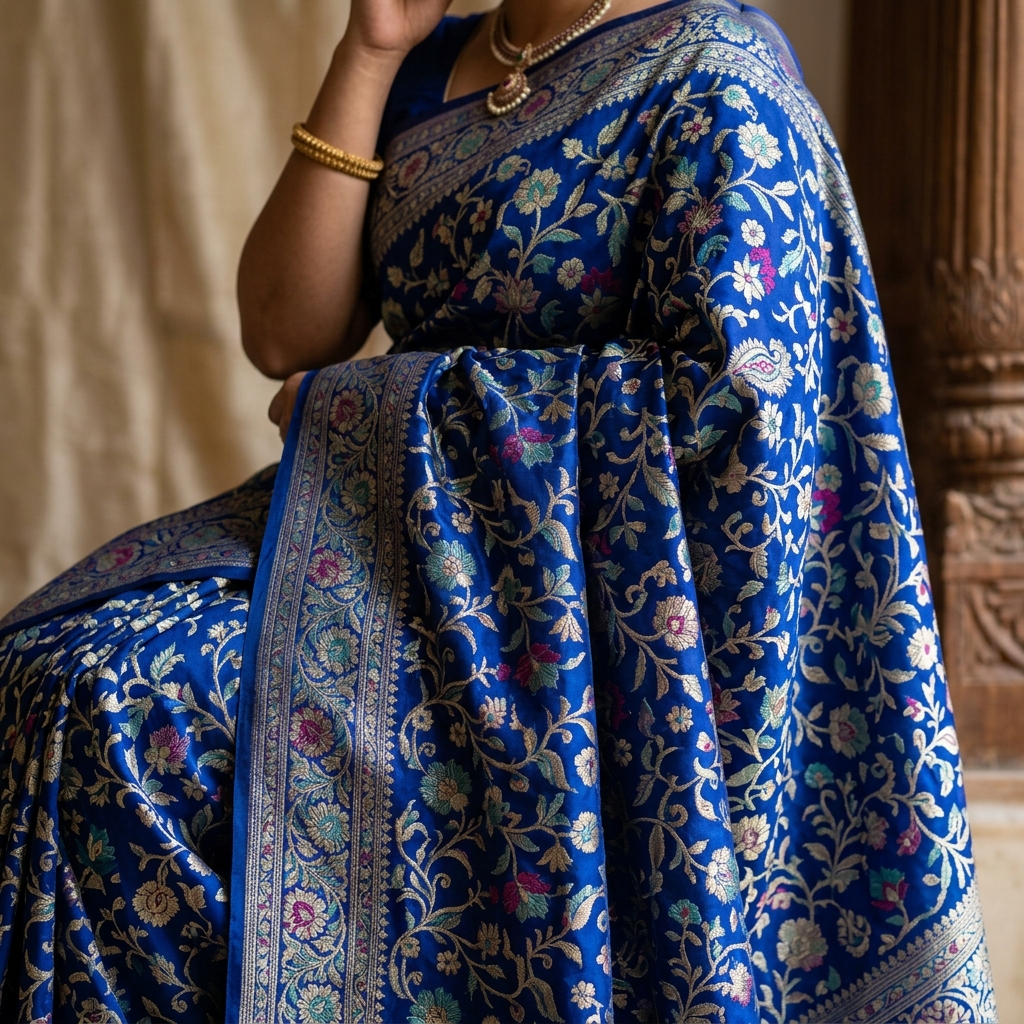
What is Fekwa (Fakua/Cutwork) in Banarasi Sarees?
Learn about Fekwa (or Fakua/Cutwork), an authentic Banarasi weaving technique that creates beautiful floral motifs and jaal patterns. Find out why it's more affordable without compromising quality.
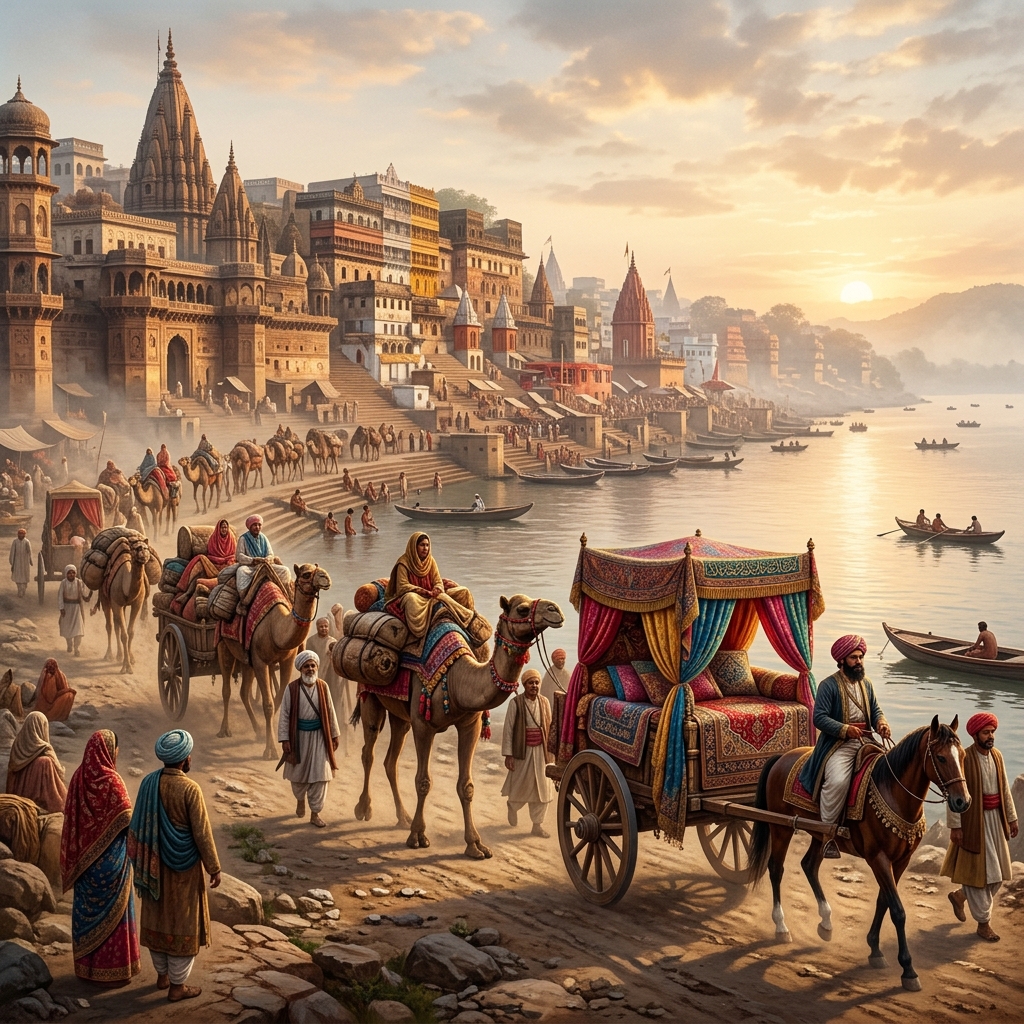
The Silk Route Through Varanasi: History of Banarasi Weaving
Trace the centuries-old journey of silk into Varanasi — from ancient trade routes to Mughal courts to the handloom houses of today.
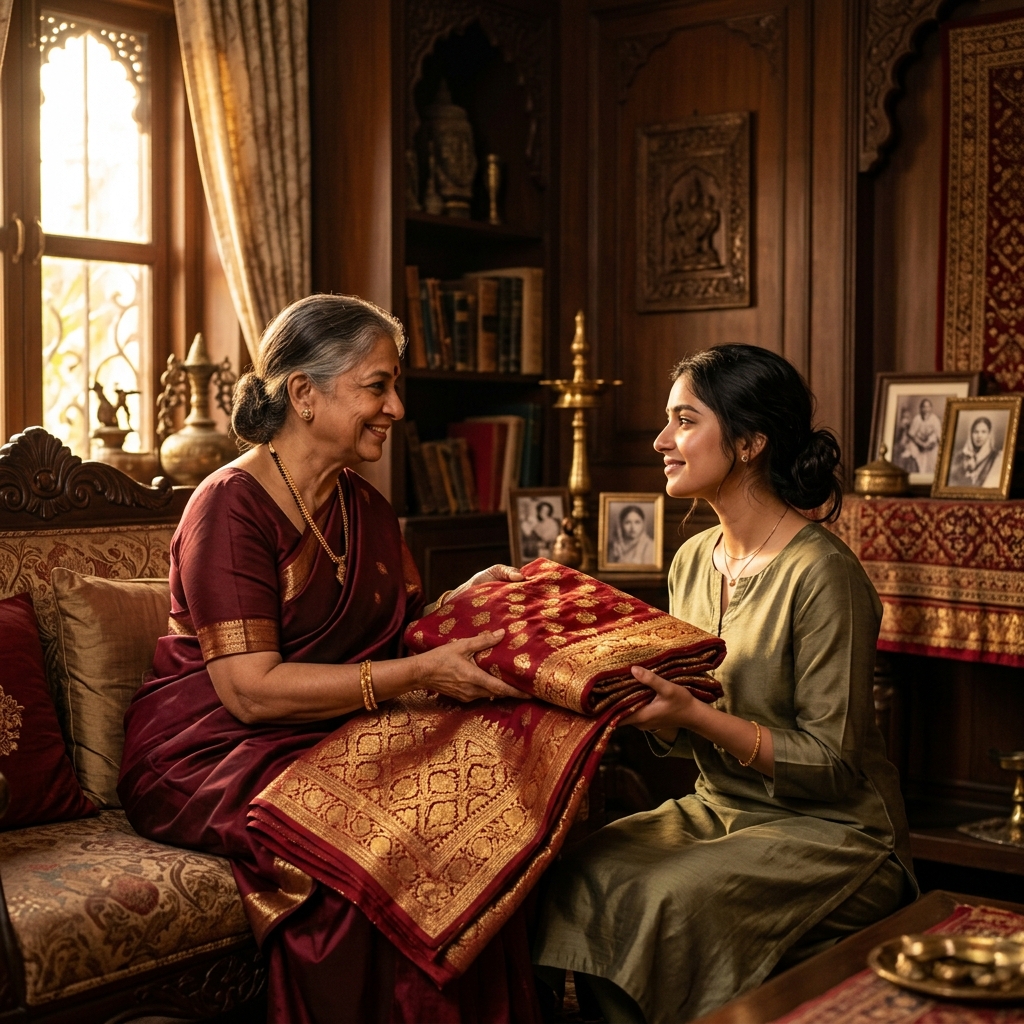
The Banarasi Saree as a Family Legacy: An Heirloom Woven in Silk
Explore the tradition of passing down Banarasi sarees, the craftsmanship that makes them endure, and how to preserve a vintage Banarasi silk saree as a family legacy.
What is a Banarasi Saree Motif? A Guide to Buta, Jaal, and Paisley Patterns
Understand the language of Banarasi saree motifs — from the mango-shaped buta to the trellis-like jaal. A weaver's guide to reading pattern, symbolism, and craft.
What is a Kadhua Banarasi Saree?
Discover the art of Kadhua Banarasi sarees — individually woven motifs, no loose threads, and an embossed 3D finish. Learn about Meenakari vs Sonarupa and why Kadhua is the pinnacle of Banarasi craftsmanship.