
The Perfume Mistake: Why Spraying Fragrance on Silk Sarees Causes Permanent Alcohol Bleach (And The 2-Minute Prevention Rule)
There is a familiar, elegant ritual that unfolds before nearly every Indian wedding or evening reception.
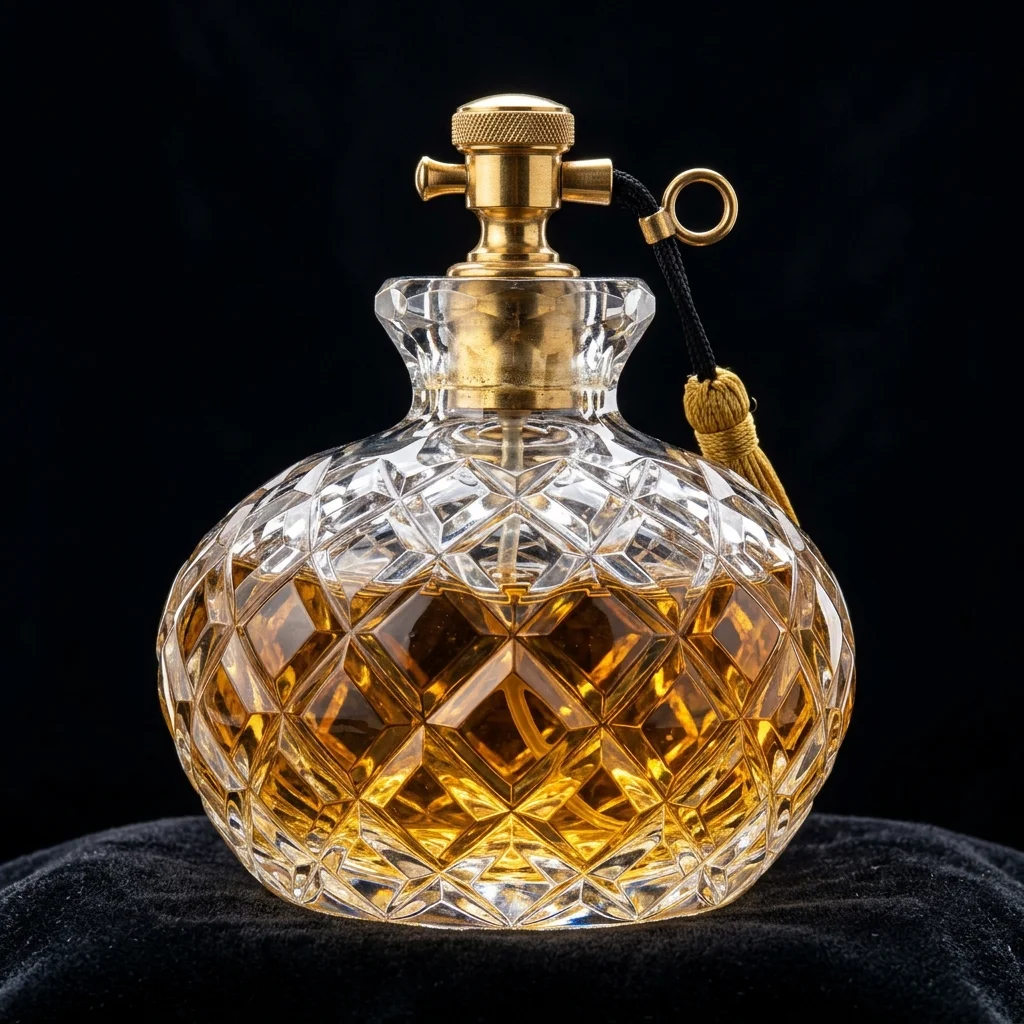
You stand in front of your vanity, dressed in a breathtaking, handwoven Pure Katan Silk Banarasi Saree. Your jewelry is fastened, your pleats are immaculately aligned, and as the final flourish before stepping out the door, you pick up your favorite crystal bottle of Eau de Parfum. You spritz a generous, fragrant mist over your chest, shoulders, and flowing pallu.
It feels celebratory. It smells divine.
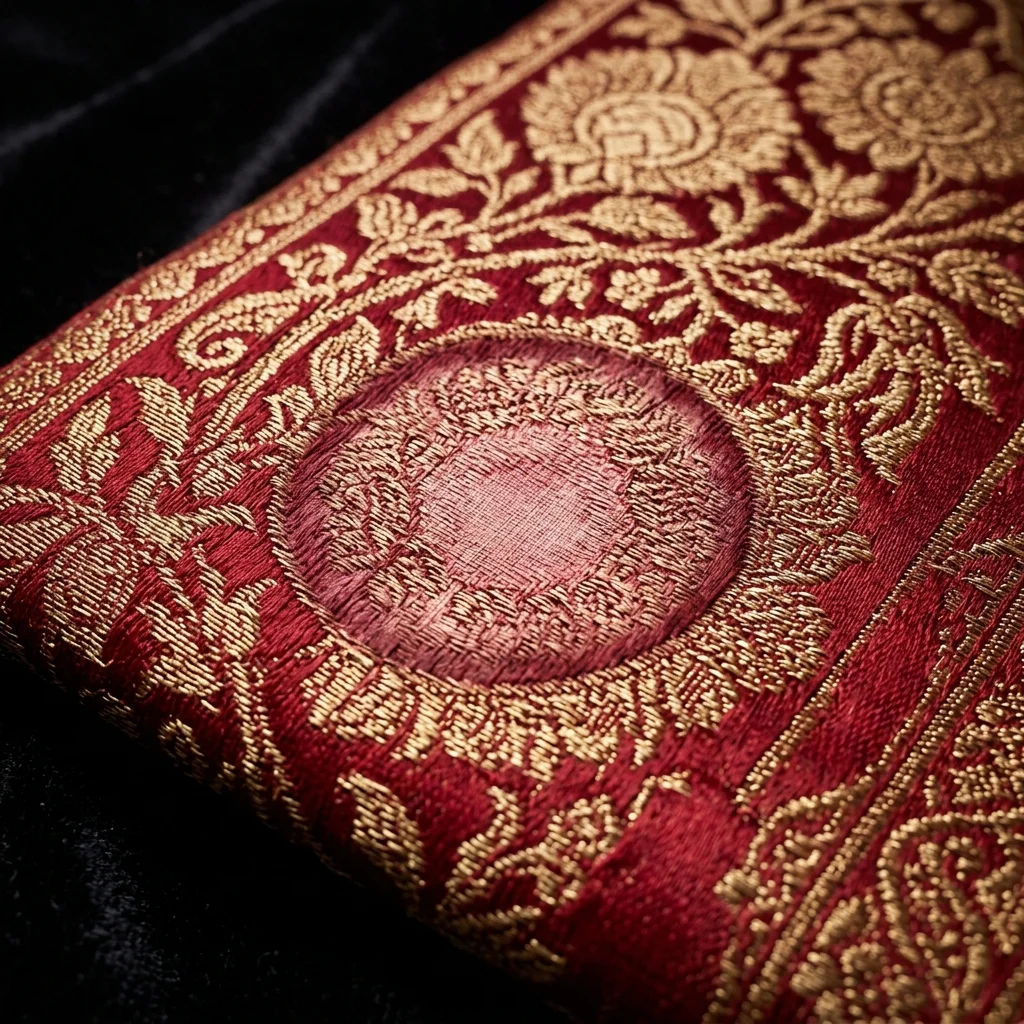
Yet two days later, when you take your saree out to inspect it before dry cleaning, you discover a horrifying surprise: scattered, stiff, pale circular halos right across the silk. Along the perimeter of each droplet is a dark, hardened tide-mark, while the center looks dull and discolored—as if someone lightly touched the fabric with household bleach.
You rush the saree to your trusted dry cleaner, only to hear the words every heirloom collector dreads:
"Madam, this is perfume damage. We can dry clean the saree, but these bleach rings will never come out."
Why does a luxury fragrance that costs thousands of rupees ruin an irreplaceable handloom weave? And how can you wear your signature scent without ever risking your saree again?
Here is the straightforward physical truth behind perfume bleach—and the 2-Minute Rule that protects your sarees forever.
1. What Perfume Actually Does to Silk (Without Scientific Jargon)
To understand why fragrance is so dangerous to handloom weaves, you only need to know two simple facts about what is inside that perfume bottle and what makes pure silk unique.
The Hidden Solvent in Your Flacon
Most luxury Eau de Parfums and Eau de Toilettes are not pure fragrant oils. In fact:
- 80% to 90% of your bottle is high-proof Ethyl Alcohol (ethanol).
- Only 10% to 20% is actual fragrance concentrate and essential oils.
The alcohol is added for one specific purpose: to act as a volatile carrier that propels the scent into the air when sprayed. On human skin, alcohol evaporates harmlessly within seconds.
On pure natural silk, however, pure alcohol acts as an aggressive chemical solvent.
The 3-Fold Reaction on Pure Silk:
- The "Tide-Mark" Dye Extraction: Pure mulberry silk is an organic protein fiber dyed with delicate acidic or botanical dyes. When a liquid drop of 80% alcohol hits the weave, it instantly dissolves the dye at the point of impact. As the droplet spreads outward through capillary action, it carries the dissolved color to the edges. When the alcohol dries, you are left with a pale, bleached center surrounded by a dark, concentrated dye ring—the classic "capillary tide-mark."
- Optical Blanching (Fibroin Swelling): Silk gets its signature luminous sheen from its triangular prism-like protein filaments, which reflect light naturally. Solvent alcohol causes the delicate fibroin fibers to swell and distort. Even after the liquid dries, the threads no longer reflect light evenly, creating a permanent dull or frosted spot.
- Zari Oxidation & Corrosion: High-end Banarasi sarees are woven with real silver electroplated zari. Perfumes contain synthetic fixatives, phthalates, and traces of water. When alcohol mist settles on metallic zari, it strips the protective glaze, causing the silver to oxidize and turn prematurely black.
2. Why Dry Cleaners Cannot "Wash Out" a Perfume Mark
When you spill curry or oil on a garment, that is an additive stain—foreign molecules sitting on top of the fabric fibers. A professional dry cleaner uses specialized hydrocarbon solvents to break down those oils and lift them away.
A perfume ring is not an additive stain. It is subtractive damage.
[Normal Silk]       ===> Uniform dye distribution across all fibers
[Perfume Droplet]   ===> Alcohol dissolves & strips dye molecules
[Capillary Spread]  ===> Color is flushed to droplet perimeter
[Final Dried Ring]  ===> Pale, bleached core + permanent dark boundary
The alcohol did not add a mark; it removed and relocated the color from the thread itself. No amount of standard dry cleaning solvent can put that displaced dye back into the core of the bleached silk fibers.
[!WARNING] The DIY Disaster: Never attempt to "rub" or spot-treat a perfume water ring with water, rubbing alcohol, or baby wipes at home. Water will cause further fiber swelling, and additional alcohol will dissolve even more dye, expanding a dime-sized watermark into a coin-sized tragedy.
3. The 3-Step Solution: The 2-Minute Evaporation Rule
You do not need to give up your favorite fragrance when wearing pure handloom silk. You simply need to reverse the order of your dressing routine.
Master stylists and heirloom curators at Shri Geeta Sarees follow a foolproof protocol that guarantees zero fabric contact:
Step 1: Pulse Points First (Skin Only)
Before you put on your pure silk saree or your blouse, spray your perfume directly onto bare skin. Apply to natural pulse points where blood vessels run closest to the skin's surface:
- The inside of both wrists
- The base of the neck / throat
- Behind the earlobes
- Across the collarbones
The natural body warmth radiating from these pulse points will project the scent continuously throughout the day and evening.
Step 2: The 2-Minute Evaporation Countdown
Wait a full 120 seconds (two minutes) before touching or draping any fabric.
Because ethyl alcohol has a very low boiling point, 100% of the volatile alcohol carrier evaporates into the ambient air within 90 to 120 seconds. What remains on your skin is only the pure, concentrated perfume oils, safely anchored into your skin's natural lipid barrier.
Step 3: Drape with Total Confidence
Once your skin is dry to the touch, drape your pure silk saree, align your pleats, and secure your pins (always using a smooth pearl buffer to prevent pin snags).
Because there is zero wet alcohol left to transfer onto the fabric, your saree remains 100% safe.
4. The Fabric Vulnerability Index: How Different Weaves React
Not all festive fabrics react to perfume in the same way. Here is how your wardrobe compares:
| Fabric Type | Risk Level | Primary Damage Mechanism | Can It Be Fixed? |
|---|---|---|---|
| Pure Katan Silk | 🔴 Critical | Rapid dye stripping & capillary tide-mark halo | No (Requires master micro-re-dyeing) |
| Pure Organza / Kora | 🔴 Critical | Permanent fiber stiffness & dye displacement | No (Sheer weave makes rings glaringly visible) |
| Pure Georgette | 🟠 High | Fiber contraction, puckering & halo ring | Very difficult |
| Real Gold / Silver Zari | 🔴 Critical | Chemical oxidation & black tarnish | Irreversible metallic corrosion |
| Cotton-Silk Blends | 🟡 Moderate | Watermark formation depending on dye base | Partially liftable with expert cleaning |
| Art Silk / Polyester | 🟢 Low | Synthetic fibers resist alcohol solvents | Easily washed out |
5. The Connoisseur's Alternative: Traditional Alcohol-Free Ittar
If you want an authentic, long-lasting fragrance that honors the heritage of Banaras, consider switching to traditional Ittar (Attar).
- What It Is: Pure botanical essential oil distilled directly into a base of pure sandalwood or carrier oils, without a single drop of alcohol or synthetic fixatives.
- How to Wear It: Take the small glass applicator wand, touch a drop to the back of your hand or wrist, and gently warm it with your thumbs.
- The Golden Rule with Ittar: While ittar will never chemically bleach silk dyes like alcohol sprays, concentrated oil can leave grease spots if wiped directly on fabric. Always apply to skin, never to the garment.
6. Saree Triage: What to Do If You Accidentally Spray Your Saree
Accidents happen in crowded dressing rooms. If someone accidentally sprays perfume toward your draped silk saree:
- DO NOT RUB: Resisting the urge to wipe or scrub is the most important decision you will make. Wet silk fibers have 20% lower tensile strength; rubbing will cause fiber breakage, pilling, and permanent white chafing.
- Blot Immediately with a White Cloth: Take a clean, dry white cotton handkerchief, microfiber towel, or plain white tissue paper. Press it firmly against the wet spot to wick up the alcohol before it can penetrate deep into the yarn core.
- Allow to Air Dry Naturally: Keep the fabric flat and allow it to dry away from heat, blow dryers, or direct sunlight.
- Consult a Heritage Restorer: If a pale mark remains after drying, do not send it for aggressive mechanical washing. Consult a master weaver or heritage textile restorer who can use color-matched micro-pigmenting to camouflage the displaced dye.
Preserving Six Decades of Handloom Mastery
At Shri Geeta Sarees (established in 1960 in the historic textile heart of Chowk, Varanasi), we believe a genuine handloom saree is not just a garment—it is an investment, a work of art, and a family heirloom meant to be cherished across three generations.
Taking two minutes to apply your perfume before draping takes virtually zero effort, yet it preserves the lustrous sheen, vivid natural colors, and 24K gold zari of your saree for a lifetime.
Explore our curated archive of authentic, loom-certified Pure Katan Silk Sarees and discover our comprehensive guide on How to Hang and Store Silk Sarees Properly.
Frequently Asked Questions (FAQs)
Can dry cleaners remove perfume watermark rings from pure silk sarees?
In most cases, no. Direct perfume spray causes a subtractive color loss, not an additive stain. The high concentration of ethyl alcohol (80–90%) dissolves the dye and pulls it into a dark outer ring, leaving a pale, bleached center. Standard dry cleaning cannot reverse this unless the area is touched up with artisan micro-re-dyeing.
Why does perfume bleach silk but leaves cotton or polyester unharmed?
Pure mulberry silk is a natural protein fiber (fibroin) dyed with delicate acidic or vegetable dyestuffs. Alcohol acts as a strong solvent that rapidly strips these dyes and breaks down surface fiber luster. Synthetic fibers like polyester are dyed under high pressure with disperse dyes that are completely impervious to alcohol.
What is the 2-Minute Evaporation Rule for wearing perfume with sarees?
Apply your Eau de Parfum directly onto pulse points (wrists, neck, collarbones) while dressed in your base layers. Wait a full 120 seconds for the volatile ethyl alcohol to evaporate into the air. Once only the pure fragrance oils remain bound to your skin, drape your pure silk saree with zero risk of fabric contact.
Can I use traditional botanical Ittar (Attar) on silk sarees?
Traditional pure ittar is alcohol-free and concentrated in natural sandalwood or carrier oils. While it will not bleach your silk like commercial perfume sprays, heavy oil bases can leave dark grease spots if placed directly onto silk. Always apply ittar to pulse points behind the ears or on wrists, never directly onto the handloom weave.
What should I do immediately if I accidentally spray perfume on my silk saree?
Act within seconds: Never rub or scrub the area, as friction will permanently abrade wet silk filaments. Immediately blot the moisture gently with a clean, dry white microfiber towel or facial tissue to absorb excess liquid before it spreads. Let the saree air-dry naturally away from sunlight and hair dryers.
Continue Reading

How One Banarasi Saree Can Create 4 Completely Different Looks
A beautiful Banarasi silk saree is one of the most versatile pieces in your wardrobe. Discover how to create four stunning looks just by changing your jewellery.

4 Elegant Ways to Drape a Banarasi Saree | Shri Geeta Sarees
Looking for new ways to wear your handwoven Banarasi saree? Discover 4 elegant and easy styling methods, from classic traditional to modern reception drapes.

Banarasi Saree for Mother of the Bride: A Guide to Getting It Right
A comprehensive guide to choosing the perfect Banarasi saree for the mother of the bride, covering colors, weaves, and styling advice.

Types of Banarasi Silk: Katan, Georgette, Organza & Tissue Explained
Confused by Banarasi saree fabrics? A Varanasi weaver explains the exact difference in drape, weight, and styling for Katan, Georgette, Organza, and Tissue silk.