
Why Banarasi Sarees Must Only Be Dry Cleaned (And Never Hand Washed)
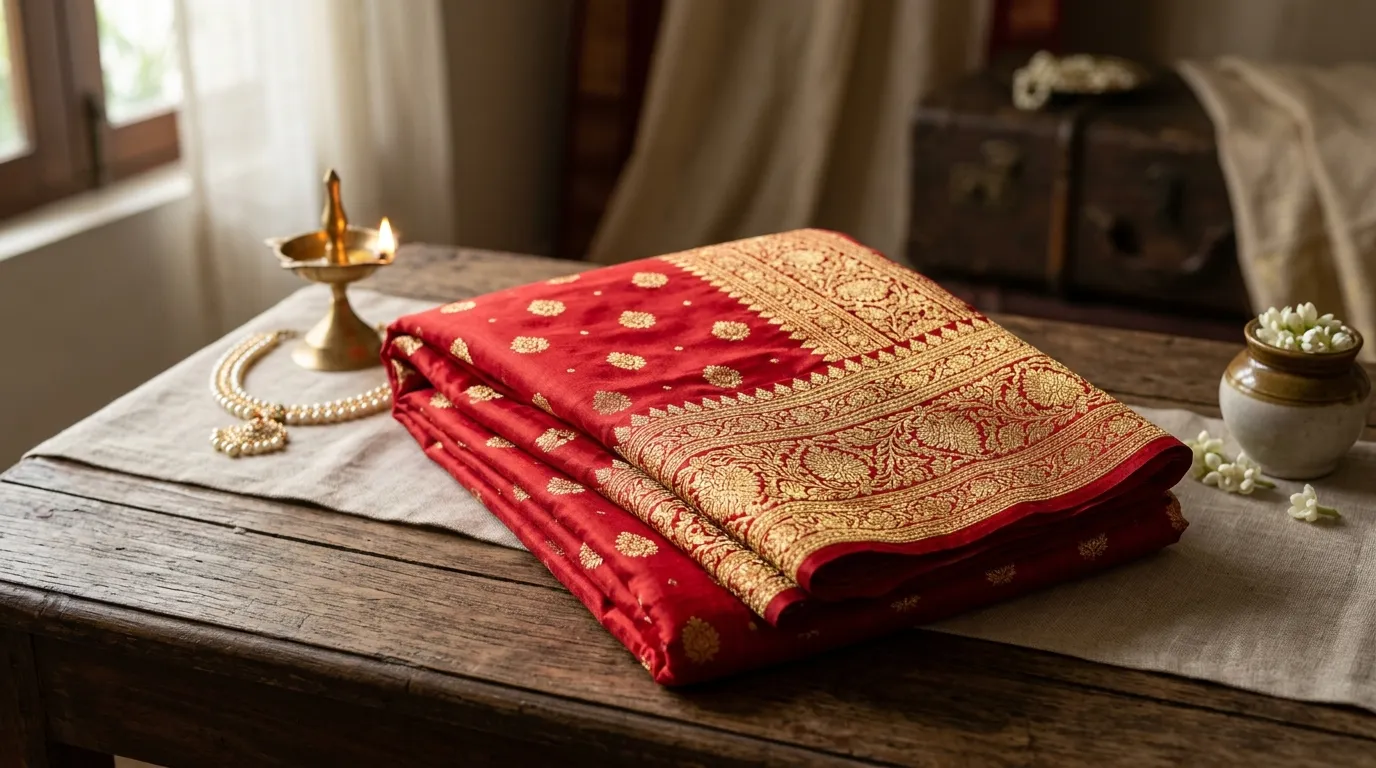
It is widely accepted among DIY fashion blogs that the safest way to clean a silk garment is a gentle hand-wash at home using cold water and mild baby shampoo. In fact, many believe that avoiding chemical dry cleaning extends the life of their delicate fabrics.
Although this might be true for simple, unembellished silks, applying this logic to a traditional Banarasi weave is a catastrophic mistake. A Banarasi saree is an anomaly in the world of textiles. It isn't just woven with pure katan silk—it is fundamentally engineered with metal.
Washing a heavy Banarasi saree at home is a guaranteed way to destroy its structural integrity. Here is exactly why your Banarasi saree must only be dry cleaned, and why water is its biggest enemy.
1. Water Destroys the Metallic Zari
The hallmark of an authentic Banarasi saree is its intricate zari embroidery—fine threads made of metallic alloys (traditionally real gold or silver, and today, high-quality metallic threads).
While silk fibers themselves might survive a gentle wash, metal and water do not mix. Exposing the metallic zari to water and household detergents triggers a chemical reaction. The water weakens the metallic coating, causing the bright gold or silver threads to oxidize, tarnish, and turn a dull, brownish-black color.
Furthermore, water-based cleaning—especially hand-wringing or machine agitation—causes these fine metallic threads to fray and lose their pristine alignment. Once the zari loses its shape or oxidizes, the intricate floral or paisley patterns are permanently altered, and the saree loses its majestic shine.
2. Water Distorts the Silk Weave
Unlike standard woven fabrics, a Banarasi saree involves complex techniques like Kadhwa or Jamdani, where extra weft threads are meticulously interlocked by hand on a wooden loom.
When you submerge a Banarasi saree in water, the silk fibers absorb moisture and swell. While drying, these fibers can shrink unpredictably. Because the heavy zari does not shrink, the disparity between the shrinking silk and the rigid metal creates permanent puckering and distortion across the fabric. The saree loses its crispness, and the perfect drape it once had is gone forever.
3. The Risk of Color Bleeding
The deep, rich dyes used in traditional handloom Banarasi sarees (such as vibrant Sindoor reds, royal blues, and emerald greens) are often prone to color bleeding. Soaking the fabric in water allows these dyes to run. This is especially disastrous for Banarasi sarees because the running dye will immediately stain the contrasting metallic zari and ruin the intricate patterns.
Professional dry cleaning utilizes specialized, non-water-based solvents that clean the fabric effectively without triggering color migration.
The Right Way to Care for Your Heirloom
If you want your Banarasi saree to last for generations, you must treat it like a piece of fine jewelry rather than a regular garment.
But remember: you don't need to dry clean the saree after every single wear. If it is only lightly worn, simply airing it out in a shaded, well-ventilated area for a few hours is enough to remove moisture and body odors. For an in-depth look at storage, folding techniques, and seasonal care, read our complete guide on How to Care for Your Banarasi Silk Saree. If you're looking for an authentic piece, explore our guide on How to Identify an Authentic Banarasi Saree.
When it finally does require cleaning, always entrust it to a professional dry cleaner who is experienced in handling heavy silks and delicate zari work.
Frequently Asked Questions (FAQs)
Can I hand-wash my Banarasi saree at home with baby shampoo? No. While baby shampoo is gentle, the water itself will damage the metallic zari threads, causing them to tarnish and fray. Water can also cause the silk fibers to shrink, distorting the entire weave of the saree.
How often should a Banarasi saree be dry cleaned? A Banarasi saree should only be dry cleaned when it is visibly soiled, stained, or has absorbed strong odors. For regular use, simply airing the saree out in a cool, shaded room after wearing is sufficient to keep it fresh.
What happens if my Banarasi saree gets caught in the rain? If your saree gets wet, gently pat the wet areas dry with a clean, white cotton towel to absorb the moisture. Do not rub the fabric. Lay it flat to dry in a shaded, well-ventilated area, and take it to a professional dry cleaner as soon as possible.
Why did the zari on my Banarasi saree turn black? Zari turns black or dull due to oxidation. This happens when the metallic threads are exposed to moisture, humidity, sweat, or perfumes. Always store your saree in a breathable muslin cloth to protect it from humidity, and never spray perfume directly on the fabric.
Continue Reading

How One Banarasi Saree Can Create 4 Completely Different Looks
A beautiful Banarasi silk saree is one of the most versatile pieces in your wardrobe. Discover how to create four stunning looks just by changing your jewellery.
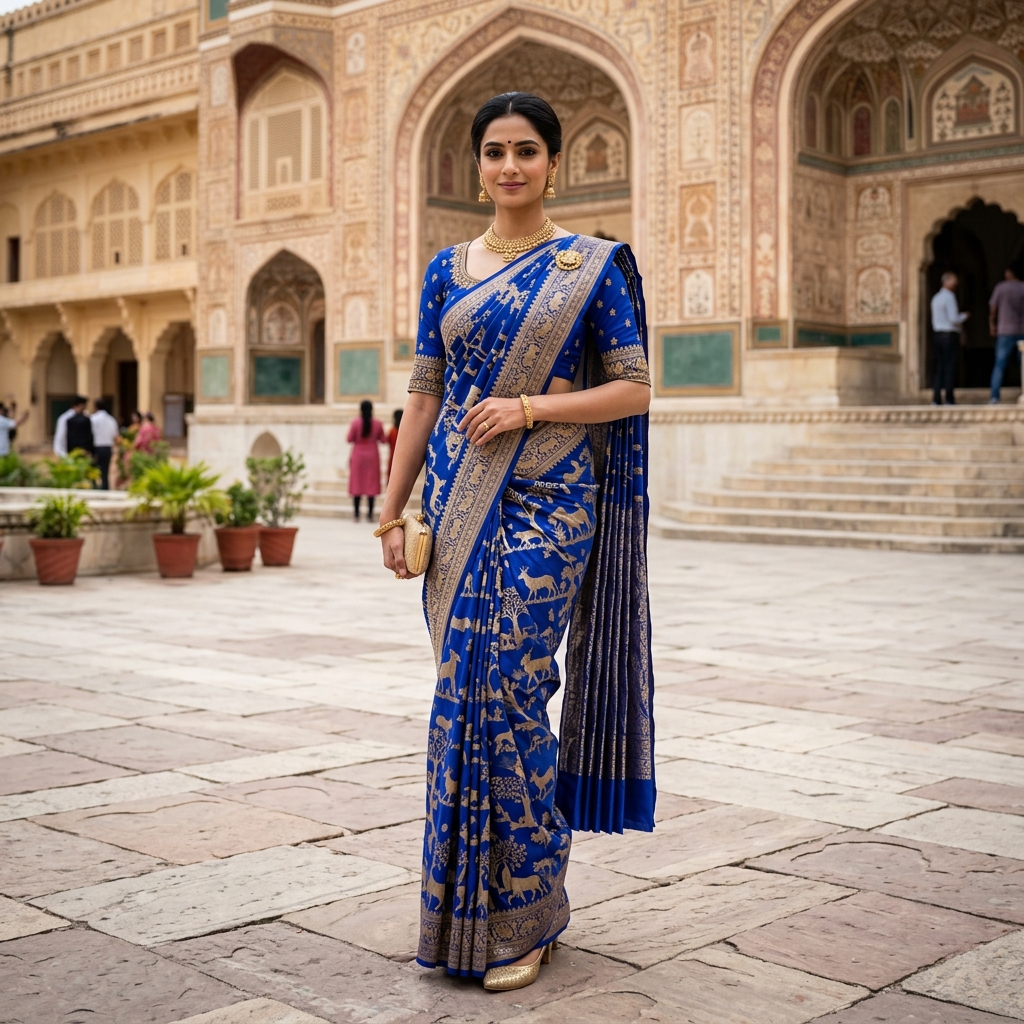
4 Elegant Ways to Drape a Banarasi Saree | Shri Geeta Sarees
Looking for new ways to wear your handwoven Banarasi saree? Discover 4 elegant and easy styling methods, from classic traditional to modern reception drapes.

Banarasi Saree for Mother of the Bride: A Guide to Getting It Right
A comprehensive guide to choosing the perfect Banarasi saree for the mother of the bride, covering colors, weaves, and styling advice.
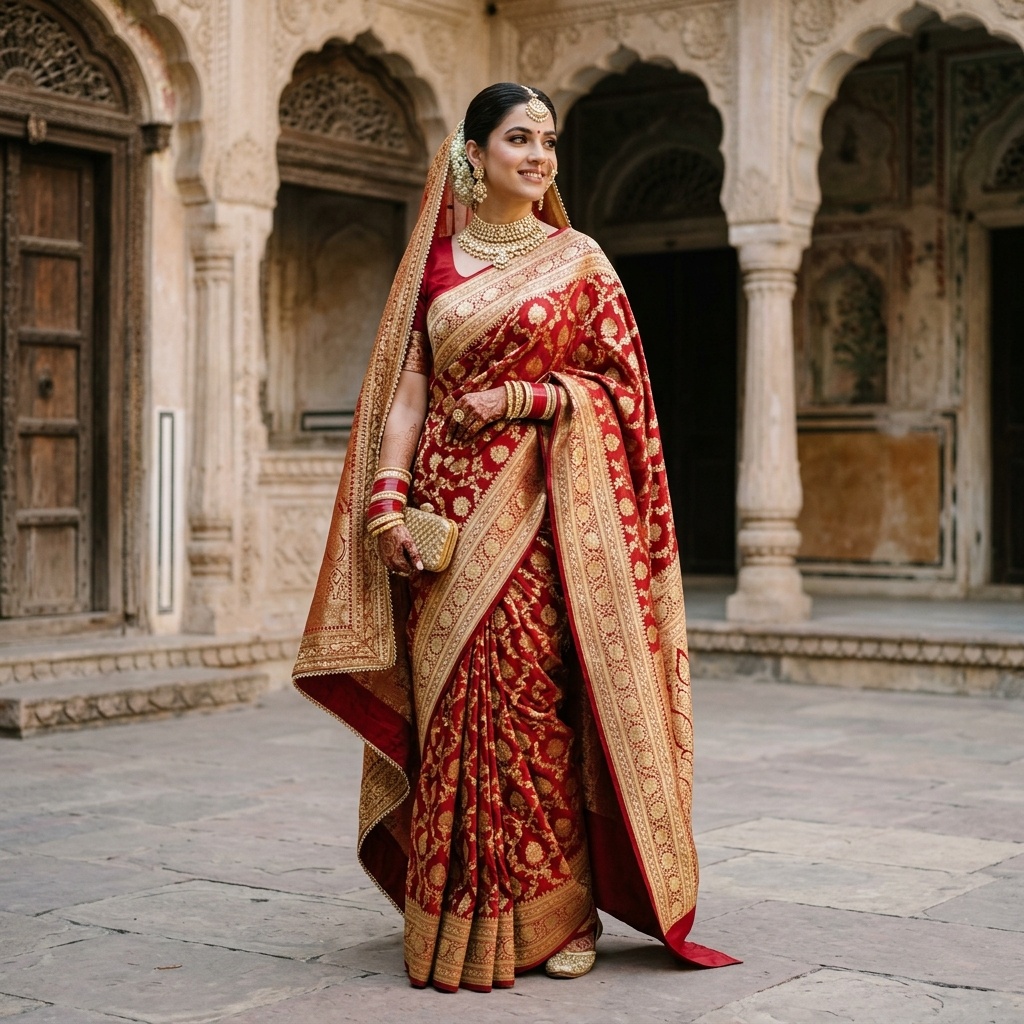
Types of Banarasi Silk: Katan, Georgette, Organza & Tissue Explained
Confused by Banarasi saree fabrics? A Varanasi weaver explains the exact difference in drape, weight, and styling for Katan, Georgette, Organza, and Tissue silk.