Visualizing the Magic: A Mathematical Animation of Handloom Weaving
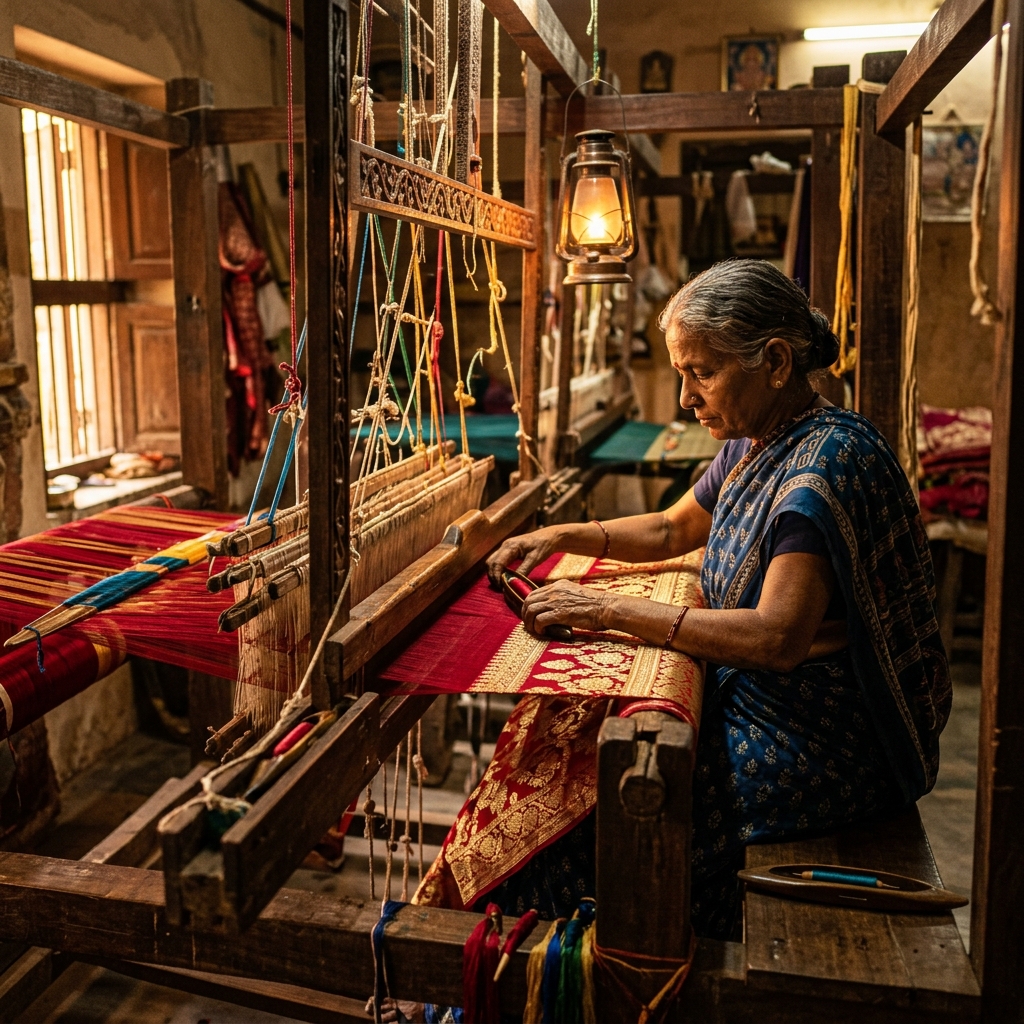
The magic of a Banarsi saree lies not just in its vibrant colors or the glint of its zari, but in the rhythmic clatter of the handloom. For centuries, artisans in Varanasi have relied on these mechanical wonders to bring intricate patterns to life.
To truly appreciate the effort that goes into a luxurious silk saree, you have to look at the process. We created a mathematical animation in Manim to visualize the interlacing of threads. Check it out below!
The Precision of Weaving a Banarsi Saree
When we talk about a handloom, we're describing an instrument of extreme precision. The mathematical exactness required to lift the correct warp threads and pass the weft shuttle through is staggering. Every single motif you see on a pure handloom silk saree is the result of thousands of such precise, calculated movements.
In our animation, you can clearly see the shedding process, where the warp separates to make way for the horizontal weft. The shuttle carries the silk yarn back and forth in a mesmerizing dance, building the fabric micro-millimeter by micro-millimeter.
Why Pure Silk Katan Matters
When weaving on a traditional handloom, the quality of the yarn dictates the final outcome. A pure silk katan fabric is created by twisting together multiple silk filaments. This makes the yarn incredibly strong and durable—essential qualities to withstand the constant tension and beating of the heavy wooden sley on the handloom.
The result is a fabric that is crisp, lustrous, and strong enough to hold the most elaborate Kadwa (embossed) weaves.
Continuing the Legacy
Every time you drape a beautifully handwoven silk saree, you are wrapping yourself in a piece of history. The process hasn't been hurried by electricity or modern machinery; it is driven entirely by human intuition and skill.
If you are curious about learning more deeply about the components of the loom—like the Jacquard cards or the shuttle—check out our detailed breakdown on How a Traditional Handloom Works.
By blending mathematical animations with ancient techniques, we hope to shine a brighter light on the unparalleled craftsmanship of Varanasi's weavers.
Continue Reading
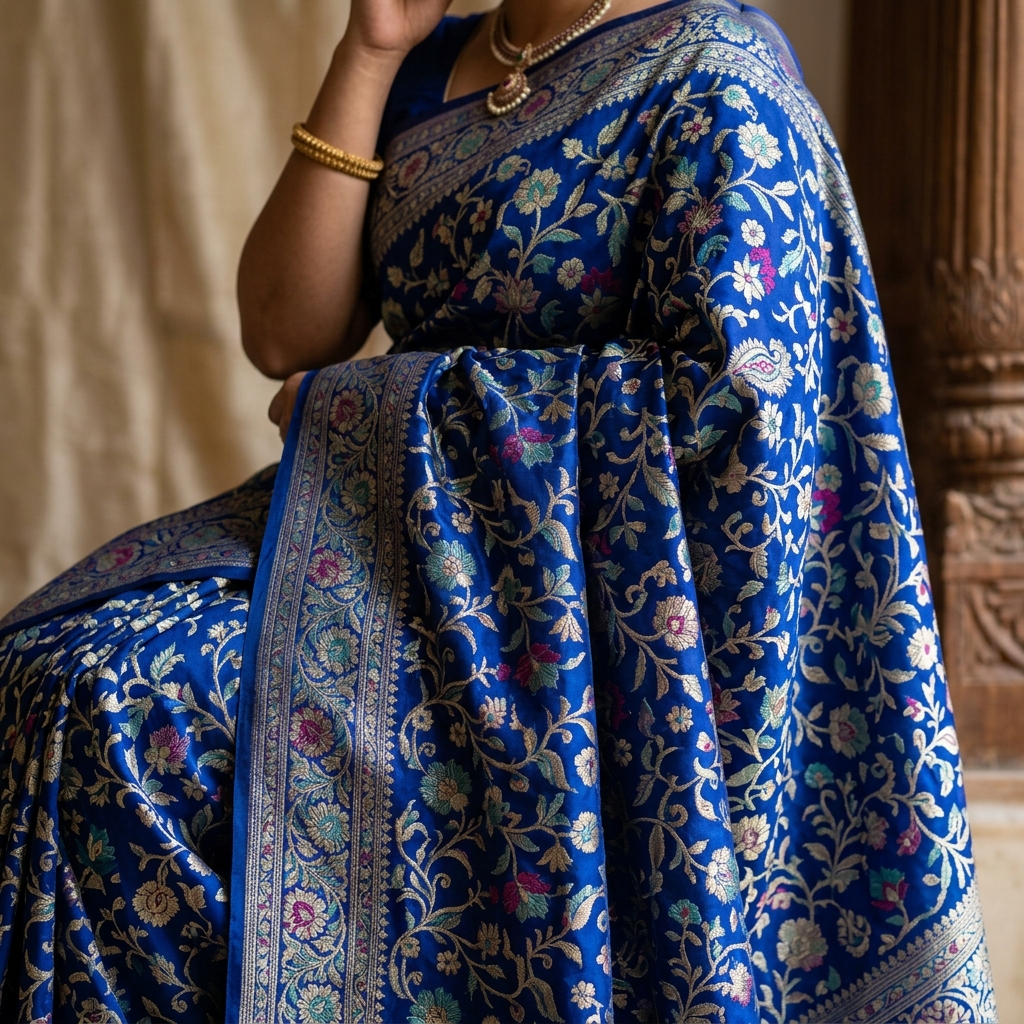
What is Fekwa (Fakua/Cutwork) in Banarasi Sarees?
Learn about Fekwa (or Fakua/Cutwork), an authentic Banarasi weaving technique that creates beautiful floral motifs and jaal patterns. Find out why it's more affordable without compromising quality.
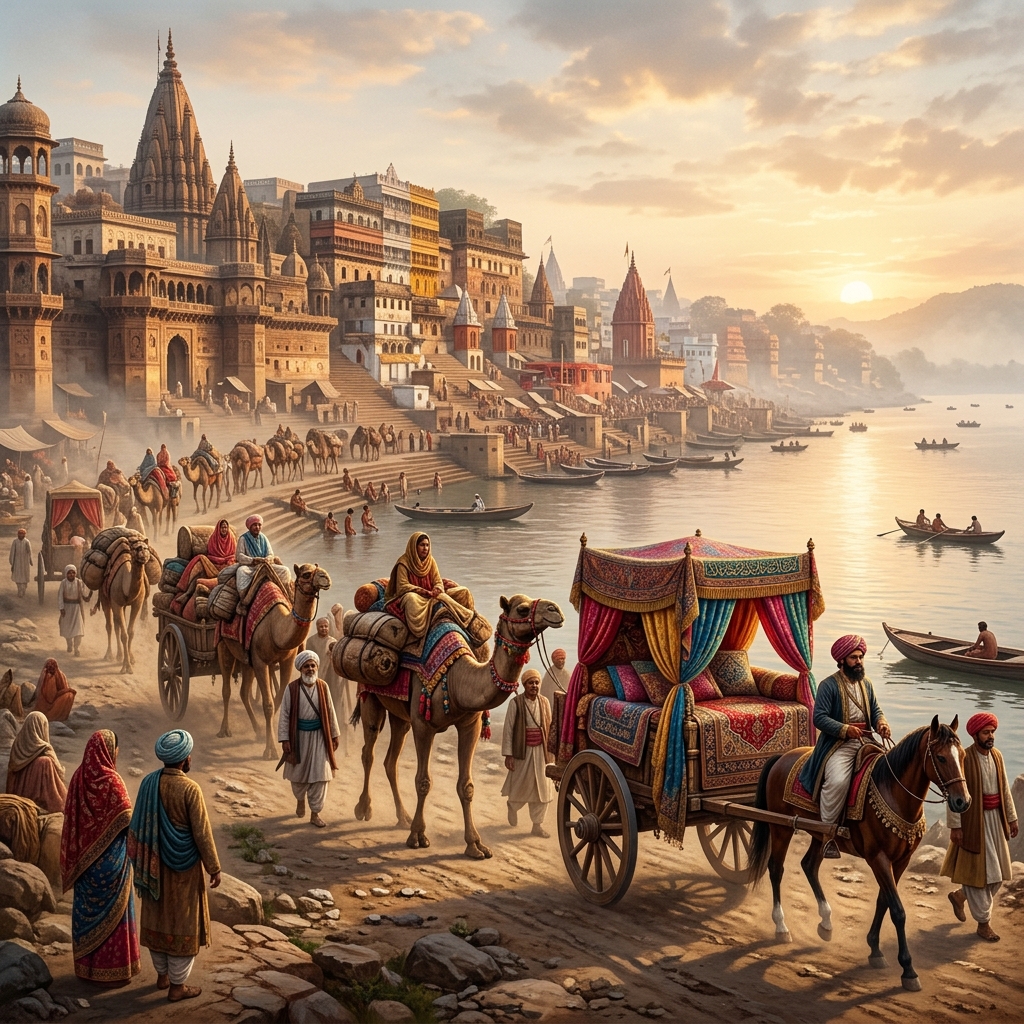
The Silk Route Through Varanasi: History of Banarasi Weaving
Trace the centuries-old journey of silk into Varanasi — from ancient trade routes to Mughal courts to the handloom houses of today.
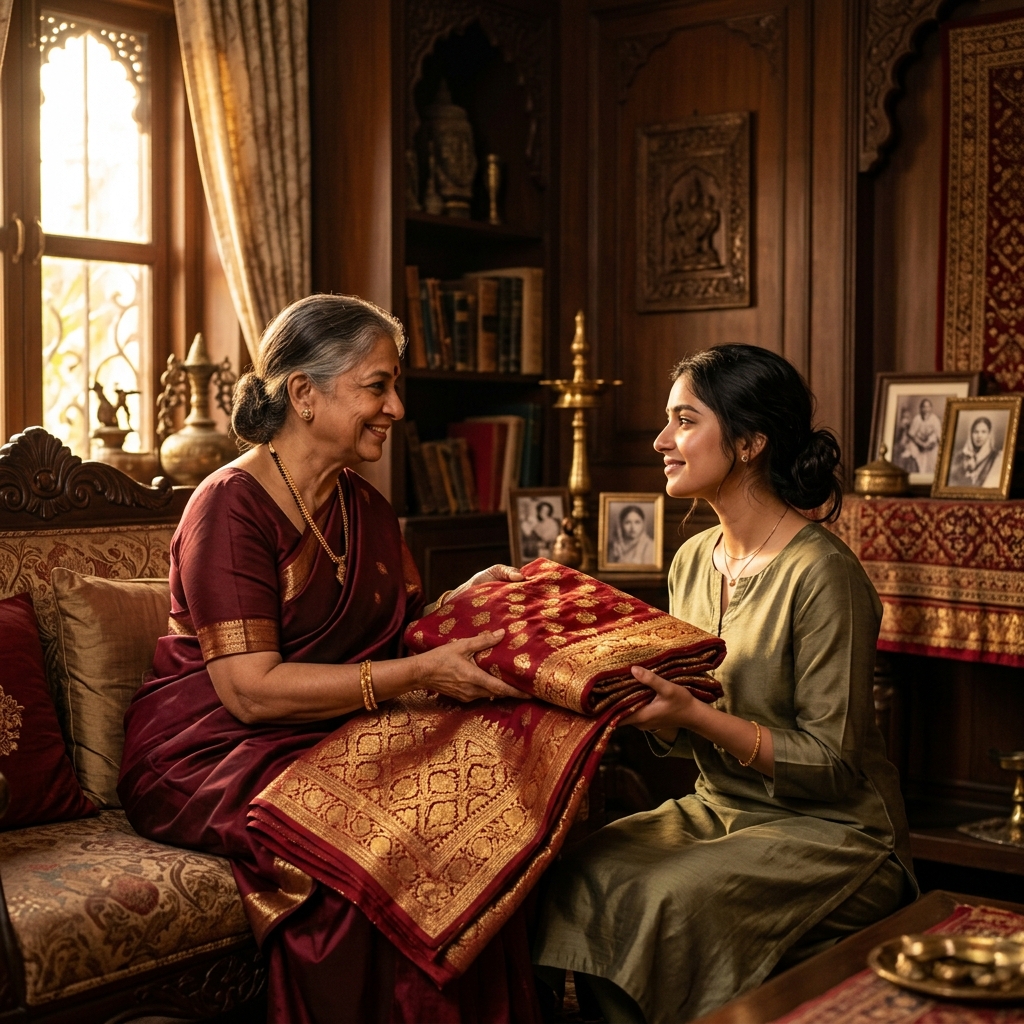
The Banarasi Saree as a Family Legacy: An Heirloom Woven in Silk
Explore the tradition of passing down Banarasi sarees, the craftsmanship that makes them endure, and how to preserve a vintage Banarasi silk saree as a family legacy.
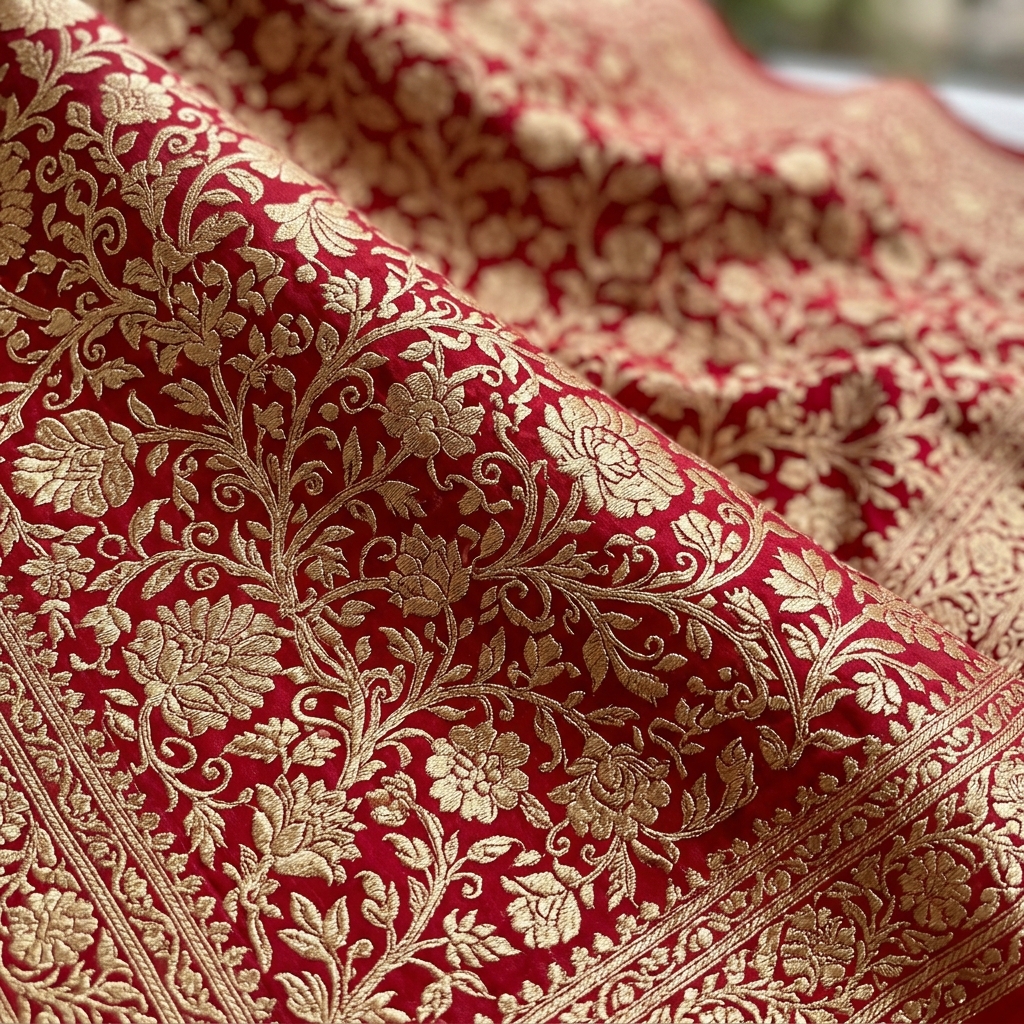
What is a Banarasi Saree Motif? A Guide to Buta, Jaal, and Paisley Patterns
Understand the language of Banarasi saree motifs — from the mango-shaped buta to the trellis-like jaal. A weaver's guide to reading pattern, symbolism, and craft.
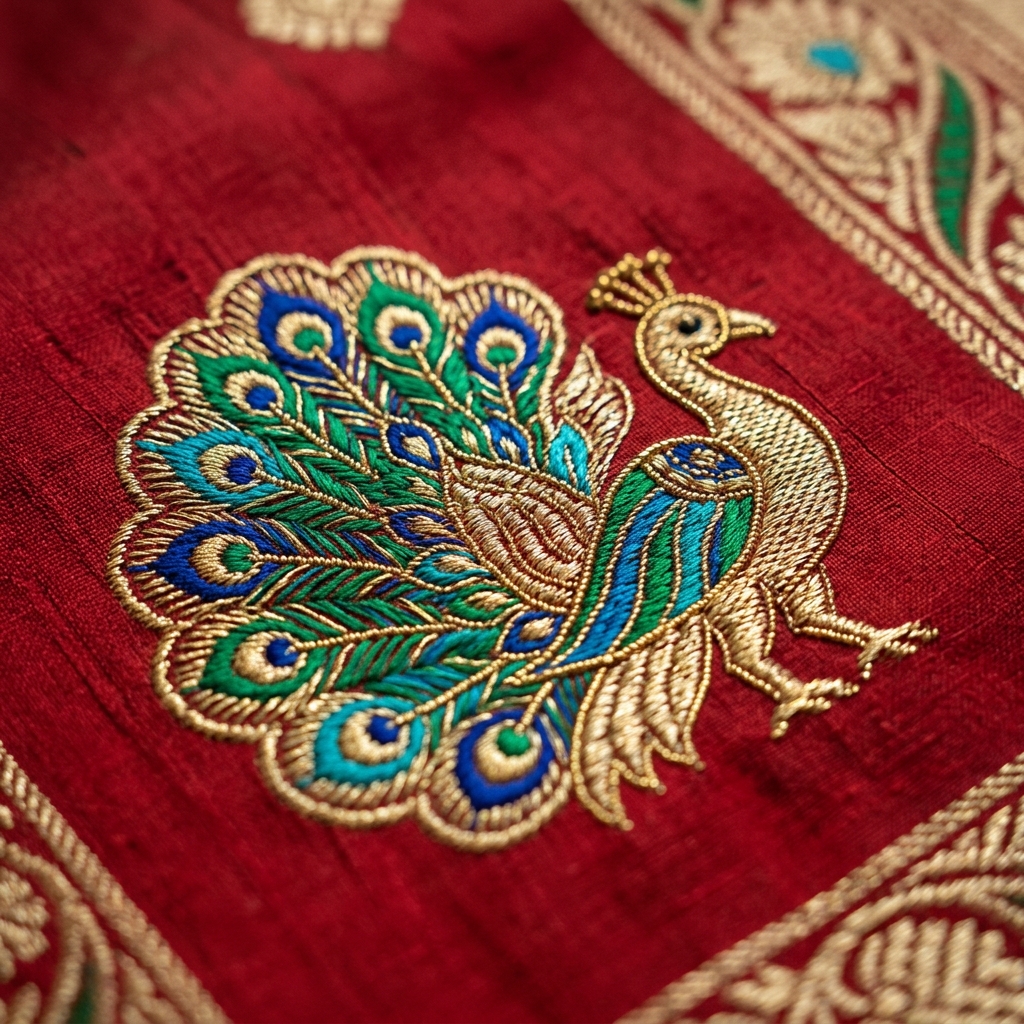
What is a Kadhua Banarasi Saree?
Discover the art of Kadhua Banarasi sarees — individually woven motifs, no loose threads, and an embossed 3D finish. Learn about Meenakari vs Sonarupa and why Kadhua is the pinnacle of Banarasi craftsmanship.