Real Zari vs. Tested Zari vs. Imitation Zari: The Master Weaver’s Definitive Guide
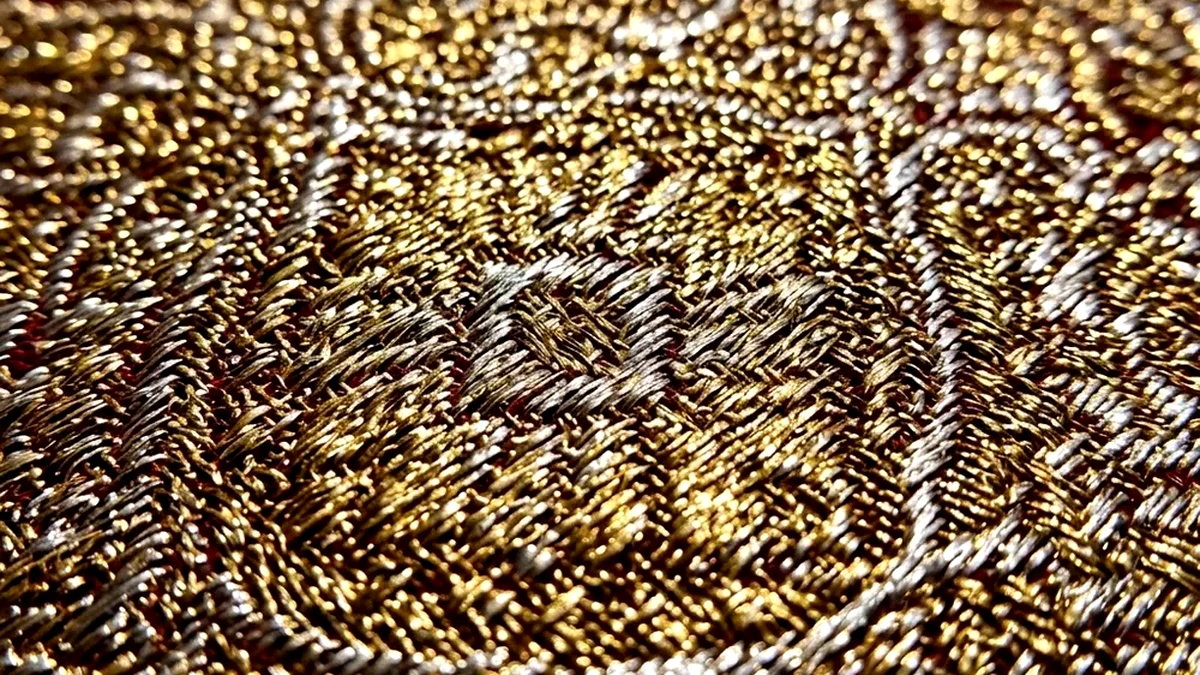
Imagine standing at a traditional wooden gaddi in Chowk, Varanasi.
The master merchant unfurls two deep vermilion Banarasi sarees side by side. Under the warm showroom chandeliers, both shimmer with hypnotic, intricate floral vines. Both feature opulent, heavy pallus. Both are handwoven on pure silk warp.
Yet, one saree is priced at ₹18,500, while the other commands ₹1,25,000.
Why such an enormous disparity for two garments that appear almost identical to the untrained eye?
In 95% of cases, the answer does not lie in the warp silk, nor in the weaver's labor hours. It lies in the microscopic metallic ribbon wound around the weft yarn: the Zari.
For centuries, Banarasi sarees have derived their imperial status from Zari (from the Persian word Zar, meaning gold). But in today's market, the word "zari" has become a catch-all marketing term covering everything from 24-karat gilded silver bullion down to 12-micron metallized plastic film.
Here is the honest, unvarnished truth from the looms of Shri Geeta Sarees: the metallurgy, the four tiers of zari, how to conduct foolproof home tests, and how to never get misled when investing in an authentic Pure Silk Katan Saree or Pure Tissue Saree.
1. The Anatomy of Real Zari: What is Kalabattun?
Authentic Banarasi zari is not a wire, nor is it metallic paint. It is a composite, hand-engineered textile yarn known in Varanasi as Kalabattun (or Kalabattu).
The creation of authentic Kalabattun is a master metallurgical art that predates the Mughal empire:
- The Silver Core Ingot: Master silver refiners melt 98.5% pure silver with a tiny fraction of copper for tensile strength.
- Wire Drawing (Tarkashi): The ingot is drawn through a progressive sequence of calibrated diamond dies, pulling thick bars down into micro-threads thinner than a strand of human hair.
- Flattening into Ribbon (Badla): The cylindrical silver wire is passed between mirror-polished hardened steel rollers to flatten it into a microscopic, pliable ribbon called Badla.
- Pure Gold Gilding (Kandla): The silver badla is electroplated with 24-karat pure gold in a temperature-controlled bath, depositing a permanent, molecular bond of real gold (typically 0.5% to 2% by weight).
- Helical Spinning (Batayi): The gold-gilded silver ribbon is spun helically around a core thread of 100% natural Mulberry silk.
The result is a yarn with the tensile flexibility and drape of pure silk, wrapped in the eternal luster and heavy density of pure silver and gold.
2. The 3 Tiers of Zari: Asli, Tested, and Imitation
To navigate the saree market with absolute confidence, you must understand the three distinct grades of zari used across Indian textiles today.
| Feature | Tier 1: Real Zari (Asli Zari) | Tier 2: Tested Zari (Semi-Real) | Tier 3: Imitation Zari (Synthetic/Plastic) |
|---|---|---|---|
| Core Thread | 100% Pure Mulberry Silk | Viscose Rayon, Cotton, or Silk Blend | 100% Polyester or Nylon |
| Metal Foil | Pure Silver (98%+) electroplated with 24K Gold | Copper or copper-alloy base plated with silver & gold lacquer | Metallized polyester film (BOPP/Mylar) |
| Precious Metals | Real Silver + Real Gold | Trace silver / copper base; zero bullion gold | 0% Silver, 0% Gold (Aluminum vapor + dye) |
| Touch / Temp | Cold to touch (instant silver thermal chill) | Cool metallic touch | Ambient, synthetic, waxy |
| Drape & Feel | Fluid, supple, liquid weight; never scratches | Pliable, graceful, comfortable | Stiff, rigid, scratchy against neck/wrists |
| Longevity | 50 – 100+ years (Heirloom quality) | 15 – 30 years with muslin storage | 2 – 5 years (peels, chips, loses luster) |
| Oxidation | Mellows into warm antique vintage bronze | Can develop dull or greenish tint if damp | Plastic turns cloudy or flakes into white film |
| Bullion Resale | Yes — can be melted down for pure silver/gold | No scrap bullion value | Zero value |
| Price Impact | +₹40,000 to +₹1,50,000+ per saree | +₹3,000 to +₹12,000 per saree | +₹500 to +₹1,500 per saree |
Tier 1: Asli / Real Zari (The Generational Heirloom)
Real Zari is an investment asset as much as it is a textile. Because the foil is predominantly pure silver electroplated with 24K gold, the saree possesses substantial bullion weight.
- The Visual Signature: Real zari never gives off a blinding, mirror-like yellow glare. Its luster is soft, deep, and regal—what Varanasi weavers call Kundan ki chamak (the quiet glow of pure gold leaf).
- The Drape: Because silver is dense yet malleable, a real zari saree drapes with liquid fluidity. It settles closely against the body rather than puffing out.
- The Aging Grace: Over decades, as silver micro-oxidizes, Real Zari deepens into a magnificent antique patina. This is why 60-year-old grandmother heirlooms look even more aristocratic today than when they were first woven.
Tier 2: Tested Zari (The Practical Luxury Standard)
Tested Zari (frequently called Semi-Real Zari) is one of the greatest technical achievements of modern Indian handloom weaving.
Instead of solid silver ribbon, Tested Zari uses an electro-conductive copper or brass core wire flattened and electroplated with pure silver, then treated with a protective golden lacquer.
- Why is it called "Tested"? Because in industrial laboratory testing, the wire passes physical conductivity and silver-coating acid checks.
- The Honest Truth: Tested Zari is not fake. It is genuine metal-coated yarn that provides 85% to 90% of the visual depth, weight, and beauty of Real Zari at one-tenth of the raw material cost.
- Who is it for? For festive wear, weddings, and modern bridal celebrations where you desire an authentic handloom Pure Silk Katan or Mango Silk Saree that will last 20 to 30 years without tying up ₹1,00,000+ in raw bullion.
- The Caveat: Tested Zari has no bullion melt value. It cannot be resold for metal scrap. If exposed to prolonged humidity, coastal salt air, or harsh chemical sprays, the copper underlayer can slowly oxidize, resulting in a dull or dark finish.
Tier 3: Imitation Zari (The Plastic/Polyester Mass Market)
Imitation Zari (often sold as "metallic yarn", "Rex", or "plastic zari") contains zero precious metal.
It is manufactured by vapor-depositing a microscopically thin coating of aluminum onto rolls of polyester film (BOPP or Mylar), coating it with yellow dye, and slitting the film into narrow ribbons 12 to 23 microns wide.
- The Visual Tell: A harsh, artificial, mirror-like gloss. It looks like Christmas tinsel or gift wrap. Under direct sunlight or camera flash, it creates an intense, unflattering glare.
- The Wearer's Discomfort: Synthetic zari does not breathe. It is stiff and abrasive. When draped around the neck or wrists, the rough edges of the slit plastic ribbon prick and irritate delicate skin.
- The Lifespan: Plastic zari breaks down quickly. Friction from sitting or walking causes the aluminum coating to rub off, exposing colorless white plastic underneath. Within a few wears, the motifs look threadbare and dull.
3. Four Artisanal Tests You Can Perform at Home
You do not need an X-ray fluorescence spectrometer to determine what type of zari is in your wardrobe. Master weavers use these four sensory tests:
| Test Protocol | Sensory Diagnostic | What It Reveals |
|---|---|---|
| 1. Core Unwind Test | Untwist outer metallic ribbon from center yarn | Mulberry Silk filaments (Real) vs. Cotton/Rayon (Tested) vs. Plastic Ribbon (Imitation) |
| 2. Thermal Touch Test | Press woven metallic border against inner wrist | Instant Icy Cold Chill (Real Silver) vs. Neutral Room-Temp (Imitation) |
| 3. Micro Flame Test | Singe 1-inch fringe thread over a safe ceramic dish | Singed-Hair Ash & Silver (Real) vs. Noxious Hard Black Bead (Imitation) |
| 4. Micro Scrape Test | Lightly scrape gold surface with a dull coin edge | Brilliant White Silver Core (Real) vs. Clear Transparent Film (Imitation) |
Test 1: The Core Thread Unwind (The Definitive Test)
Locate an unworked weft tail or fringe edge at the inner end of the pallu (aanchal).
- Pull out a single metallic thread about one inch long.
- Using your fingernails or fine tweezers, gently untwist the outer metallic wrap from the center.
- Inspect the inner core thread:
- Real Zari: The core thread is a cluster of creamy-yellow, lustrous Mulberry silk filaments.
- Tested Zari: The core thread is dull white cotton or smooth rayon.
- Imitation Zari: There is no separate silk core wrapped in metal; it is a single ribbon of flat plastic, or a polyester thread dyed yellow.
Test 2: The Thermal Touch Test (Silver Conductivity)
Pure silver has the highest thermal conductivity of any metal on the periodic table (429 W/m·K). Plastic, by contrast, is a thermal insulator.
- Leave the saree in a normal room-temperature room for 15 minutes.
- Press a dense patch of the zari border directly against the sensitive skin of your inner wrist or upper lip.
- Evaluate the sensation:
- Real Zari: Feels instantly, shockingly cold to the touch, almost like touching an ice-cold silver coin, before rapidly warming up as it absorbs body heat.
- Imitation Zari: Feels neutral, ambient, and slightly waxy from the very first second.
Test 3: The Micro Flame & Ash Burn Test
Always perform this test with tweezers over a ceramic bowl on a single thread extracted from an inconspicuous fringe.
- Hold the single extracted thread in metal tweezers.
- Bring a match flame to the very tip for one second.
- Observe the combustion and residue:
- Real Zari (Asli): The pure silk core burns slowly and self-extinguishes when the flame is pulled away. It gives off the unmistakable organic smell of singed hair or feathers (keratin protein). It leaves a soft, dark gray ash containing tiny, shiny globules of melted silver.
- Tested Zari: The core burns with a cotton/paper scent. A reddish-brown copper wire skeleton remains behind.
- Imitation Zari: The thread shrinks violently away from the flame, flares up, emits a pungent chemical petroleum smell, and melts into a hard, uncrushable black plastic bead.
Test 4: The Micro Scrape Test
Gently scrape the surface of the metallic ribbon with the edge of a coin or dull blade:
- Real Gold Zari: As you scrape the microscopic 24K gold layer, it reveals a brilliant white silver body beneath.
- Imitation Zari: The yellow colored lacquer peels away immediately, revealing clear transparent plastic film.
4. The Market Dilemma: Is Tested Zari Unethical?
A widespread misconception exists among luxury saree buyers that any saree not woven with Real Zari is a counterfeit.
As heritage weavers since 1960, our stance is simple: Tested Zari is not unethical. Misrepresentation is.
- The Economic Reality: A full-body Kadhwa bridal saree with dense real silver-gilded zari requires 400 to 700 grams of pure silver. At current silver bullion rates, the raw metal alone adds ₹50,000 to ₹90,000 to the wholesale cost. Tested Zari allows a master artisan to invest 60 days of handloom artistry into a magnificent pure silk piece that a family can cherish for ₹22,000 instead of ₹1,20,000.
- The Only Fraud: The deceit occurs when unethical retailers take a ₹15,000 Tested Zari saree and sell it to a trusting bride for ₹75,000 under the fraudulent promise of "Pure Real Gold Zari".
- Our Pledge at Shri Geeta Sarees: Every saree in our Chowk showroom and online catalog clearly distinguishes between Pure Silk Katan with Tested Zari, Pure Real Zari Heritage Pieces, and specialty weaves like Pure Tissue Sarees.
5. How to Store and Preserve Your Zari Sarees
Whether your saree features Real Zari or high-grade Tested Zari, metallic threads require deliberate care to prevent premature tarnishing:
- Wrap Exclusively in Breathable White Muslin: Never store fine zari sarees in synthetic zippered plastic bags. Plastic emits gases that react with copper and silver, and traps moisture that turns zari black. Wrap in unbleached cotton or muslin.
- Banish Naphthalene Balls: Traditional mothballs release volatile sulfur vapors. Sulfur is the primary chemical compound that reacts with silver to form black silver sulfide (Ag2S). Use natural dried neem leaves or sealed silica gel pouches instead.
- Rotate Crease Lines Every 4 Months: Metallic ribbons have physical "memory." If a heavy pallu is folded along the same line for years, the flattened badla ribbons will bend, fatigue, and snap. Unfold, air out in shade, and refold along fresh lines every few months.
- Apply Fragrance Before Dressing: Perfumes and deodorants contain alcohol and chemical fixatives that instantly corrode both silk proteins and gold lacquer. Ensure fragrances are completely dry before draping your saree.
For comprehensive care techniques, read our Complete Guide to Hanging and Storing Silk Sarees Properly.
Final Thoughts from the Looms of Varanasi
A Banarasi saree is a woven testament to patience, geometry, and human devotion. When you understand the true nature of the zari resting against your skin, you don't merely wear a garment—you carry three thousand years of Indian metallurgical and artistic genius.
Whether you choose an archival Real Zari heirloom to pass down through four generations or a dazzling Tested Zari handloom for your wedding festivities, always demand authenticity, transparency, and master craftsmanship.
Explore our authentic handwoven collections:
Continue Reading
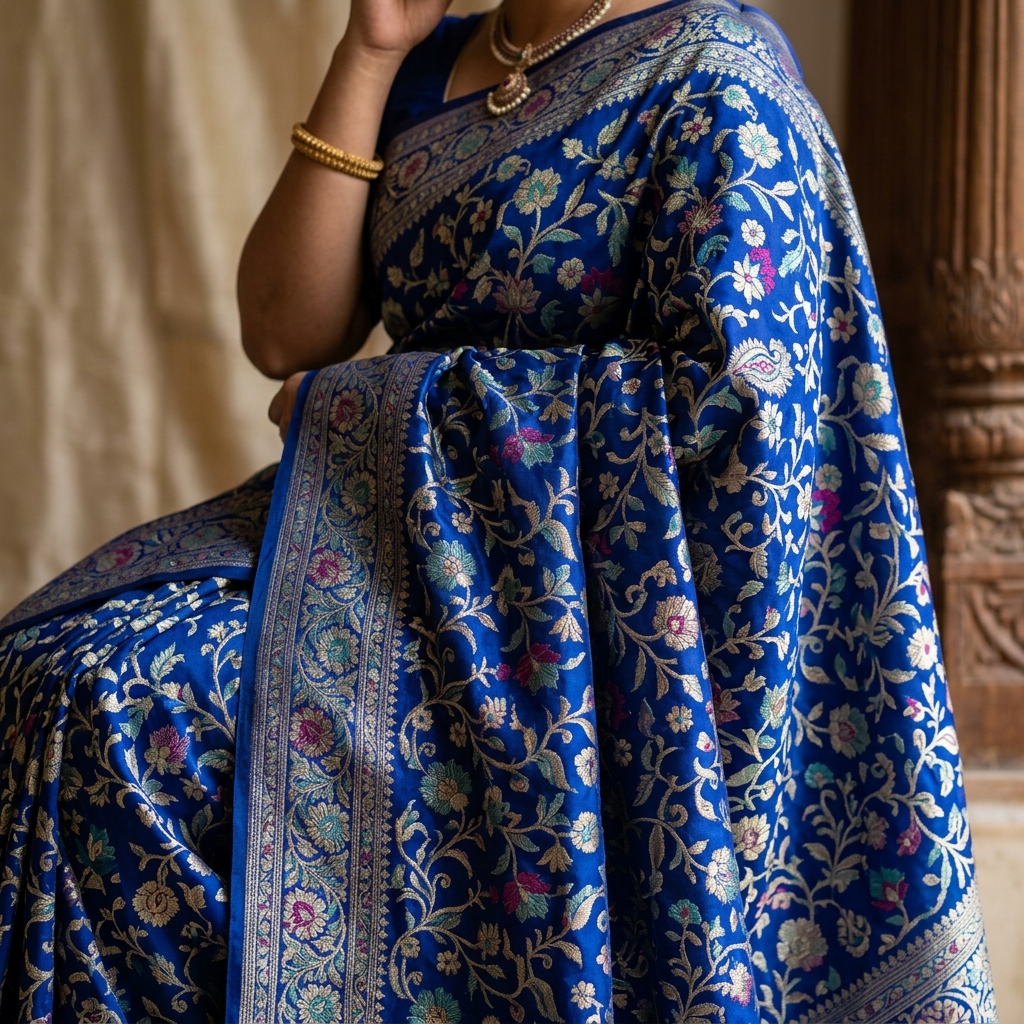
What is Fekwa (Fakua/Cutwork) in Banarasi Sarees?
Learn about Fekwa (or Fakua/Cutwork), an authentic Banarasi weaving technique that creates beautiful floral motifs and jaal patterns. Find out why it's more affordable without compromising quality.

The Silk Route Through Varanasi: History of Banarasi Weaving
Trace the centuries-old journey of silk into Varanasi — from ancient trade routes to Mughal courts to the handloom houses of today.
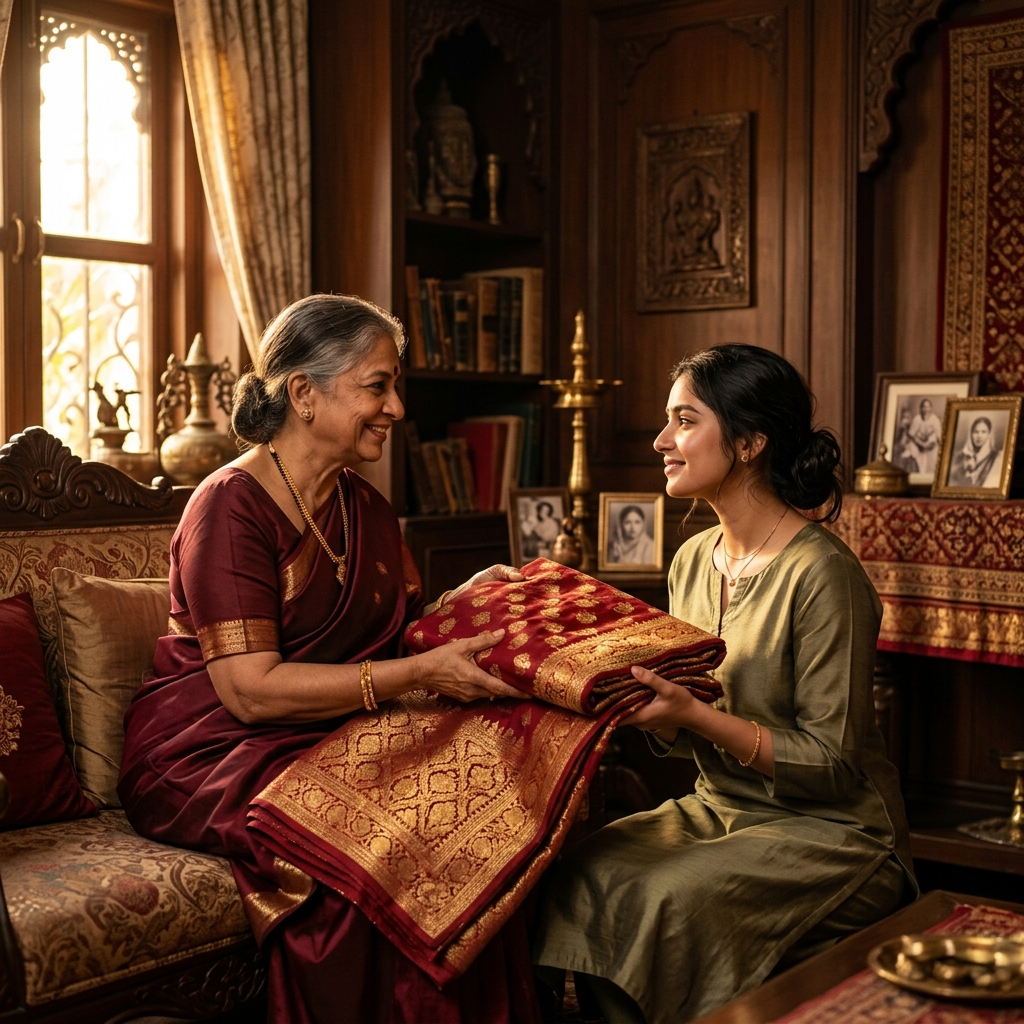
The Banarasi Saree as a Family Legacy: An Heirloom Woven in Silk
Explore the tradition of passing down Banarasi sarees, the craftsmanship that makes them endure, and how to preserve a vintage Banarasi silk saree as a family legacy.
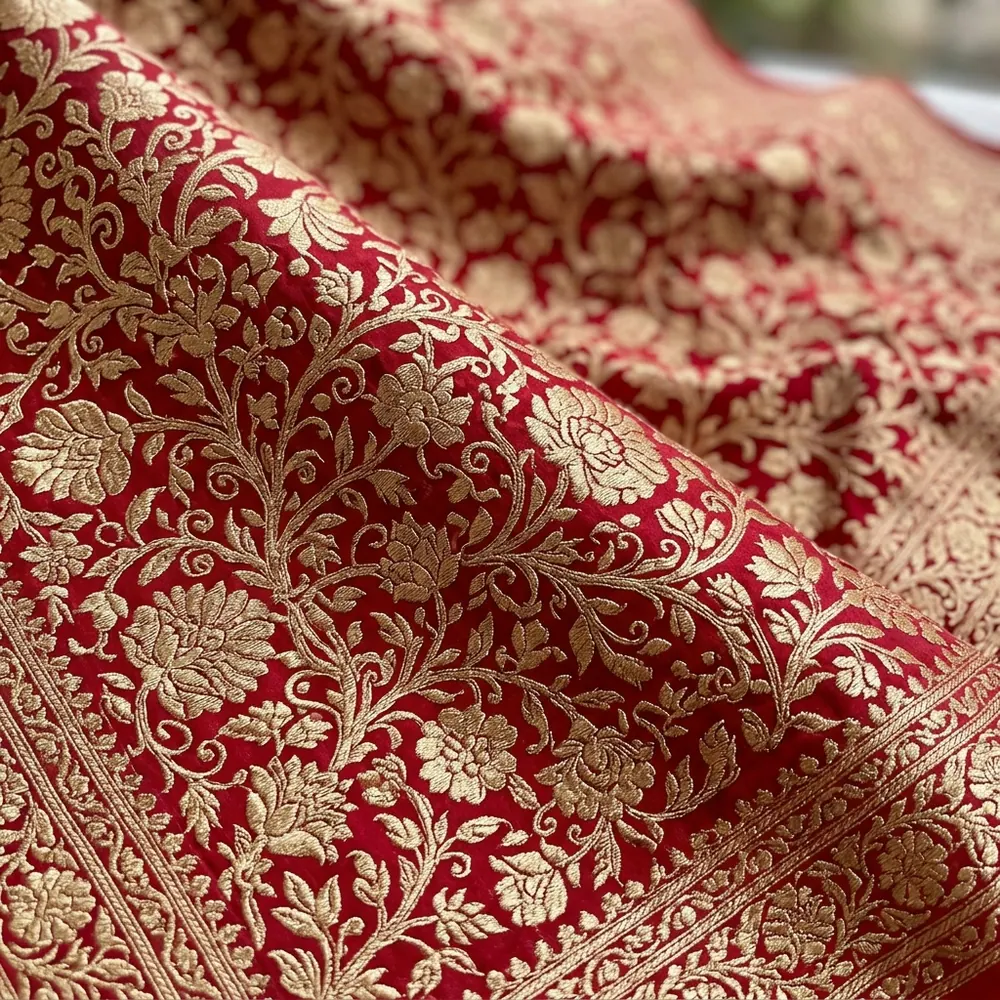
What is a Banarasi Saree Motif? A Guide to Buta, Jaal, and Paisley Patterns
Understand the language of Banarasi saree motifs — from the mango-shaped buta to the trellis-like jaal. A weaver's guide to reading pattern, symbolism, and craft.
What is a Kadhua Banarasi Saree?
Discover the art of Kadhua Banarasi sarees — individually woven motifs, no loose threads, and an embossed 3D finish. Learn about Meenakari vs Sonarupa and why Kadhua is the pinnacle of Banarasi craftsmanship.