The Anatomy of Silk Dyeing: Why True Banarasi Silk Glows
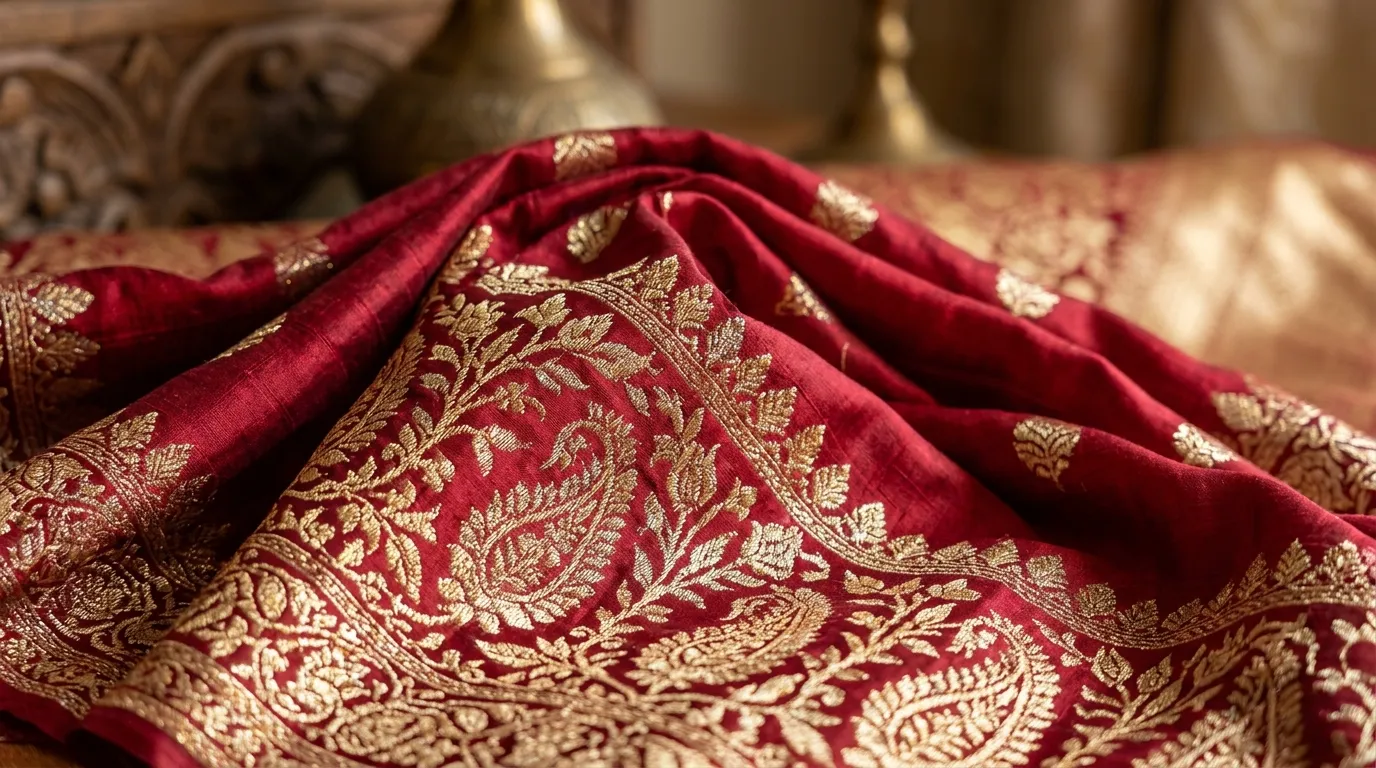
It is widely accepted that the breathtaking shine of a Banarasi saree comes purely from the metallic zari woven into the fabric. Shoppers often spend hours examining the intricate gold threads, assuming they are the sole source of the garment's radiance.
But this belief is inconsistent with the actual science of textiles. While zari adds undeniable luxury, the true source of a pure Banarasi saree's glow is a microscopic anomaly hidden deep within the silk fiber itself. Although synthetic copies try to mimic this exact look, they fundamentally fail. To understand why cheap art silk looks flat while authentic silk seems to glow from the inside out, we must look at the mathematical anatomy of silk dyeing.
The Triangular Prism Anomaly
Most people picture a thread of yarn as a perfectly round cylinder. This is true for synthetic fibers like polyester and nylon, which are manufactured by extruding liquid plastic through circular nozzles.
Pure mulberry silk, however, is woven by nature. The protein structure of natural silk naturally forms a rounded triangular cross-section. When you look at a single strand of silk under a microscope, it does not look like a round tube. It looks exactly like a tiny glass prism.
This geometric shape is the secret to silk's famous luster. When light hits a round synthetic fiber, it bounces directly off the surface or scatters in random directions. The light cannot penetrate the plastic. But when light strikes the triangular prism of pure silk, it enters the fiber, refracts, and bounces around the internal angles before exiting. This internal refraction creates a multidimensional, pearlescent glow that no machine can artificially replicate.
The Chemistry of Deep Dyeing
The optical magic of the prism is only half of the equation. The second crucial factor is how the dye interacts with the protein structure.
It is reported by textile experts that synthetic fibers are incredibly difficult to dye organically. Because they are essentially plastic, dye molecules cannot easily penetrate the core. Instead, the color simply coats the outer surface of the round fiber like a layer of paint. When light hits this surface paint, it stops. There is no depth, causing the rich red Banarasi sarees made of art silk to look distinctly flat and lifeless under harsh lighting.
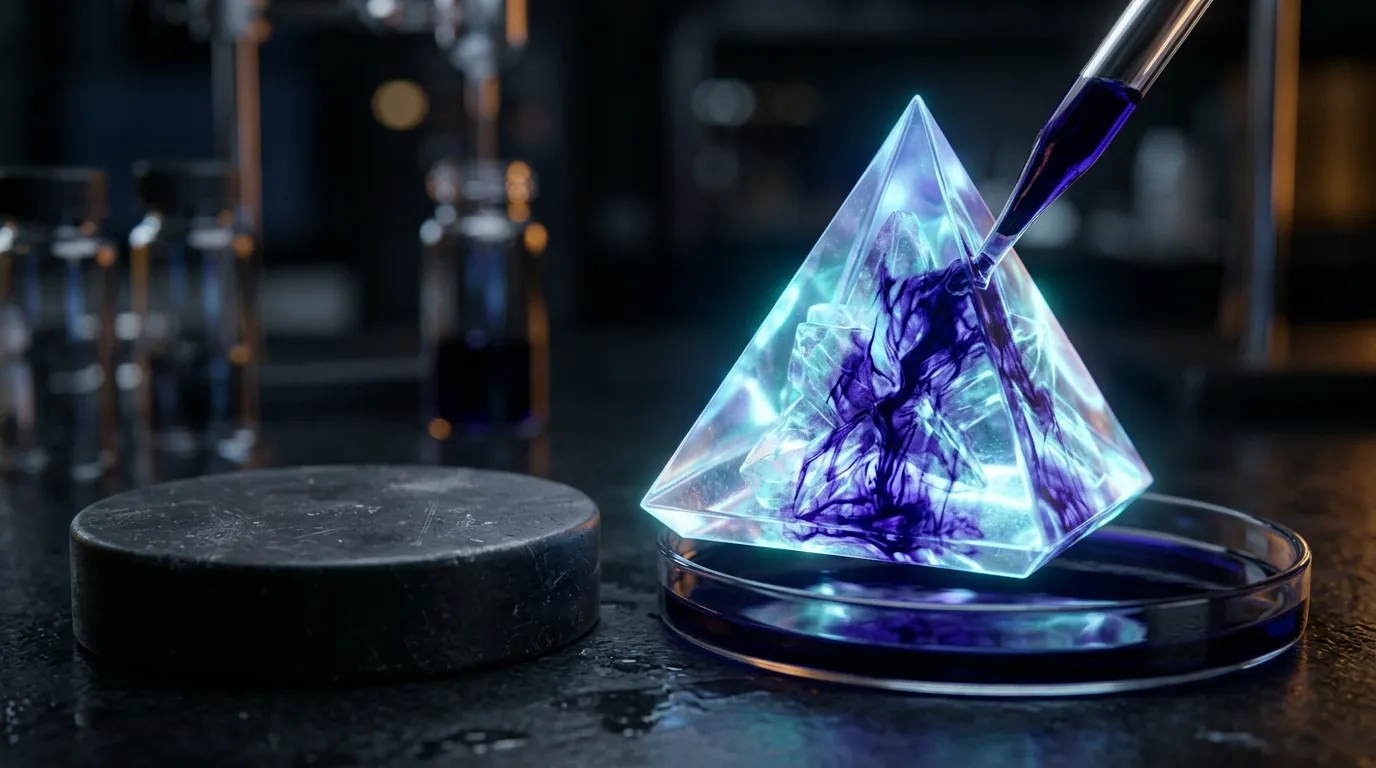
Pure silk behaves entirely differently. The natural protein structure allows dye molecules to physically bond deep inside the fiber's core. Because the color is locked deep within the triangular prism, the incoming light actually refracts through the dye. You are not just looking at color painted on a surface; you are looking at light glowing through a colored crystal. This is why authentic green Banarasi silk or vibrant blue pure silk drapes seem to shift in hue as you move them.
Why Synthetic Copies Fail
Although the fashion industry has created highly advanced synthetic textiles, they cannot artificially replicate the natural triangular extrusion of a silkworm. Synthetic art silk remains perfectly round and flatly dyed.
If you ever compare a pure silk heirloom side by side with a cheap synthetic copy, the difference is undeniable. The copy will reflect light like a mirror, looking glossy and cheap. The true Banarasi silk will absorb and refract the light, glowing softly from within.
Understanding this biological anomaly empowers you to make informed decisions when investing in heritage textiles. The glow is not magic; it is simply flawless microscopic geometry.
Frequently Asked Questions (FAQs)
Why do synthetic sarees look shiny but feel cheap? Synthetic sarees are made of round plastic fibers that reflect light aggressively off their surface. This creates a harsh, mirror-like gloss rather than a soft, internal glow.
Does the color of the dye affect the shine of the silk? While darker colors like deep pink or navy absorb more light, the fundamental refracting property of the triangular silk prism ensures that even the darkest hues maintain a rich, multidimensional glow.
How can I test if my Banarasi saree is pure silk? Beyond the visual glow, pure silk will feel incredibly soft and will naturally regulate temperature. A definitive physical test is the burn test, where pure silk turns to ash and smells like burnt hair, while synthetics melt like plastic.
Continue Reading
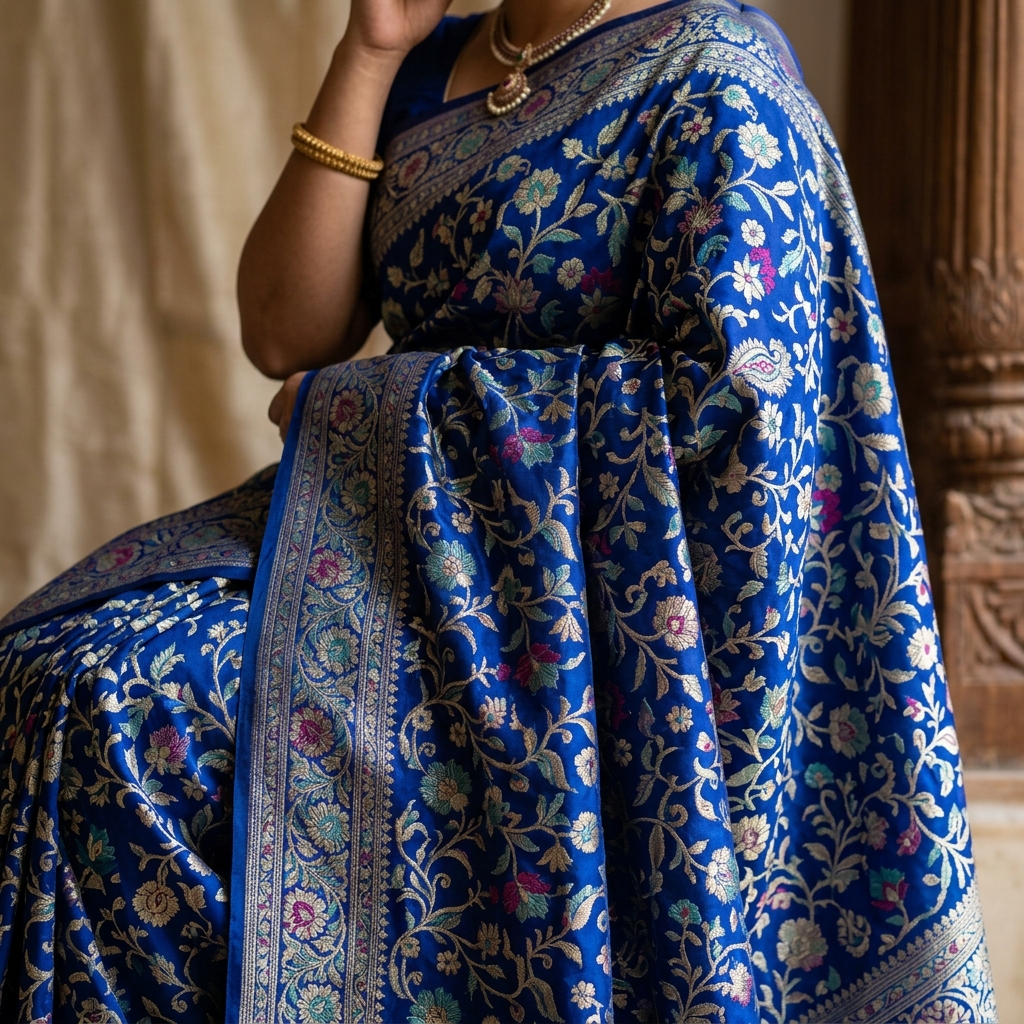
What is Fekwa (Fakua/Cutwork) in Banarasi Sarees?
Learn about Fekwa (or Fakua/Cutwork), an authentic Banarasi weaving technique that creates beautiful floral motifs and jaal patterns. Find out why it's more affordable without compromising quality.

The Silk Route Through Varanasi: History of Banarasi Weaving
Trace the centuries-old journey of silk into Varanasi — from ancient trade routes to Mughal courts to the handloom houses of today.
The Banarasi Saree as a Family Legacy: An Heirloom Woven in Silk
Explore the tradition of passing down Banarasi sarees, the craftsmanship that makes them endure, and how to preserve a vintage Banarasi silk saree as a family legacy.
What is a Banarasi Saree Motif? A Guide to Buta, Jaal, and Paisley Patterns
Understand the language of Banarasi saree motifs — from the mango-shaped buta to the trellis-like jaal. A weaver's guide to reading pattern, symbolism, and craft.
What is a Kadhua Banarasi Saree?
Discover the art of Kadhua Banarasi sarees — individually woven motifs, no loose threads, and an embossed 3D finish. Learn about Meenakari vs Sonarupa and why Kadhua is the pinnacle of Banarasi craftsmanship.