
Why We've Been Wearing Banarasi Sarees Wrong (And Why That Needs to Change)
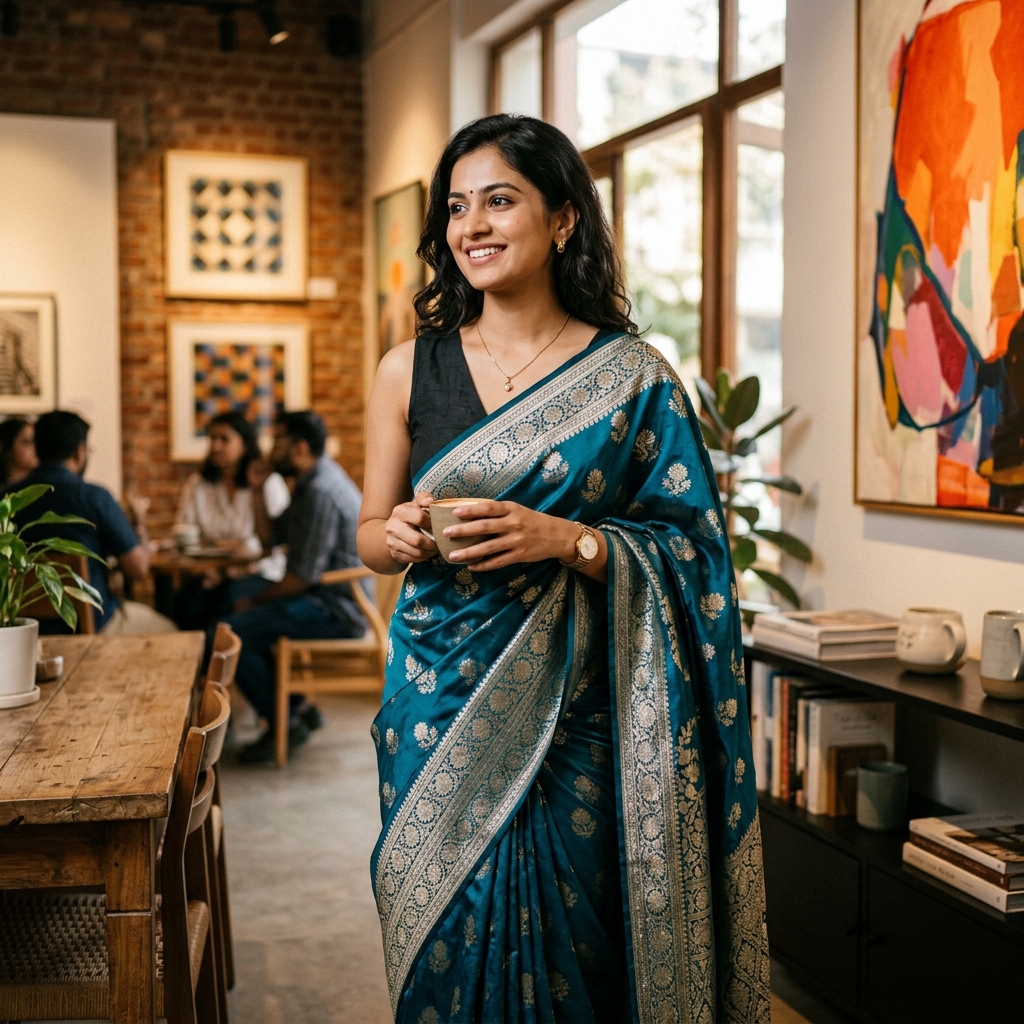
Walk into almost any Indian wardrobe and you'll notice something curious.
The most expensive handbag is usually used.
The favourite perfume slowly becomes emptier.
Even heirloom jewellery makes occasional appearances.
But the Banarasi saree?
It often sits perfectly folded inside a cotton bag, waiting for a wedding invitation that may not arrive for months.
Some wardrobes hold sarees that have been worn twice in ten years.
That isn't unusual.
It's normal.
And perhaps that's exactly the problem.
For decades we've accepted one simple idea:
Banarasi sarees are meant for special occasions.
It's an idea repeated so often that very few people stop to ask whether it is actually true.
Tradition never said this
One of the biggest misconceptions surrounding Banarasi silk is that it was created only for grand ceremonies.
History suggests something more interesting.
For centuries, Banaras produced textiles for royalty, merchants and households alike. The craftsmanship represented status and artistry, but the idea that a Banarasi saree should remain hidden for 360 days a year is a relatively modern habit—not an ancient tradition.
Somewhere along the way, preserving became more important than enjoying.
After three generations in Banaras, we've noticed something
Over the years, we've helped thousands of women choose Banarasi sarees.
Brides. Daughters. Mothers. Grandmothers. Collectors. First-time buyers.
Almost everyone remembers why they bought the saree.
Very few remember the last ordinary day they decided to wear it.
The stories customers cherish years later are rarely about the purchase.
They're about the memories.
"I wore this when my daughter graduated."
"This is the saree from our twenty-fifth anniversary."
"This is the one I wore when I became principal."
No one says,
"This stayed perfectly folded for eight years."
Experience has taught us something simple:
A Banarasi saree becomes an heirloom because of the life lived in it—not because of the shelf it sat on.
Festivals aren't the only important days
Think about the moments that quietly become family history.
- A birthday breakfast.
- Your parents' anniversary.
- Meeting an old friend after years.
- Your first day in a new role.
- A classical music concert.
- A visit to the ghats in Varanasi.
- Your child's school function.
- A family portrait.
None of these appear on lists of "traditional saree occasions."
Yet years later, these photographs often become the ones framed inside homes.
Life rarely tells us in advance which ordinary day will become unforgettable.
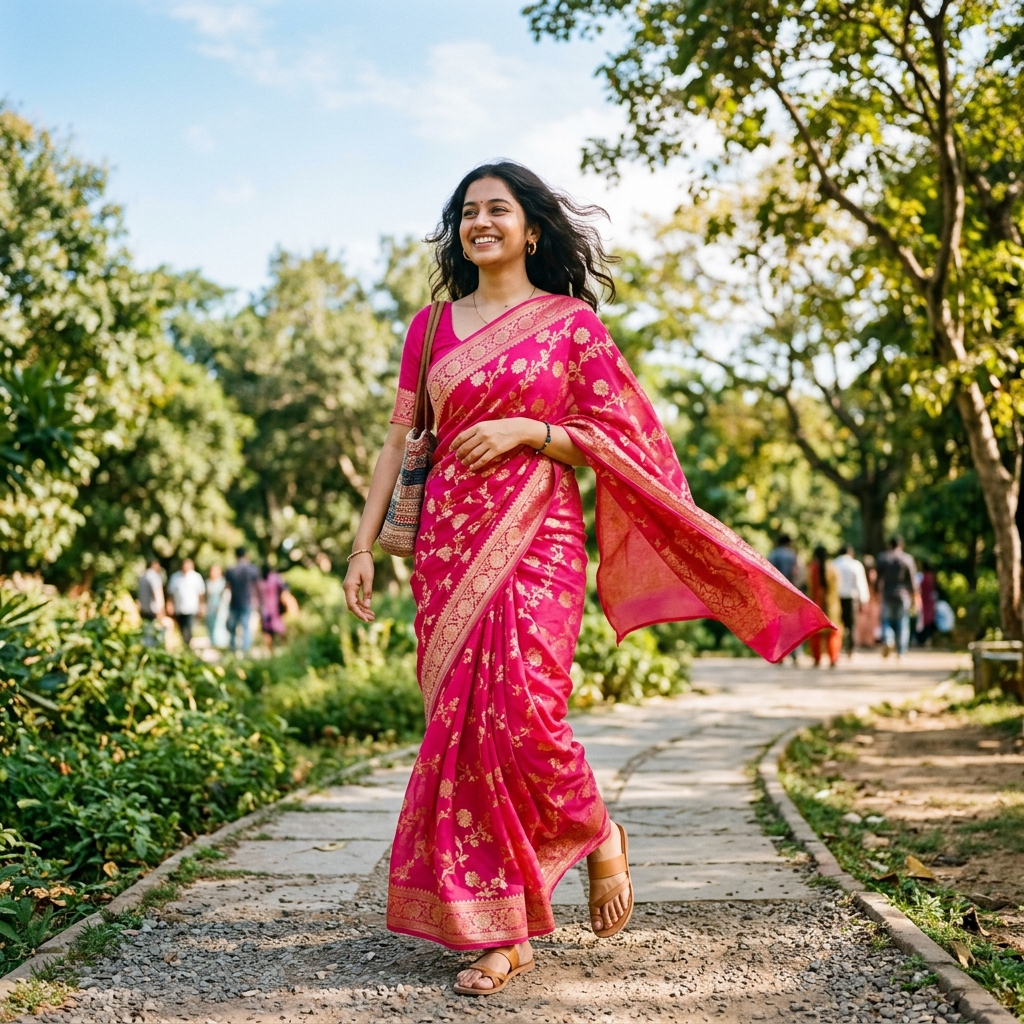
The world is changing—and so is the Banarasi saree
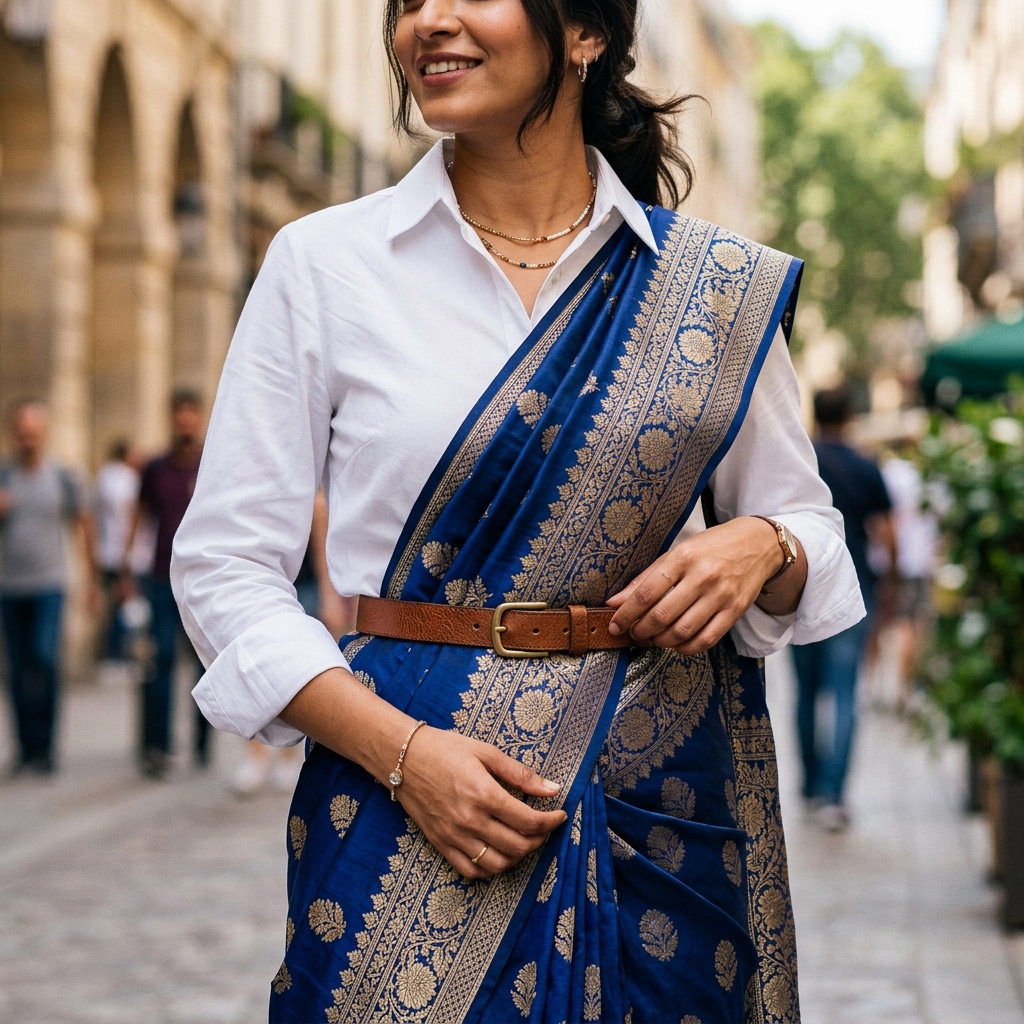
Across India, younger women are styling Banarasi sarees with minimalist blouses, belts, shirts, sneakers and lightweight jewellery. Fashion coverage increasingly reflects this shift toward wearing Banarasi weaves beyond weddings and into everyday celebrations and contemporary wardrobes.
The change isn't about making the saree less traditional.
It's about making tradition more wearable.
Heritage survives when people continue living with it.
"But won't it get damaged?"
It might.
Eventually.
So will leather shoes.
So will silver jewellery.
So will books.
Objects created to be used inevitably show signs of use.
That's not failure.
That's evidence of a life shared.
A Banarasi silk saree cared for properly can last for decades.
What it cannot do is create memories while waiting inside a wardrobe.
How to wear a Banarasi saree beyond festivals
This is where inspiration becomes practical.
A Banarasi saree doesn't need a wedding invitation.
It needs an occasion that matters to you.
Consider wearing one for:
- Anniversary dinners
- Family celebrations
- Housewarming ceremonies
- Cultural performances
- Temple visits
- Graduation ceremonies
- Office award functions
- Festive lunches instead of only evening celebrations
- Formal dinners
- Portrait photography
- Milestone birthdays
- Weekend gatherings with family
Choosing lighter Banarasi fabrics like pure georgette or chiffon, pairing them with simpler blouses, and keeping jewellery understated can make the look feel elegant rather than overly formal.
What we hope changes
We don't hope people buy more Banarasi sarees.
We hope people wear the ones they already own.
Because every Banarasi saree represents weeks—sometimes months—of patient craftsmanship.
It deserves more than being admired twice a year.
It deserves birthdays. Conversations. Photographs. Laughter. Unexpected compliments. Rainy afternoons. Family dinners.
Moments no calendar could have predicted.
Perhaps the greatest respect we can show a Banarasi saree isn't by protecting it from life.
Perhaps it's by allowing it to become part of one.
Continue Reading
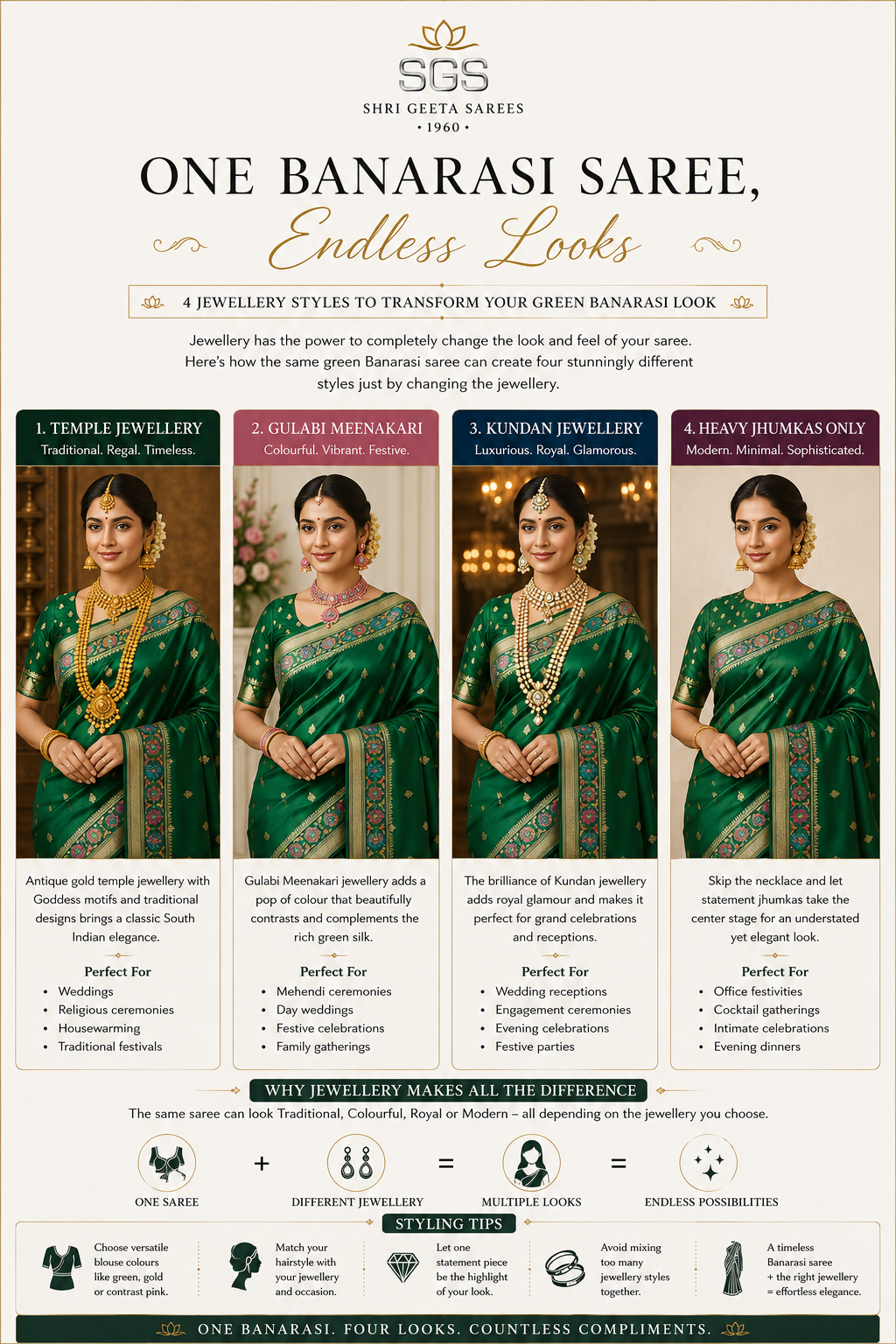
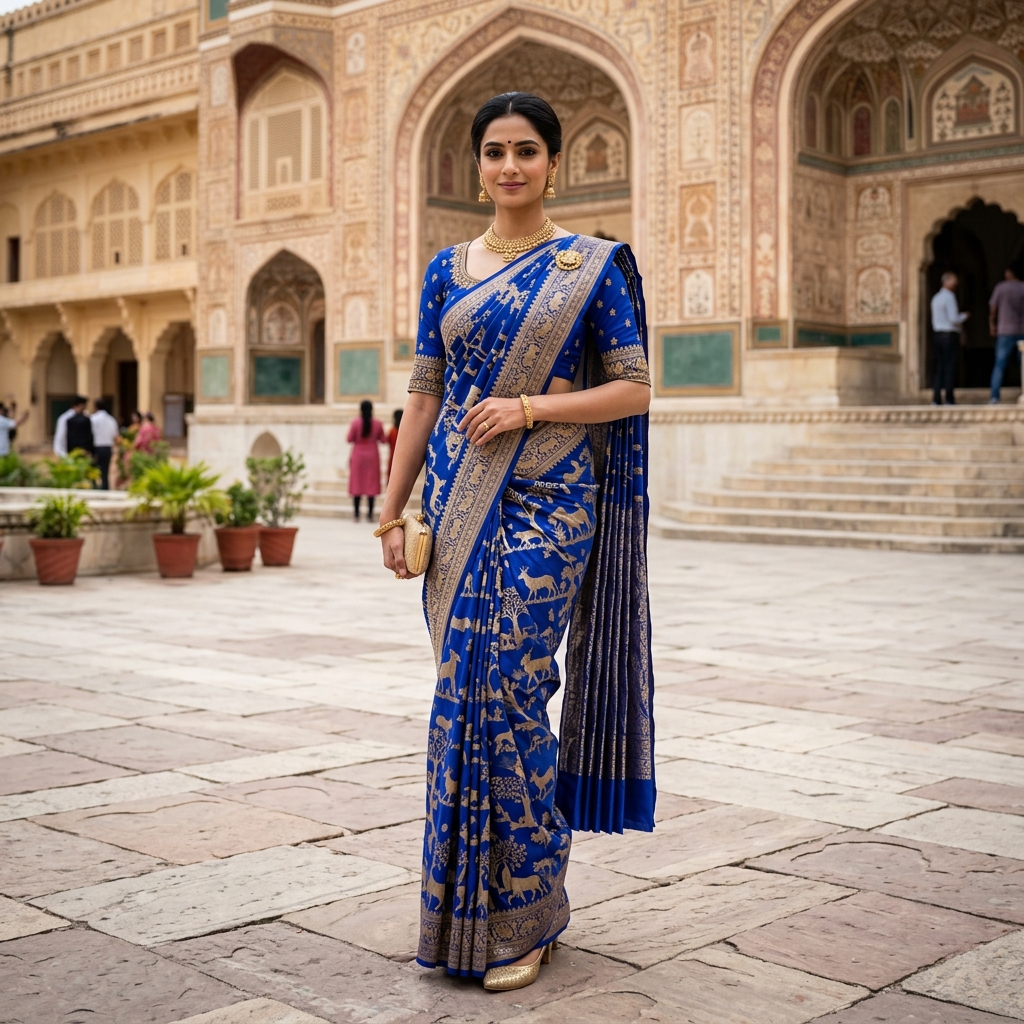
How One Banarasi Saree Can Create 4 Completely Different Looks
A beautiful Banarasi silk saree is one of the most versatile pieces in your wardrobe. Discover how to create four stunning looks just by changing your jewellery.
4 Elegant Ways to Drape a Banarasi Saree | Shri Geeta Sarees
Looking for new ways to wear your handwoven Banarasi saree? Discover 4 elegant and easy styling methods, from classic traditional to modern reception drapes.
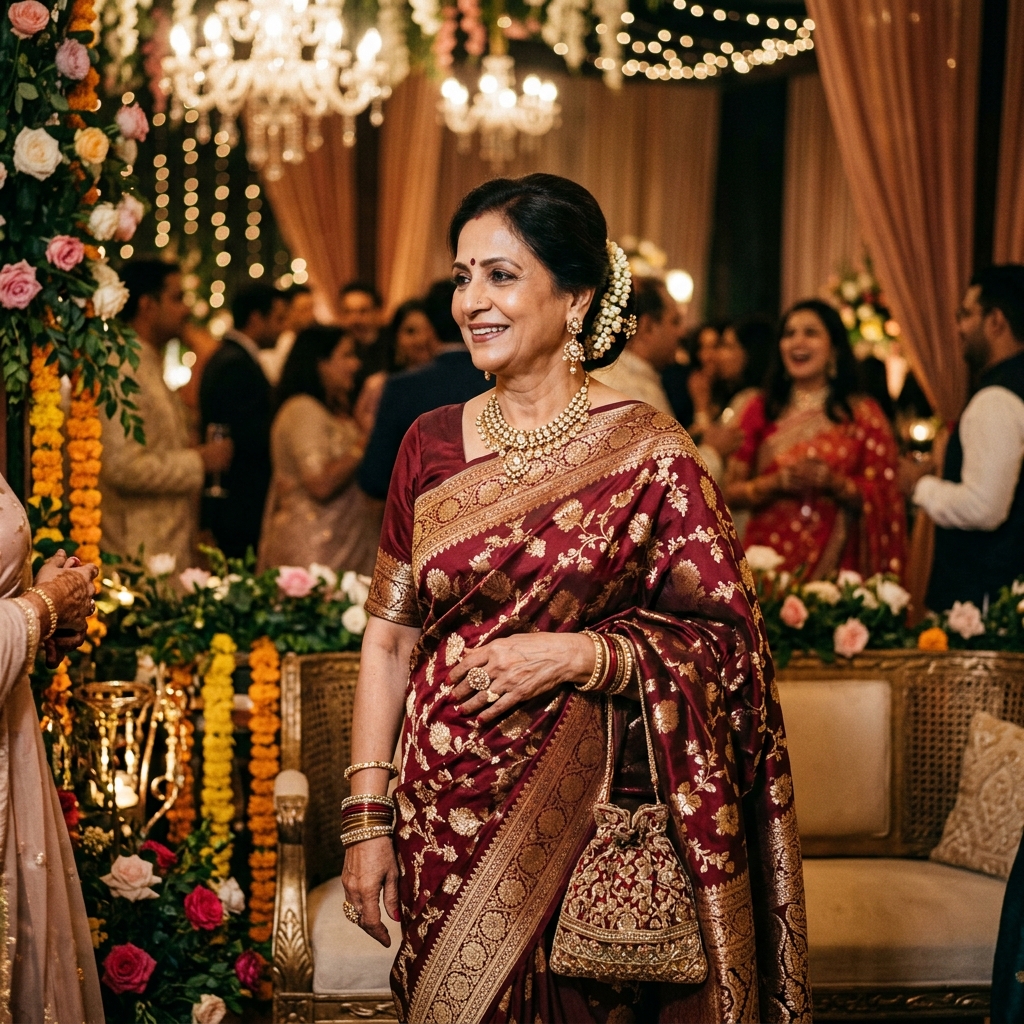
Banarasi Saree for Mother of the Bride: A Guide to Getting It Right
A comprehensive guide to choosing the perfect Banarasi saree for the mother of the bride, covering colors, weaves, and styling advice.
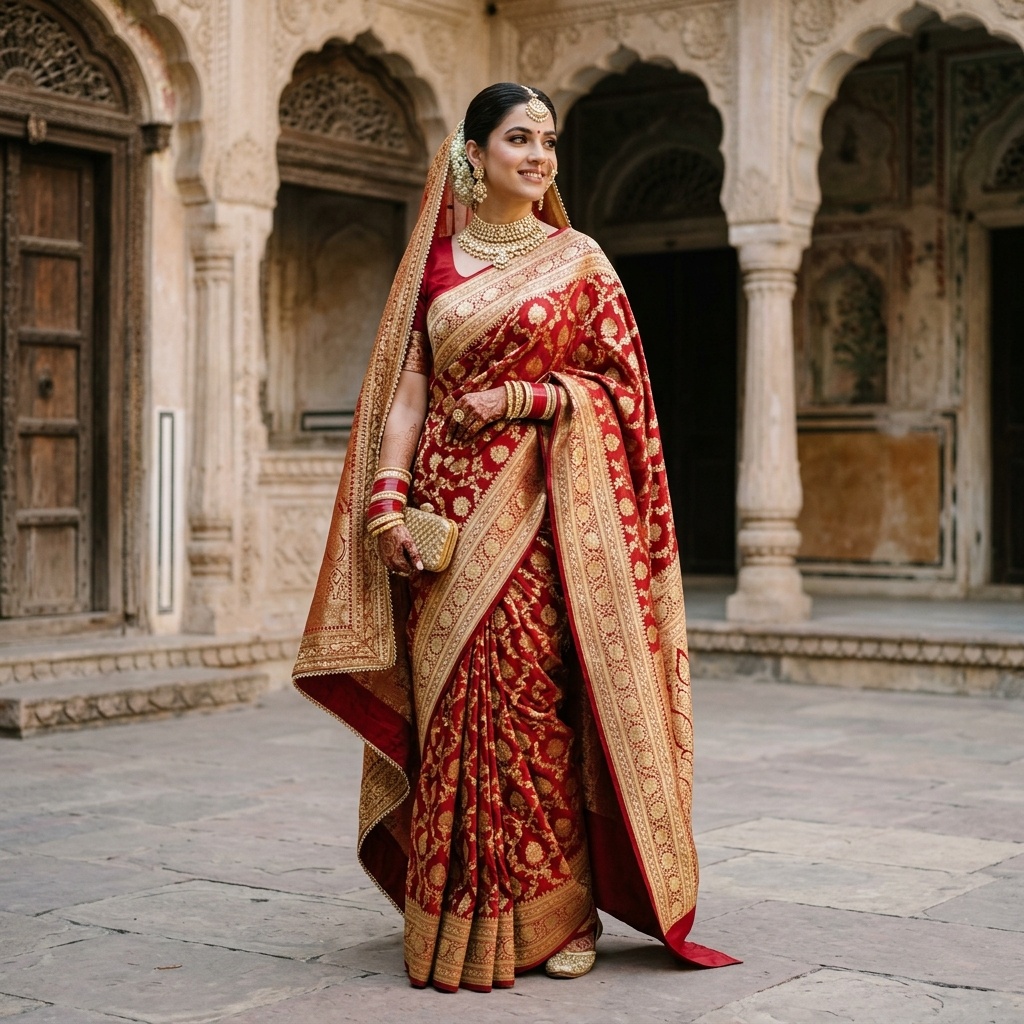
Types of Banarasi Silk: Katan, Georgette, Organza & Tissue Explained
Confused by Banarasi saree fabrics? A Varanasi weaver explains the exact difference in drape, weight, and styling for Katan, Georgette, Organza, and Tissue silk.