From Heirloom to Haute Couture: 4 Ways to Upcycle a Vintage Banarasi Saree
It is widely accepted across Indian households that a vintage Banarasi saree is a sacred heirloom. Mothers and grandmothers meticulously preserve them in trunks, passing them down as physical pieces of family history. However, there is an unspoken truth that no one wants to admit: many of these heavy, ultra-traditional sarees are never actually worn by the younger generation.
Most people believe that an heirloom must be preserved in its exact original form. But this belief is fundamentally flawed. When you lock a masterpiece in a dark closet for decades simply because the drape feels too heavy or the silhouette feels outdated, you aren't preserving its legacy—you are abandoning it.
The anomaly is that the fabric itself—especially a Pure Silk Katan—is essentially immortal. It is the six-yard silhouette that may not fit your modern lifestyle. By upcycling and tailoring the silk, you aren't destroying an heirloom; you are rescuing it.
Here are 4 high-fashion ways to upcycle your vintage Banarasi saree and bring it out of the trunk and into the modern era.
1. The Royal Banarasi Lehenga
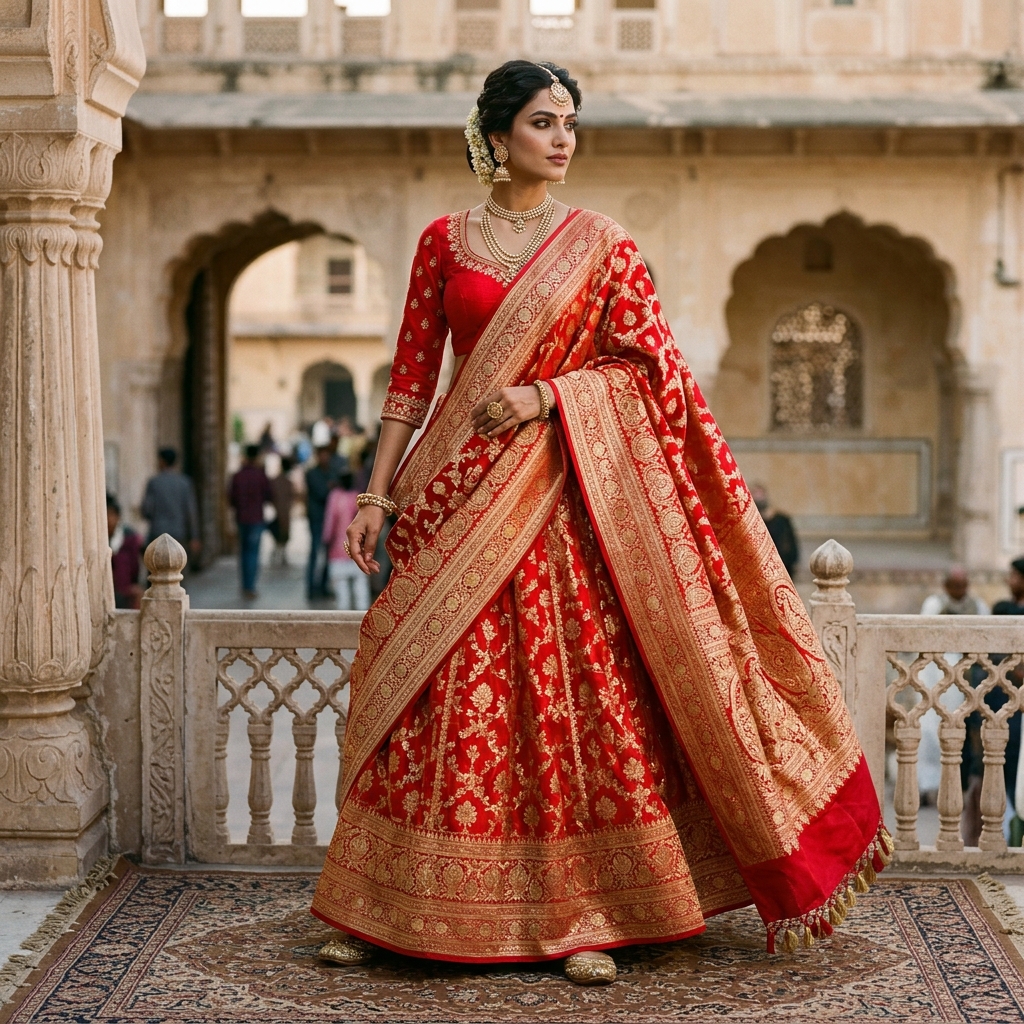
If your vintage saree feels too stiff or heavy to drape, the best way to utilize the sheer volume of the silk is to convert it into a lehenga skirt.
The body of the saree provides ample fabric for a voluminous, flared skirt. The heavy zari pallu, which is often the most intricately woven part of the saree, can be expertly detached and finished to serve as a stunning, matching dupatta. This breathes new life into the silk, allowing you to wear it comfortably for weddings without wrestling with pleats.
2. The Statement Trench Coat
For those who want to completely break away from traditional silhouettes, tailoring your heavy Banarasi brocade into a structured trench coat or long jacket is incredibly chic.
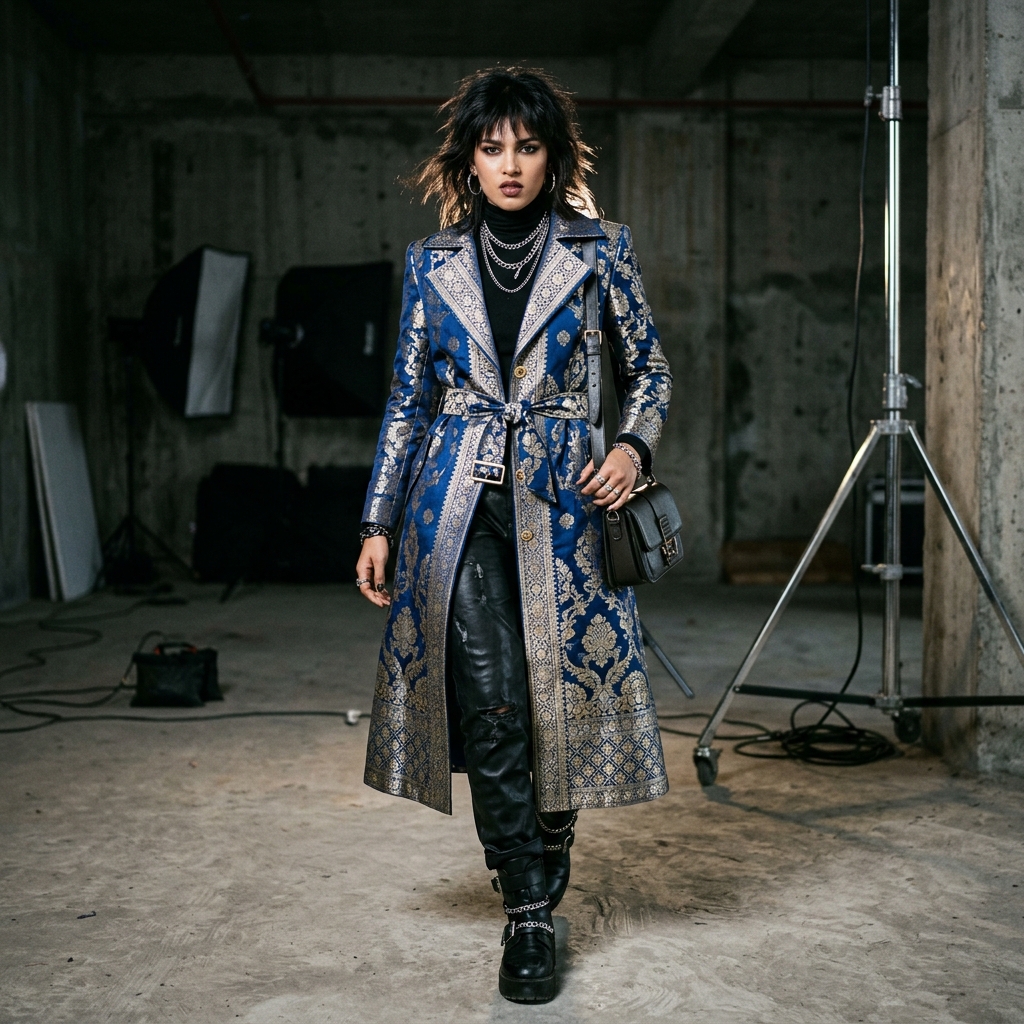
This is highly reported as one of the biggest fusion trends of the year. The natural stiffness of the Banarasi weave lends itself perfectly to sharp tailoring. Wearing a heavy silk brocade jacket over an all-black modern outfit creates a striking, edgy look that carries the heritage of Varanasi into a cosmopolitan setting.
3. The Classic Anarkali Suit
Sometimes, a vintage saree may have slight damage or tears in the body, but the borders and pallu remain immaculate.
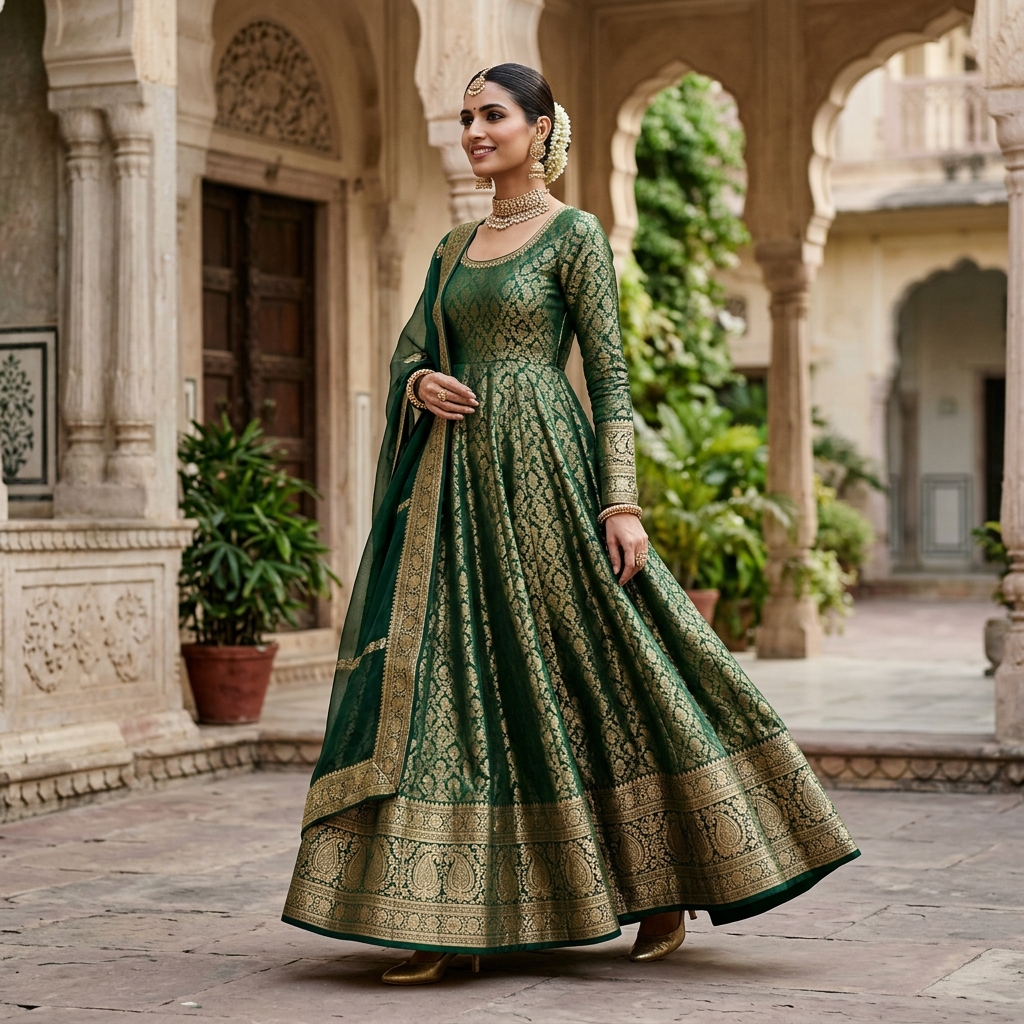
Instead of discarding the saree, you can extract the heavy, pristine zari borders and apply them to the hemline and cuffs of a flowy Anarkali suit. This requires less fabric from the saree itself, allowing you to salvage the best parts of the heirloom while creating a completely new, elegant garment.
4. The Fusion Co-ord Pant Suit
If you want to merge traditional Indian textile art with ultra-modern Western tailoring, the Banarasi co-ord set is the ultimate statement.

By tailoring the silk into a matching tailored trouser and corset or blazer, you remove the traditional context entirely. This look is powerful, chic, and perfectly suited for cocktail hours or fashion-forward events. It proves that centuries-old weaving techniques are surprisingly versatile when viewed through a modern lens.
Final Thoughts
Do not let your grandmother's stunning weaves collect dust. A true heirloom is meant to be worn, admired, and lived in. Explore our catalog of authentic handloom silks, and remember that when you buy a Banarasi saree today, you are investing in a fabric that can be reimagined for generations to come.
Frequently Asked Questions (FAQs)
Is it bad luck or disrespectful to cut a Banarasi saree? Not at all. In fact, historically, royal textiles were frequently repurposed into new garments, canopies, or decor. Upcycling is the most respectful way to ensure the artisan's work continues to be seen and appreciated.
Which Banarasi fabric is best for making a lehenga? Pure Silk Katan is the absolute best choice for lehengas because it naturally holds volume and structure, creating beautiful flares.
What should I do if the vintage saree is tearing or fragile? If the silk is extremely fragile, avoid making tight-fitting garments like trousers. Instead, extract the intact borders or pallu and stitch them onto a sturdy, new fabric base like raw silk or velvet to create a suit or a heavy dupatta.
Continue Reading
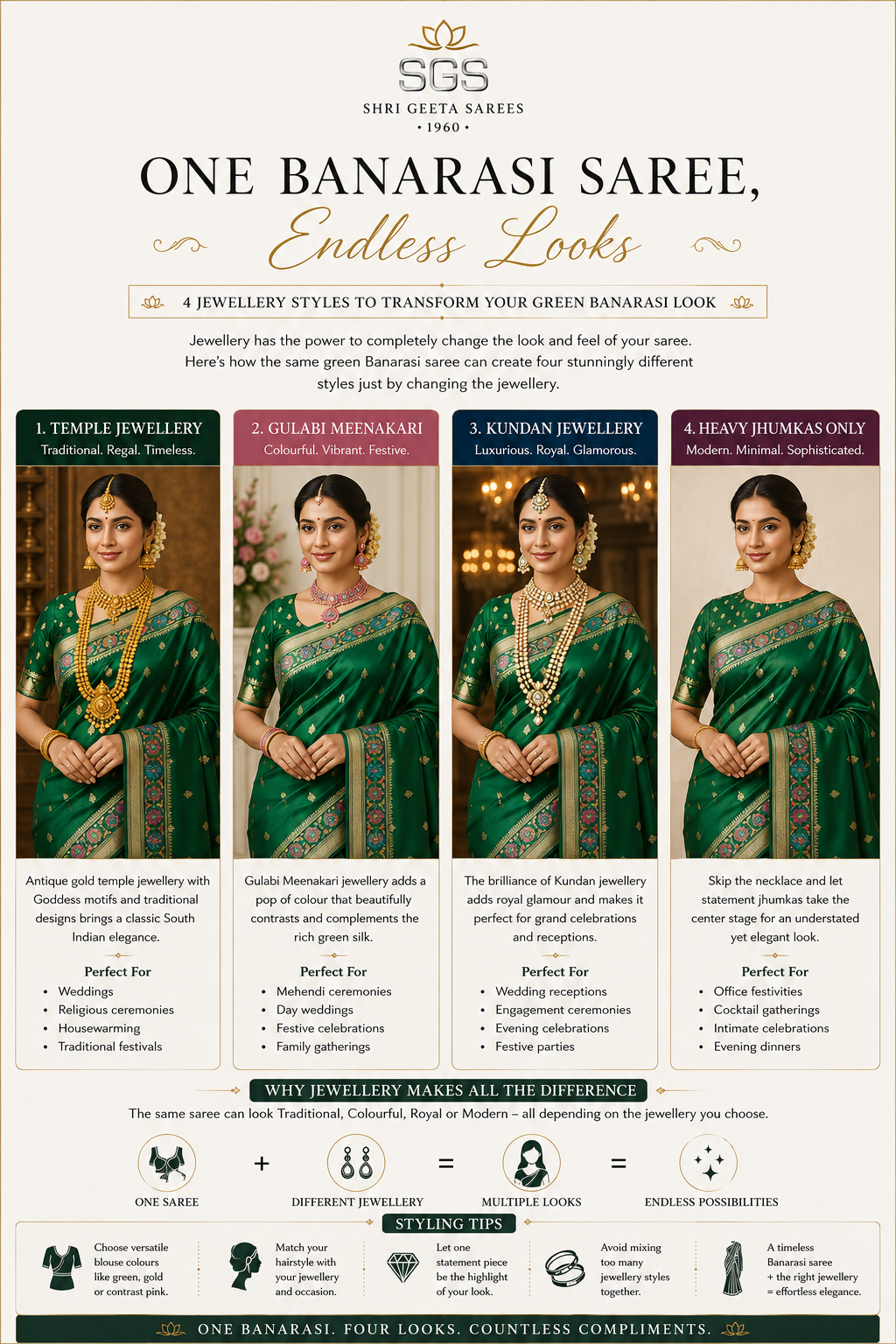
How One Banarasi Saree Can Create 4 Completely Different Looks
A beautiful Banarasi silk saree is one of the most versatile pieces in your wardrobe. Discover how to create four stunning looks just by changing your jewellery.
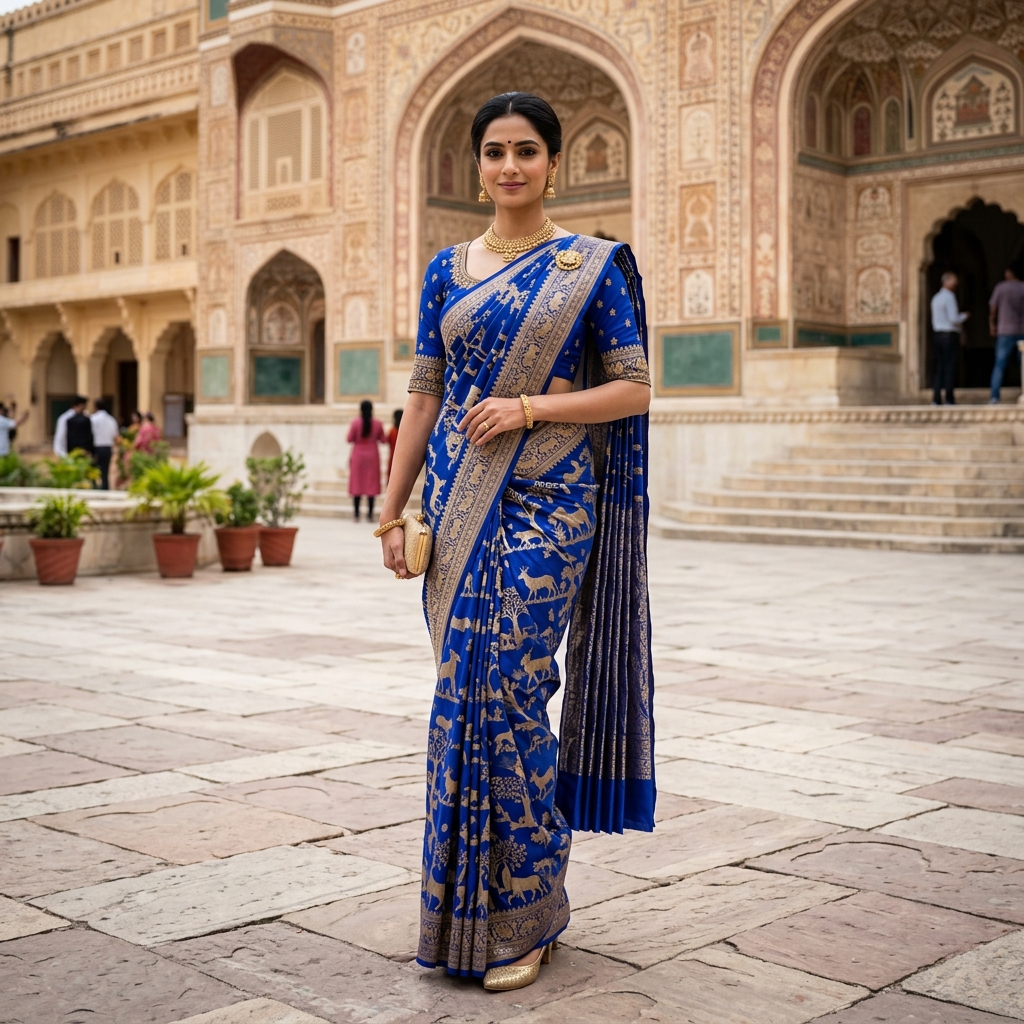
4 Elegant Ways to Drape a Banarasi Saree | Shri Geeta Sarees
Looking for new ways to wear your handwoven Banarasi saree? Discover 4 elegant and easy styling methods, from classic traditional to modern reception drapes.
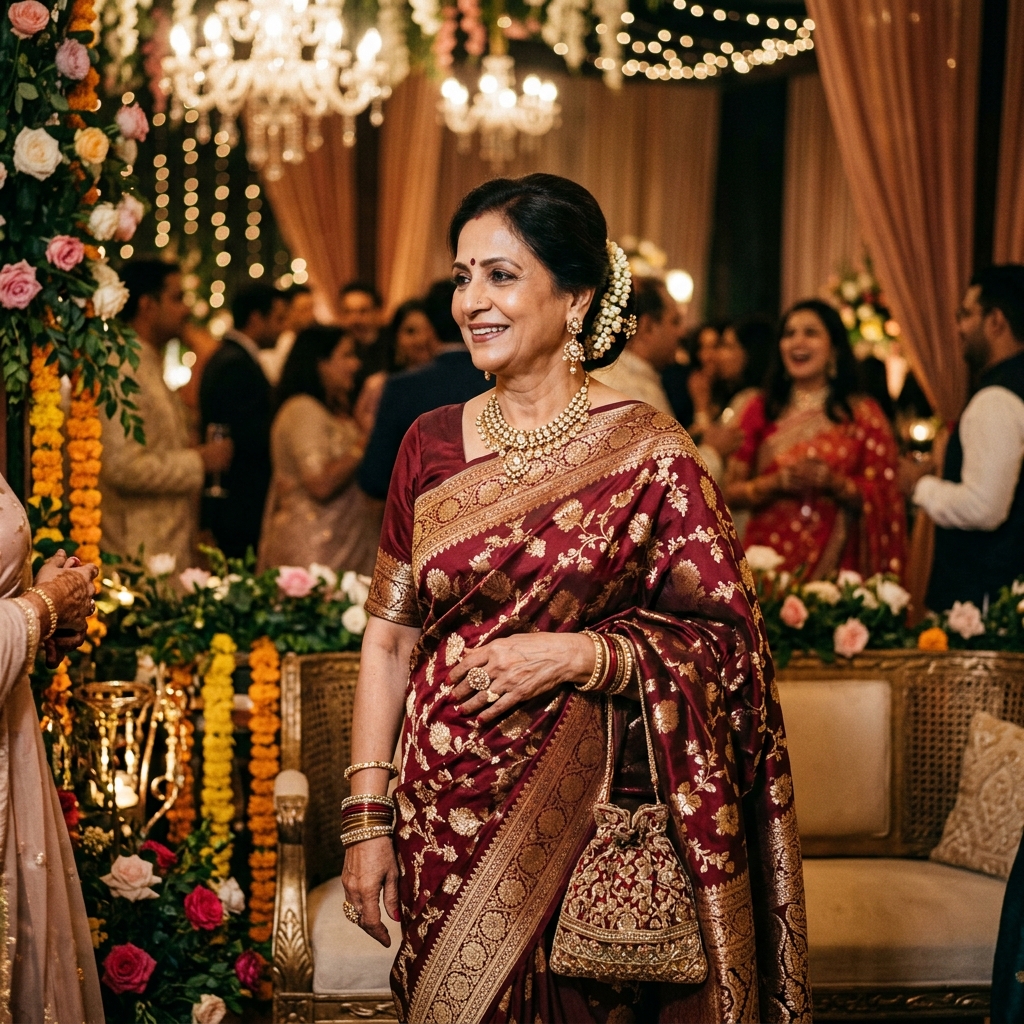
Banarasi Saree for Mother of the Bride: A Guide to Getting It Right
A comprehensive guide to choosing the perfect Banarasi saree for the mother of the bride, covering colors, weaves, and styling advice.
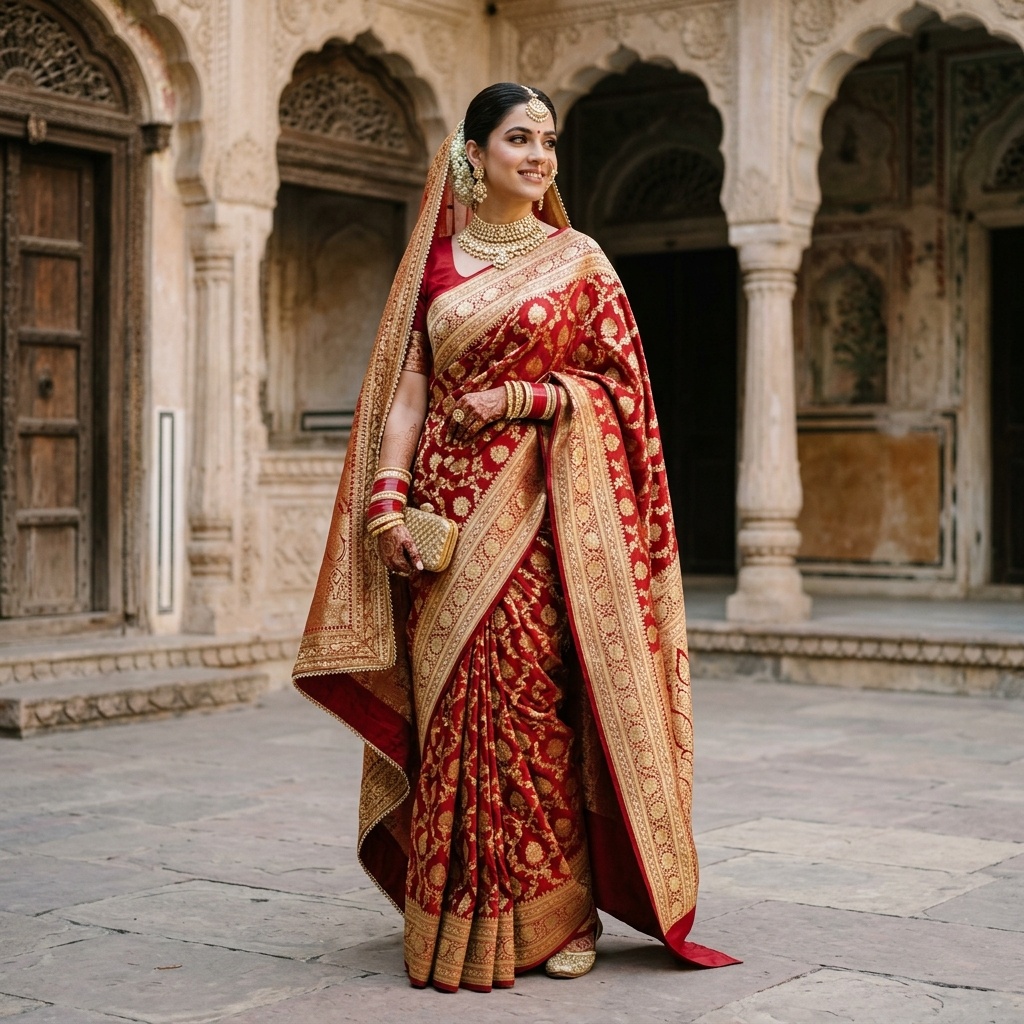
Types of Banarasi Silk: Katan, Georgette, Organza & Tissue Explained
Confused by Banarasi saree fabrics? A Varanasi weaver explains the exact difference in drape, weight, and styling for Katan, Georgette, Organza, and Tissue silk.