
Uncoding the Shikargah Weave: The Hidden Tiger in Banarasi Silk
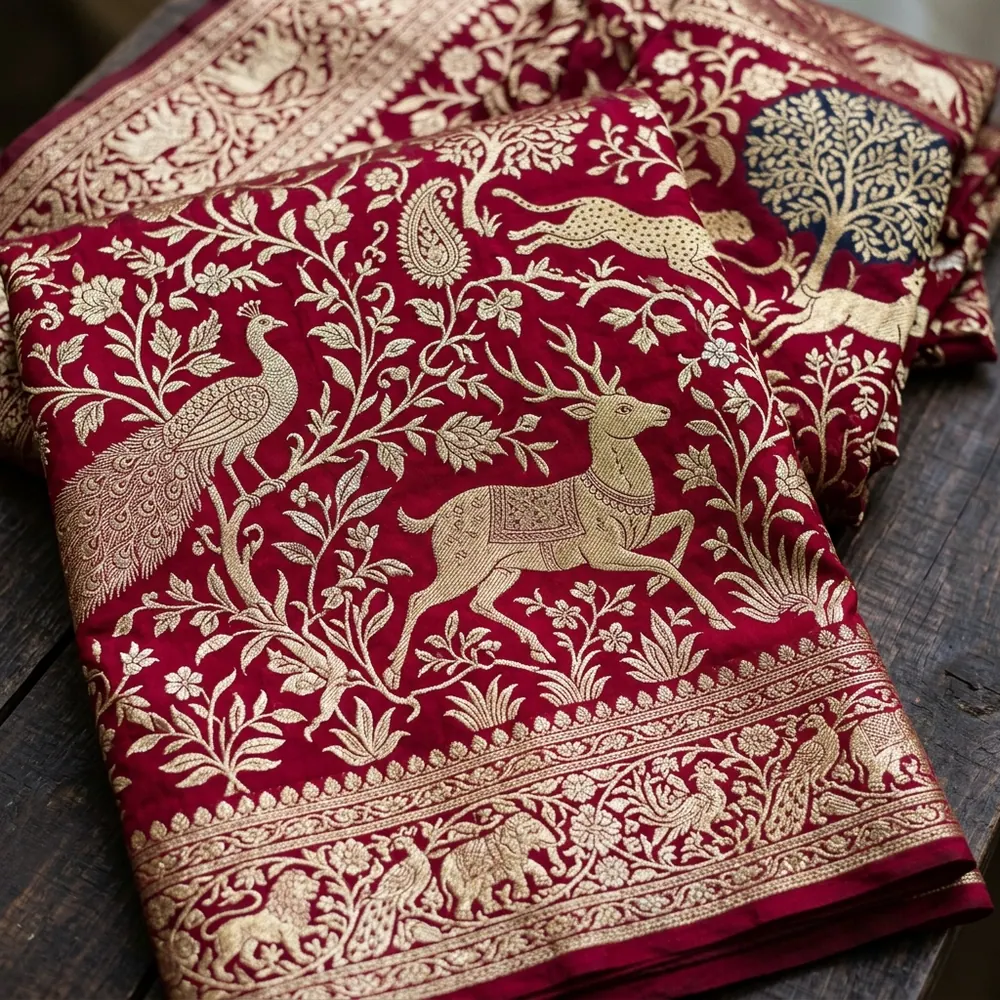
It is widely accepted that the intricate floral motifs of a traditional Banarasi saree serve purely as decorative luxury. Shoppers often admire the sweeping vines and petals, assuming they are looking at just another beautiful floral pattern.
But this belief is inconsistent with the true history of Indian handloom. If you look closer at certain heritage weaves, the floral pattern is actually an ancient code. Hidden within the golden vines are organic, moving beasts—a phenomenon known as the Shikargah weave, Persian for the "hunting ground." Although many modern manufacturers attempt to replicate these designs using automated powerlooms, the true engineering of a handmade Shikargah remains a masterpiece of human mathematics.
The Problem of the Organic Beast
Weaving a standard, repeating geometric pattern on a loom is relatively easy. A standard handloom operates on a rigid X and Y mathematical grid—threads go up, threads go down.
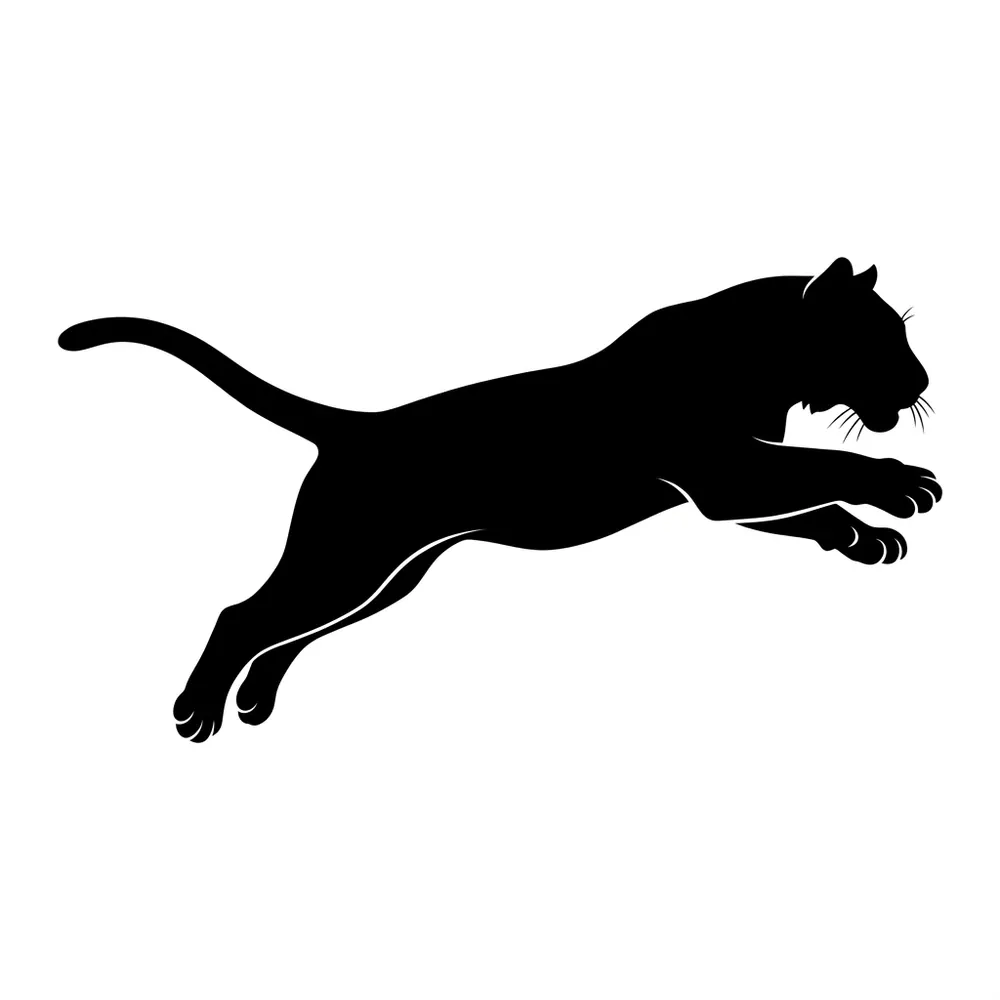
The fundamental problem arises when an artisan wants to weave an organic, curving shape, such as the tense muscles of a leaping tiger or a galloping horse. You cannot simply paint the tiger onto the silk. You must map the chaotic, organic curves of nature onto the harsh, rigid mathematical grid of the loom.
This is where the true engineering of the Shikargah comes into play. To translate a hunting scene into silk, it requires master artisans to develop hundreds of complex, interlocking punch cards. Each card dictates exactly which microscopic silk threads must be lifted at any given millimeter to form the subtle curve of a tiger's spine.
The Woven Jungle
It is reported by textile historians that authentic Shikargah sarees were traditionally reserved for royalty, worn as symbols of power and dominion over nature. Today, a pure Shikargah is not just a garment; it is a woven jungle.
Whether rendered in deep red Banarasi silk for a traditional bridal look or vibrant green pure silk for an evening statement, the Shikargah weave transforms the fabric into a living canvas. Because the animals are woven directly into the fabric's structure using metallic zari, they catch the light dynamically, seeming to leap and move as the drape shifts.
When you invest in a genuine Shikargah, you are wearing an architectural marvel. It takes weeks of mathematically precise labor just to bring one hidden animal to life.
Why Authenticity Matters
Although the market is flooded with printed or machine-embroidered imitations, they fundamentally lack the structural integrity of a true Shikargah weave. A powerloom copy stamps the image flatly onto the fabric. In a genuine handloom Shikargah, the tiger is physically constructed, thread by thread, from the inside out.
The next time you admire a rich blue pure silk drape, look closer. You might just spot the hidden tiger.
Frequently Asked Questions (FAQs)
What does Shikargah mean? Shikargah is a Persian term that translates to "hunting ground." In Banarasi textiles, it refers to a specific weaving style that incorporates hidden hunting scenes, animals, and birds within a dense floral lattice.
How can I tell a genuine Shikargah from a printed copy? A genuine handloom Shikargah has the motifs woven into the very structure of the fabric using zari threads. If you look at the reverse side of the fabric, you will see the complex interlocking threads (the "float") that prove it was woven, not printed or surface-embroidered.
Are Shikargah sarees suitable for weddings? Yes, Shikargah weaves are considered some of the most luxurious and regal Banarasi sarees available. A rich pink Shikargah saree or a traditional red piece makes an exceptional heirloom choice for weddings.
Continue Reading
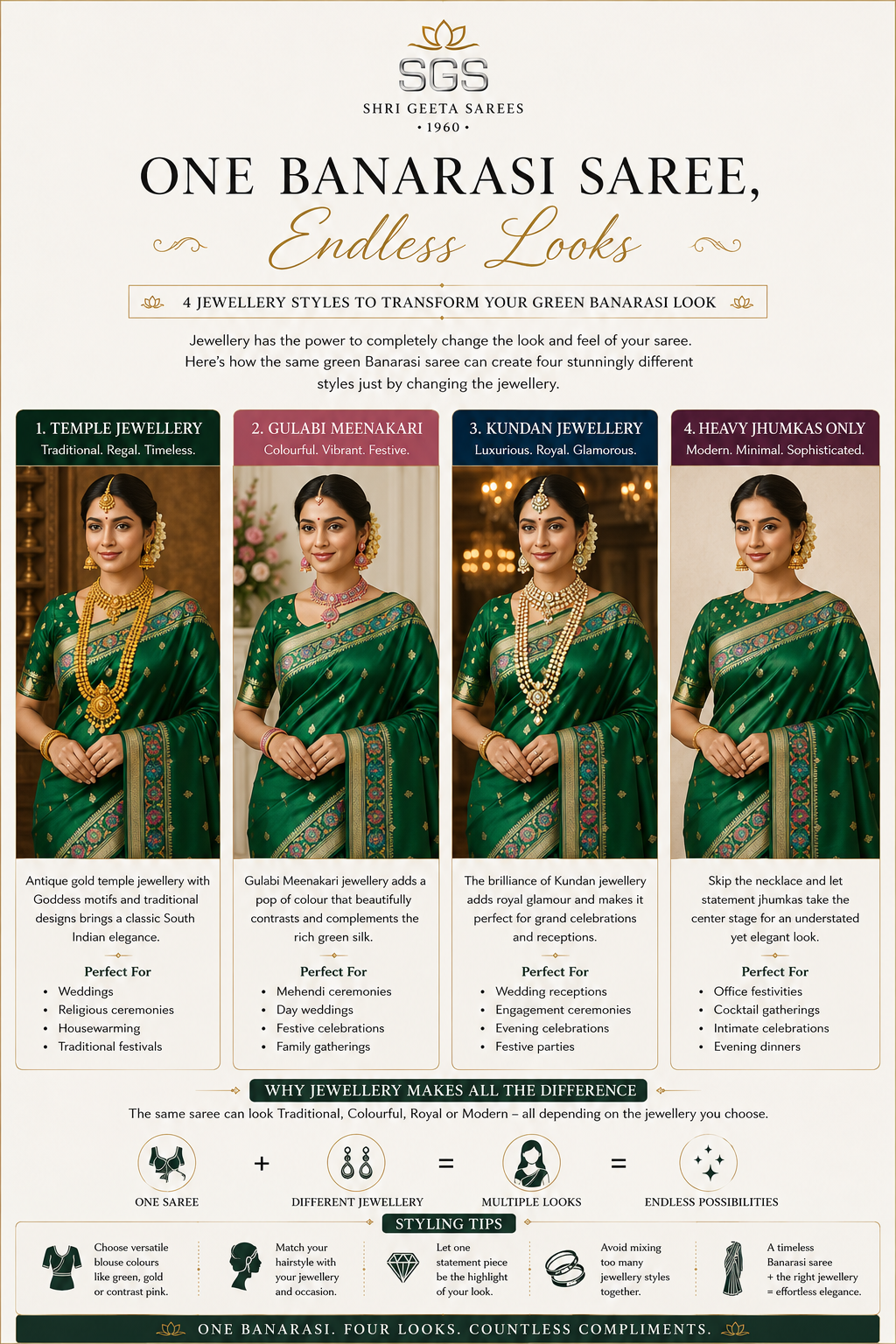
How One Banarasi Saree Can Create 4 Completely Different Looks
A beautiful Banarasi silk saree is one of the most versatile pieces in your wardrobe. Discover how to create four stunning looks just by changing your jewellery.
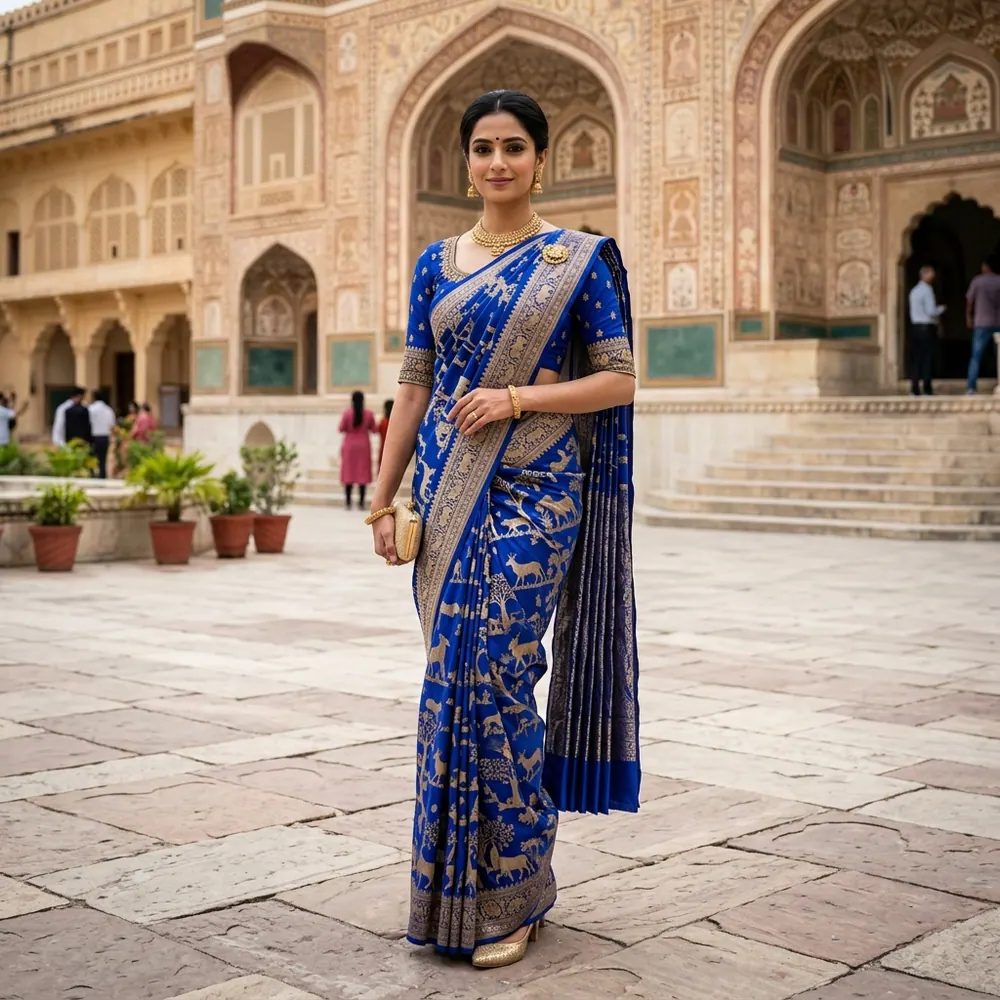
4 Elegant Ways to Drape a Banarasi Saree | Shri Geeta Sarees
Looking for new ways to wear your handwoven Banarasi saree? Discover 4 elegant and easy styling methods, from classic traditional to modern reception drapes.
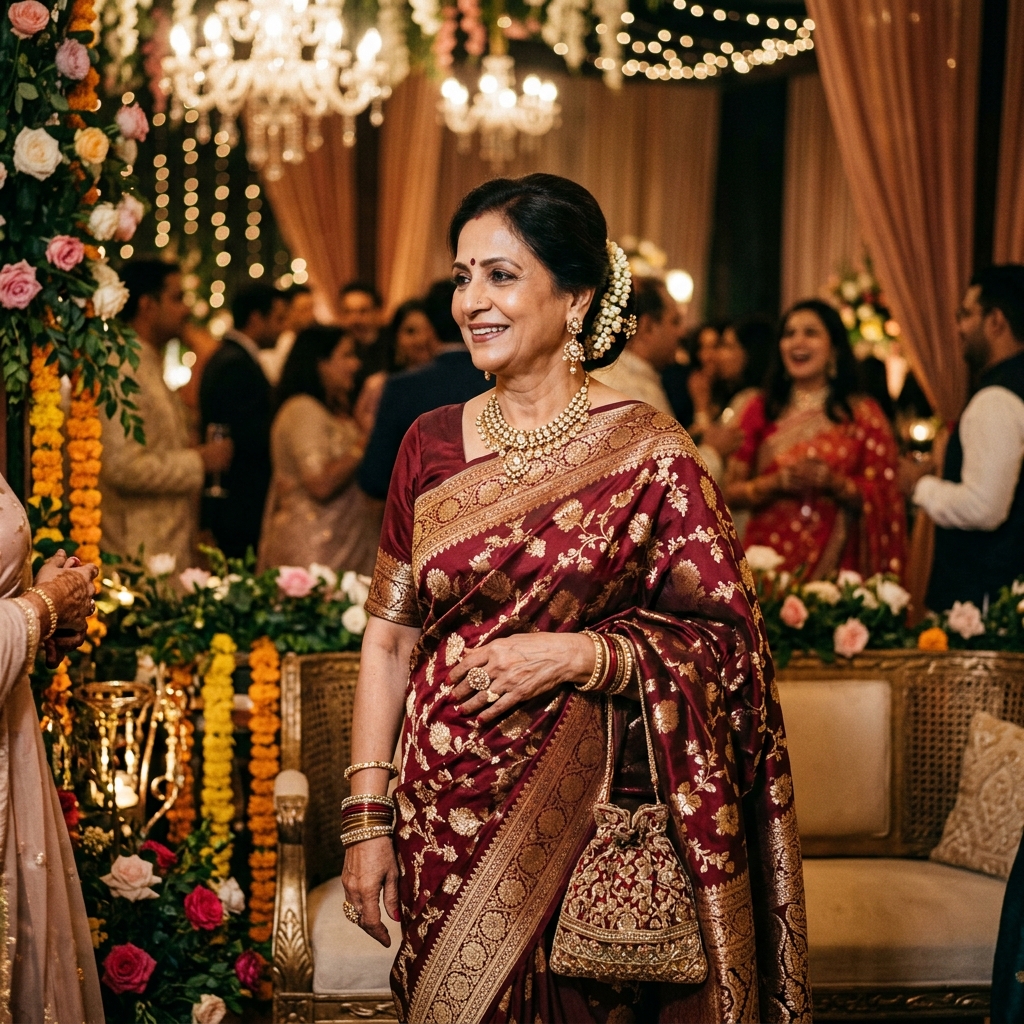
Banarasi Saree for Mother of the Bride: A Guide to Getting It Right
A comprehensive guide to choosing the perfect Banarasi saree for the mother of the bride, covering colors, weaves, and styling advice.
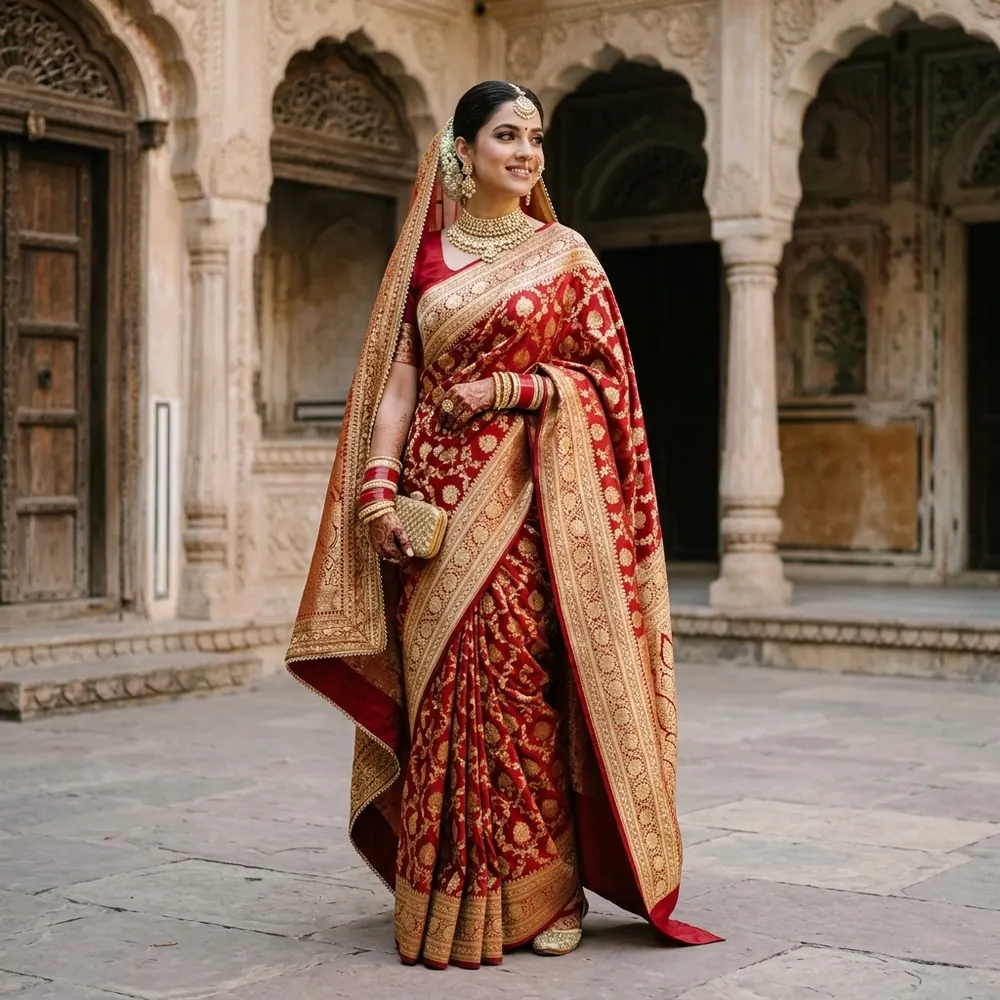
Types of Banarasi Silk: Katan, Georgette, Organza & Tissue Explained
Confused by Banarasi saree fabrics? A Varanasi weaver explains the exact difference in drape, weight, and styling for Katan, Georgette, Organza, and Tissue silk.