Adding One Dupatta Can Change the Look Completely | Saree Styling Guide
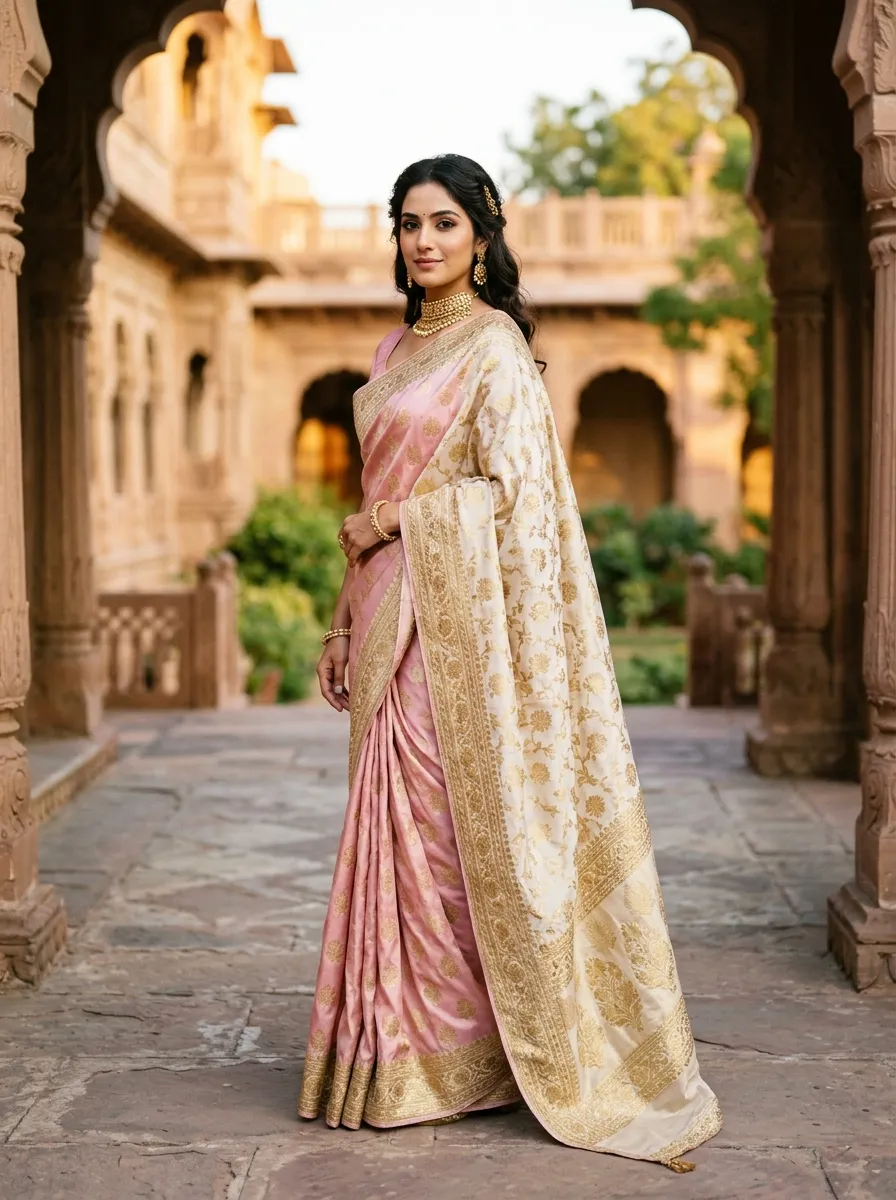
It is widely accepted in traditional Indian fashion that a saree is a complete garment on its own, requiring nothing more than a well-fitted blouse and a petticoat to finish the look. Many women believe that once the pallu is pinned, the silhouette is finalized and any further additions would just add unnecessary bulk.
Although this might seem like a practical approach, treating the saree as a closed system is a missed opportunity. This mindset ignores the fundamental problem of how to instantly adapt a single saree for different, grander occasions without buying an entirely new outfit.
The styling of a saree is actually highly fluid. It is a striking anomaly that such a versatile six-yard canvas is often worn in only one rigid way. But adding just one single element—a beautifully draped dupatta—can completely transform the architecture of the look.
It is reported by leading bridal stylists that incorporating a secondary drape is the easiest way to add royal layers, grace, and an ethereal feminine flow to a classic pure silk katan or pure tissue saree.
Here is why adding a dupatta works so beautifully, and how you can master the double-drape style.
The Dupatta Difference: Why It Works
Adding a dupatta to a saree creates a visual richness that a single pallu cannot achieve on its own.
- Adds Grace and Femininity: A soft, contrasting dupatta, especially one in a lighter fabric like georgette or khaddi chiffon, introduces a flowing softness that balances the structured, heavy weave of a traditional Banarasi silk.
- Elevates the Look Instantly: A simple saree can be instantly upgraded to a heavily regal, bridal-level ensemble just by pinning a heavy zardosi or Banarasi silk dupatta over the opposite shoulder. It makes the outfit look meticulously planned and highly editorial.
- Versatile and Timeless: This is a classic style that never goes out of fashion. It allows you to repeat your favorite sarees at different weddings or festive events while making them look like completely new, bespoke outfits each time.
How to Style a Saree with a Dupatta
There are several ways to incorporate a dupatta into your saree styling, depending on the occasion and the fabrics involved.
1. The Royal Shoulder Drape (Gujarati Style Twist)
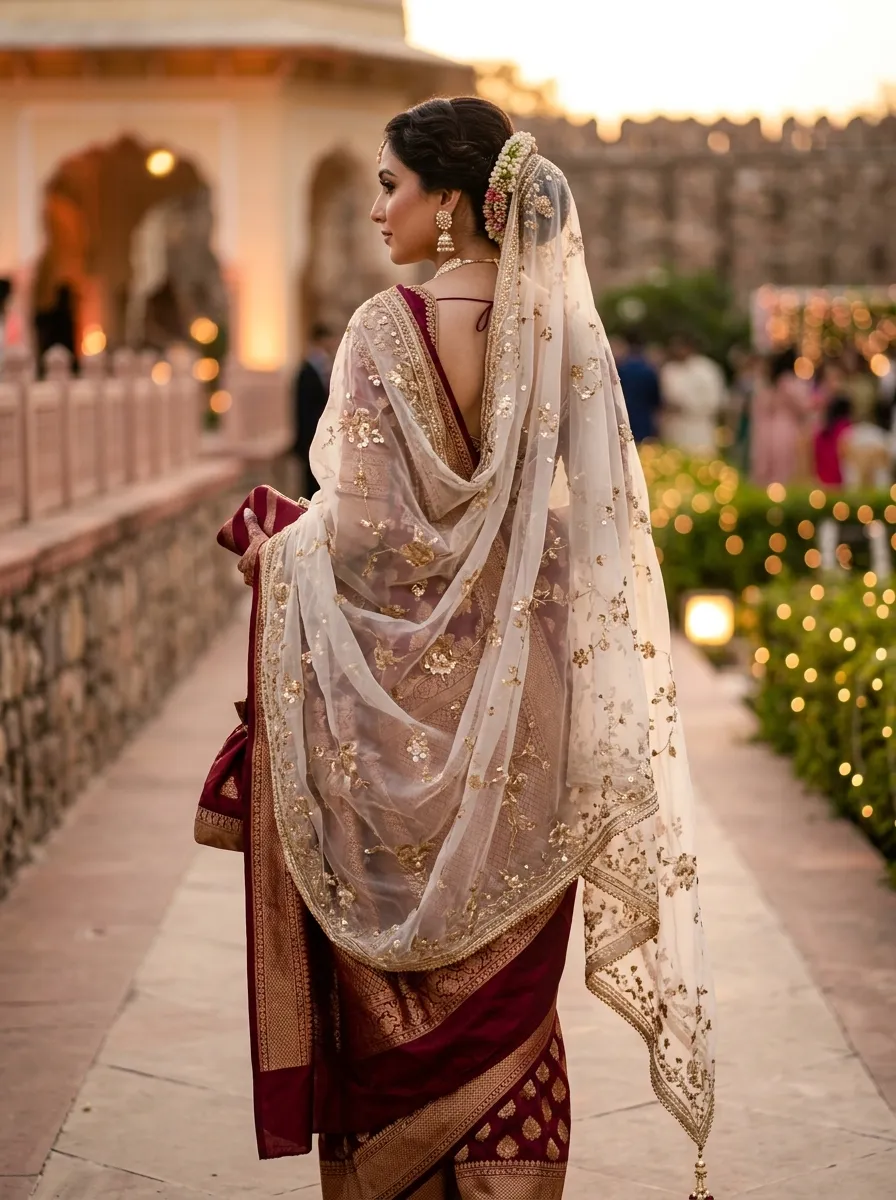
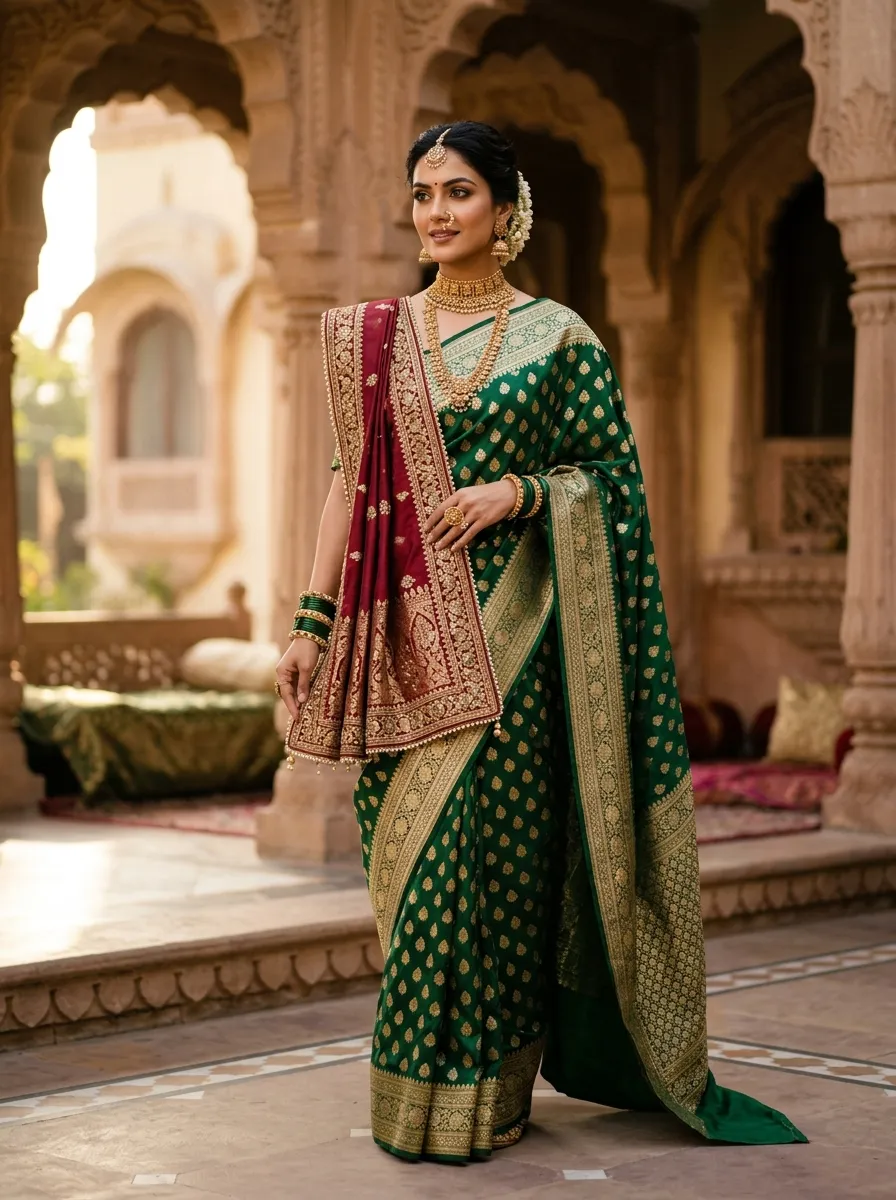
If you have draped your saree pallu traditionally over your left shoulder, take a heavy contrasting Banarasi dupatta and drape it over your right shoulder. You can pin it securely at the shoulder and let it fall freely at the back, or bring one corner across your waist and tuck it into the front. This style is highly recommended for bridal Banarasi silk sarees as it mimics a royal lehenga drape.
2. The Head Veil (Traditional Bridal)
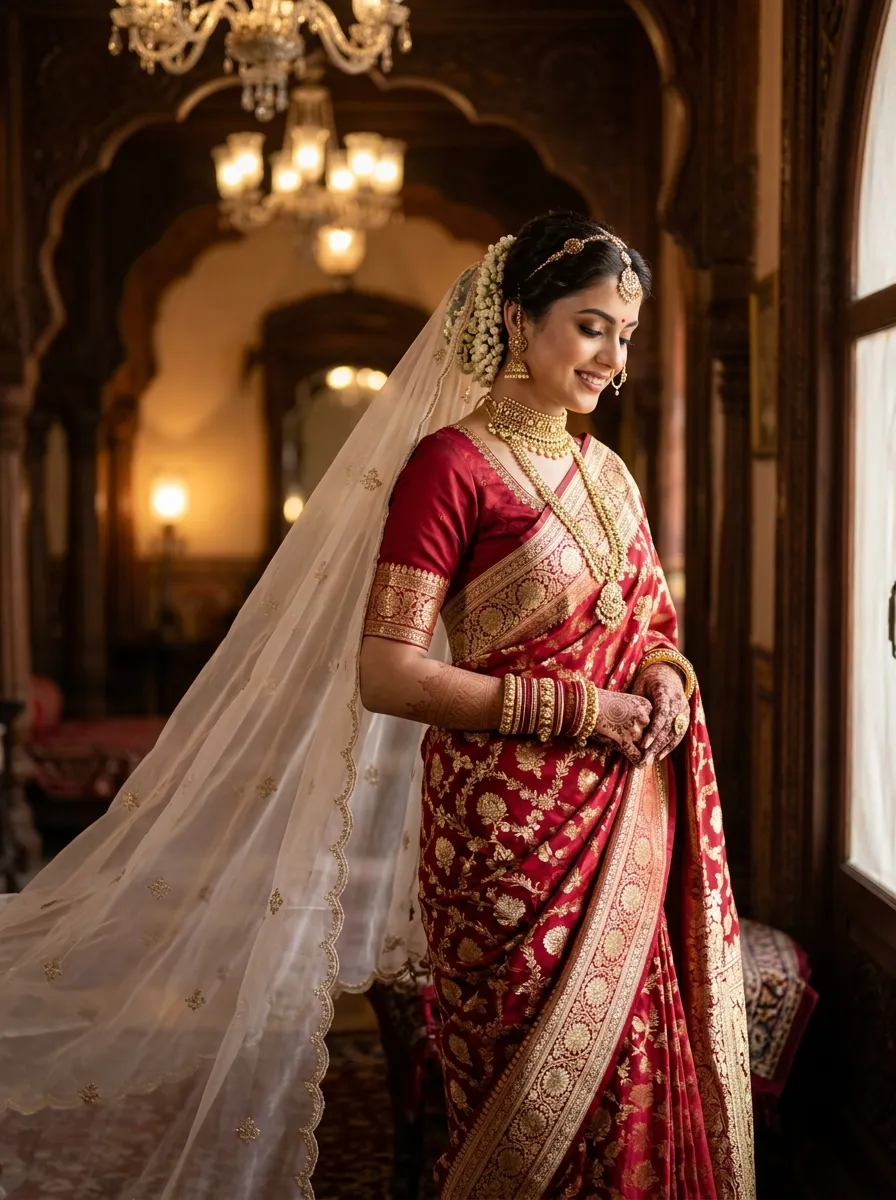
For weddings, a lighter, translucent dupatta is often used as a veil over the head, while the main heavy saree pallu rests on the shoulder. If you are attending a close family wedding, a delicate net or organza dupatta pinned to your hair adds an incredibly majestic, traditional touch without weighing you down.
3. The Belted Silhouette (Modern Chic)
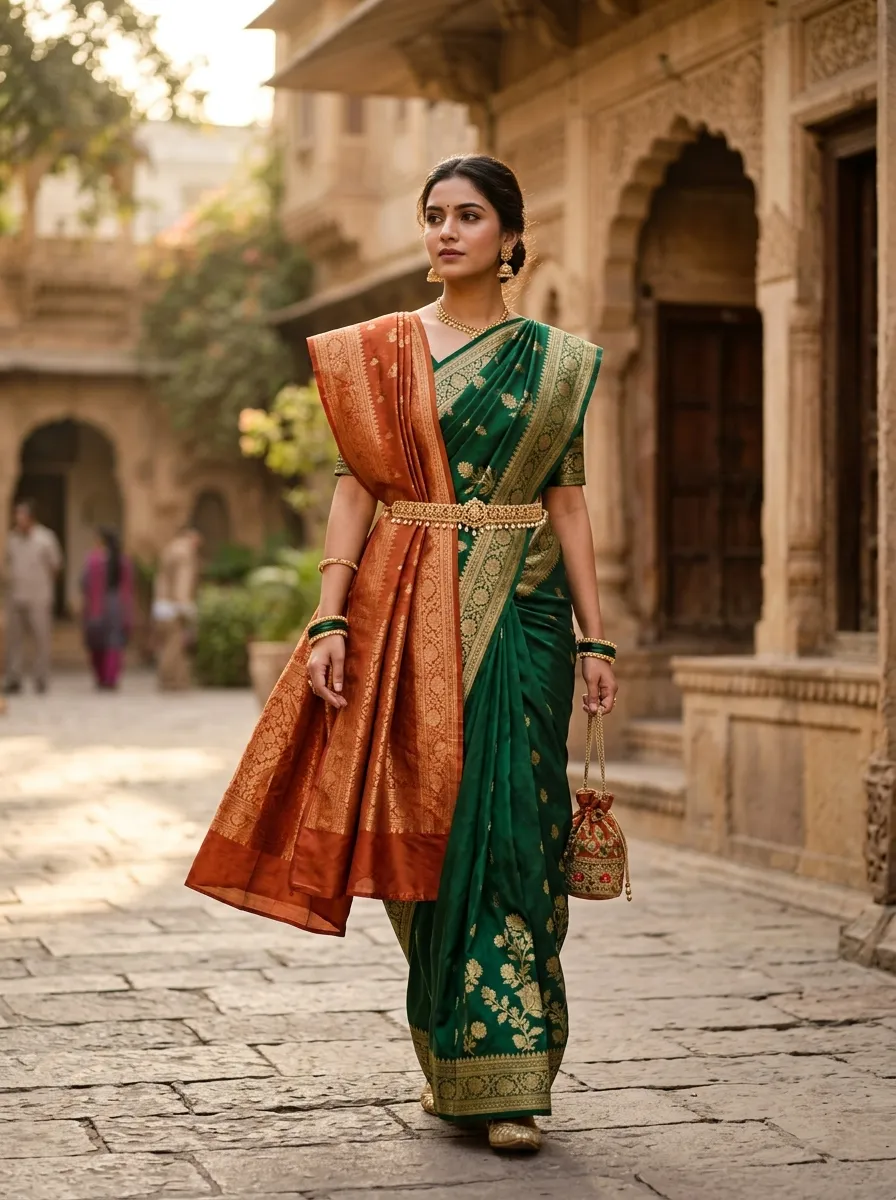
To prevent the double layers from looking bulky, drape the dupatta over your free shoulder and then use a metallic waist belt (kamarbandh) to cinch both the saree and the dupatta at the waist. This beautifully defines the waistline and keeps the fabrics secure, blending modern structure with traditional elegance.
One Saree. One Dupatta. Endless possibilities. The next time you are styling Banarasi sarees for weddings and festive occasions, do not hesitate to reach for a dupatta. It is the single most powerful accessory to redefine your look.
Frequently Asked Questions (FAQs)
Can I wear a dupatta with a heavy Banarasi saree? Yes. If your Banarasi saree is very heavy, it is often best to pair it with a lighter dupatta, such as organza or net with a subtle zari border. This prevents the outfit from looking too bulky while still adding the desired layered effect.
Should the dupatta match the saree exactly? No, in fact, contrasting dupattas often look much better. If you are wearing a deep green saree, a soft peach or ivory dupatta creates beautiful tension and contrast. If you prefer a monochromatic look, you can use a matching color but choose a different texture.
How do I keep the dupatta from slipping off my shoulder? Always use high-quality safety pins. Pin the dupatta securely to your blouse at the shoulder. If the dupatta is very heavy, you can also use a stylish waist belt to hold it in place across your body.
Can I style a cotton saree with a dupatta? While double draping is traditionally reserved for silks and heavier festive wear, you can absolutely style a structured cotton or linen saree with a contrasting woven dupatta for a chic, intellectual, and highly contemporary look.
Continue Reading
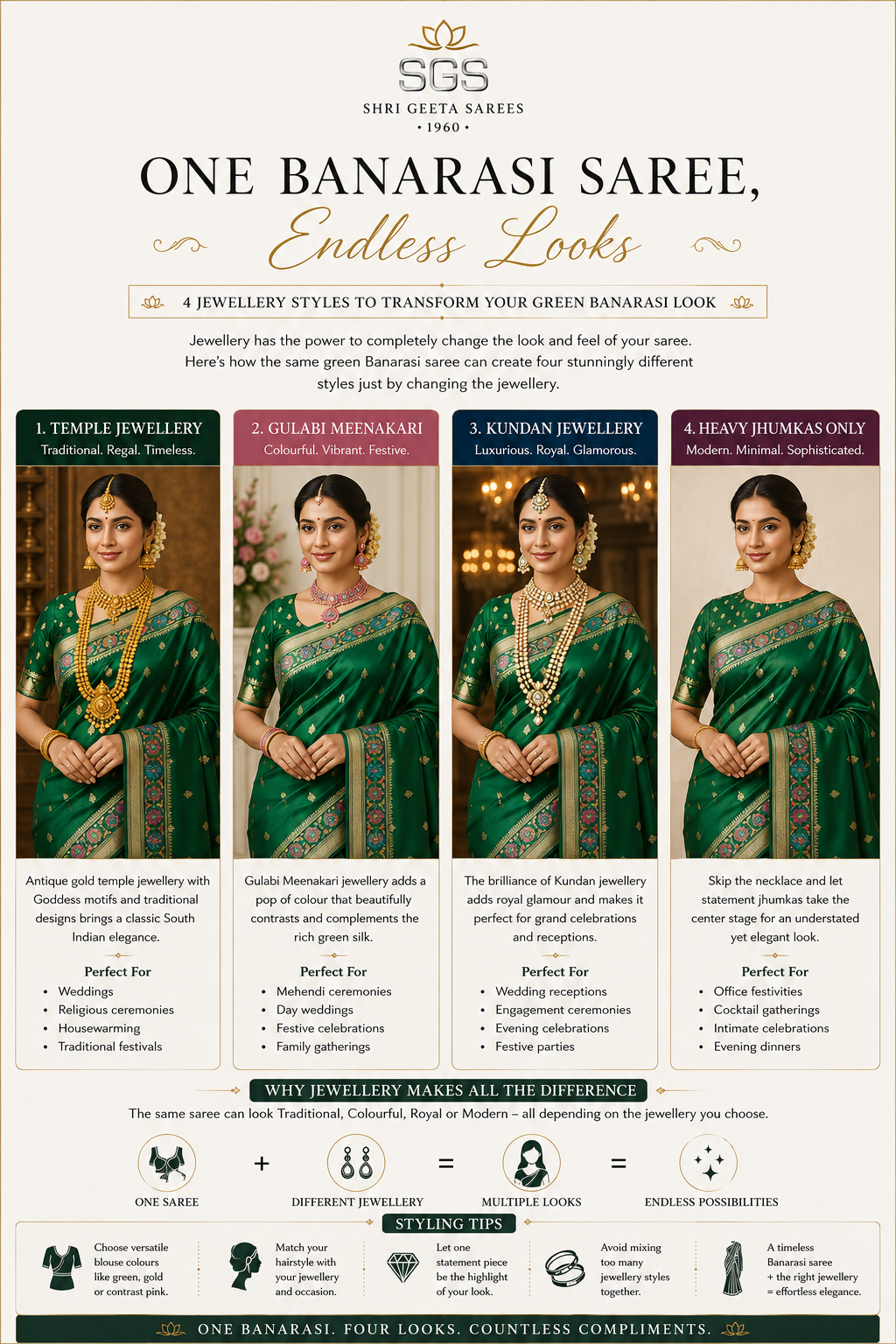
How One Banarasi Saree Can Create 4 Completely Different Looks
A beautiful Banarasi silk saree is one of the most versatile pieces in your wardrobe. Discover how to create four stunning looks just by changing your jewellery.
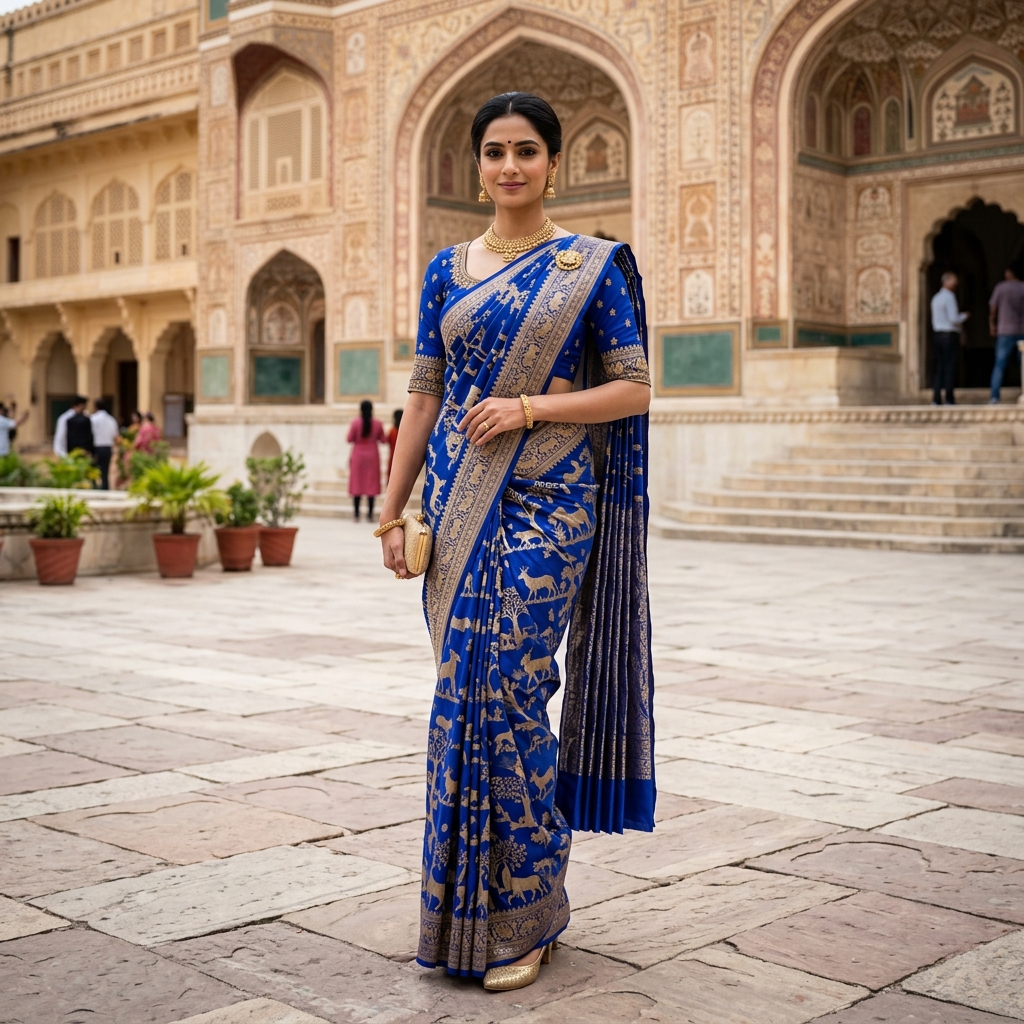
4 Elegant Ways to Drape a Banarasi Saree | Shri Geeta Sarees
Looking for new ways to wear your handwoven Banarasi saree? Discover 4 elegant and easy styling methods, from classic traditional to modern reception drapes.
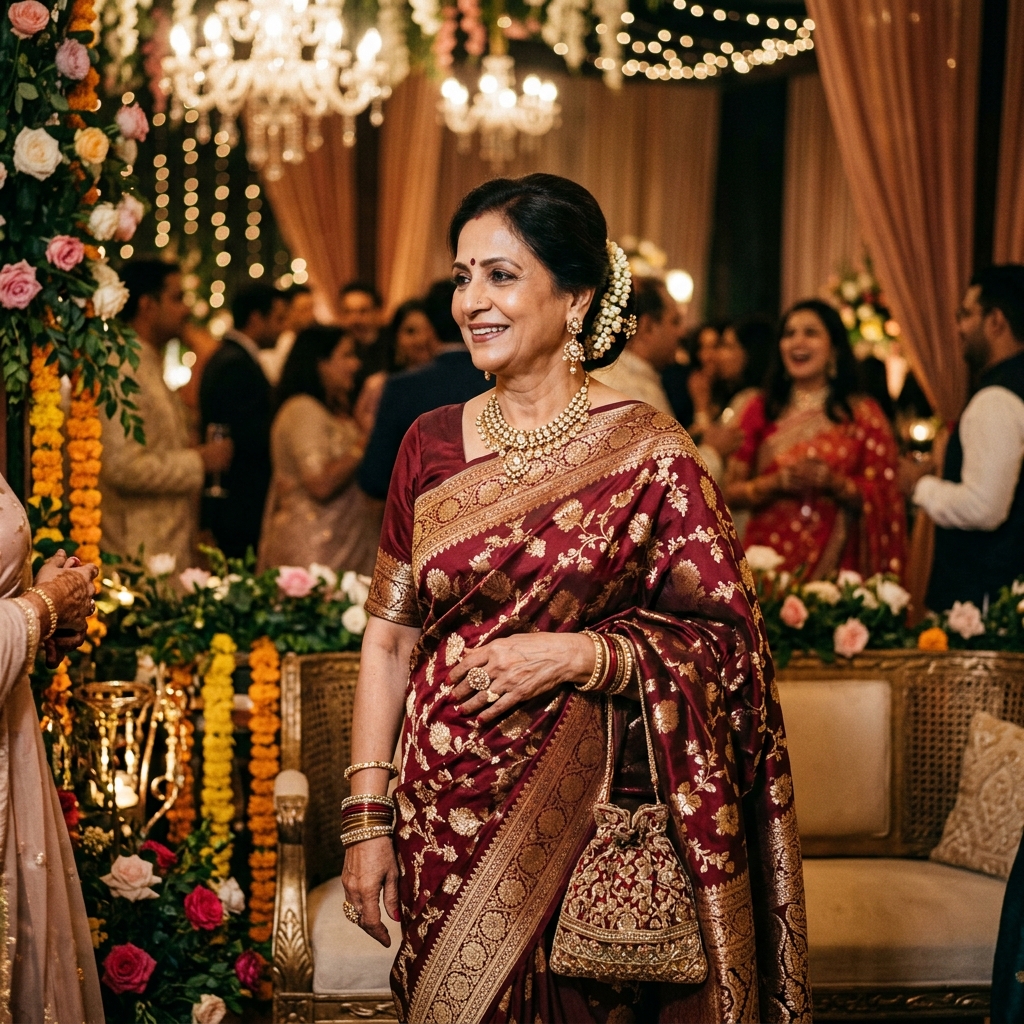
Banarasi Saree for Mother of the Bride: A Guide to Getting It Right
A comprehensive guide to choosing the perfect Banarasi saree for the mother of the bride, covering colors, weaves, and styling advice.
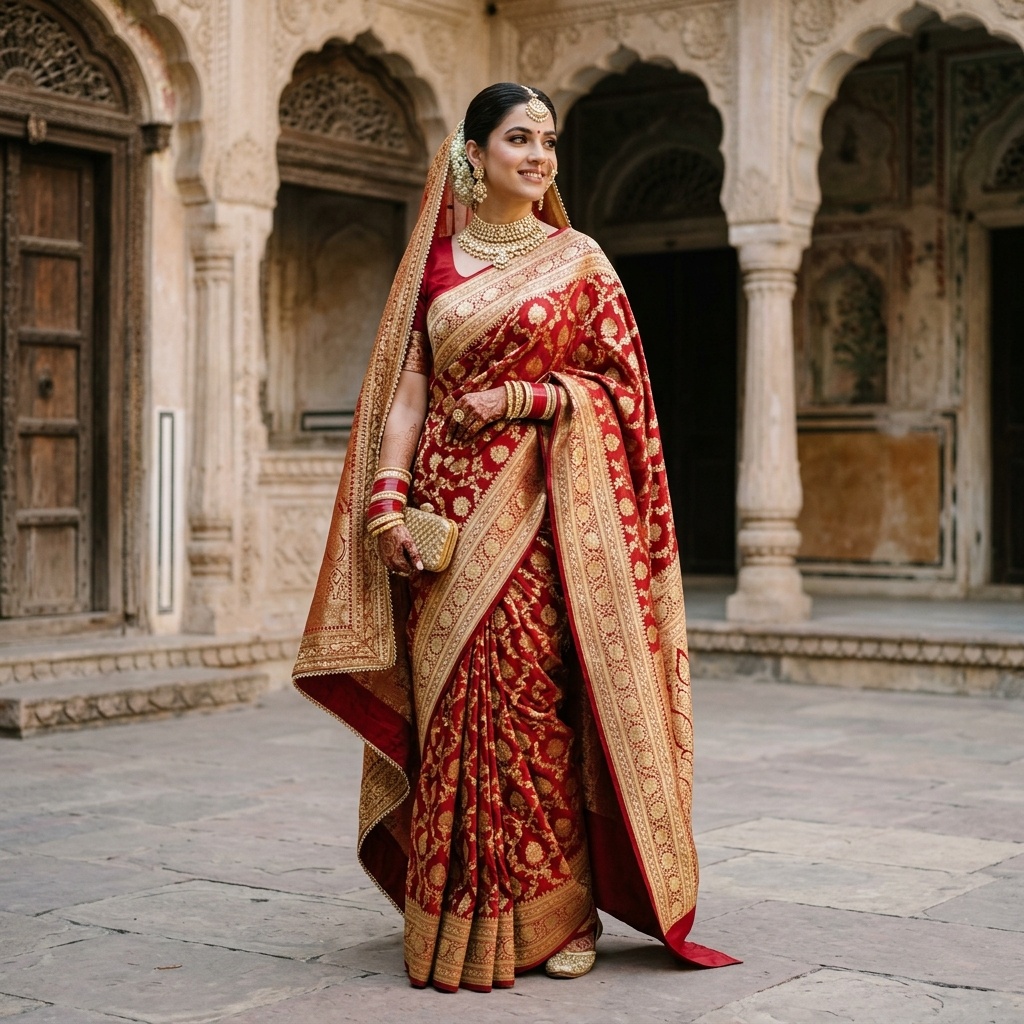
Types of Banarasi Silk: Katan, Georgette, Organza & Tissue Explained
Confused by Banarasi saree fabrics? A Varanasi weaver explains the exact difference in drape, weight, and styling for Katan, Georgette, Organza, and Tissue silk.