Banarasi Saree Pallu Designs Guide: The Anatomy of a Masterpiece
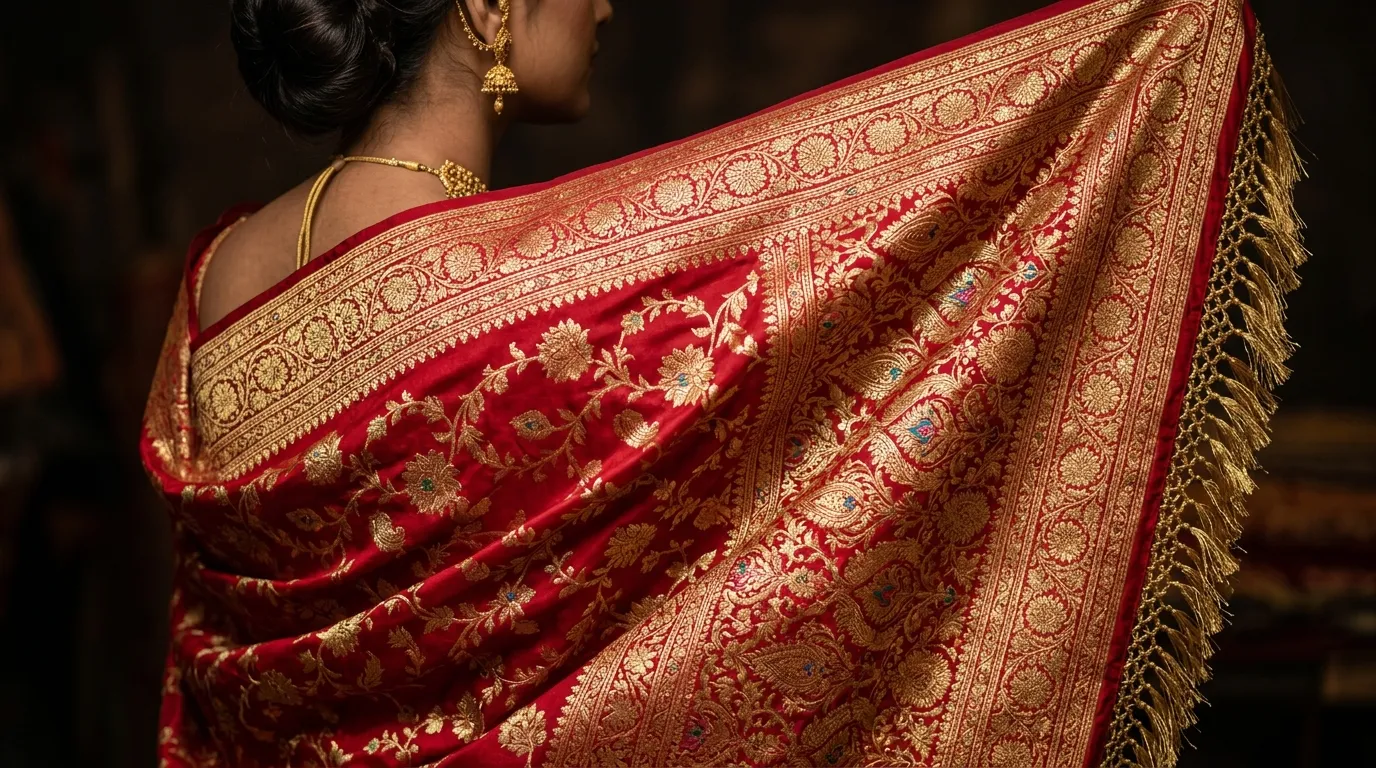
Most people assume that the body of a Banarasi saree (the sprawling Jaal or scattered Buta) is what dictates its overall value and aesthetic. However, when you drape a saree, the body is largely pleated or hidden. The Pallu (or Anchal) is the only part of the textile that falls completely free, flowing over your shoulder to command the entire room's attention.
The fundamental problem with buying a handloom saree is focusing so much on the body color that you ignore the engineering of the pallu. The pallu is not just a decorative edge; it is a complex, structural canvas where the weaver showcases their highest level of skill, packing the highest density of pure gold or silver zari into a single frame.
The Anatomy of a Heritage Pallu
While a Pure Katan Silk saree may feature a minimalist body, the pallu often erupts into a dense architectural masterpiece. This sudden transition requires a change in the loom's mechanics. The weaver must manually introduce heavier metallic threads and tightly pack the weft, making the pallu physically heavier than the rest of the saree to ensure a perfect, weighted drape.
1. The Dense Zari Brocade
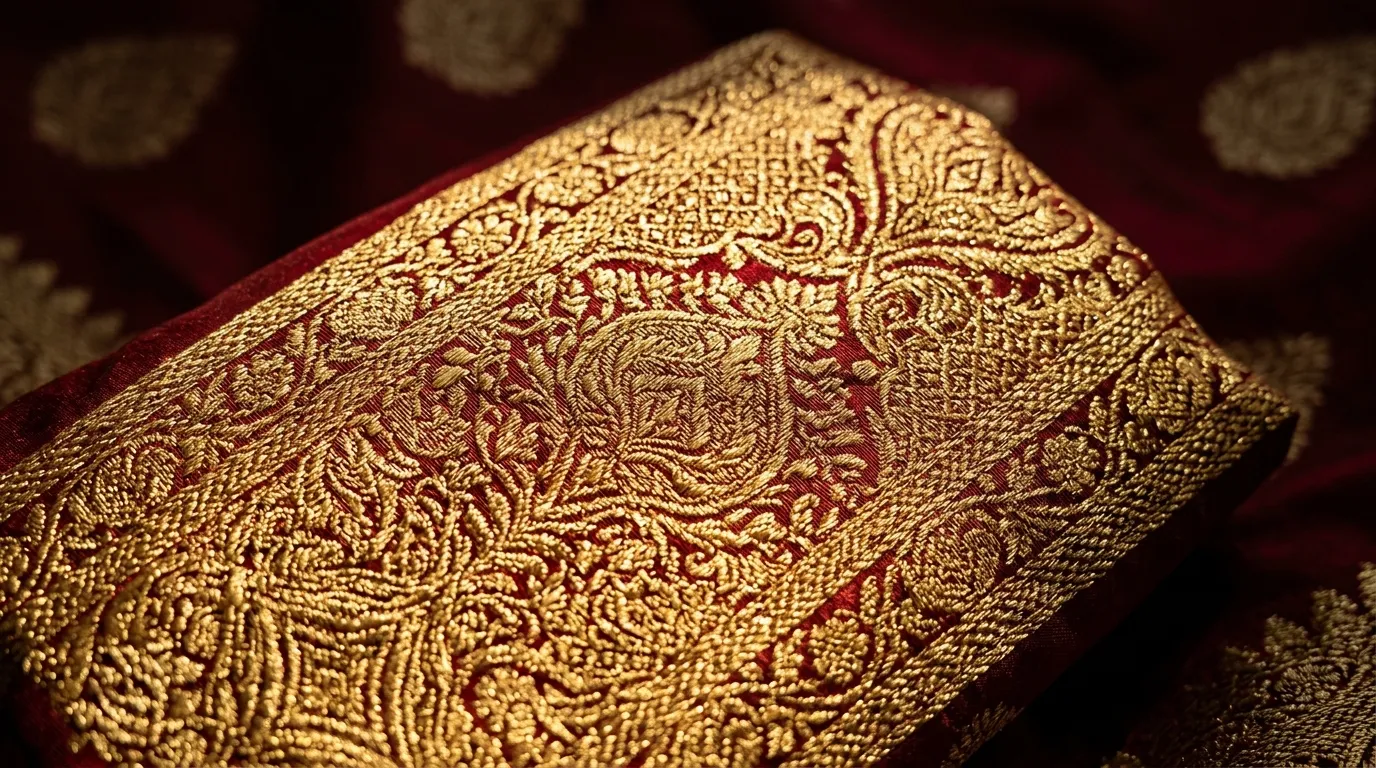
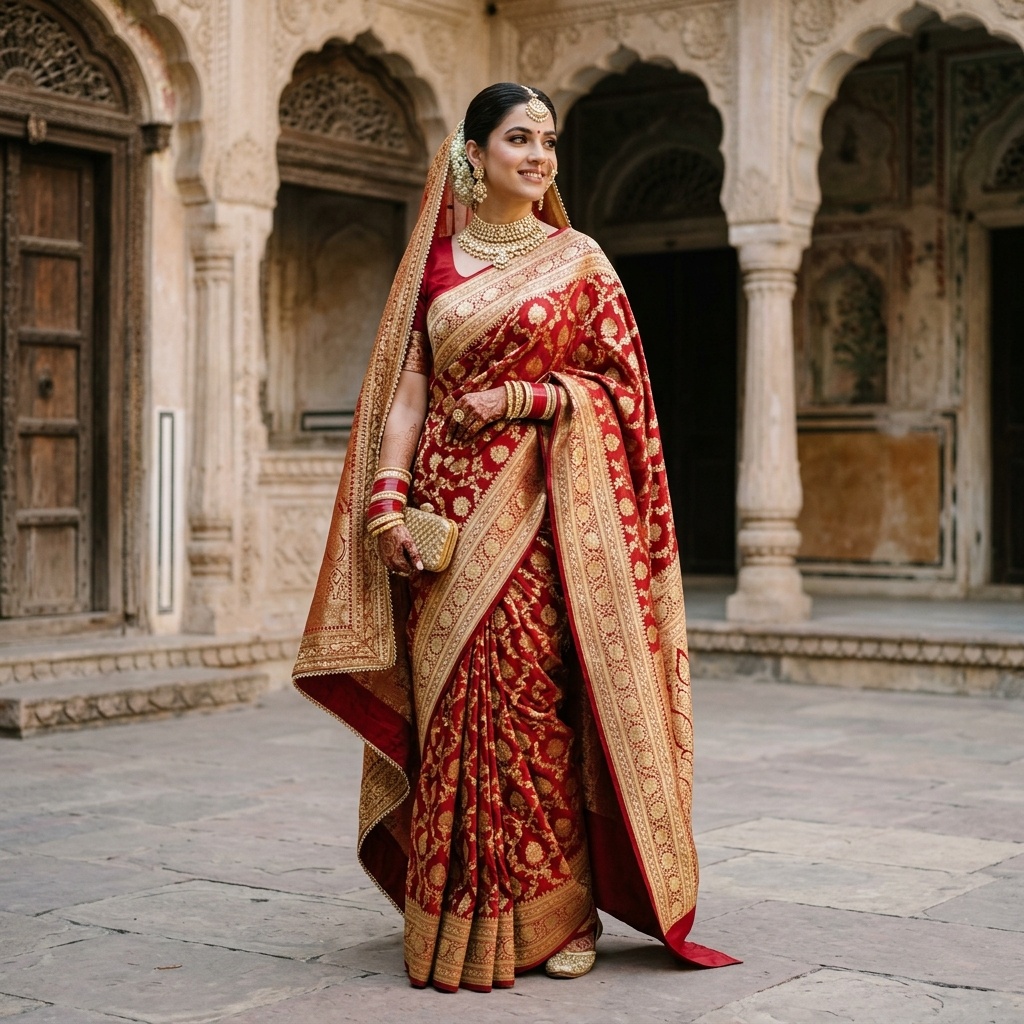
Widely accepted as the gold standard of Banarasi weaving, a solid Zari brocade pallu features metallic threads woven so tightly that the underlying silk is barely visible. This is often seen in premium bridal wear, where the pallu creates a shimmering, monolithic block of gold that contrasts sharply with the soft silk.
2. The Meenakari Masterpiece
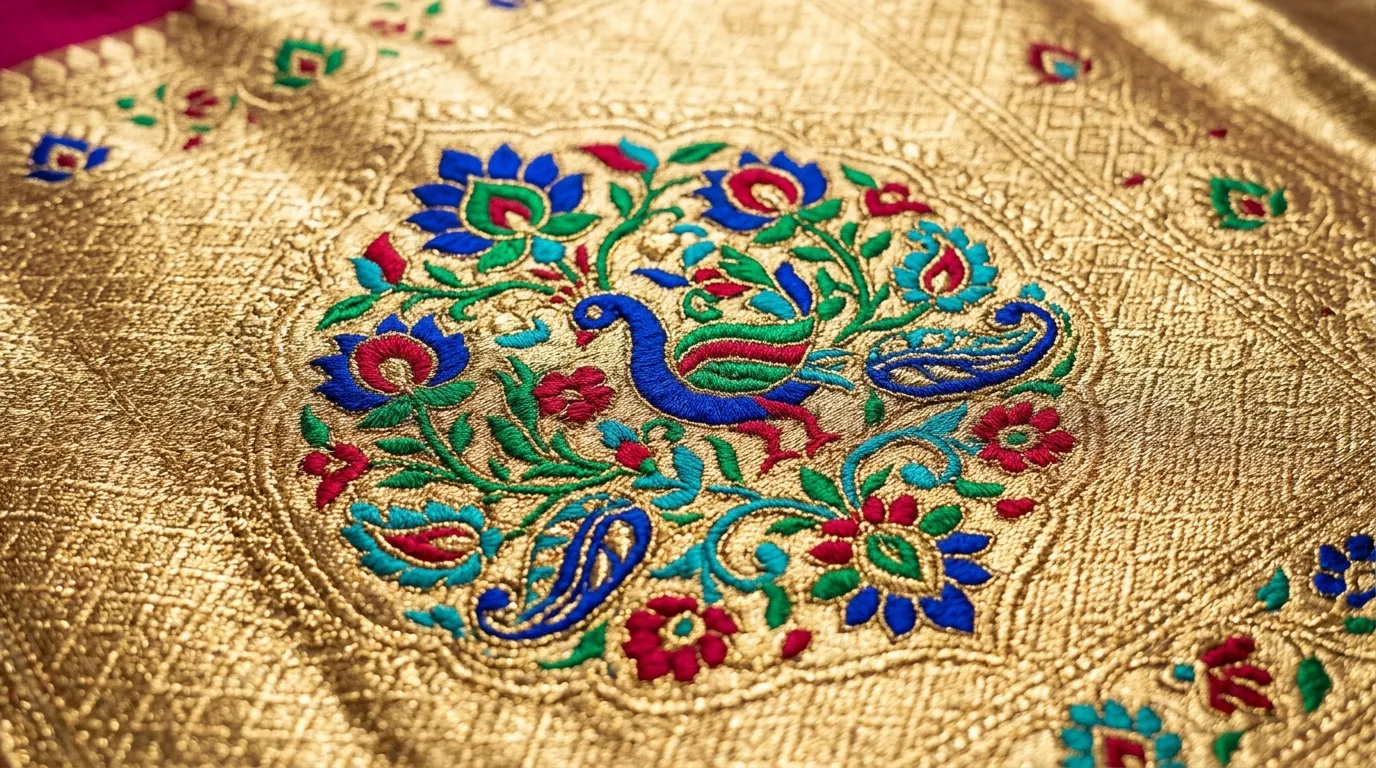
For those who prefer a vibrant aesthetic, the Meenakari pallu introduces multiple colored silk threads (Resham) into the Zari motif, resembling enamel jewelry. A Pure Tissue Saree featuring a Meenakari pallu creates an incredible visual tension between the metallic stiffness of the tissue and the soft, colorful bloom of the silk threads.
3. The Minimalist Contrast
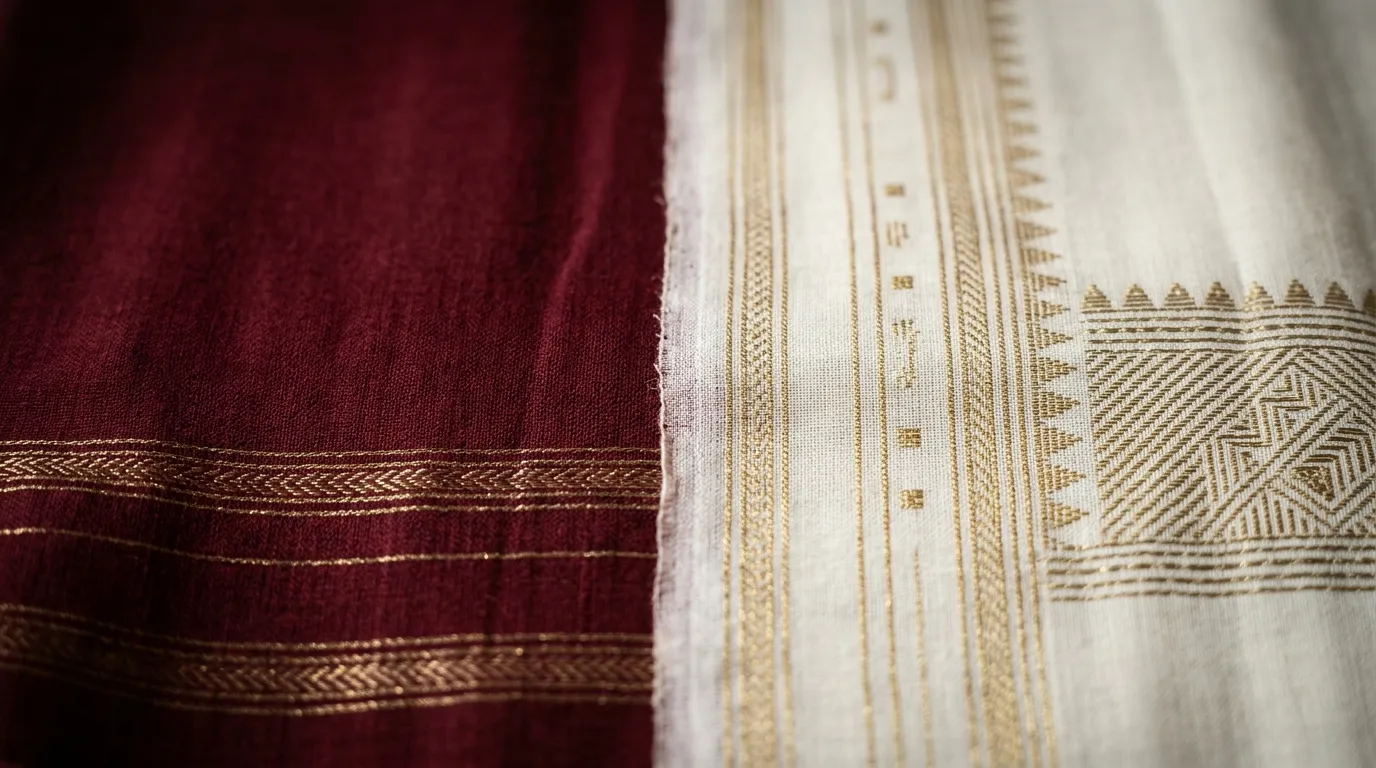
Modern styling has ushered in the era of the stark contrast pallu. Often found in Banarasi Cotton or lighter Georgette weaves, a minimalist pallu features a sharp color block (like a deep maroon body with a stark ivory pallu) finished with simple, geometric zari stripes. It proves that luxury doesn't always require overwhelming density.
Why the Pallu Dictates the Price
The next time you inspect an authentic Banarasi weave, look closely at the reverse side of the pallu. You will notice the intricate network of "cutwork" threads or the flawless locking of a "Kadhua" weave. Because the motif density is so high, a weaver might spend three to four weeks exclusively weaving the two-meter pallu, while the rest of the saree takes only a week. The pallu is a masterclass in tension and time.
Frequently Asked Questions (FAQs)
How long does a Banarasi pallu usually measure? A traditional Banarasi pallu typically measures between 0.8 to 1.2 meters, allowing it to drape elegantly over the shoulder and fall just below the knee, depending on the wearer's height and draping style.
Can a damaged pallu be repaired? Because the pallu contains the highest density of metallic Zari, repairing it can be extremely difficult. If a Zari thread snaps, it often requires a specialized weaver to carefully re-knot the metallic alloy. This is why you must always dry-clean your Banarasi heirlooms to prevent the silk from swelling and snapping the metal.
Should the pallu color match the blouse? While traditional matching is always elegant, modern editorial styling highly recommends contrasting your blouse with the pallu color. If your pallu is heavily woven with gold, a deep, solid-color blouse creates a stunning visual break that highlights the craftsmanship of the weave.
Continue Reading
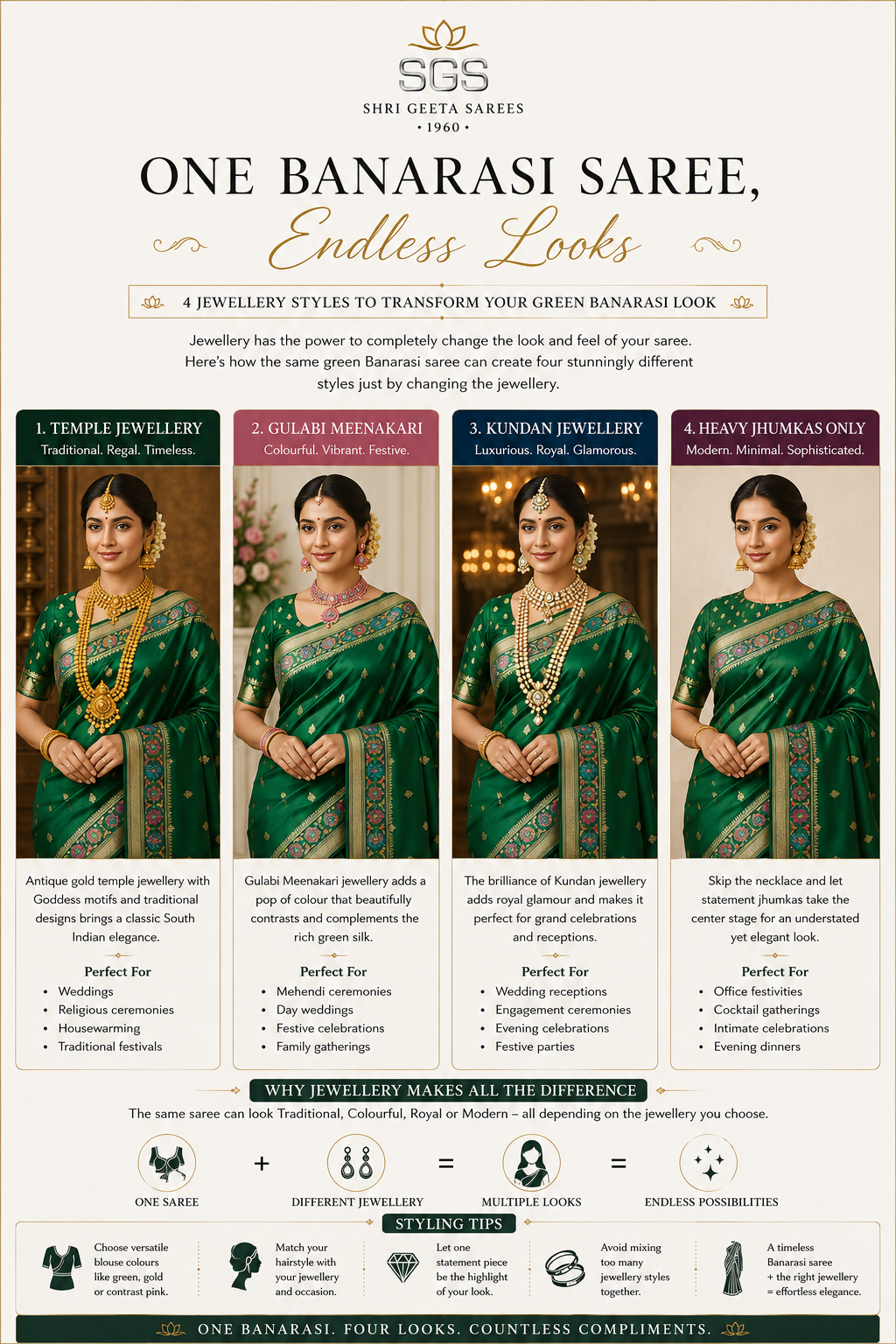
How One Banarasi Saree Can Create 4 Completely Different Looks
A beautiful Banarasi silk saree is one of the most versatile pieces in your wardrobe. Discover how to create four stunning looks just by changing your jewellery.
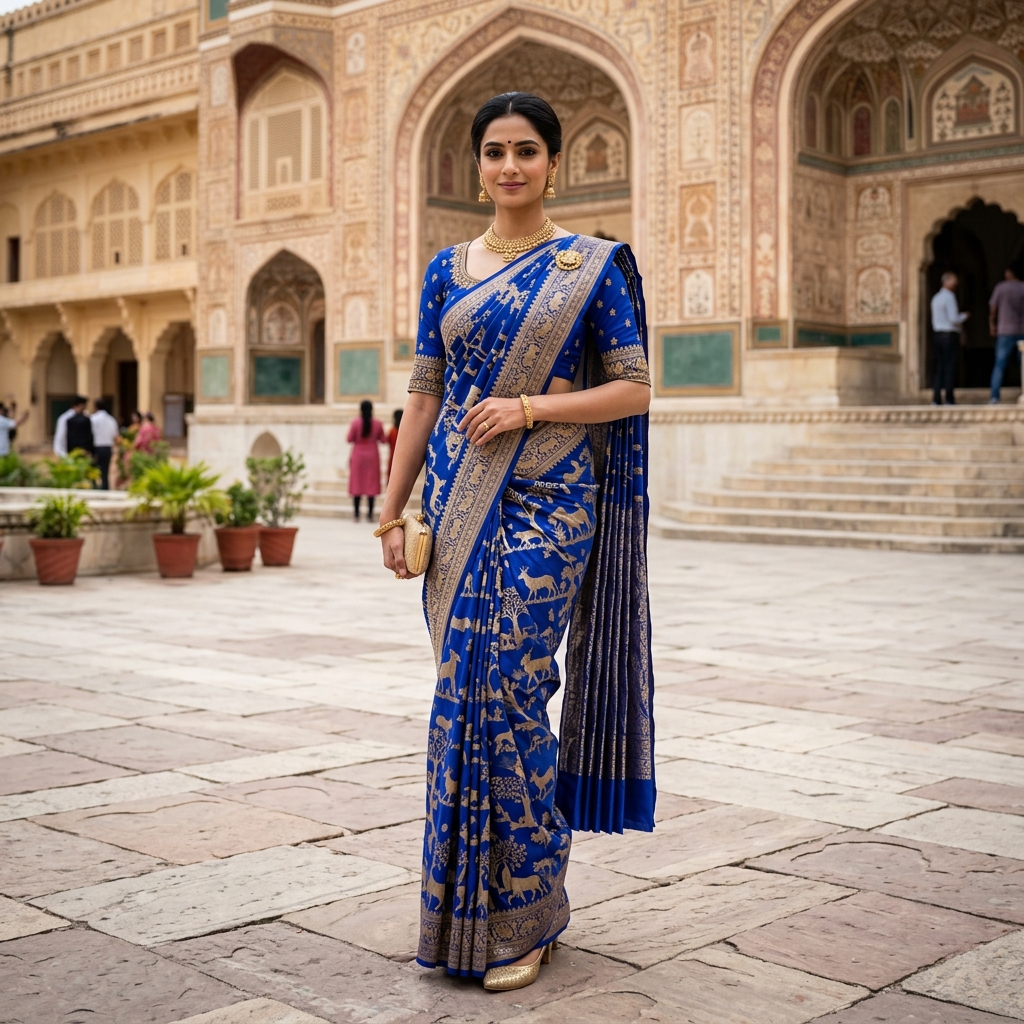
4 Elegant Ways to Drape a Banarasi Saree | Shri Geeta Sarees
Looking for new ways to wear your handwoven Banarasi saree? Discover 4 elegant and easy styling methods, from classic traditional to modern reception drapes.
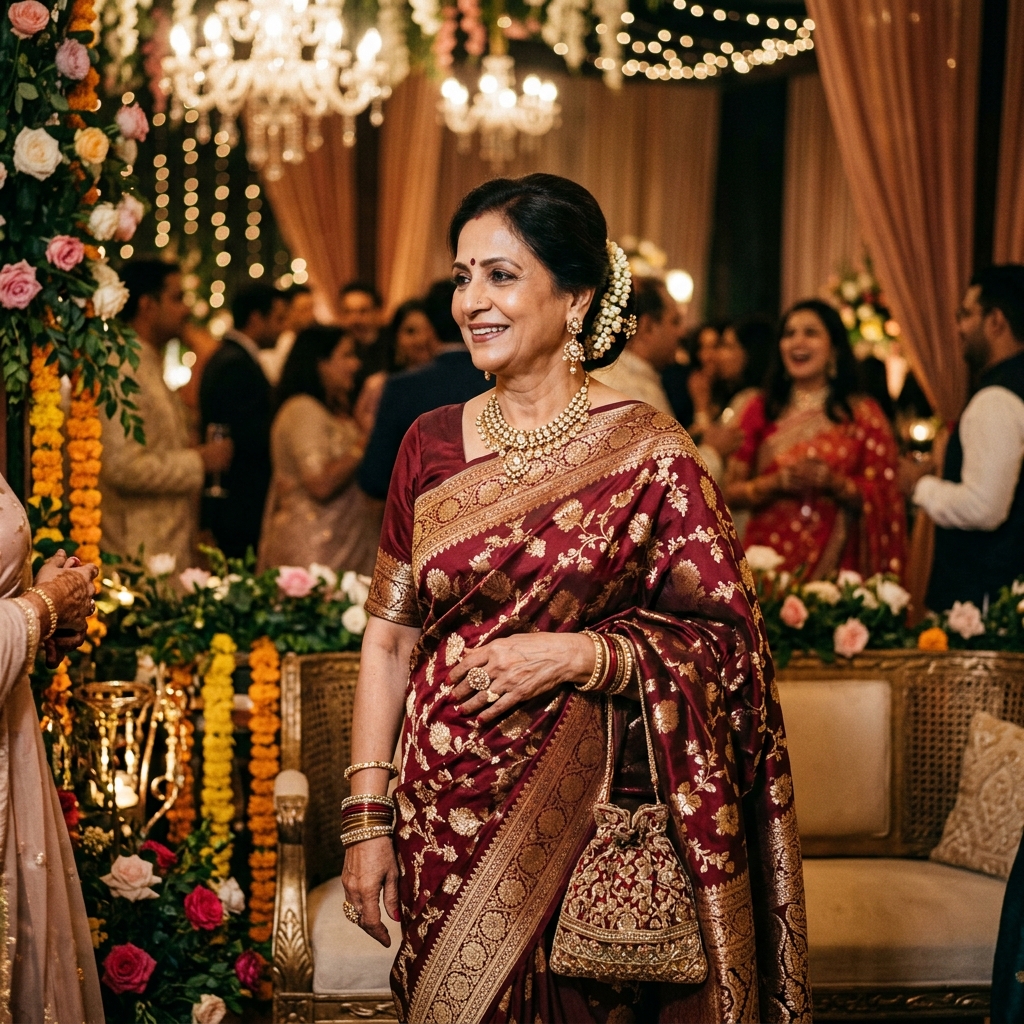
Banarasi Saree for Mother of the Bride: A Guide to Getting It Right
A comprehensive guide to choosing the perfect Banarasi saree for the mother of the bride, covering colors, weaves, and styling advice.
Types of Banarasi Silk: Katan, Georgette, Organza & Tissue Explained
Confused by Banarasi saree fabrics? A Varanasi weaver explains the exact difference in drape, weight, and styling for Katan, Georgette, Organza, and Tissue silk.