
How to Choose the Right Banarasi Saree for Every Season: A Practical Guide
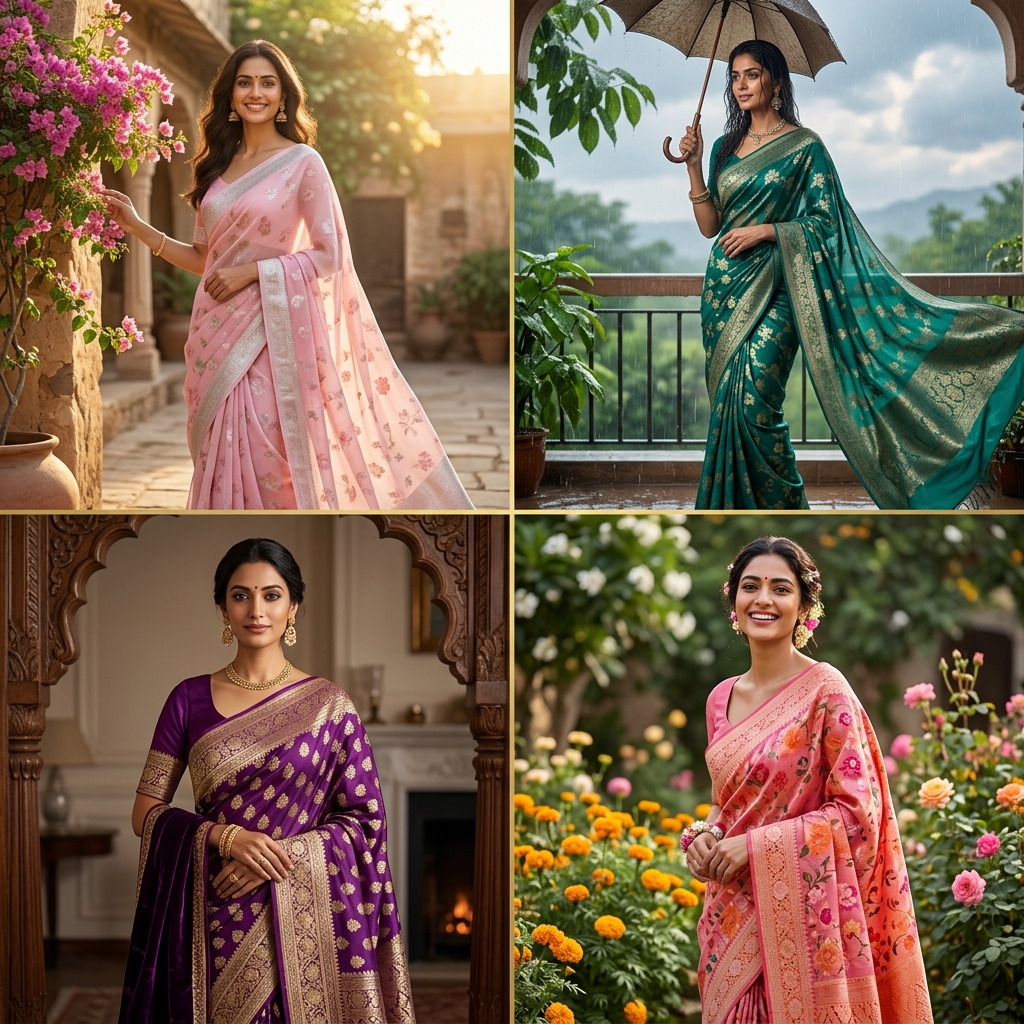
A Banarasi saree is never just fabric. It's silk that's passed through a weaver's hands for days, sometimes weeks, before it reaches you. But even heirloom silk still has to survive Delhi's May heat, a Mumbai monsoon, or a Varanasi winter wedding. So the question we hear most, from brides and boutique owners alike, isn't "which Banarasi saree is best" — it's "which one actually suits this weather, this event."
Here's the honest answer, the way we'd give it if you walked into our store in Chowk.
Why the Weave Matters More Than You Think
Banarasi isn't one fabric — it's a family of weaves, each with its own weight and drape. A dense Katan silk with heavy zari behaves nothing like a Khaddi Chiffon or a Banarasi Linen. Choosing by season doesn't mean stepping away from authenticity. It means picking the right weave within the tradition — one that's actually comfortable to wear.
Summer: Weaves That Breathe
Daytime summer weddings need silk that's light without losing the Banarasi character.
Good choices:
- Khaddi Georgette or Khaddi Chiffon — the same motifs and zari borders you'd expect, but on a soft, breathable base that doesn't cling
- Banarasi Organza — light, with a beautiful sheen for daytime
- Linen — a newer favourite for summer, cool against the skin, still carrying handloom motifs
- Mulchedari — a lighter cotton-silk blend, easy to drape through long events
- Tissue Banarasi — shimmers well in daylight without feeling heavy
What to skip: Heavily worked Katan silk with dense zari for long outdoor daytime events — beautiful, but better saved for evening.
Styling tip: Keep the blouse unlined or half-lined, and let the zari be the statement — jewellery can stay simple.
Monsoon: Practical Without Losing Elegance
Monsoon doesn't mean giving up on silk altogether — it means choosing weaves that handle a little water and movement better.
Good choices:
- Banarasi Georgette — flows well, dries faster than heavy silk, and still carries proper zari work
- Banarasi Chiffon — light, elegant, forgiving if you get caught in a sudden shower
- Darker or jewel-tone shades — they hide water spotting far better than pastels
What to skip: Pale Katan silk for outdoor monsoon events — water spots on light silk are hard to reverse.
Care tip: Always carry the saree in a breathable muslin cover, never plastic. If it does get splashed, air dry it away from direct sunlight before storing.
Winter: Where Banarasi Silk Truly Belongs
Winter is when heavy Banarasi weaves feel indulgent instead of heavy — this is the season the craft was really made for.
Good choices:
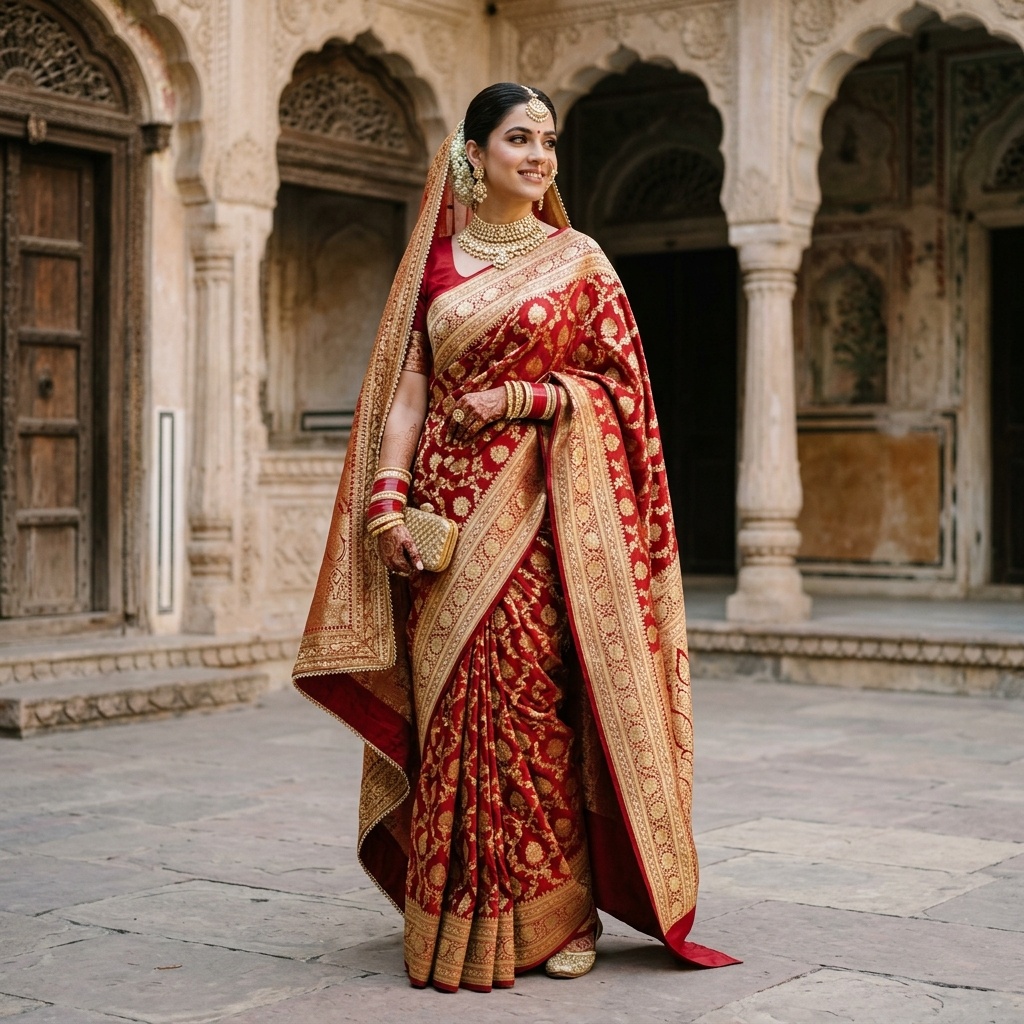
- Pure Katan silk with dense zari, Kadwa, or Jangla weave — rich, textured, and unmatched for bridal wear
- Shikargah weave — hunting-scene motifs woven with incredible detail, a real conversation piece
- Kimkhaab — heavy brocade, historically worn by royalty, and still one of the most opulent weaves we carry
- Rich jewel tones — maroon, deep green, wine, royal blue — that suit winter wedding lighting and gold jewellery
Styling tip: This is the season for layered jewellery, a contrast zari blouse, and a fuller, more traditional drape.
Spring and In-Between Weather
For late-February to early-April, when it's neither hot nor cold, a medium-weight Katan silk or a Banarasi cutwork saree works well — enough richness for a function, without full winter weight.
Quick Reference
- Bridal and winter wedding functions: Katan silk, Kadwa, Jangla, Shikargah, Kimkhaab
- Summer daytime functions: Khaddi Georgette, Khaddi Chiffon, Organza, Linen, Mulchedari, Tissue
- Monsoon festive events: Georgette, Chiffon, darker tones
- Everyday festive or office wear: Tissue or lighter Katan blends
Caring for Your Banarasi Saree
- Store folded in muslin, and refold every few months so the zari doesn't crease permanently
- Dry clean only, with someone experienced in real zari and silk brocade
- Keep away from direct sunlight during long storage — zari oxidizes, silk weakens
- Never spray perfume or deodorant directly on the fabric
Cared for this way, a Banarasi saree doesn't just last one wedding season. It becomes something you hand down.
Frequently Asked Questions
Which Banarasi saree is best for summer weddings? Lighter weaves like Khaddi Georgette, Khaddi Chiffon, Organza, Linen, or Mulchedari work best. They carry the same motifs and zari as heavier silk but sit much lighter on the body.
Can I wear pure Katan silk in summer? Yes, but it's better suited to indoor or evening events rather than long outdoor daytime functions, since dense zari work can feel heavy in heat.
Is Banarasi silk safe to wear in the rain? Pure silk can water-spot, especially in pale shades. For monsoon events, choose Georgette or Chiffon in darker tones, and carry the saree in a breathable cover.
What's the best Banarasi saree for a winter wedding? Pure Katan silk with Kadwa or Jangla weave, Shikargah, or heavy brocade Kimkhaab — all suited to winter's cooler weather and photograph beautifully under wedding lighting.
How do I know if a Banarasi saree is handloom, not powerloom? Genuine handloom sarees show slight irregularities in the weave, a heavier, more textured feel, and the zari work often mirrors on the reverse side since it's woven by hand. A trustworthy seller will always explain the weave and zari details when asked. (Learn more about genuine weaves in our About Our Craft guide).
Final Thought
Choosing a Banarasi saree by season isn't a compromise — it's the tradition working the way it always has. Varanasi's weavers have adapted Katan, Georgette, Linen, Khaddi, and Kimkhaab within the same motifs and techniques for decades, because Banarasi silk was always meant to be worn, not just kept in a box. At Shri Geeta Sarees, every saree we've curated since 1960 is chosen with that in mind — so whatever the season, there's a piece of handloom heritage ready to be worn, and eventually, passed down.
Continue Reading
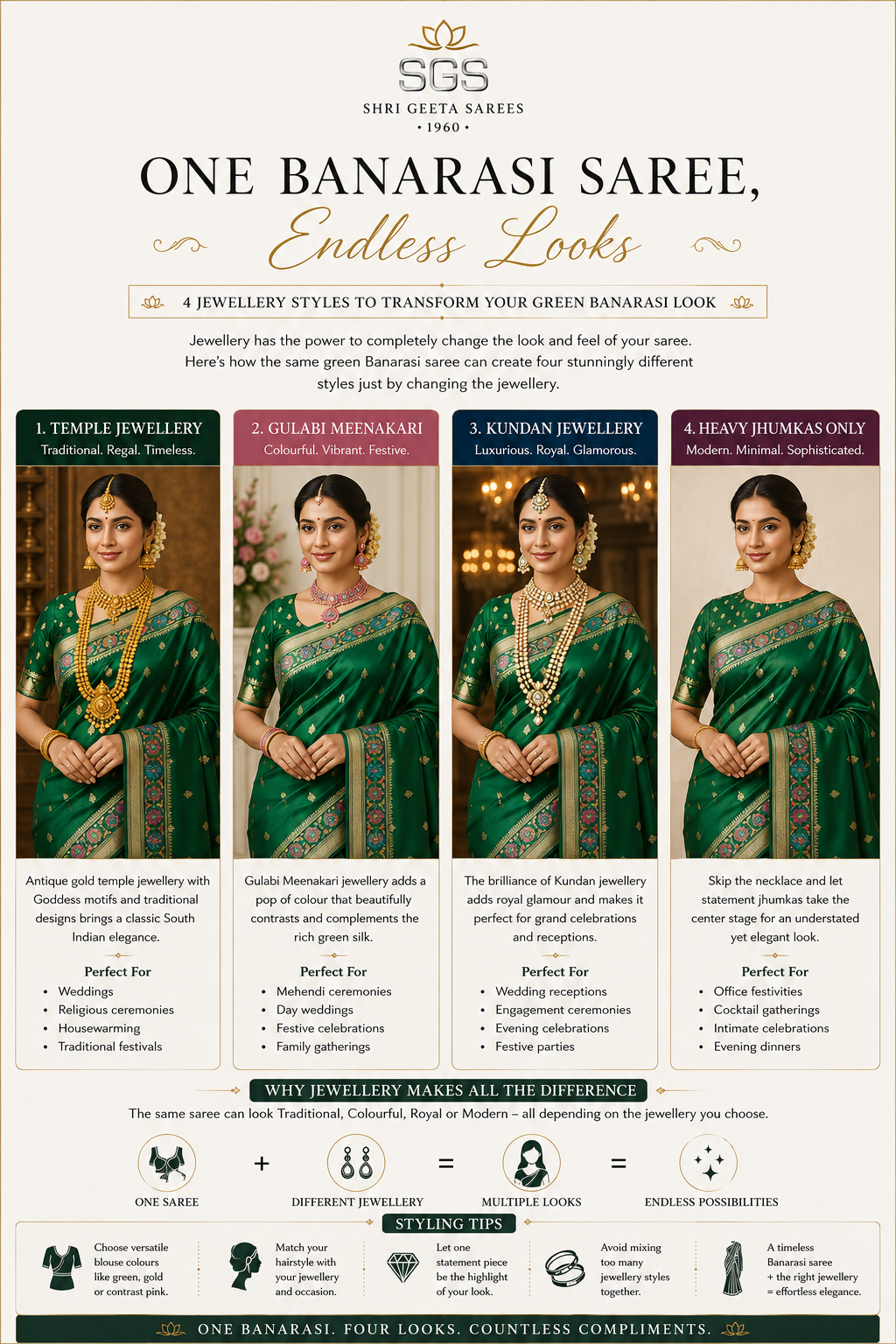
How One Banarasi Saree Can Create 4 Completely Different Looks
A beautiful Banarasi silk saree is one of the most versatile pieces in your wardrobe. Discover how to create four stunning looks just by changing your jewellery.
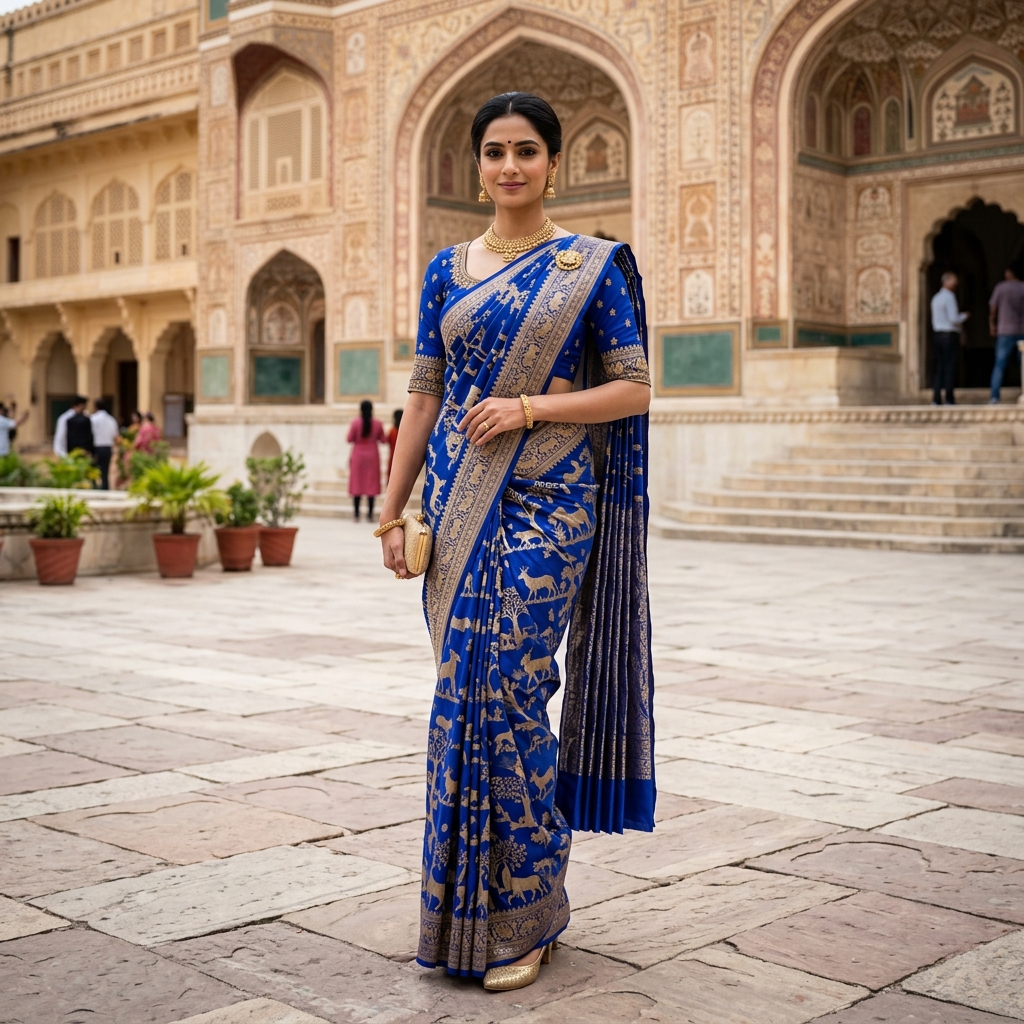
4 Elegant Ways to Drape a Banarasi Saree | Shri Geeta Sarees
Looking for new ways to wear your handwoven Banarasi saree? Discover 4 elegant and easy styling methods, from classic traditional to modern reception drapes.
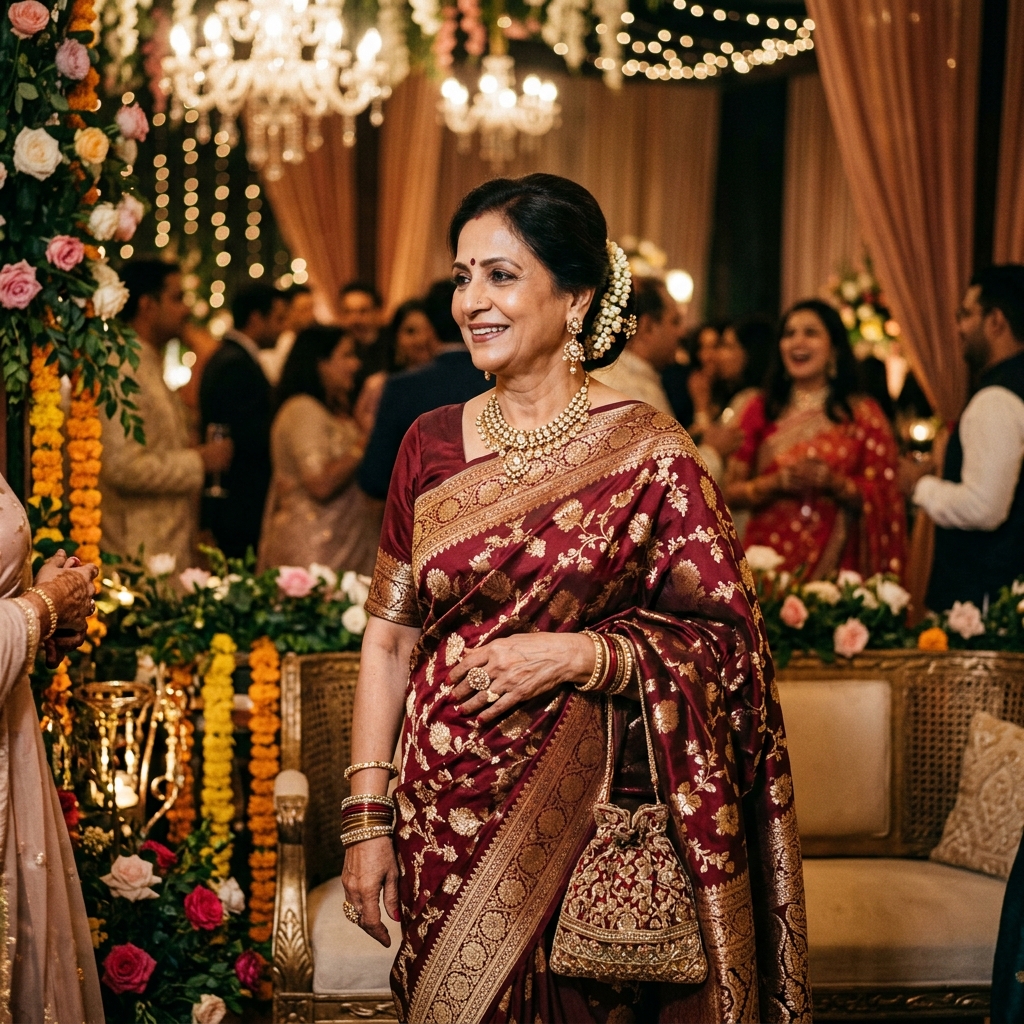
Banarasi Saree for Mother of the Bride: A Guide to Getting It Right
A comprehensive guide to choosing the perfect Banarasi saree for the mother of the bride, covering colors, weaves, and styling advice.
Types of Banarasi Silk: Katan, Georgette, Organza & Tissue Explained
Confused by Banarasi saree fabrics? A Varanasi weaver explains the exact difference in drape, weight, and styling for Katan, Georgette, Organza, and Tissue silk.