
The Heirloom Guide: How to Choose the Perfect Banarasi Saree for Gifting
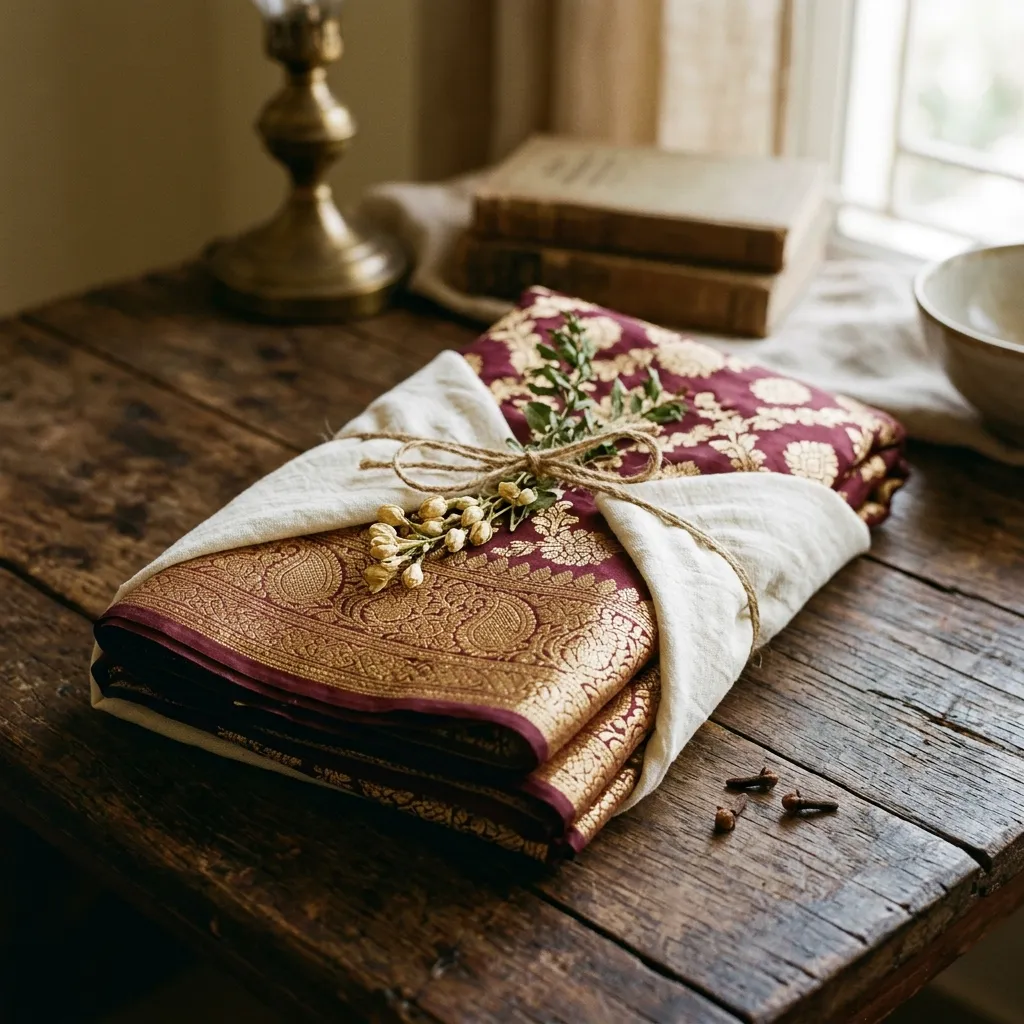
There is a distinct weight to a pure Banarasi saree. When you lift a handwoven Katan silk drape, you are holding weeks of silent, rhythmic labor on a wooden pit loom.
Gifting a Banarasi is not like buying a piece of fast fashion. It is the transfer of an heirloom. Whether you are a bride selecting a saree for your mother-in-law, or a family curating a wedding trousseau, the saree you choose will likely outlive the person wearing it. It will be passed down, refolded, and worn by the next generation.
But the sheer variety of weaves coming out of Varanasi can be overwhelming. If you walk into our Chowk showroom today, you will see hundreds of textures, motifs, and fabrics. How do you choose the right one to gift?
Here is exactly how we guide families through this process at Shri Geeta Sarees.
Choose the Fabric Based on the Drape, Not Just the Look
The biggest mistake buyers make is choosing a saree based entirely on the photographs, without considering who has to wear it for eight hours in an Indian summer.
For Mothers and Grandmothers: Older women almost always prefer a fabric that breathes and falls softly. Heavy, stiff silks can be exhausting to carry. If you are gifting your mother or mother-in-law, bypass the stiff organzas. Look strictly at Khaddi Georgette or Pure Banarasi Cotton. Khaddi Georgette offers the rich, metallic zari borders of a traditional Banarasi, but the base fabric flows like water. It drapes close to the body, making the wearer look elegant without adding bulk.
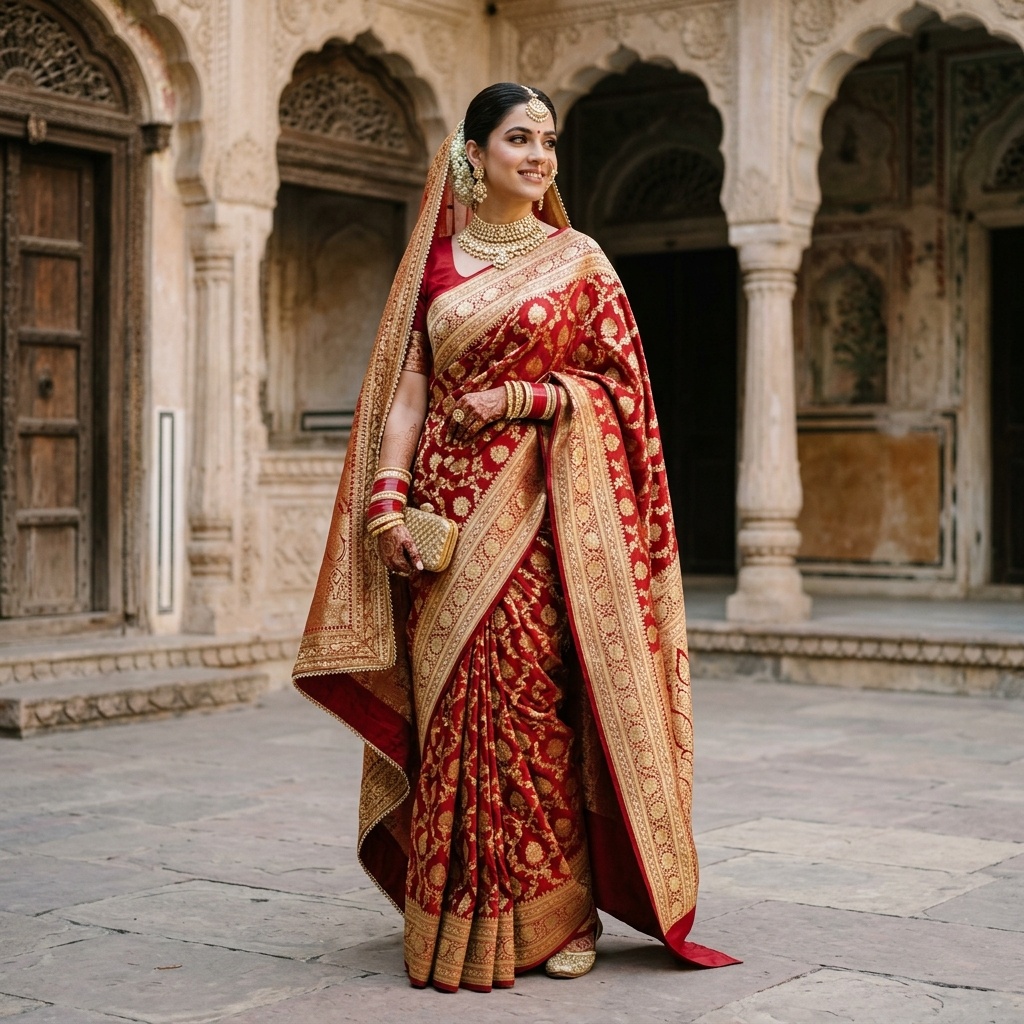
For Brides and Young Relatives: If the gift is for a wedding trousseau, Katan Silk is the undisputed standard. Katan is woven by twisting multiple pure silk threads together to create a dense, highly durable fabric. It holds structure beautifully, making it perfect for the sharp pleats required in modern bridal draping. Look for the Kadhua weave—an intricate technique where each motif is woven individually into the fabric, leaving no loose threads on the reverse side.
The Language of Auspicious Colors
Color in Indian textiles is rarely accidental. When gifting for a wedding or milestone, the color you choose carries cultural weight.
- Rani Pink & Crimson Red: The traditional colors of fertility and celebration. Always appropriate for a new bride.
- Deep Aubergine (Jamuni) & Emerald Green: These rich jewel tones are highly favored for mothers-in-law. They command respect and look striking in evening lighting without being aggressively loud.
- Tissue Gold & Silver: If you want to gift something undeniably opulent, Tissue Banarasi—where metallic zari is woven directly into the warp and weft—turns the wearer into walking light. It is a spectacular choice for a milestone anniversary.
How to Guarantee You Aren't Gifting Plastic
Imagine gifting your mother what you believe is a pure silk Banarasi, only to realize years later it is machine-made polyester. It happens every day. Up to 90% of the "Banarasi" sarees sold online today are synthetic knockoffs woven on powerlooms.
If you are buying online, you must protect your investment. Authentic handloom silk has a distinct, organic irregularity. The reverse side of a pure handloom saree will look almost as neat as the front, especially in a Kadhua weave. Powerloom fakes often have a chaotic web of loose threads on the back.
More importantly, look at the seller's footprint. Do they have a physical presence in Varanasi? A heritage weaver will always tell you exactly what you are buying—whether the zari is tested silver or copper, and whether the silk is pure mulberry. We have operated from the same location in the old city since 1960 because trust takes decades to build and seconds to lose.
The Presentation: Throw Away the Plastic
When you finally hand over the gift, how it is packed matters as much as the weave. Never leave a pure silk saree in a plastic bag. Plastic traps humidity, causing the silk to rot and the real metal zari to oxidize and turn black.
Wrap the saree gently in an unbleached, white cotton muslin cloth. If you want to add a traditional touch of care, tuck a few dry cloves into the folds to naturally repel insects.
Gifting a pure Banarasi is a quiet promise of permanence. Choose the right fabric, demand pure handloom, and you aren’t just giving a garment—you are giving a piece of Indian history.
Continue Reading
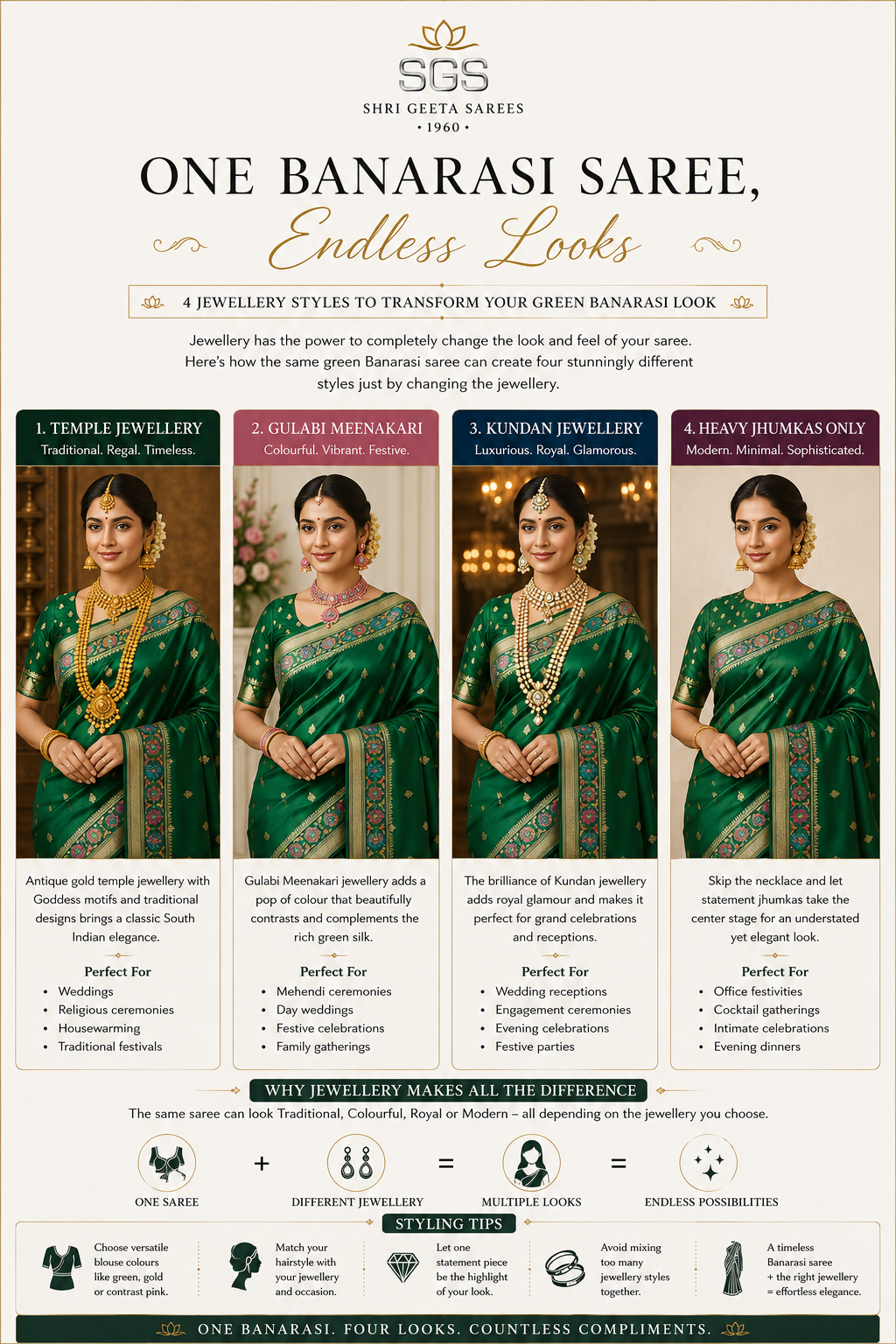
How One Banarasi Saree Can Create 4 Completely Different Looks
A beautiful Banarasi silk saree is one of the most versatile pieces in your wardrobe. Discover how to create four stunning looks just by changing your jewellery.
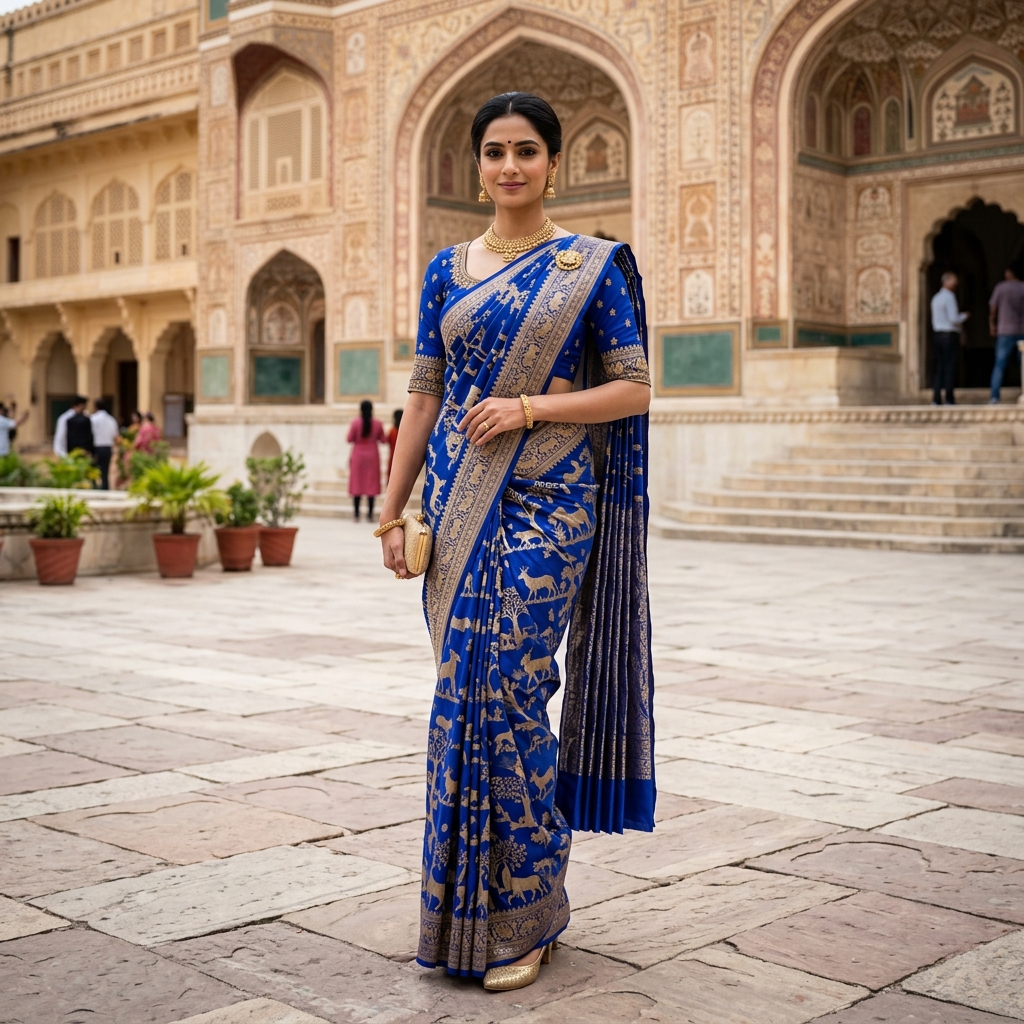
4 Elegant Ways to Drape a Banarasi Saree | Shri Geeta Sarees
Looking for new ways to wear your handwoven Banarasi saree? Discover 4 elegant and easy styling methods, from classic traditional to modern reception drapes.
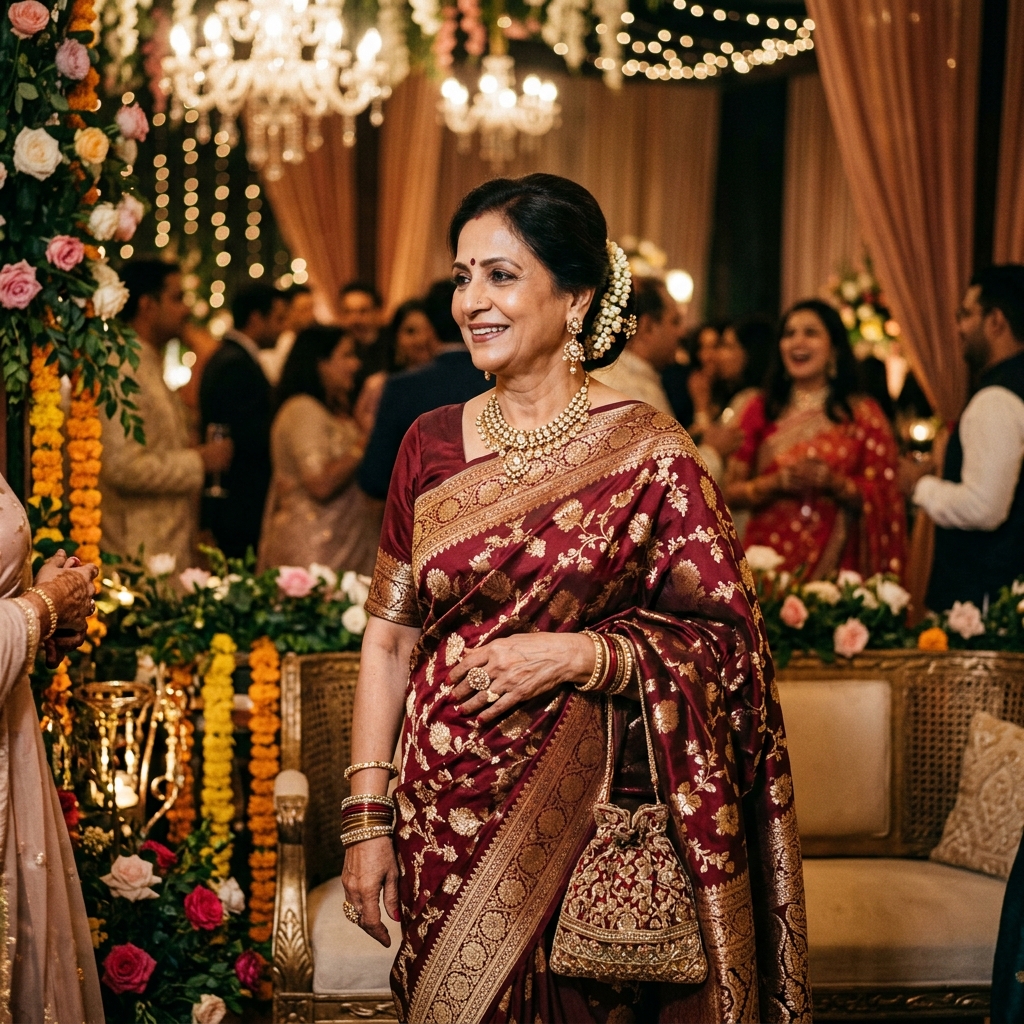
Banarasi Saree for Mother of the Bride: A Guide to Getting It Right
A comprehensive guide to choosing the perfect Banarasi saree for the mother of the bride, covering colors, weaves, and styling advice.
Types of Banarasi Silk: Katan, Georgette, Organza & Tissue Explained
Confused by Banarasi saree fabrics? A Varanasi weaver explains the exact difference in drape, weight, and styling for Katan, Georgette, Organza, and Tissue silk.