The Spiritual Significance of Wearing a Saree During Puja and Temple Visits
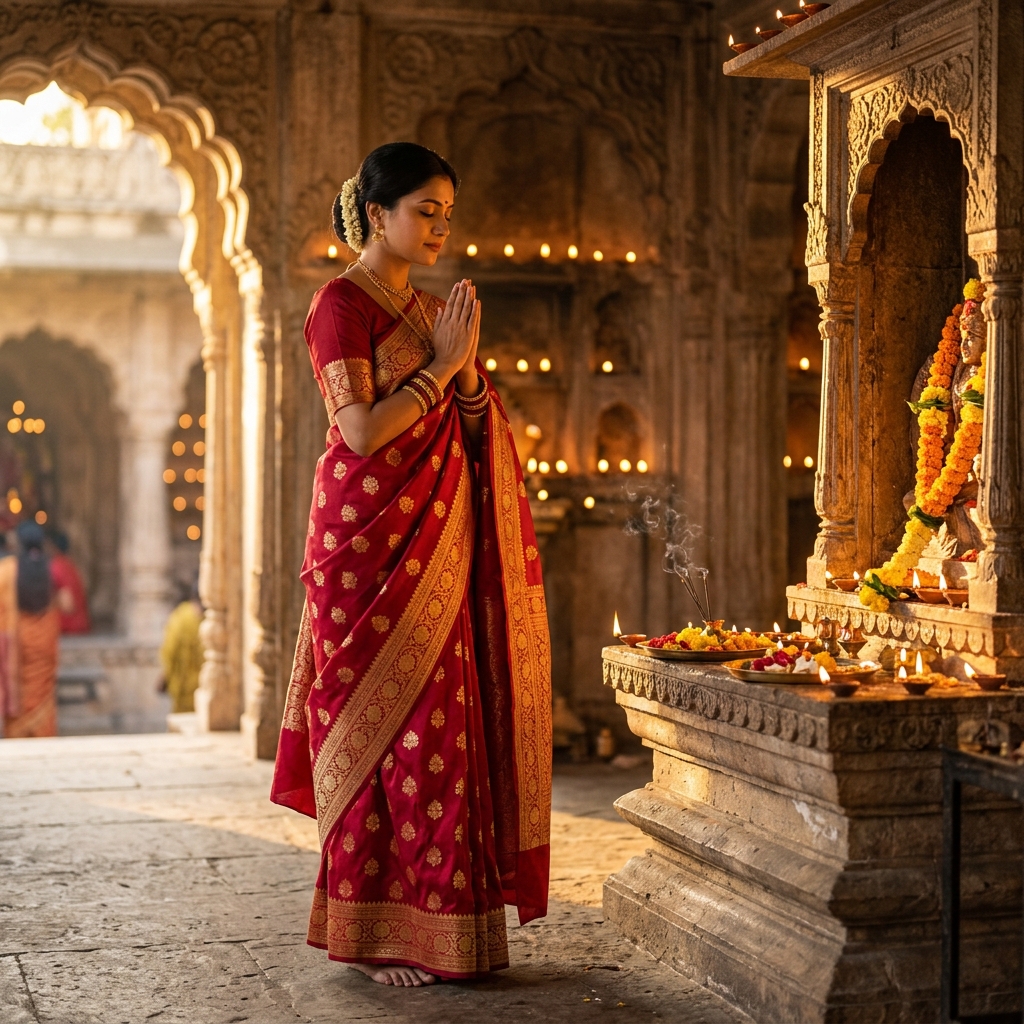
Have you ever wondered why so many women choose to wear a saree during pujas or while visiting temples?
A saree is not merely an elegant, unstitched piece of fabric—it carries a deep spiritual significance rooted in centuries of ancient Indian tradition and Vedic wisdom. Whether you view it through the lens of tradition, spiritual symbolism, or personal faith, the saree is a garment that beautifully harmonises the physical and spiritual realms.
At Shri Geeta Sarees, we believe that every authentic handloom saree weaves together cultural heritage and spiritual grace. Let’s explore the spiritual reasons behind wearing a saree for auspicious occasions.
The Power of Unstitched Fabric
In ancient Indian culture, unstitched garments are considered pure and untouched. The saree, being a single, continuous drape, is believed to allow the body's natural energy (prana) to flow freely without interruption. Its graceful, spiral drape mimics the natural movement of energy around us, creating a protective aura that shields the wearer from negative vibrations during sacred rituals.
Saree Pleats and the Seven Chakras
Traditionally, a saree is draped with exactly seven pleats. These pleats hold incredible symbolic power, representing the seven chakras (energy centres) of the human body.
When a saree is draped, these pleats are tucked securely between the navel and the Swadhisthana chakra (the sacral chakra). This precise placement is no coincidence—it is believed to help maintain balance, harmony, and centeredness, grounding the wearer's energy during deep meditation and prayer.
The Spiritual Role of the Pallu
The pallu, which elegantly drapes over the shoulder and is traditionally allowed to gently touch the ground or remain free-flowing, acts as a spiritual conduit. According to traditional beliefs, the pallu receives the auspicious energies of planetary forces like Jupiter and Ketu. This flow of energy symbolises the continuous reception of wisdom, spirituality, and divine blessings from the universe.
Pure Fabrics: The Essence of Sattvic Clothing
In ancient India, sarees were primarily woven from pure, natural fibres like cotton and silk. These materials are highly regarded as sattvic—meaning they promote purity, positivity, peace, and prosperity.
Wearing a pure silk or cotton saree to a temple isn't merely an aesthetic choice; it’s a spiritual one. Sattvic fabrics naturally repel impurities and absorb the positive vibrations generated by mantras, incense, and temple bells. This is why authentic, handcrafted silk sarees remain the most preferred attire for religious ceremonies and weddings.
Preserving the Legacy with Shri Geeta Sarees
The saree wraps within itself centuries of ancient Vedic wisdom, cultural heritage, and timeless elegance. By choosing to wear a saree for your pujas, you are not just embracing tradition, but also inviting harmony and positive energy into your life.
At Shri Geeta Sarees, we are committed to preserving this beautiful legacy. We bring you authentic, pure handloom sarees that honour our rich traditions and can be cherished for generations to come. Explore our collection of pure silk Banarasi sarees and drape yourself in tradition and grace for your next auspicious occasion.
Continue Reading
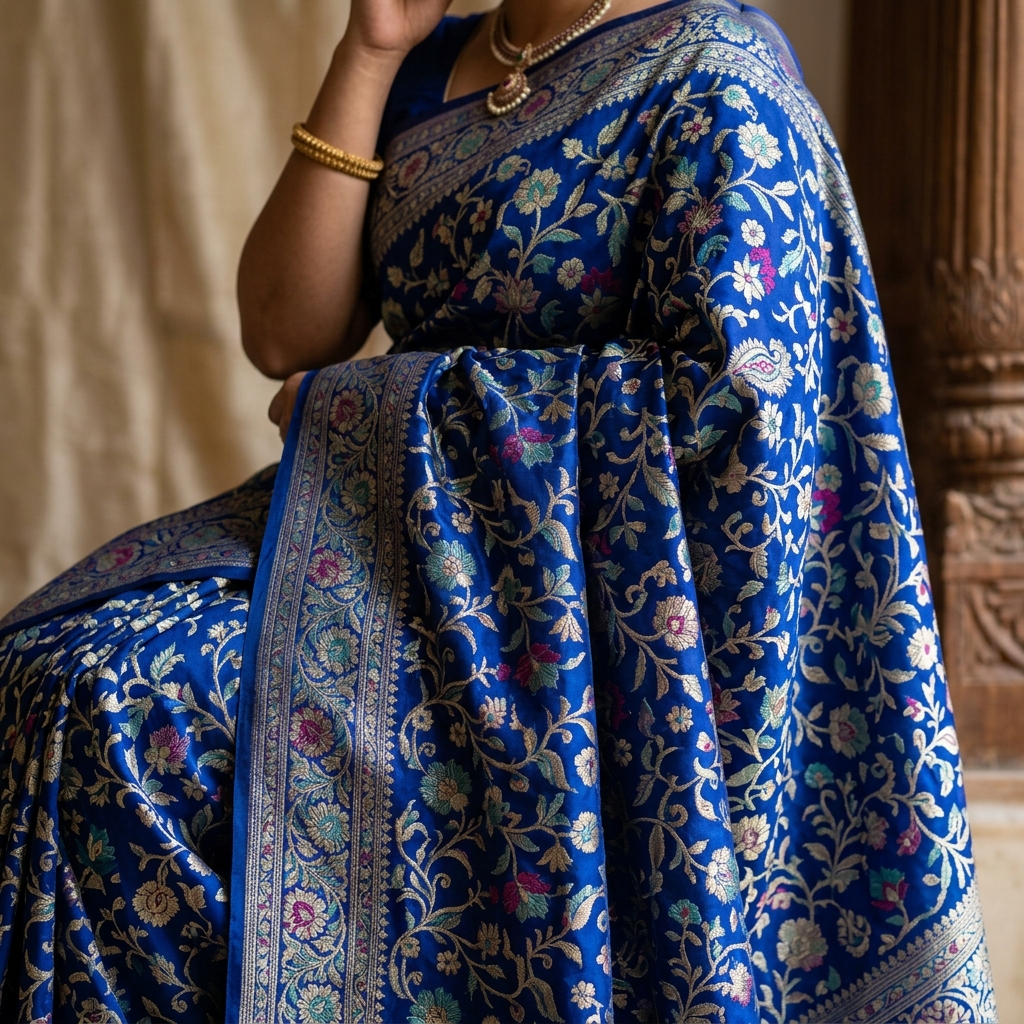
What is Fekwa (Fakua/Cutwork) in Banarasi Sarees?
Learn about Fekwa (or Fakua/Cutwork), an authentic Banarasi weaving technique that creates beautiful floral motifs and jaal patterns. Find out why it's more affordable without compromising quality.
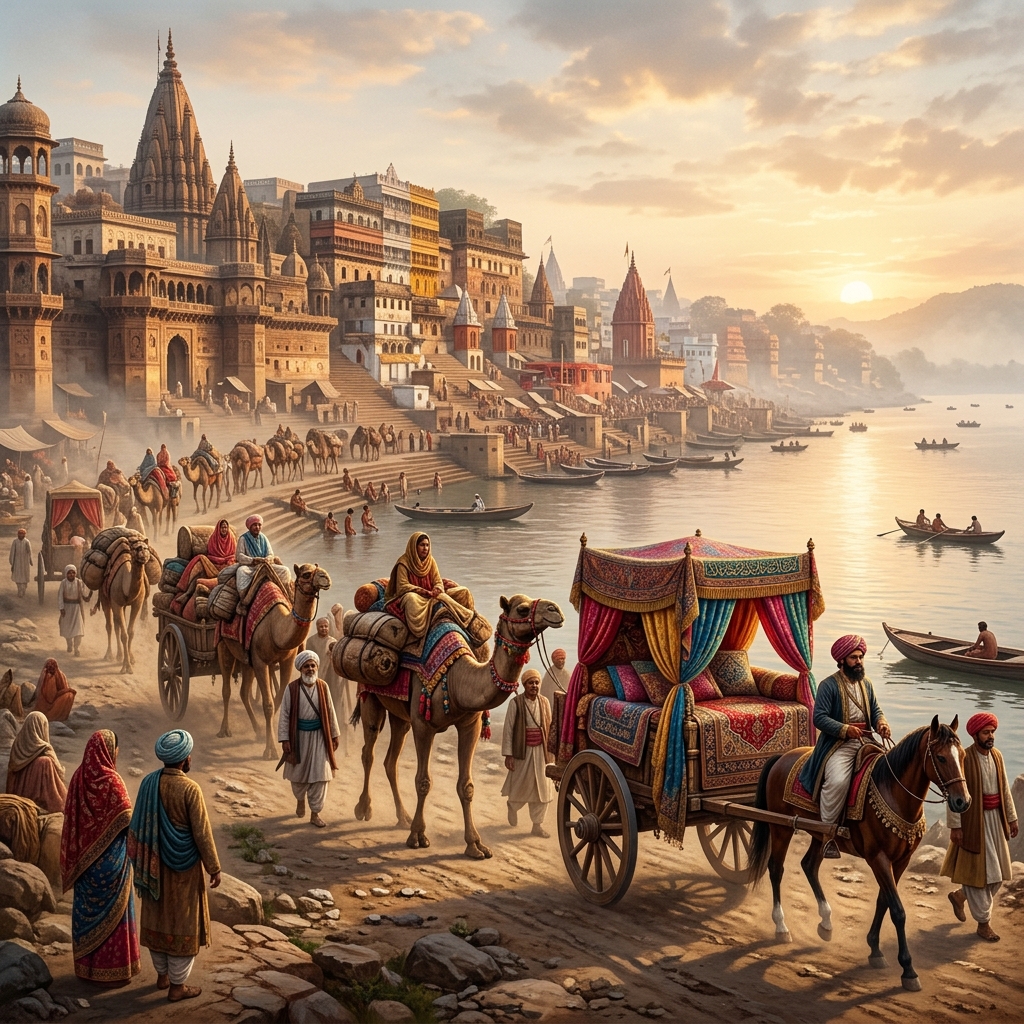
The Silk Route Through Varanasi: History of Banarasi Weaving
Trace the centuries-old journey of silk into Varanasi — from ancient trade routes to Mughal courts to the handloom houses of today.
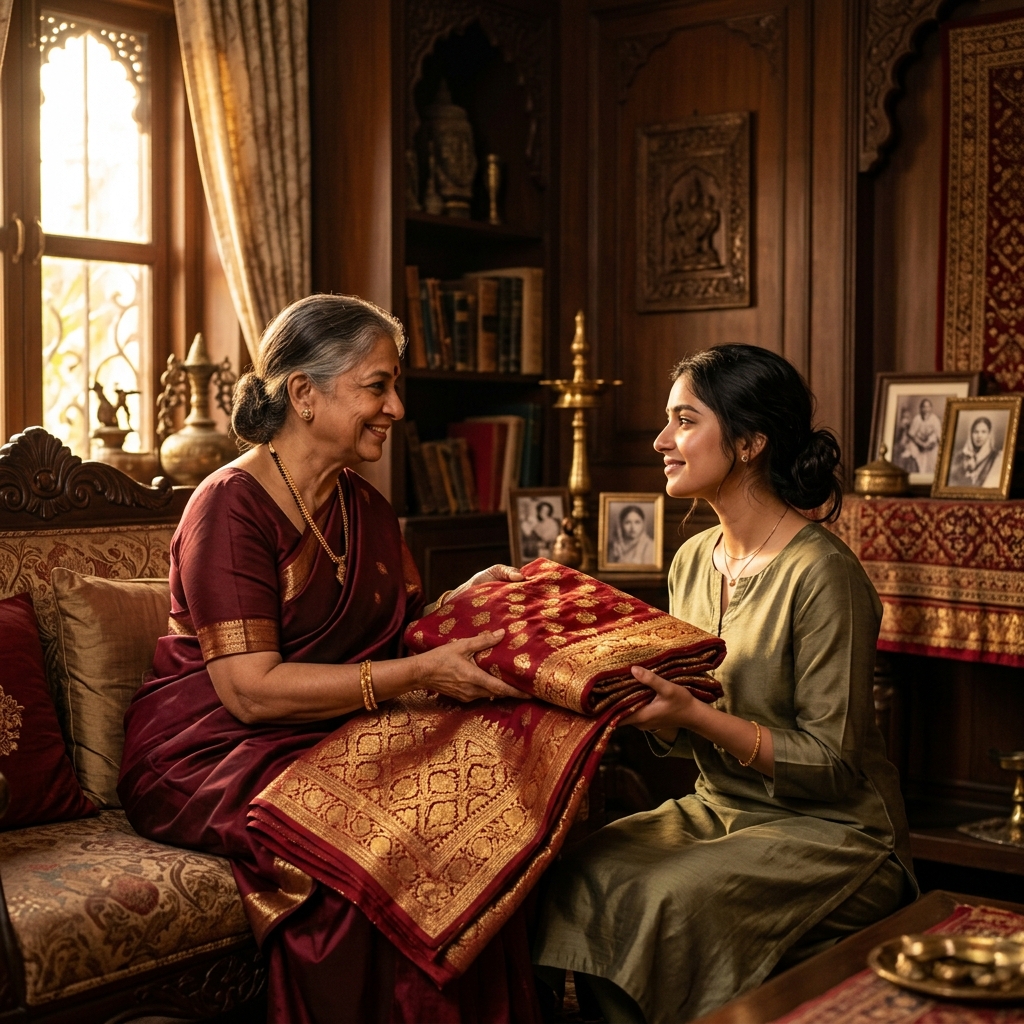
The Banarasi Saree as a Family Legacy: An Heirloom Woven in Silk
Explore the tradition of passing down Banarasi sarees, the craftsmanship that makes them endure, and how to preserve a vintage Banarasi silk saree as a family legacy.
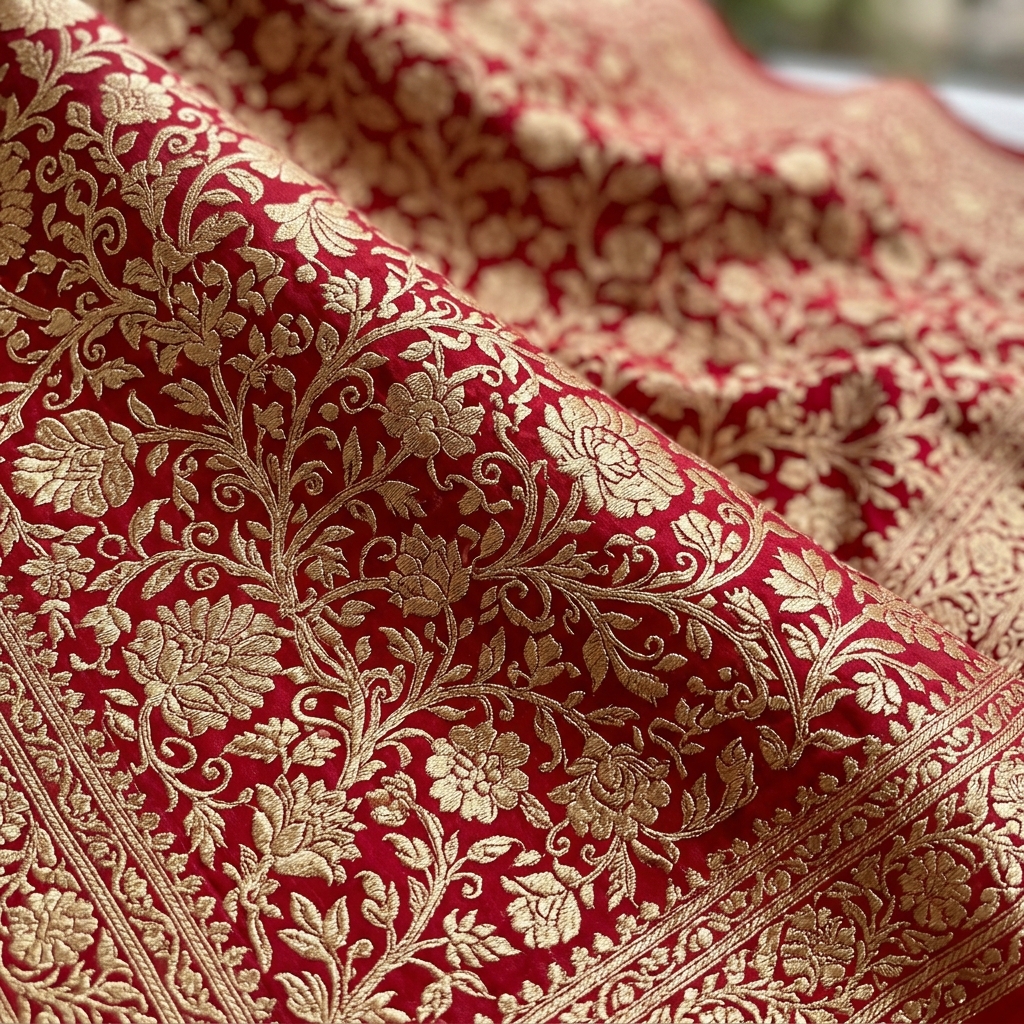
What is a Banarasi Saree Motif? A Guide to Buta, Jaal, and Paisley Patterns
Understand the language of Banarasi saree motifs — from the mango-shaped buta to the trellis-like jaal. A weaver's guide to reading pattern, symbolism, and craft.
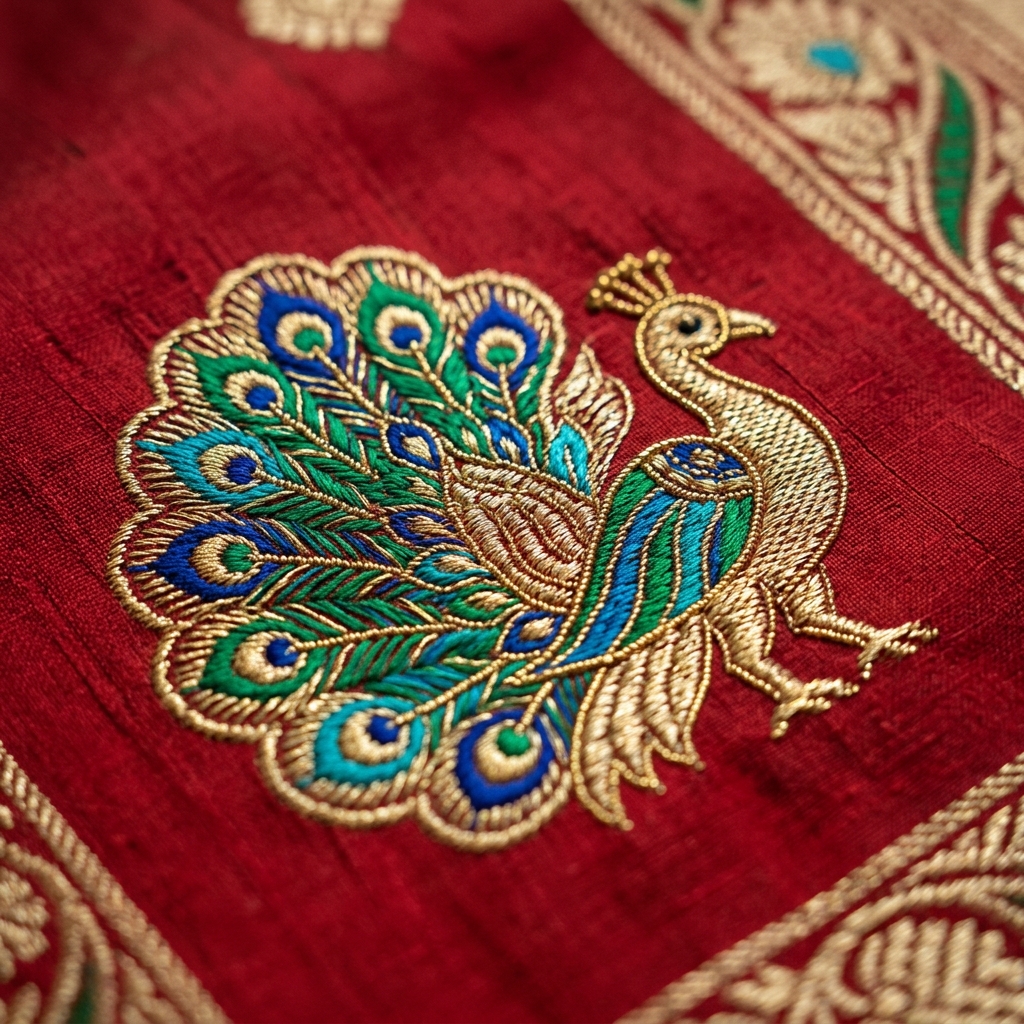
What is a Kadhua Banarasi Saree?
Discover the art of Kadhua Banarasi sarees — individually woven motifs, no loose threads, and an embossed 3D finish. Learn about Meenakari vs Sonarupa and why Kadhua is the pinnacle of Banarasi craftsmanship.