The Craft Story: Shikargah Saree
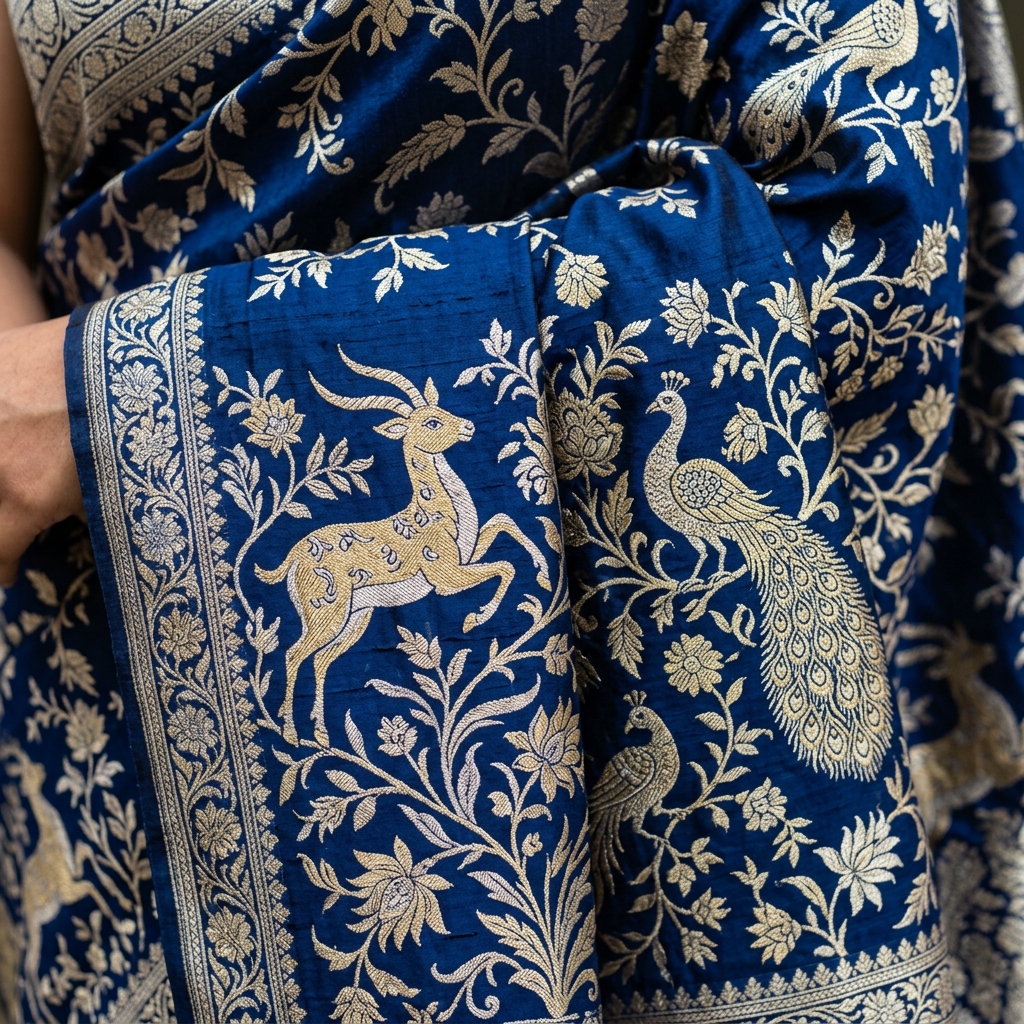
The Craft Story: Shikargah Banarasi Saree
In the grand tapestry of Varanasi handloom traditions, the Shikargah Banarasi saree represents one of the most intellectually ambitious, visually breathtaking, and historically rich creations ever woven by master artisans.
While most Banarasi textiles focus on floral lattices (jaals) and symmetrical geometric vines, the Shikargah breaks all conventions by transforming six yards of pure silk into a living, breathing royal forest landscape.
The Royal Origins: Persian Tapestries in Mughal Varanasi
The word Shikargah originates from Persian: Shikar (hunt) and Gah (place or ground), translating to "royal hunting scene."
During the 16th and 17th centuries, Mughal emperors commissioned court weavers to reproduce the dense forest narratives of Persian miniature paintings into ceremonial garments. Varanasi’s master weavers embraced this challenge, developing specialized naksha drafting techniques to weave dynamic animal forms, mounted riders, and intricate foliage into pure Katan silk.
Anatomy of a Shikargah Weave: Reading the Motifs
A true Shikargah is a visual narrative. As you look across the drape from the skirt pleats to the heavy pallu, you will discover a symphony of classical wildlife and floral motifs:
| Motif Element | Cultural Symbolism | Weaving Complexity |
|---|---|---|
| Gaja (Elephant) | Royal sovereignty, strength, and auspicious wisdom | High density zari with fine trunk and tusk detailing |
| Mayura (Peacock) | Divine grace, romantic beauty, and eternal joy | Woven in Sonarupa (gold and silver zari alloy) |
| Harina (Deer) | Swift agility, gentleness, and forest purity | Delicate micro-weaving embedded within floral foliage |
| Vyaghra / Shardula (Tiger) | Valour, martial prowess, and imperial authority | Dynamic posture woven across the main border and pallu |
| Vriksha / Jaal (Forest Canopy) | Abundance, interconnected life, and nature's shelter | Interlocking banyan and mango branches holding the animals |
The Weaving Discipline: How a Master Shikargah is Made
Crafting an authentic Shikargah is one of the most demanding achievements in handloom weaving:
- Intricate Naksha Drafting: Every animal's posture and muscle contour is mapped onto thousands of grid intersections.
- Kadhua Handloom Execution: Master artisans use the Kadhua Weave Technique to weave each animal motif independently, ensuring no loose or floating threads on the reverse side.
- Multi-Month Timeline: Due to the immense density of motifs, an authentic handloom Shikargah typically requires 90 to 180 days of continuous loom work.
Styling and Preserving a Shikargah Saree
- Blouse Recommendation: Because the saree is densely patterned, wear a solid, deep-toned silk blouse (such as midnight navy, emerald, or crimson) with a simple zari border.
- Jewellery: Pair with statement Polki or heritage Temple jewellery that reflects the antique grandeur of the weave.
- Preservation: Store wrapped in pure unbleached muslin, refold every few months, and strictly dry clean only.
Discover our curated heirloom masterweaves at Shri Geeta Sarees, Varanasi's trusted home of authentic Banarasi silks since 1960.
Continue Reading
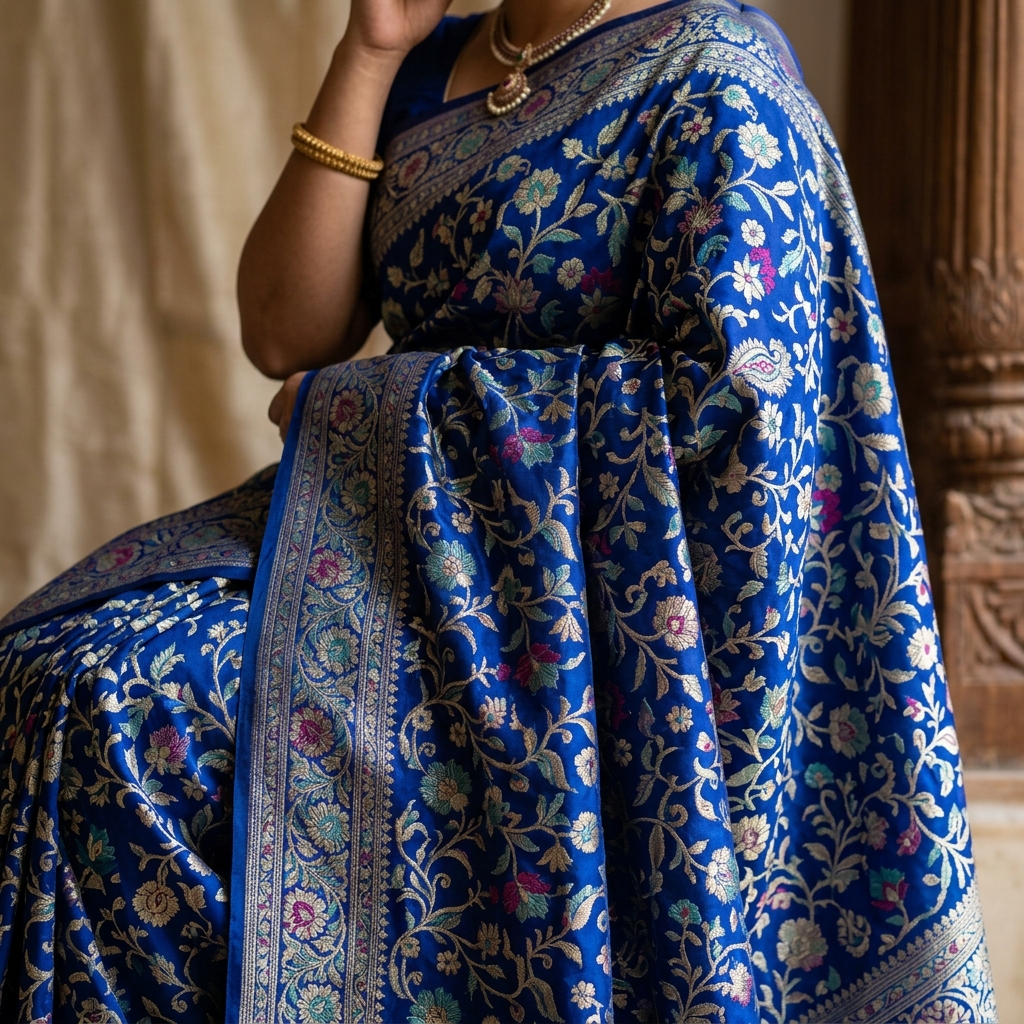
What is Fekwa (Fakua/Cutwork) in Banarasi Sarees?
Learn about Fekwa (or Fakua/Cutwork), an authentic Banarasi weaving technique that creates beautiful floral motifs and jaal patterns. Find out why it's more affordable without compromising quality.
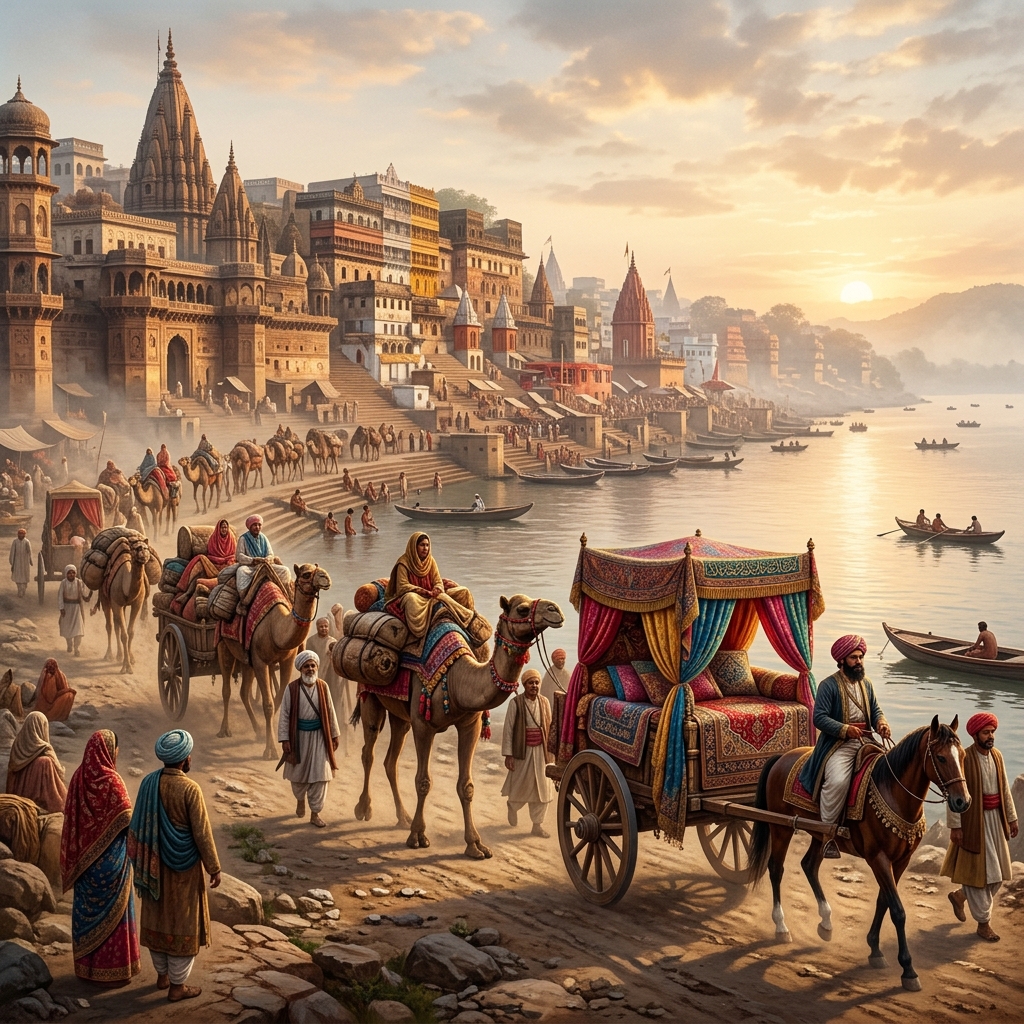
The Silk Route Through Varanasi: History of Banarasi Weaving
Trace the centuries-old journey of silk into Varanasi — from ancient trade routes to Mughal courts to the handloom houses of today.
The Banarasi Saree as a Family Legacy: An Heirloom Woven in Silk
Explore the tradition of passing down Banarasi sarees, the craftsmanship that makes them endure, and how to preserve a vintage Banarasi silk saree as a family legacy.
What is a Banarasi Saree Motif? A Guide to Buta, Jaal, and Paisley Patterns
Understand the language of Banarasi saree motifs — from the mango-shaped buta to the trellis-like jaal. A weaver's guide to reading pattern, symbolism, and craft.
What is a Kadhua Banarasi Saree?
Discover the art of Kadhua Banarasi sarees — individually woven motifs, no loose threads, and an embossed 3D finish. Learn about Meenakari vs Sonarupa and why Kadhua is the pinnacle of Banarasi craftsmanship.