Rangkat Banarasi Saree: Guide to the Multi-Coloured Handloom Masterpiece
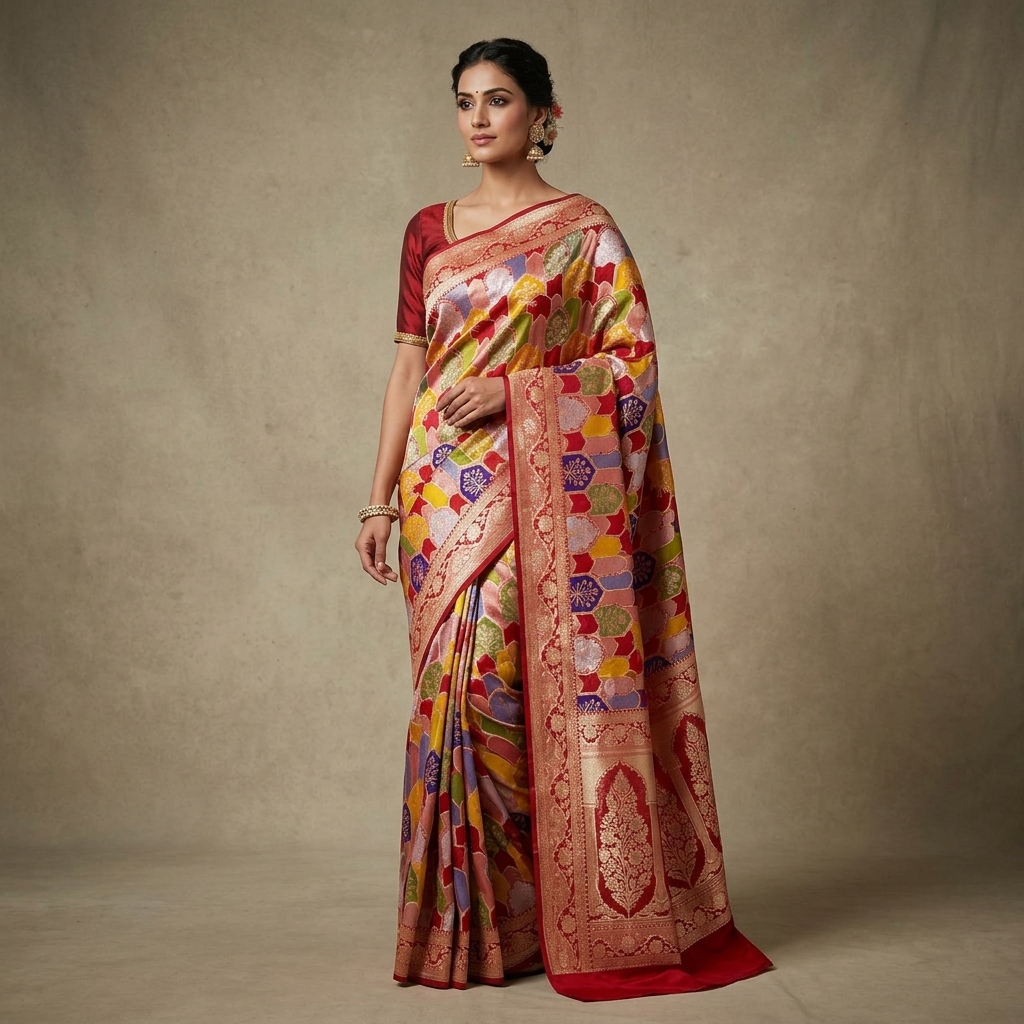
Rangkat Banarasi Saree: The Art of Weaving Colours into Silk
Among the illustrious repertoire of Banarasi handloom textiles, few creations command the reverence, awe, and collector fascination of the Rangkat Banarasi saree. While traditional Varanasi masterweaves are renowned for casting luminous gold and silver zari motifs across a rich, monochromatic silk ground, the Rangkat technique shatters this uniformity. It introduces vibrant, multi-hued colour transitions woven directly into the structural architecture of the textile.
An authentic handloom Rangkat is not merely a garment; it represents the absolute pinnacle of handloom mathematics, yarn dyeing, and loom discipline. In an era where powerlooms and rapid digital screen printing flood the market with cheap multi-colour imitations, understanding the genuine craft of Rangkat is essential for brides, textile connoisseurs, and heirloom collectors.
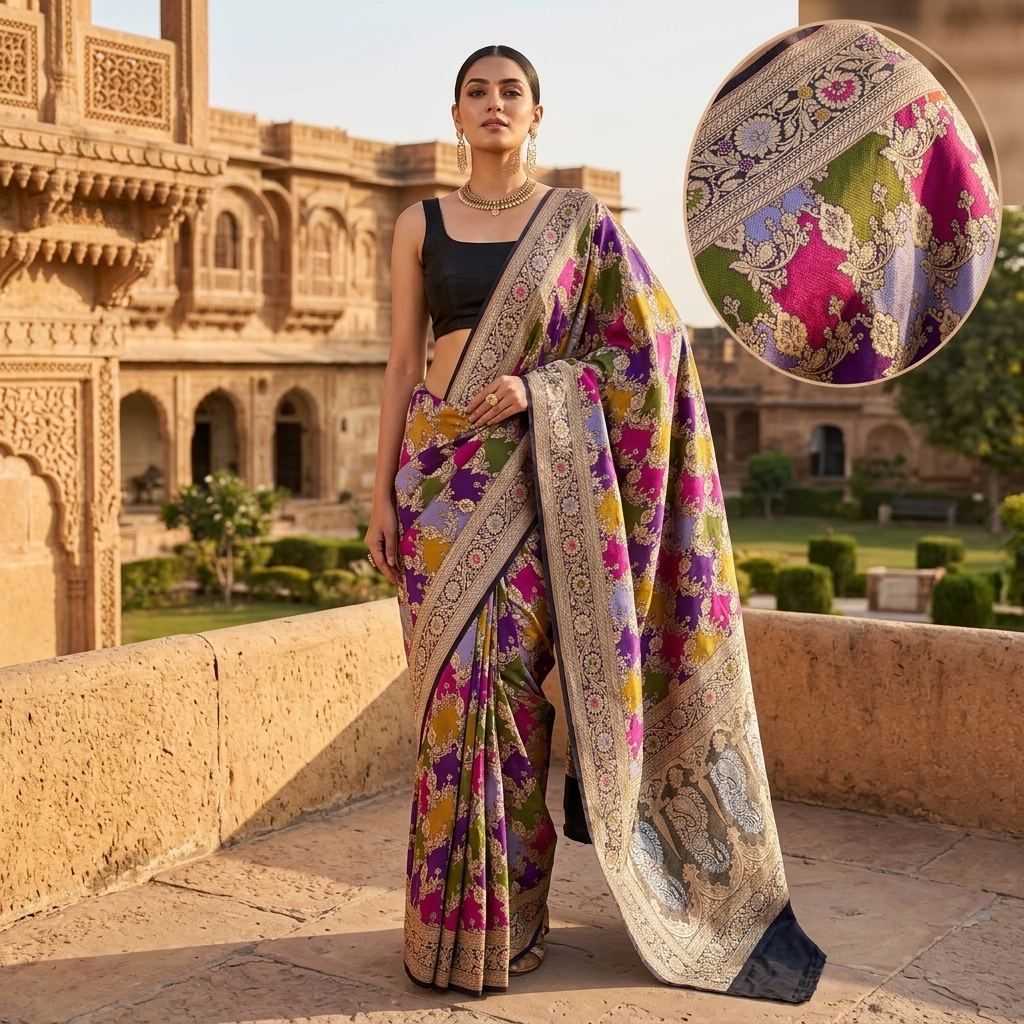
What Does "Rangkat" Mean? Etymology & Historical Origins
The word Rangkat is derived from two Hindustani root words: Rang (colour) and Kat or Khat (cut, dividing line, or segment). Broadly translated, it refers to the deliberate cutting, segmenting, and cross-blending of colours across the warp and weft of the saree.
Historically, the Rangkat weaving technique flourished during the 17th and 18th centuries under Mughal imperial patronage in Varanasi. Mughal royalty sought textiles that mimicked the kaleidoscopic florals of Kashmiri carpets and Persian miniature gardens while retaining the celebratory sheen of Banarasi silk. Master weavers (Ustaads) in the historic quarters of Varanasi—such as Madanpura, Chowk, and Alaipura—devised a method to dye individual silk yarns in precise mathematical intervals before mounting them onto the pit loom.
Over generations, this knowledge was passed down orally through select artisan families. Today, due to the immense physical stamina, mathematical precision, and time required, only a few master weaving clans in Varanasi retain the mastery to execute an authentic handwoven Rangkat.
The Extraordinary Weaving Mechanics: How Authentic Rangkat is Made
To understand why a handwoven Rangkat is celebrated as a museum-grade heirloom, one must explore the painstaking, multi-stage process required to bring a single piece to life.
1. Mathematical Warp Calculation (Tana Taiyari)
Before a single thread is dyed, the master artisan sketches the intended colour geometry on graph paper (Naksha). In a standard 5.5-metre saree with a 1-metre blouse, there are over 10,000 individual warp threads. The artisan calculates the exact point where each colour must transition—whether in chevron diagonal bands, rectangular colour blocks (charkhana), or cascading ombre stripes.
2. Segment Yarn Tie-Dyeing (Rangai)
Unlike regular sarees where yarn is dyed in a single vat, Rangkat warp bundles are tightly bound (tie-dyed) at precise measured intervals. The skeins are immersed sequentially in different botanical and natural dye vats. A single millimeter discrepancy during dyeing will cause colour blocks to misalign across the width of the saree, ruining months of preparation.
3. Loom Tensioning & Reed Alignment
Setting the pre-dyed warp on the pit loom is an engineering feat. Every single dyed segment across thousands of threads must align perfectly with adjacent threads across the reed. Even a 1% variance in loom tension will distort the crisp horizontal or diagonal boundary between colours.
4. The Kadhwa Weaving Execution
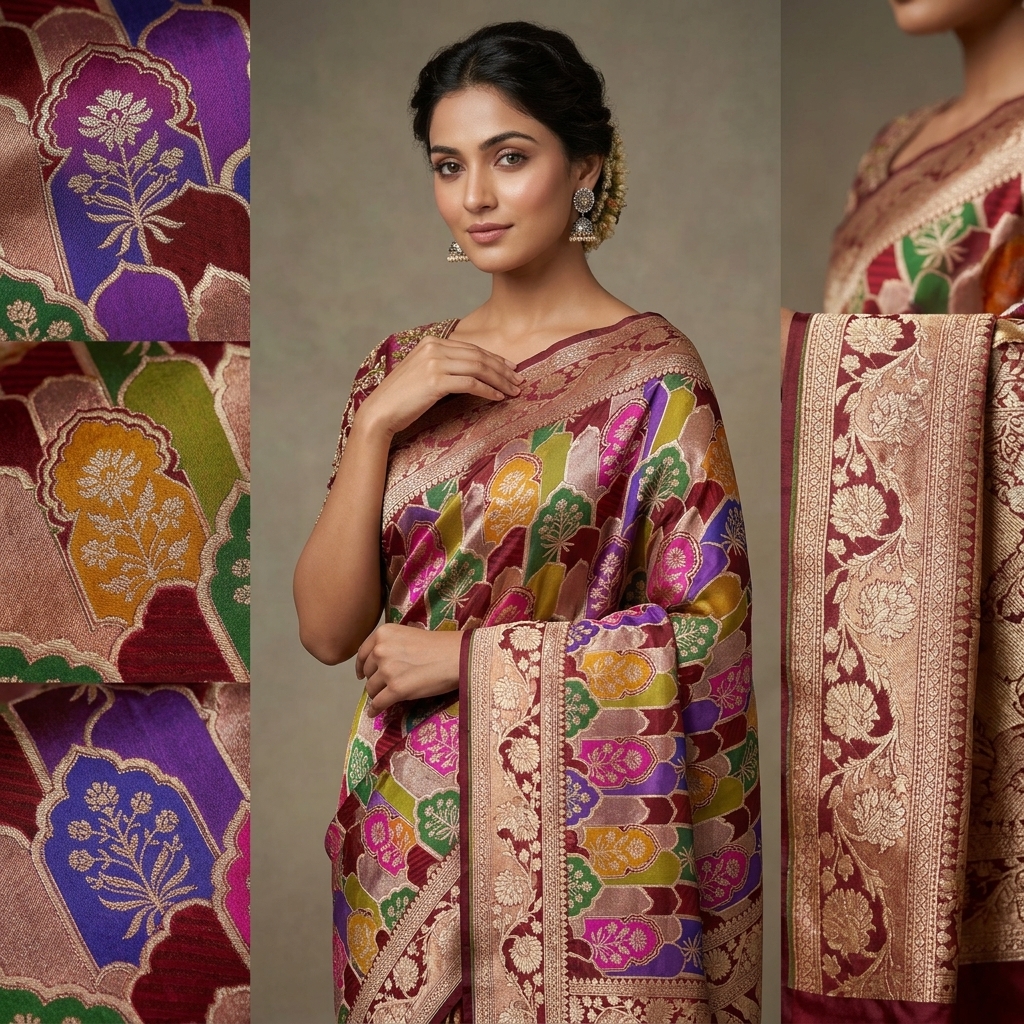
Once the warp is tensioned, the weaver utilizes the legendary Kadhua (Kadhwa) Weave technique. In Kadhwa weaving, each floral motif (buta or jaal) is engraved individually using dedicated wooden spools (tilis). There are no loose, floating threads on the reverse side. The artisan weaves gold or silver zari directly through the multi-coloured silk canvas, taking anywhere from 3 to 6 months of continuous, daily labor for a single saree.
Handloom Woven Rangkat vs Table-Dyed Rangkat: The Critical Difference
When browsing luxury boutiques or Varanasi markets, you will encounter two distinct traditions bearing the name "Rangkat": Authentic Loom-Woven Rangkat and Artisanal Table-Dyed Rangkat. Both possess artistic merit, but they represent entirely different levels of craft, production time, and investment value.
| Attribute | Authentic Handloom Woven Rangkat | Artisanal Table-Dyed Rangkat | Machine / Digital Printed Copy |
|---|---|---|---|
| Craft Process | Pre-dyed warp yarns woven on a traditional pit loom with Kadhwa motifs | Plain woven white/cream silk saree hand-painted with dye brushes on a 30-ft table | Inkjet or rotary roller printed on powerloom fabric |
| Colour Demarcation | Razor-sharp, geometric, and woven directly into the yarn structure | Soft, organic, watercolour-like bleed between colour bands | Flat surface print without yarn penetration |
| Reverse Side | Clean weave with locked zari motifs; distinct colour blocks visible on both sides | Backside matches front; zari is embedded before dyeing so zari may carry slight tint | Messy floating threads or synthetic white backing |
| Production Time | 90 to 180 days on the loom | 7 to 14 days per piece | 10 to 15 minutes |
| Weaving Complexity | Museum-grade; requires master ustaad | High artisanal skill in manual brush blending | Automated mass manufacturing |
| Price Benchmark | ₹50,000 to ₹1,75,000+ | ₹12,000 to ₹28,000 | ₹2,500 to ₹6,500 |
| Heirloom Longevity | Multi-generational (50+ years without color degradation) | 15–25 years with gentle dry-cleaning care | Fades rapidly after 2–3 washes |
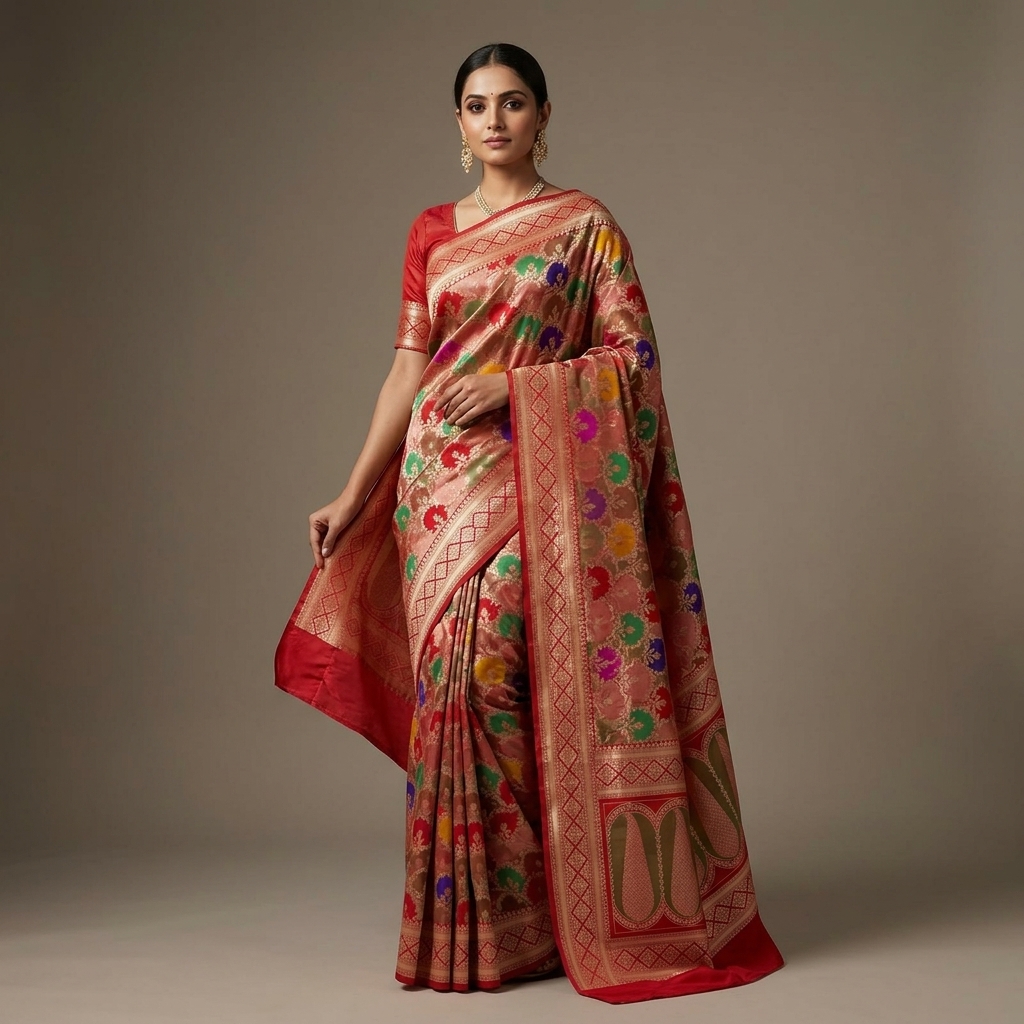
5-Point Authentication Checklist: How to Identify a True Handloom Rangkat
If you are investing in a bridal or heirloom Rangkat Banarasi saree, use this 5-point verification framework:
- Inspect the Reverse Side (Ulta Palla): An authentic handwoven piece crafted in Kadhwa weave has zero loose, floating threads running between motifs. Every leaf and petal is hand-locked into the warp.
- Examine the Colour Transitions Under Sunlight: In a loom-woven Rangkat, you can clearly trace individual warp threads changing colour at precise intersections. In counterfeit prints, the colour is merely sprayed onto the surface.
- Perform the Silk Purity Touch Test: Genuine Rangkat utilizes Pure Silk Katan or high-twist natural silk. It feels soft yet dense and structural, adjusting to body temperature, whereas synthetic blends feel slick and overly shiny.
- Inspect the Selvedge (Edges): Look at the side borders of the saree. True handlooms exhibit slight pin marks (karvat) where the fabric was tensioned on the wooden frame during weaving.
- Check Zari Tone: Master-crafted Rangkats feature genuine Sonarupa (gold and silver zari alloy) or tested silver zari. The zari exhibits a mellow, regal luster rather than a harsh, brassy yellow reflection.
Rangkat in Different Silk Weaves & Textures
While heavy bridal Rangkats are traditionally woven in foundational Pure Silk Katan, modern Varanasi artisans have adapted the multi-colour technique across diverse textures:
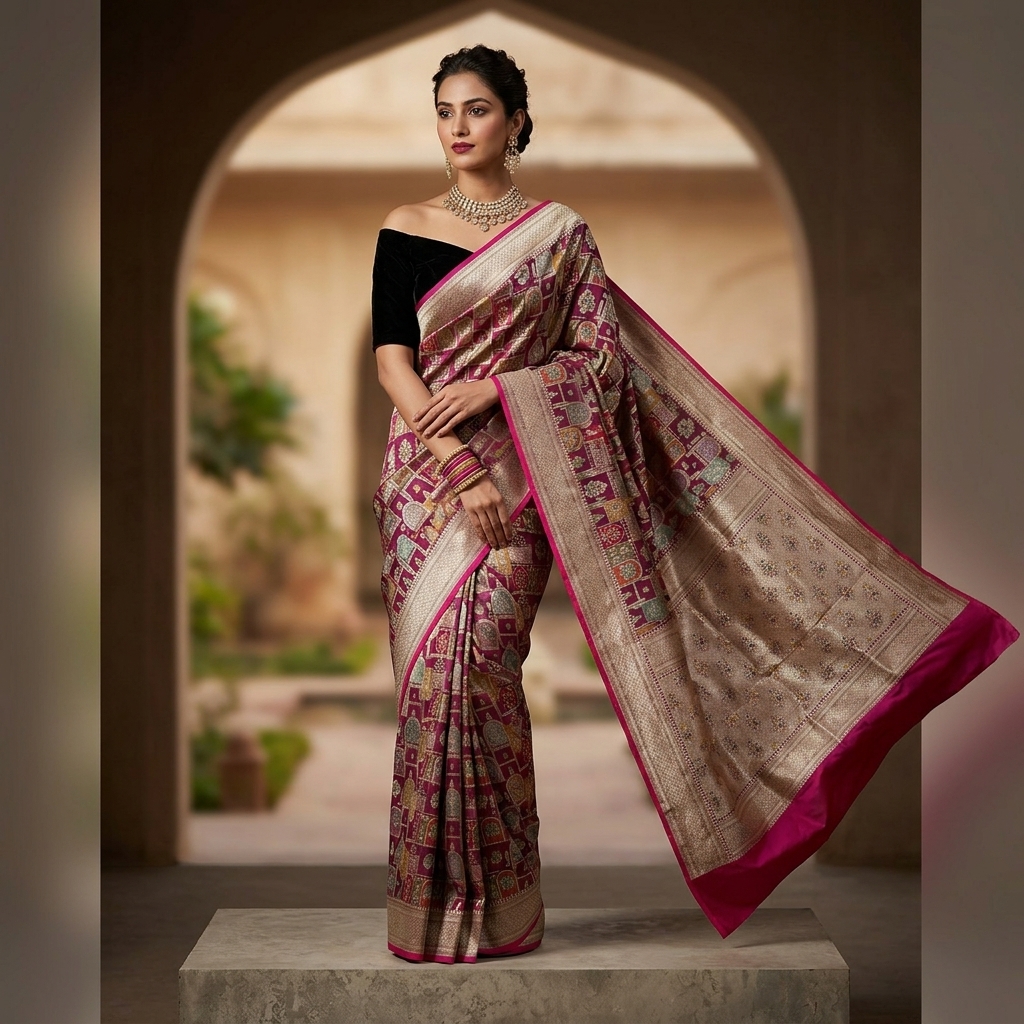
- Pure Silk Katan Rangkat – The definitive bridal standard. Dense, heavy, lustrous, and adorned with elaborate Banarasi Motifs like Jangla and Shikargah.
- Kora & Organza Silk Rangkat – Airy, semi-sheer, and architectural. Provides dramatic visual volume while remaining featherweight for summer soirees and daytime wedding ceremonies (explore our Organza vs Khaddi Chiffon Guide).
- Khaddi Chiffon & Georgette Rangkat – Exceptionally fluid and body-hugging. The soft colour transitions blend effortlessly across graceful pleats, making it a favorite for sangeet and cocktail nights.
- Tanchoi & Jamawar Rangkat – Intricate satin-weave backgrounds featuring multi-coloured floral vines woven without visible floating threads on the reverse.
How to Style a Rangkat Banarasi Saree
Because a Rangkat saree is an inherently vibrant, multi-coloured statement piece, styling requires thoughtful harmony so that elements complement rather than compete with the weave:
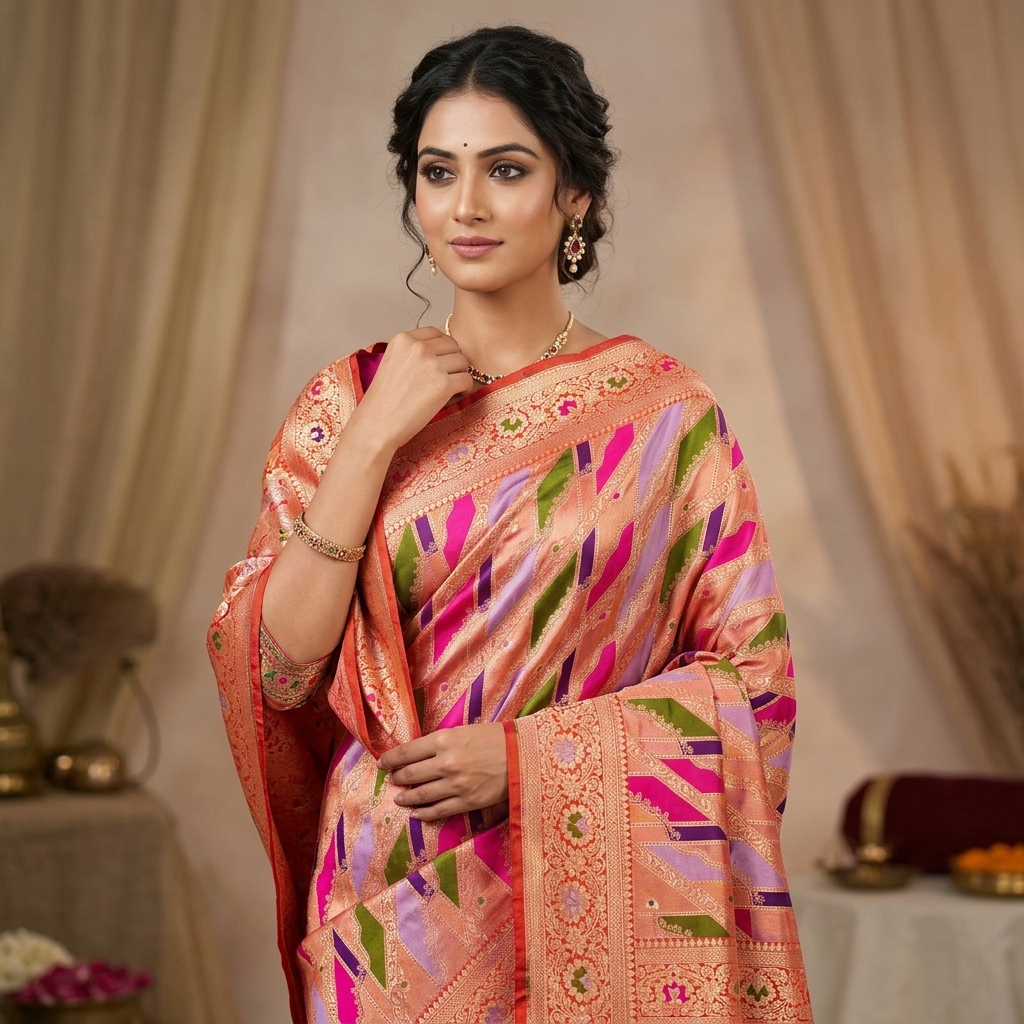
1. Blouse Coordination
Avoid multi-coloured or heavily printed blouses. Instead, select a solid-coloured silk blouse drawn from one of the deeper secondary hues inside the saree—such as deep emerald green, royal ink blue, wine maroon, or obsidian black. A structured elbow-length sleeve with subtle zari piping on the cuff lets the saree remain the undisputed hero.
2. Jewellery Selection
- Antique Gold & Polki: Complements warm-toned Rangkats featuring rich reds, mustard yellows, and saffron blocks.
- Kundan & Uncut Emeralds: Adds regal contrast against cool-toned Rangkats (turquoise, peacock blue, and rani pink).
- Temple Jewellery: Ideal for traditional bridal ceremonies where heritage craftsmanship is the central theme.
3. Draping Tips
Use crisp, well-measured pleats to showcase the alternating colour panels along the bottom skirt. Drape the pallu over the shoulder in an open, floating fall or structured box pleats to reveal the intricate zari jaal and colour transitions across the chest.
Caring for and Preserving Your Rangkat Heirloom
Due to the presence of multiple natural dye pigments and delicate zari threads, preserving a Rangkat saree requires disciplined textile care:
- Strictly Dry Clean Only: Never subject a handwoven silk Rangkat to water washing, as multi-tonal dyes may bleed into adjacent zari motifs.
- Wrap in Pure Cotton or Muslin: Store the saree wrapped in unbleached white muslin cloth. Avoid plastic zip covers, which trap moisture and oxidize silver zari threads.
- Change Fold Lines Periodically: Every 4 to 6 months, unfold the saree, air it in a shaded, well-ventilated room for 30 minutes, and refold along fresh lines to prevent permanent crease breaks along the zari weft.
- Avoid Direct Scent & Perfume: Never spray perfumes or deodorants directly onto the silk, as alcohol stains cause irreversible discolouration on natural dye pigments.
An Investment in Living Heritage
A handwoven Rangkat Banarasi saree is not merely fashion—it is a collector's textile that preserves centuries of Varanasi's intangible cultural heritage. At Shri Geeta Sarees, our master weavers have preserved these traditional pit loom techniques since 1960, ensuring that every bridal piece that leaves our Chowk atelier in Varanasi is an authentic, certified testament to generational craft.
Whether you are building your wedding trousseau or acquiring an investment heirloom, exploring our Pure Silk Katan Collection or consulting our curators will guide you to a definitive piece designed to be cherished for decades to come.
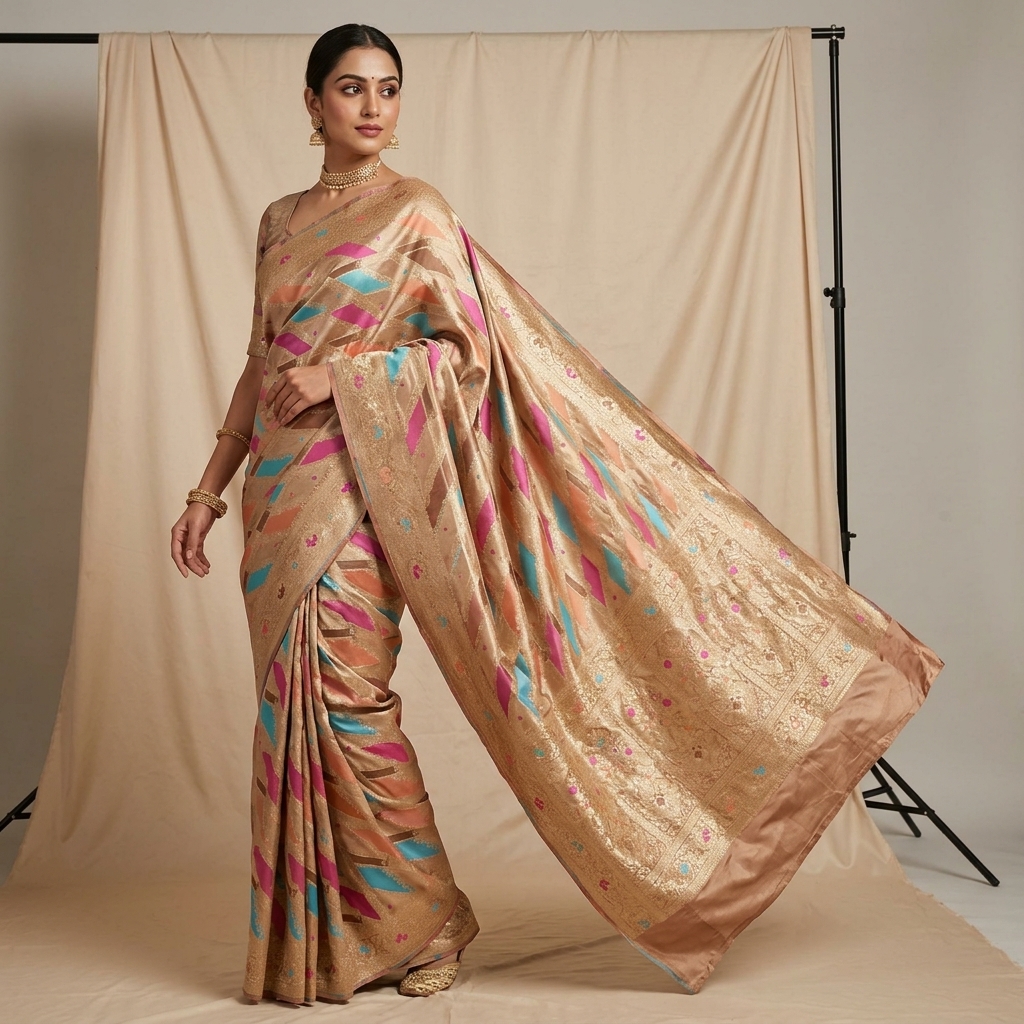
Continue Reading
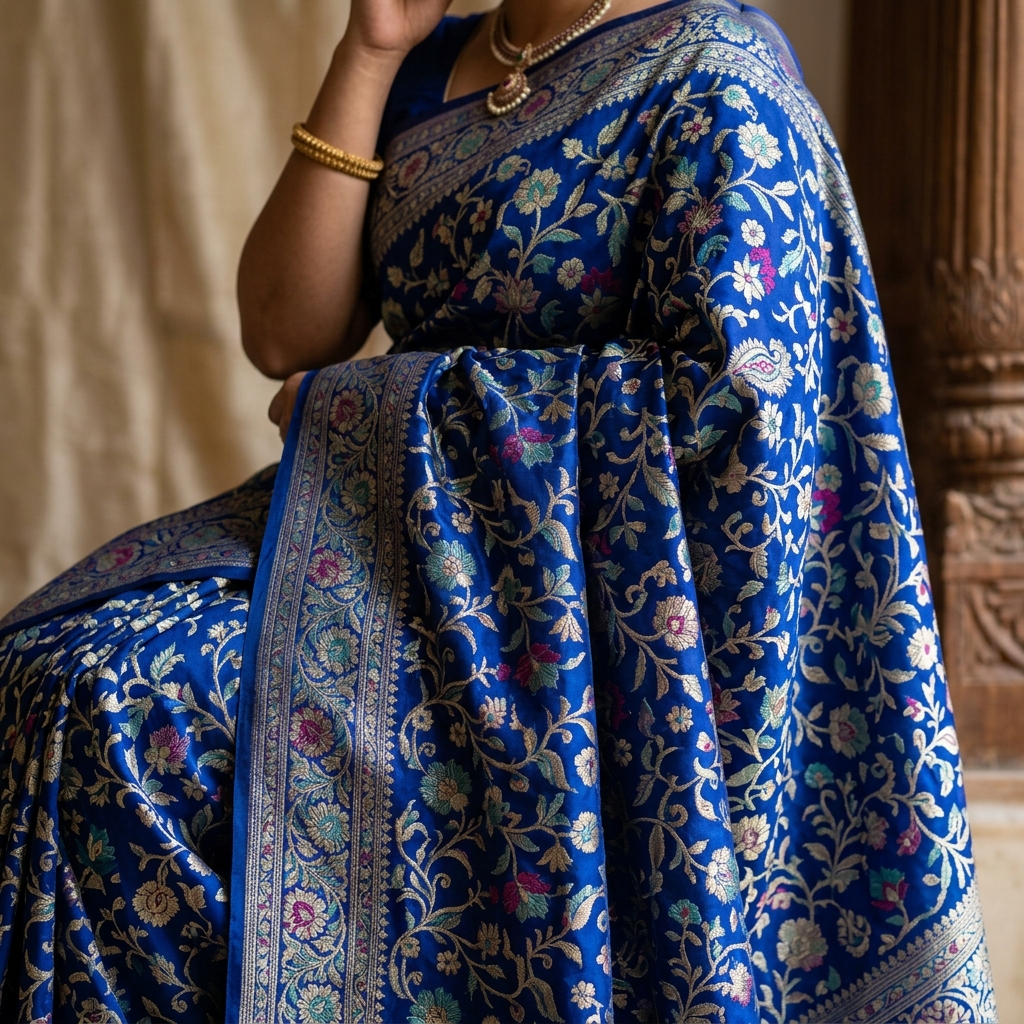
What is Fekwa (Fakua/Cutwork) in Banarasi Sarees?
Learn about Fekwa (or Fakua/Cutwork), an authentic Banarasi weaving technique that creates beautiful floral motifs and jaal patterns. Find out why it's more affordable without compromising quality.
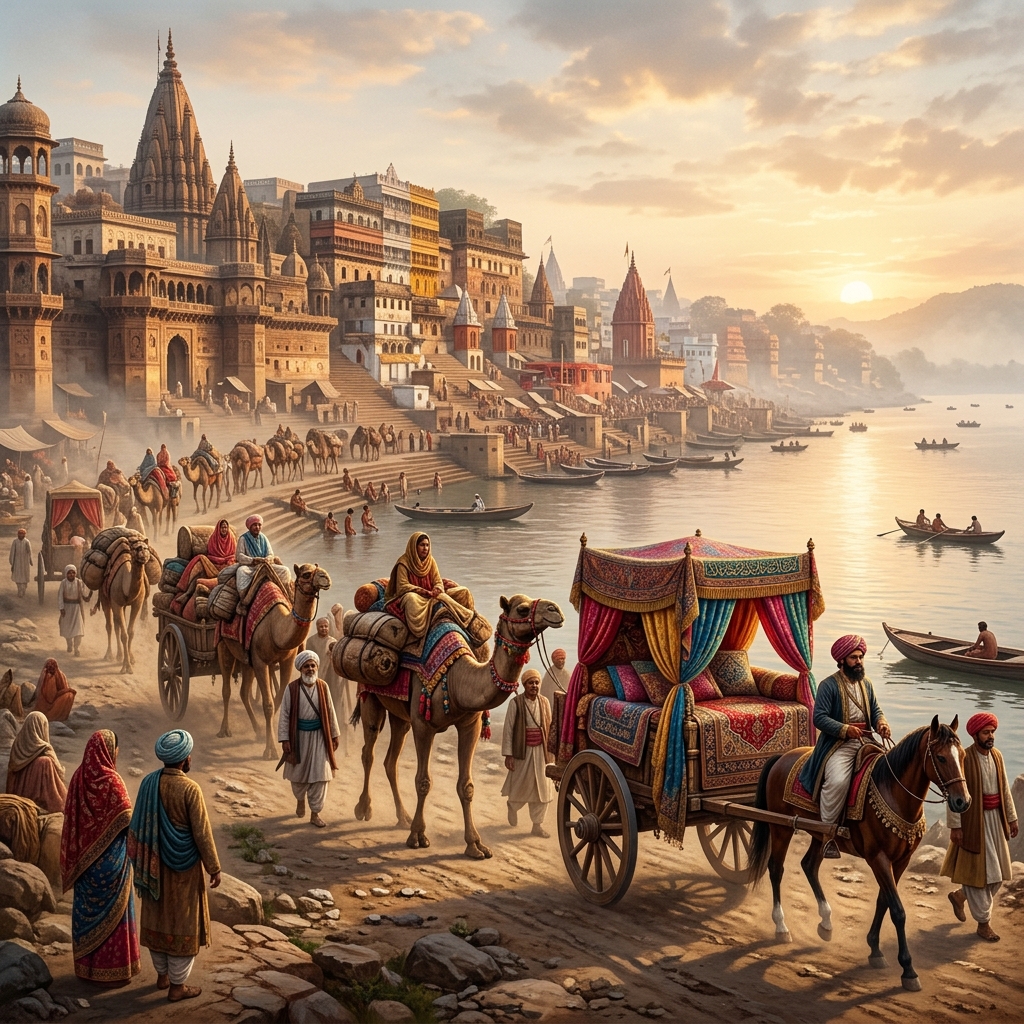
The Silk Route Through Varanasi: History of Banarasi Weaving
Trace the centuries-old journey of silk into Varanasi — from ancient trade routes to Mughal courts to the handloom houses of today.
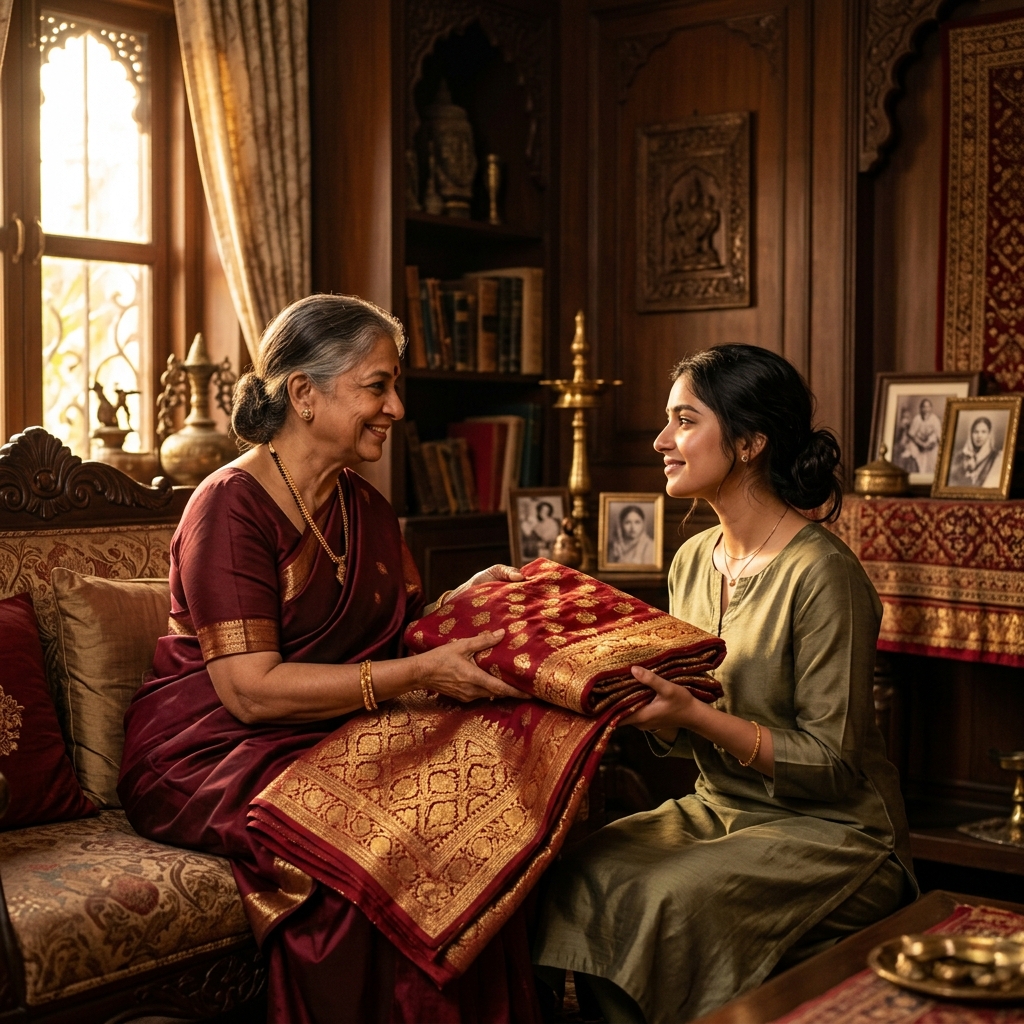
The Banarasi Saree as a Family Legacy: An Heirloom Woven in Silk
Explore the tradition of passing down Banarasi sarees, the craftsmanship that makes them endure, and how to preserve a vintage Banarasi silk saree as a family legacy.
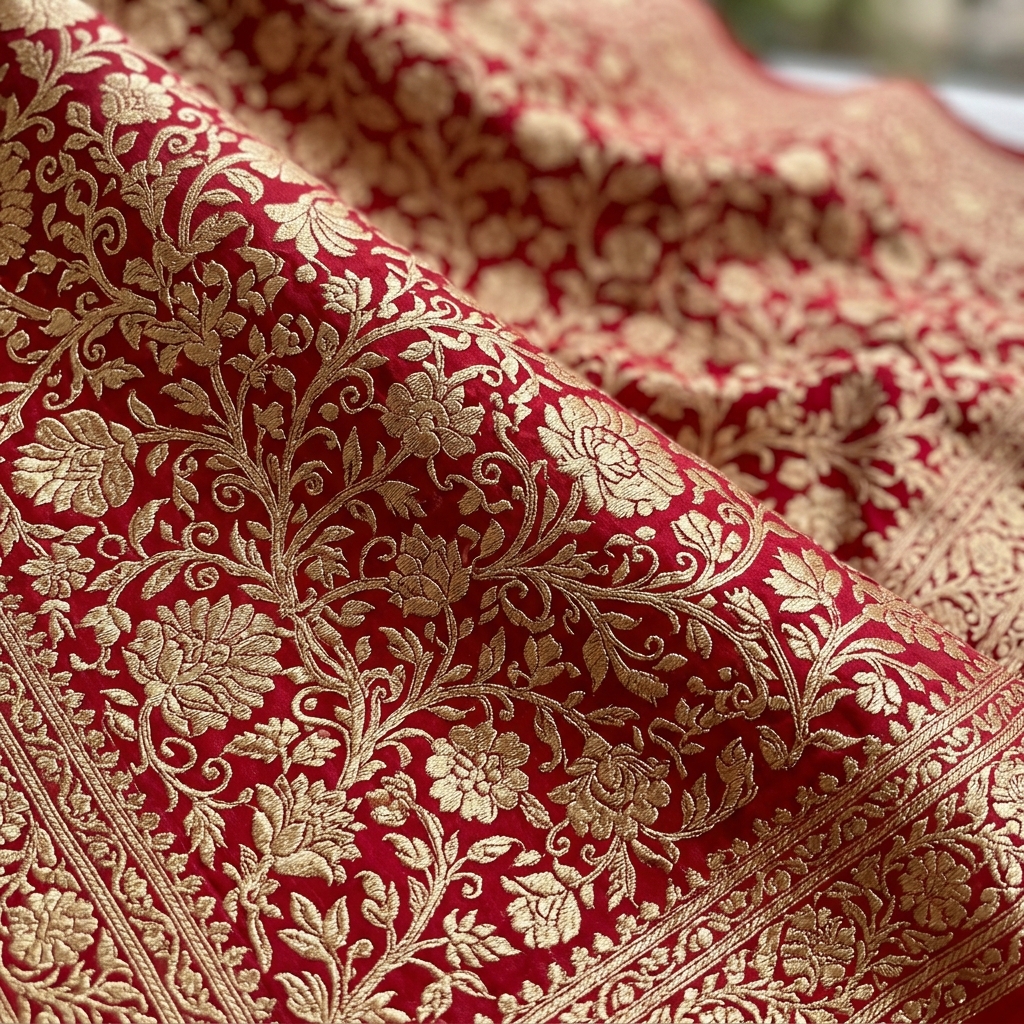
What is a Banarasi Saree Motif? A Guide to Buta, Jaal, and Paisley Patterns
Understand the language of Banarasi saree motifs — from the mango-shaped buta to the trellis-like jaal. A weaver's guide to reading pattern, symbolism, and craft.
What is a Kadhua Banarasi Saree?
Discover the art of Kadhua Banarasi sarees — individually woven motifs, no loose threads, and an embossed 3D finish. Learn about Meenakari vs Sonarupa and why Kadhua is the pinnacle of Banarasi craftsmanship.