Meenabooti: A Heritage Woven in Every Buta
Meenabooti: A Heritage Woven in Every Buta
In the majestic lexicon of Varanasi handlooms, few embellishments evoke the breathtaking luxury of royal jewelry quite like Meenabooti (often celebrated as the woven Meenakari of Banaras).
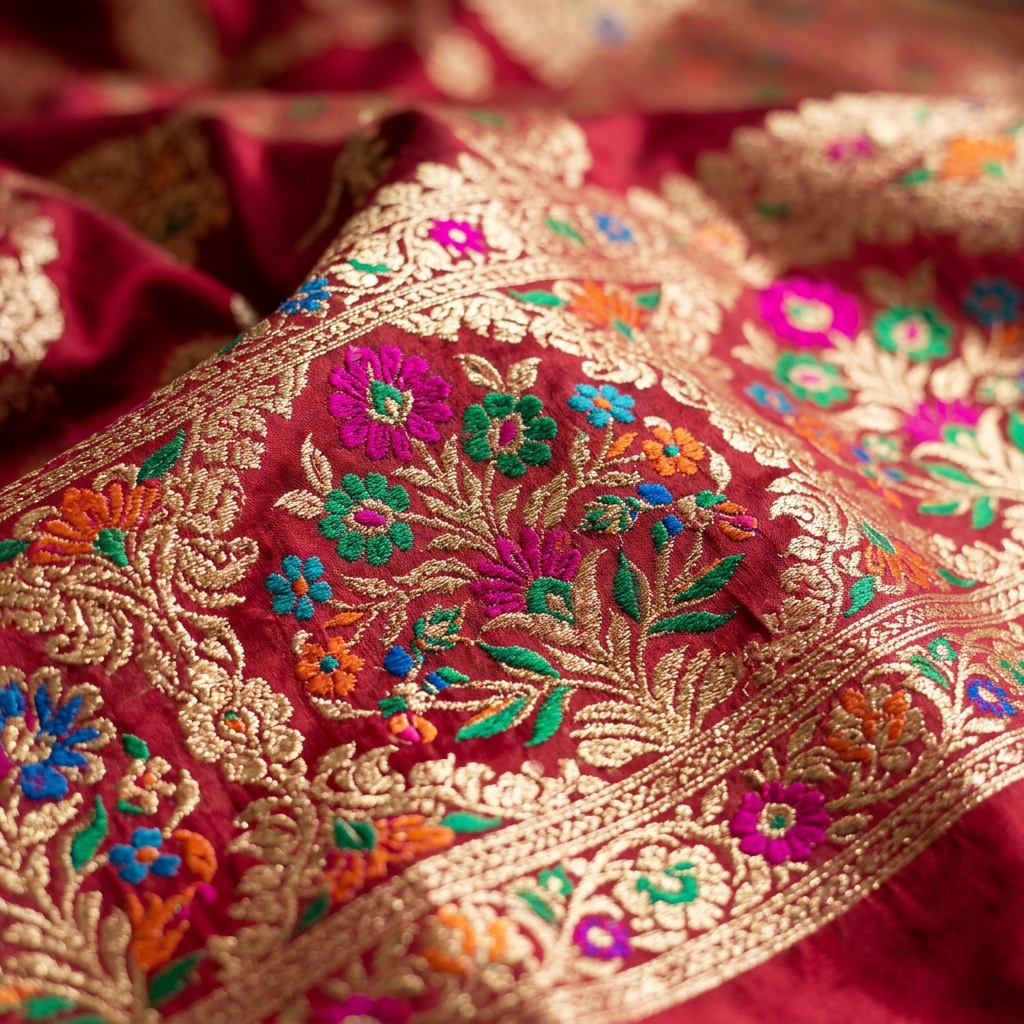
Just as master goldsmiths in Varanasi and Rajasthan embed vibrant colored enamels into gold jewelry, Banarasi master weavers weave jewel-toned silk (resham) threads directly into gold and silver zari motifs across Pure Silk Katan.
The Imperial Origin of Meenakari Weaving
The art of Meenakari was introduced into Mughal court workshops by Persian artisans. While it quickly became a staple of royal weaponry and jewelry, Varanasi’s visionary textile ustaads saw an opportunity to translate this enamel brilliance onto fabric.
By introducing multi-coloured silk threads into metallic zari jaals, weavers transformed traditional monochrome gold sarees into vivid, kaleidoscopic works of wearable art.
The Weaving Technique: How Meenabooti is Crafted
Crafting a genuine Meenabooti saree is an exercise in extreme patience:
- The Kadhwa Canvas: The saree is crafted using the legendary Kadhua Weave Technique, ensuring every floral motif is locked independently into the warp.
- Individual Colour Spools: The weaver keeps 4 to 8 tiny wooden shuttles (tilis) loaded with natural dyed resham threads (emerald green, ruby pink, turquoise blue, and mustard saffron).
- Micro-Weaving Detail: As the shuttle passes, the artisan manually threads the colored silk into individual flower centers, leaf veins, and bird wings. A single Meenabooti saree can take between 60 and 120 days on the pit loom.
Popular Meenabooti Motifs
| Motif Style | Visual Description | Cultural Meaning |
|---|---|---|
| Pankhi Meena | Stylized peacock feather with multi-coloured eyes | Royalty, grace, and divine beauty |
| Gulab Meena | Blooming rose sprigs with emerald leaves and ruby petals | Romantic elegance and eternal joy |
| Kalka Meena | Paisley mango motif filled with intricate miniature florals | Auspicious fertility and celebration |
| Shikargah Meena | Forest animals with multi-coloured enamel detailing | Imperial power and royal heritage |
How to Identify Authentic Handloom Meenabooti
- The Reverse Side: Turn the saree over. An authentic handloom Meenabooti will have clean, locked motifs without long messy floating threads.
- Colour Sharpness: The resham threads sit crisp and raised against the gold zari ground, giving the motif an embossed, 3D jewel look.
- Yarn Purity: Authentic pieces are woven on pure mulberry Katan Silk or Rangkat Multi-Colour Canvases.
Explore our exclusive Meenabooti bridal collection at Shri Geeta Sarees, handcrafted by Varanasi’s hereditary masterweavers.
Continue Reading
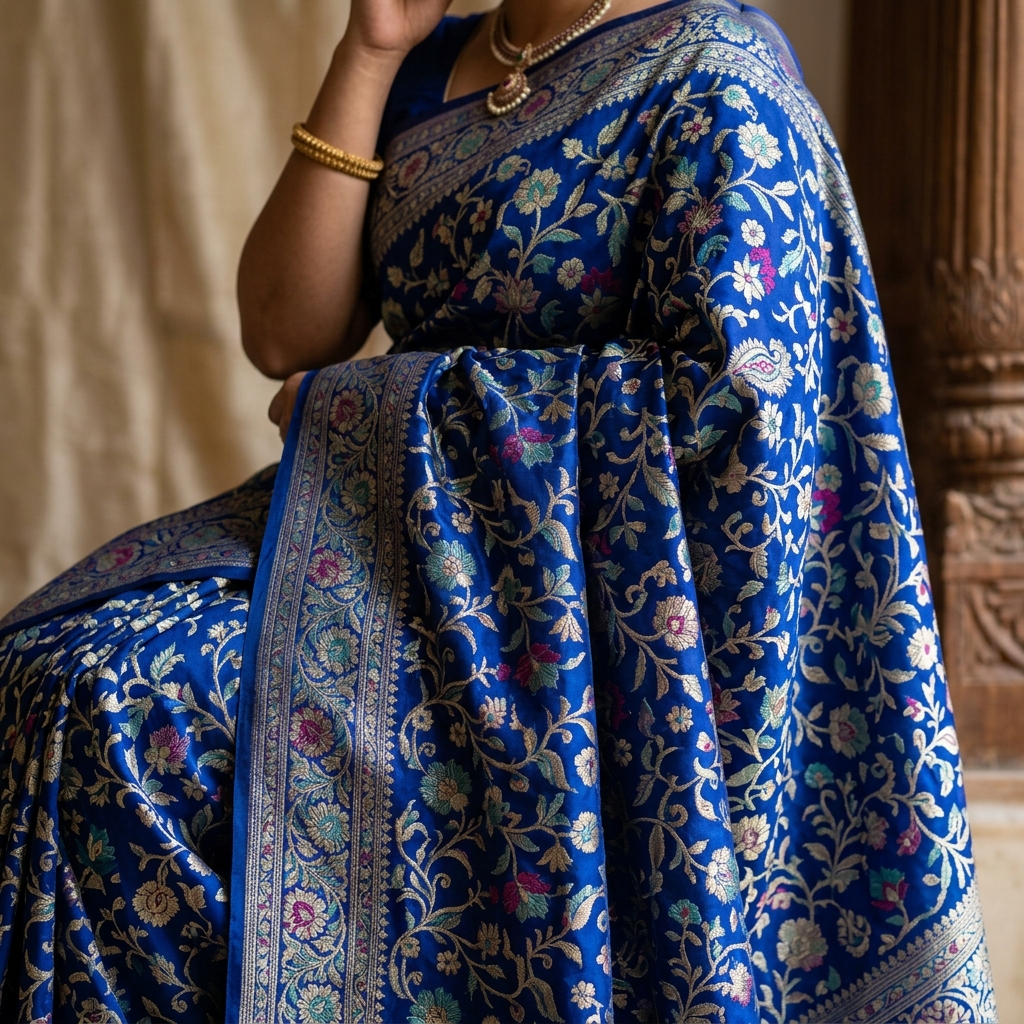
What is Fekwa (Fakua/Cutwork) in Banarasi Sarees?
Learn about Fekwa (or Fakua/Cutwork), an authentic Banarasi weaving technique that creates beautiful floral motifs and jaal patterns. Find out why it's more affordable without compromising quality.
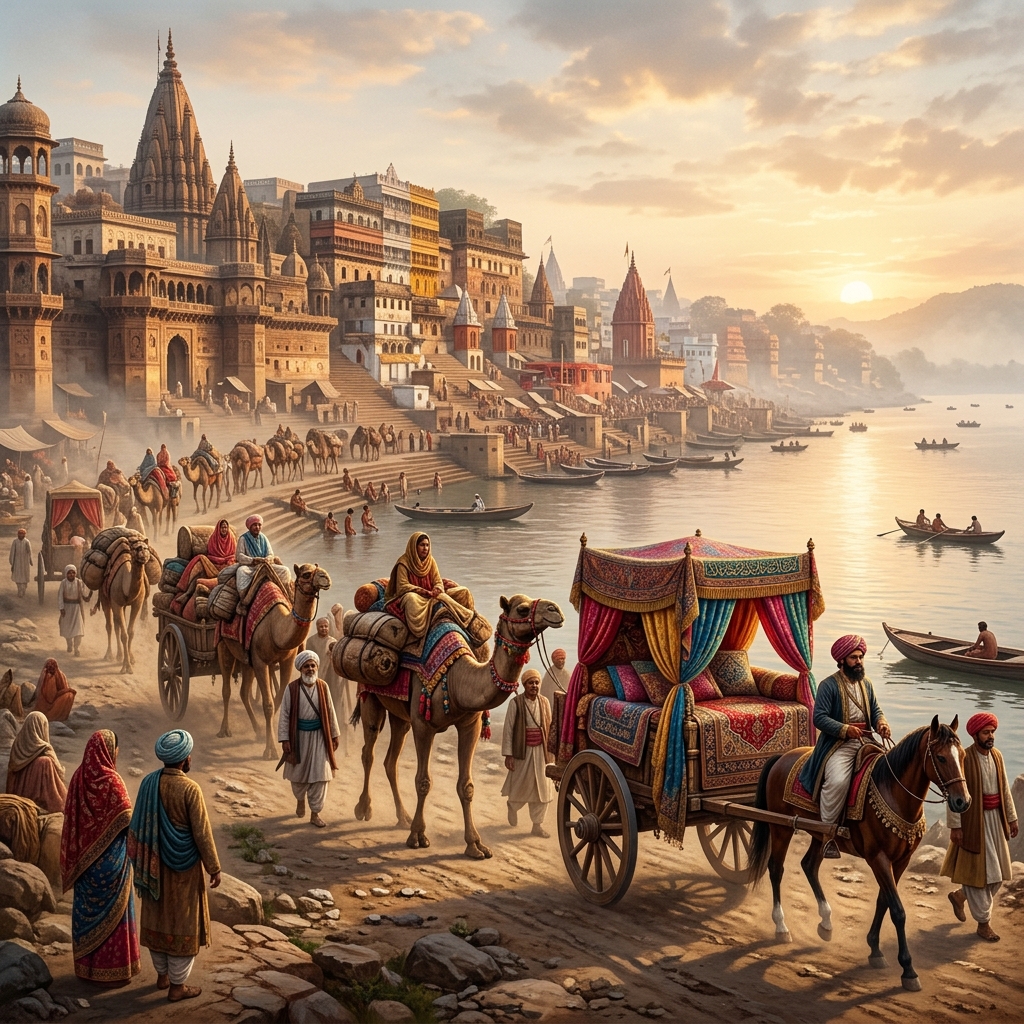
The Silk Route Through Varanasi: History of Banarasi Weaving
Trace the centuries-old journey of silk into Varanasi — from ancient trade routes to Mughal courts to the handloom houses of today.
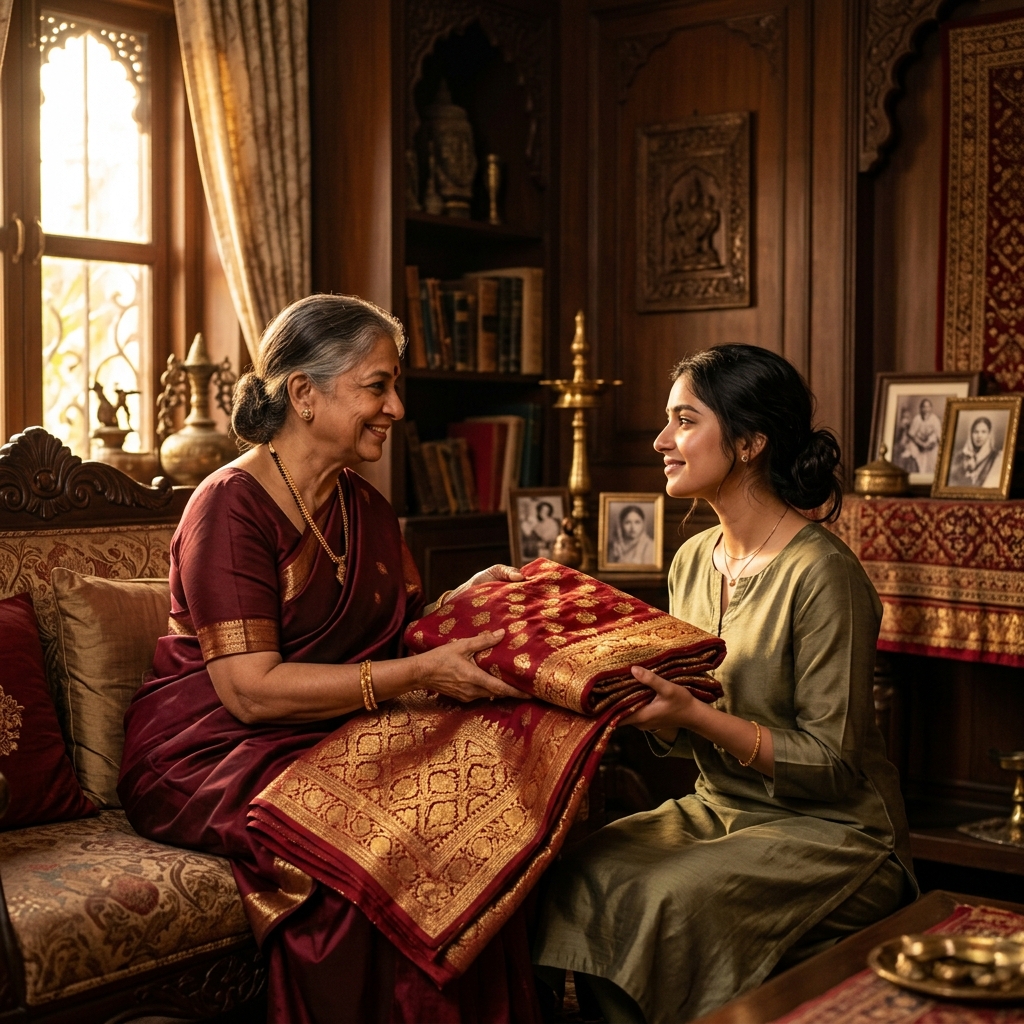
The Banarasi Saree as a Family Legacy: An Heirloom Woven in Silk
Explore the tradition of passing down Banarasi sarees, the craftsmanship that makes them endure, and how to preserve a vintage Banarasi silk saree as a family legacy.
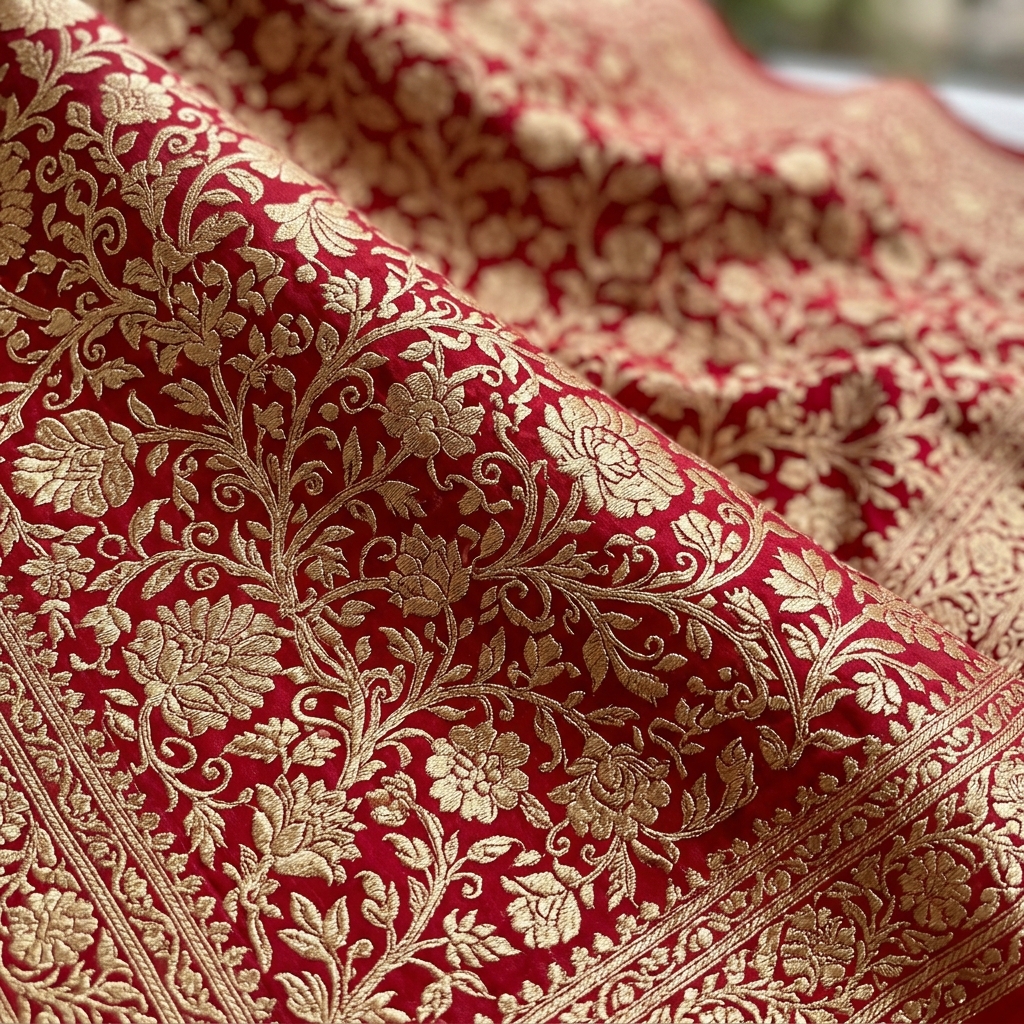
What is a Banarasi Saree Motif? A Guide to Buta, Jaal, and Paisley Patterns
Understand the language of Banarasi saree motifs — from the mango-shaped buta to the trellis-like jaal. A weaver's guide to reading pattern, symbolism, and craft.
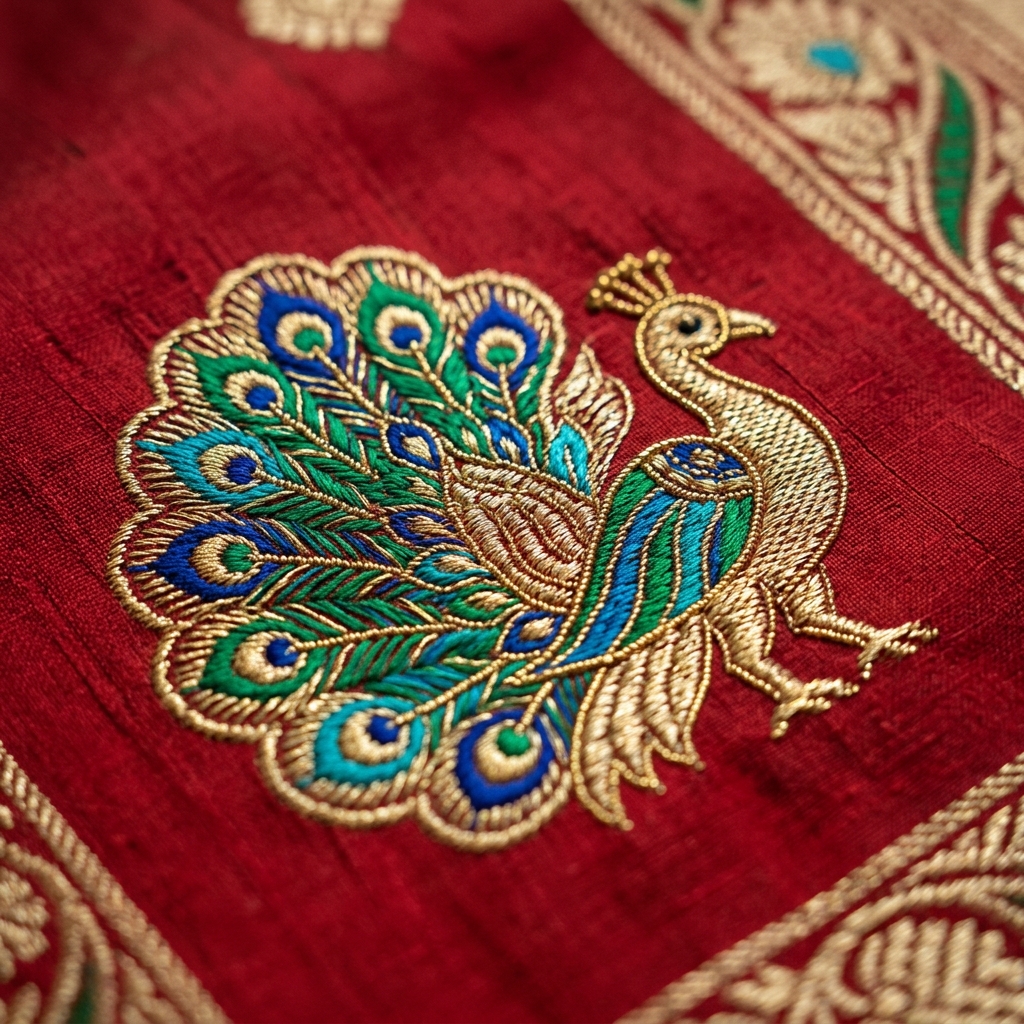
What is a Kadhua Banarasi Saree?
Discover the art of Kadhua Banarasi sarees — individually woven motifs, no loose threads, and an embossed 3D finish. Learn about Meenakari vs Sonarupa and why Kadhua is the pinnacle of Banarasi craftsmanship.