Banarasi Jamdani: Where Bengal’s Artistry Meets Varanasi’s Heritage
Banarasi Jamdani: Where Bengal’s Artistry Meets Varanasi’s Heritage
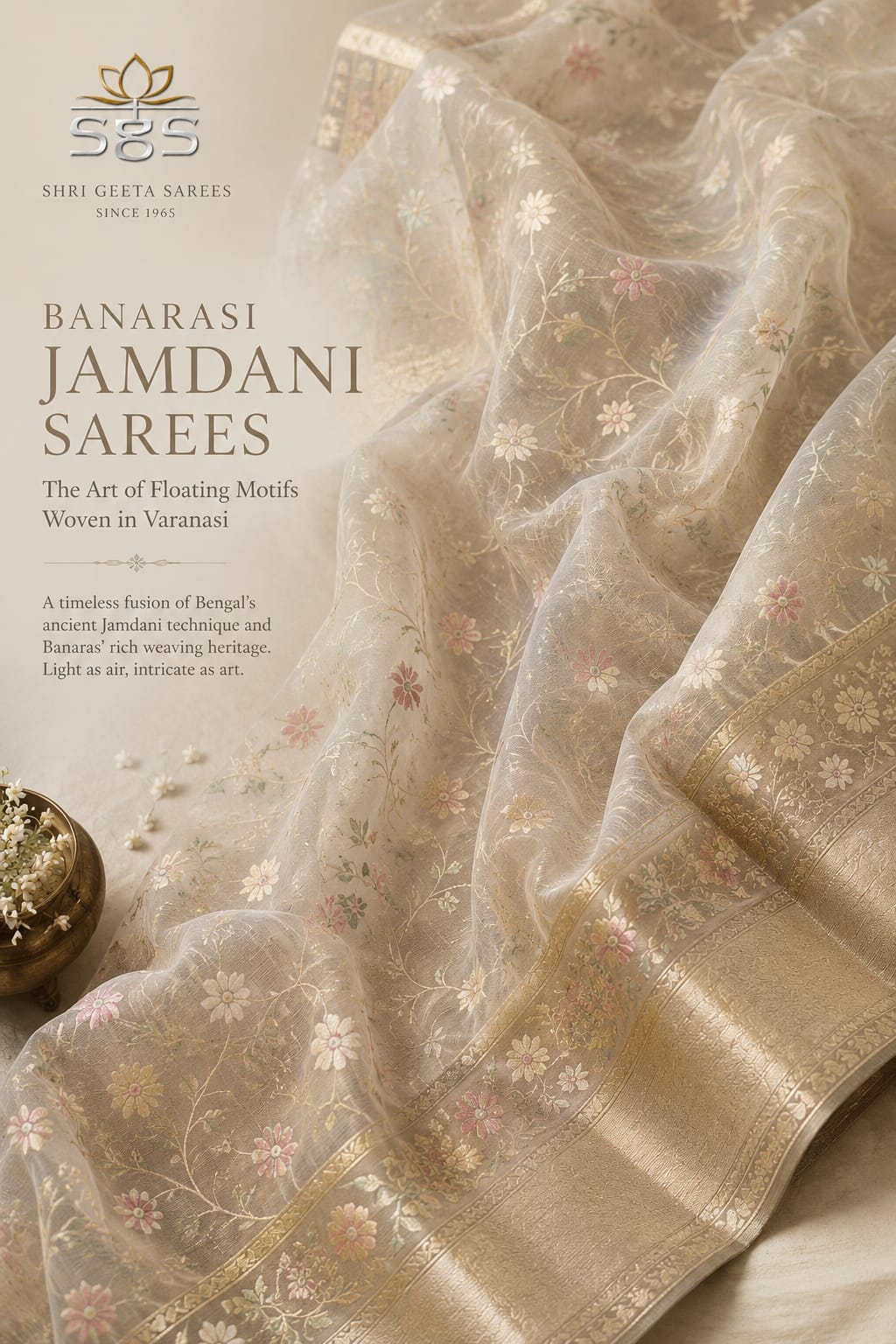
Among the most poetically delicate handloom creations in Indian textile history, Banarasi Jamdani stands in a league of its own. It represents the historic convergence of two legendary textile powerhouses: the ethereal, discontinuous-weft weaving of Bengal and the opulent silk-and-zari tradition of Varanasi.
The word Jamdani traces its roots to Persian: Jam (meaning flower) and Dani (meaning vase), capturing the lush floral motifs that blossom across these diaphanous handwoven textiles.
The Historical Fusion: From Bengal to the Looms of Varanasi
The Jamdani technique was declared an Intangible Cultural Heritage of Humanity by UNESCO for its sublime intricacy. Originally practiced on ultra-fine Dhaka muslin cotton, the craft received royal patronage during the Mughal period.
In the late 18th and early 19th centuries, master weavers migrated along the Ganges to Varanasi. There, Banarasi ustaads adapted the technique—replacing plain cotton with luminous Pure Silk Katan, crisp organza, and liquid gold zari. The result was the Banarasi Jamdani: a saree that married the breezy weightlessness of Bengal with the regal grandeur of Banaras.
The Weaving Magic: Discontinuous Supplementary Weft
What makes a Jamdani fundamentally different from any other Banarasi saree is its unique weaving method:
- No Jacquard Punch Cards: Unlike standard sarees where patterns follow pre-punched cards, a traditional Jamdani is woven entirely freehand or guided by a hand-drawn pattern paper (naksha) placed beneath the warp.
- Individual Spools (Kandis): The artisan uses individual bamboo needles or tiny wooden spools (tilis) to insert non-structural, supplementary weft threads.
- Pinch-by-Pinch Interlocking: Each flower petal, stem, and geometric border is manually laid into the warp one thread at a time. A master weaver can spend 4 to 9 months crafting a single full-jaal Jamdani saree.
Iconic Motifs in Banarasi Jamdani
| Motif Name | Visual Theme | Symbolic Meaning |
|---|---|---|
| Butidar | Scattered floral sprigs across the body | Understated royal elegance |
| Jall / Jaaldar | Continuous interlocking floral vines | Prosperity and eternal abundance |
| Tercha | Diagonal floral cascades across the pleats | Movement and visual grace |
| Kalka / Paisley | The iconic teardrop mango motif | Fertility and auspicious beginnings |
Handloom Jamdani vs Machine Imitations: How to Tell
With the rise of powerloom jacquard copies, distinguishing genuine Jamdani requires careful inspection:
- The Reverse Feel: In an authentic handwoven Jamdani, the supplementary pattern threads are seamlessly locked into the fabric structure. The reverse side feels almost as smooth and wearable as the front.
- Slight Organic Irregularities: Because each motif is hand-threaded, subtle, organic variations exist from one flower to the next—the unmistakable hallmark of human artistry.
- Weight and Drape: A genuine silk Jamdani is remarkably lightweight, breathable, and soft, unlike stiff powerloom replicas.
Explore our related masterweaves in Kadhua Banarasi Sarees and Multi-Coloured Rangkat Weaves to witness the full breadth of Varanasi handloom excellence at Shri Geeta Sarees.
Continue Reading
What is Fekwa (Fakua/Cutwork) in Banarasi Sarees?
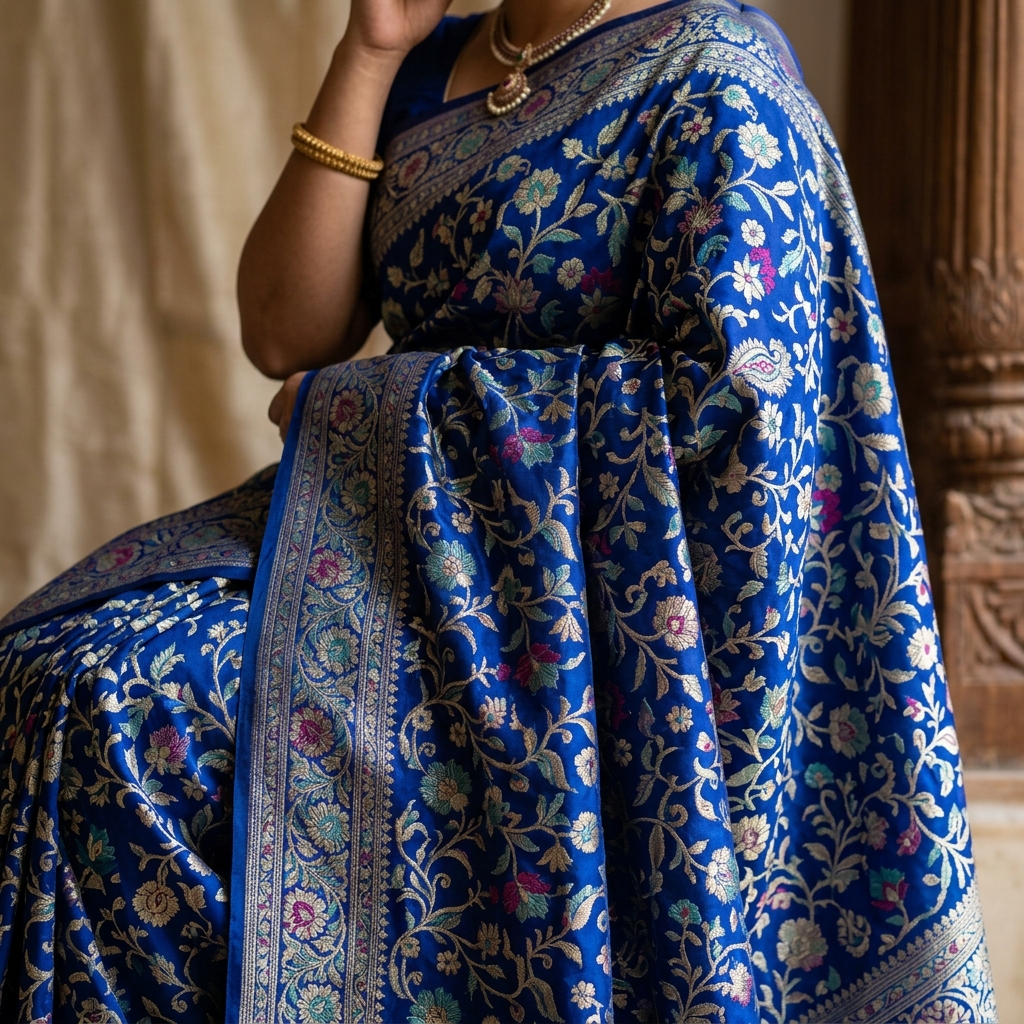
Learn about Fekwa (or Fakua/Cutwork), an authentic Banarasi weaving technique that creates beautiful floral motifs and jaal patterns. Find out why it's more affordable without compromising quality.
The Silk Route Through Varanasi: History of Banarasi Weaving
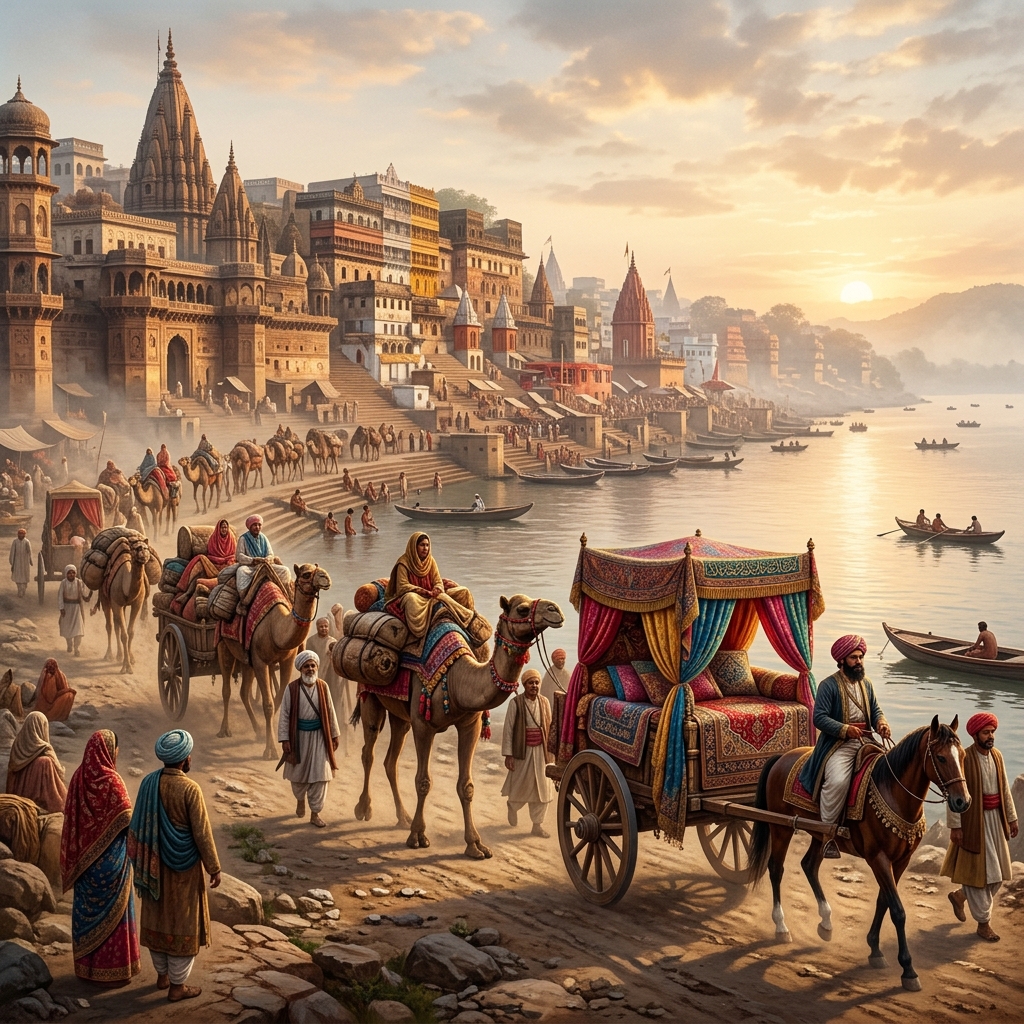
Trace the centuries-old journey of silk into Varanasi — from ancient trade routes to Mughal courts to the handloom houses of today.
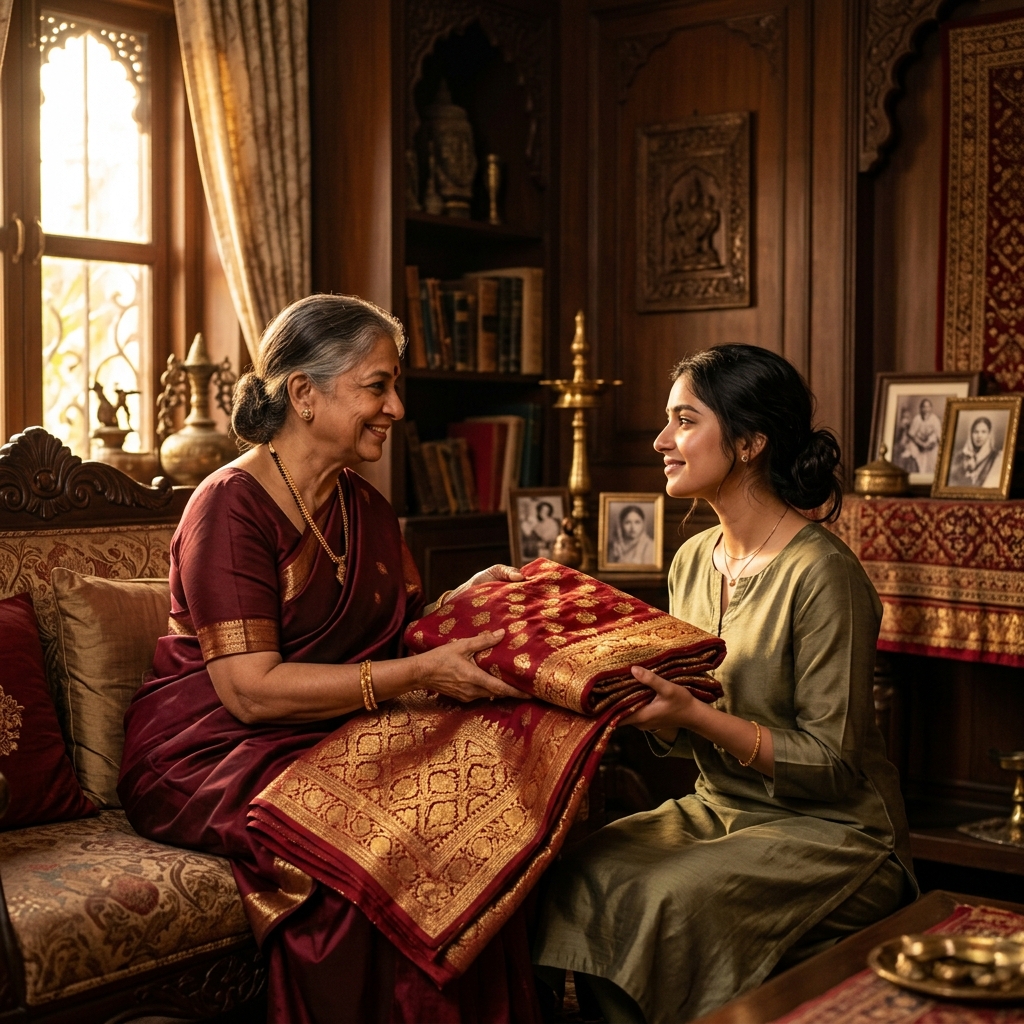
The Banarasi Saree as a Family Legacy: An Heirloom Woven in Silk
Explore the tradition of passing down Banarasi sarees, the craftsmanship that makes them endure, and how to preserve a vintage Banarasi silk saree as a family legacy.
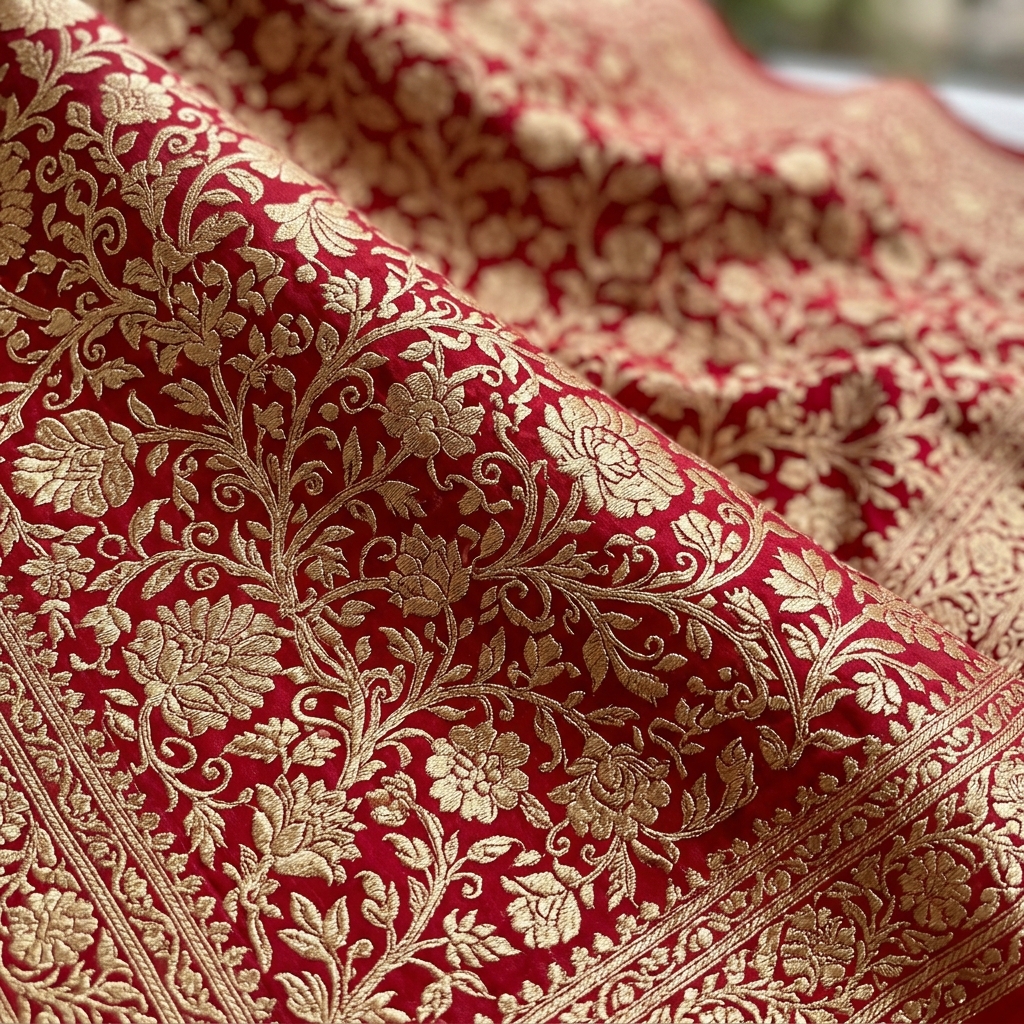
What is a Banarasi Saree Motif? A Guide to Buta, Jaal, and Paisley Patterns
Understand the language of Banarasi saree motifs — from the mango-shaped buta to the trellis-like jaal. A weaver's guide to reading pattern, symbolism, and craft.
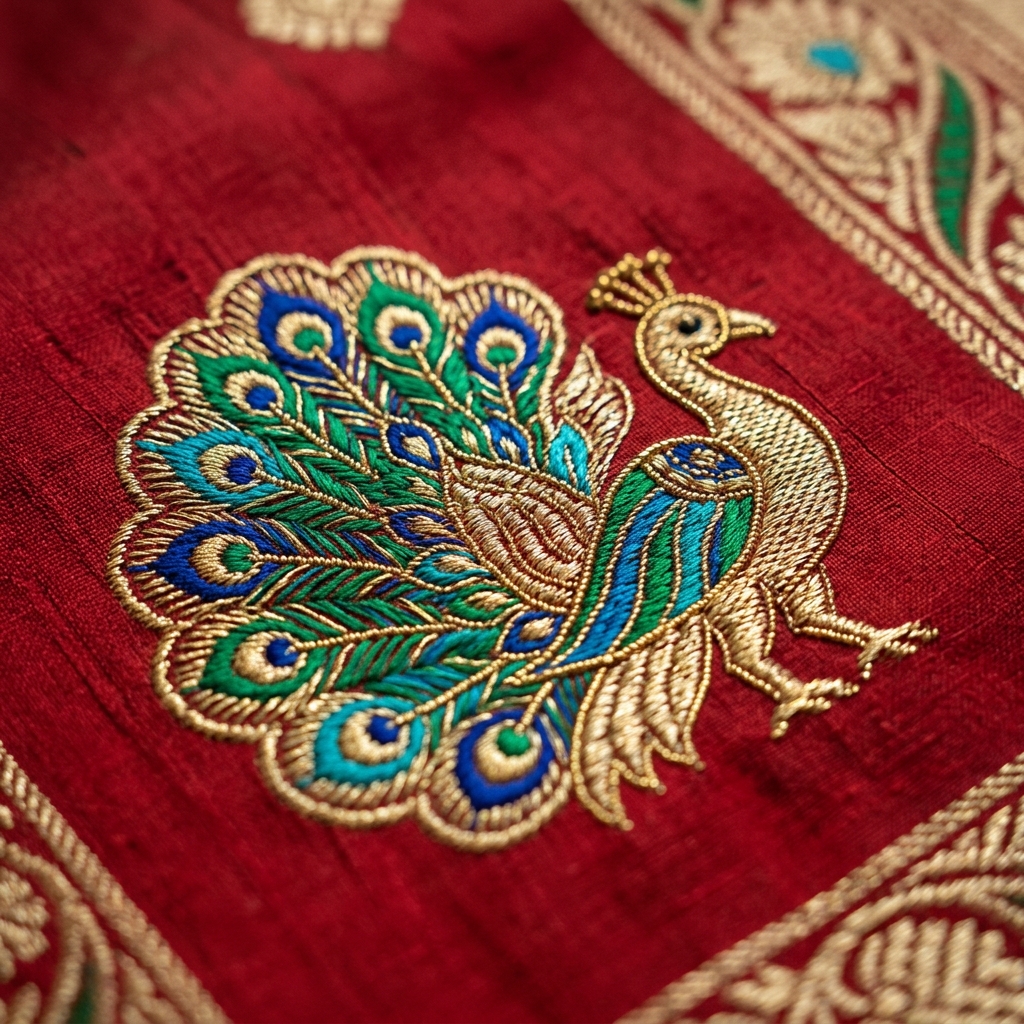
What is a Kadhua Banarasi Saree?
Discover the art of Kadhua Banarasi sarees — individually woven motifs, no loose threads, and an embossed 3D finish. Learn about Meenakari vs Sonarupa and why Kadhua is the pinnacle of Banarasi craftsmanship.